


This article treats conflict resolution in hybrid teams as a distinct discipline, mapping digital misunderstandings, their causes, and measurable remedies. It provides policies, mediation tiers, KPIs, an 8-week change template, and case studies so leaders can pilot targeted fixes, reduce clarifications, and track outcomes through decision logs and visibility metrics.
Conflict resolution hybrid teams is an essential capability for modern leaders. In our experience, decision-makers who treat hybrid conflict as a discrete discipline — not a side effect — recover productivity faster and reduce turnover. This article maps the problem of digital misunderstandings, explains causes and consequences, and provides a practical, implementable playbook for how to resolve conflict in hybrid teams.
The guidance combines policy, tools, mediation options and a repeatable training template so leaders can move from diagnosis to measurable outcomes. Expect concrete KPIs, three short case studies, and a sample escalation flowchart you can adopt immediately.
Definition: For decision-makers, conflict resolution hybrid teams describes the frameworks, processes and interventions used to prevent, surface and resolve tensions that arise when some employees are remote while others are onsite.
Scope: This includes interpersonal disputes, task ownership confusion, misaligned expectations and technical frictions caused by different communication modes. A pattern we've noticed is that most hybrid team conflicts start as small digital misunderstandings that escalate because of low visibility and uneven norms.
Digital misunderstandings occur when tone, intent, timing or context are lost across channels. They show up as misread emails, missing context in comments, or decisions made in meetings where key stakeholders are absent. These misunderstandings are often the root cause of broader hybrid team conflict.
Consequences range from delayed deliverables and duplicated work to increased attrition. Studies show that unclear communication contributes to lost productivity and lower employee engagement — outcomes leadership must quantify and address.
Mapping causes helps leaders design targeted fixes. Below is a taxonomy that groups root causes into four buckets: technology, norms, culture, and schedules.
Each bucket requires different interventions: tech fixes alone rarely eliminate hybrid team conflict because norms and culture amplify small signal losses into full conflicts.
Signal loss happens when tools create information silos or inconsistent presence indicators. Common issues include asynchronous thread fragmentation, unclear channel purpose, and poor meeting audio/video. In our experience, standardizing channels and archiving decisions reduces repeat clarifications by 40%.
Norms govern who responds when and how. Absence of agreed norms produces expectation gaps: remote staff assume asynchronous follow-ups; onsite staff expect ad-hoc alignment. Schedule mismatches (time zones, office days) create structural second-class participation that breeds resentment and the remote and office conflict dynamic.
Preventing hybrid workplace conflict requires policy, onboarding and the right tooling. Prevention is cheaper than mediation: reduced turnover and faster decision-making are measurable benefits.
Use layered controls: explicit policies, reinforced onboarding, and operational tools that improve visibility.
Create clear, written norms: channel purpose, response SLAs, meeting rules (camera, facilitation, decision logging). A short, enforced set of norms reduces ambiguity and provides a neutral standard for mediation.
Onboarding must include hybrid norms, examples of digital misunderstandings, and shadowing opportunities. We've found that a 90-day onboarding checklist which includes "how to escalate" cuts early conflicts by half.
Adopt tools that preserve context: shared decision logs, async video updates, and presence-aware collaboration boards. The turning point for many organizations isn’t just adding more tools — it’s removing friction. Tools like Upscend help by making analytics and personalization part of the core process, surfacing hidden signals about who’s being left out and where information gaps occur.
Mediation for hybrid environments should be tiered and documented. Decide in advance which conflicts managers can resolve and which require HR or external mediators. Clear escalation reduces escalation anxiety.
Manager-led mediation is best for day-to-day task disputes; HR handles conduct or repeated pattern issues; external mediation is for high-stakes, escalated disputes where neutrality is crucial.
Managers should follow a simple script: acknowledge, gather facts across channels, invite perspectives asynchronously, propose a time-bound solution and document the resolution. Use a decision log so repeated issues become visible as patterns rather than one-offs.
HR should provide a hybrid workplace mediation framework that includes an intake form, evidence checklist, and a neutral facilitator pool. External mediators are appropriate when legal risk or deep trust fractures exist.
What gets measured gets managed. Define KPIs that link conflict resolution hybrid teams programs to business outcomes: turnover, time-to-decision, meeting efficiency, and quality of async documentation.
KPIs should be tracked quarterly and reported to leadership with proposed interventions and ROI estimates.
Combine HR analytics, collaboration platform logs, and periodic pulse surveys. In our experience, correlating decision latency with churn uncovers high-value interventions that reduce turnover and improve productivity.
Implementing conflict resolution in hybrid teams requires a change plan with communication, training, pilots and scaling. Below is a modular 8-week template leaders can adapt.
Use a pilot group, measure early wins, iterate, and then roll out. Training should be experiential: role plays with recorded scenarios and decision logs.
Common pitfalls: over-engineering policies, failing to measure, and skipping frontline manager training. Address these by keeping policies concise, tying KPIs to business outcomes, and coaching managers weekly for the first 90 days.
Below are three concise case studies showing how different organizations applied these principles, followed by a sample escalation flowchart you can adopt.
Enterprise case: A global firm faced remote and office conflict between product and operations. They standardized channel policy, required decision logs for all cross-team meetings, and trained managers in mediation. Result: 22% faster product launches and 12% lower voluntary attrition in affected teams within six months.
Mid-market case: A mid-market SaaS company used an onboarding checklist and a visibility dashboard that surfaced stalled decisions. Managers held weekly async "decision reviews." Result: time-to-decision fell by 35% and customer SLA breaches decreased.
Startup case: A startup with a dispersed team suffered culture drift and frequent misunderstandings. They mandated 30-minute alignment calls twice weekly and a shared project board; they also used peer mediation for small conflicts. Result: morale improved and hiring velocity increased.
This simple flow reduces ambiguity, increases visibility, and creates a data trail for measurement. Use the flowchart as a standard operating procedure and publish it in the employee handbook and onboarding materials.
Decision-makers who treat conflict resolution hybrid teams as a strategic competency unlock faster decision-making, lower turnover, and higher productivity. The combination of clear norms, targeted tooling, manager training, and measurable KPIs creates durable improvement.
Start by piloting one team with the 8-week template, instrument the KPIs listed above, and use the escalation flowchart after week 3. In our experience, visible early wins make scale simple: leaders gain traction because the benefits — fewer misunderstandings and faster project velocity — are tangible.
Next step: Select a pilot team, assign a manager champion, and commit to a 60-day measurement window using the KPIs above. Track outcomes and report one prioritized policy change to leadership at day 60.
Call to action: If you want a ready-made decision-log template and KPI dashboard to start your pilot, download the kit provided by your HR or operations team and schedule a 30-minute alignment meeting to assign owners and timelines.
The Upscend Team provides actionable insights on technology and business strategy.
Book a walkthrough and we'll show you how it applies to your own content.
 General
December 14, 2025
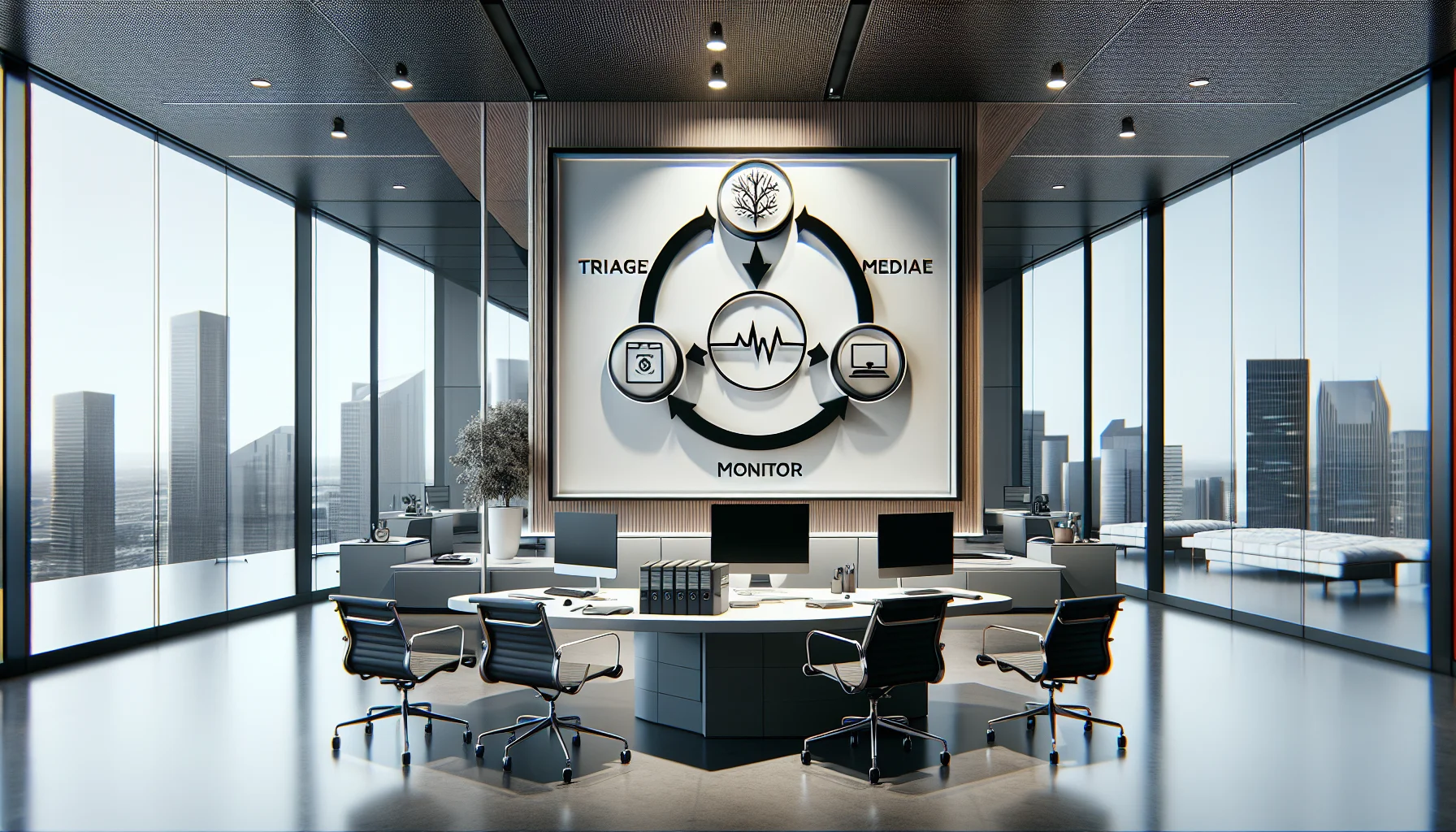
Practical steps to implement employee conflict resolution: use a Triage→Mediate→Monitor framework, structured conciliatory conferences, and mediator techniques (active listening, reframing, caucuses). The article includes templates, training recommendations, KPIs to track (incident frequency, time-to-resolution, recurrence) and case studies showing resolution time falling from 28 to 9 days and improved perceived fairness.
 Workplace Culture&Soft Skills
January 5, 2026
Post-conflict retrospectives give hybrid teams a structured, nonpunitive forum to convert incidents into system fixes. Leaders should appoint a neutral facilitator and scribe, collect timelines and communication artifacts, follow the 90-minute agenda, and record remediation owners and deadlines. Pilot one retrospective, publish outcomes, and verify closure at 30 and 90 days.
 Workplace Culture&Soft Skills
January 5, 2026
This article explains legal considerations when resolving hybrid team conflicts, covering jurisdiction, evidence preservation, data privacy, discrimination law, cross-border and union obligations. It provides a pre-escalation checklist, sample preservation and counsel‑notification wording, plus lessons from anonymized cases to help managers reduce liability and resolve disputes fairly.
 Workplace Culture&Soft Skills
January 5, 2026
This article compares leading conflict resolution frameworks (TKI, IBR, restorative practices), explains hybrid-specific adaptations, and gives decision criteria, sample scripts, and a six-week pilot plan. It contrasts TKI's speed with IBR's relational repair and recommends combining style-aware and interest-based approaches for resilient hybrid dispute systems.