

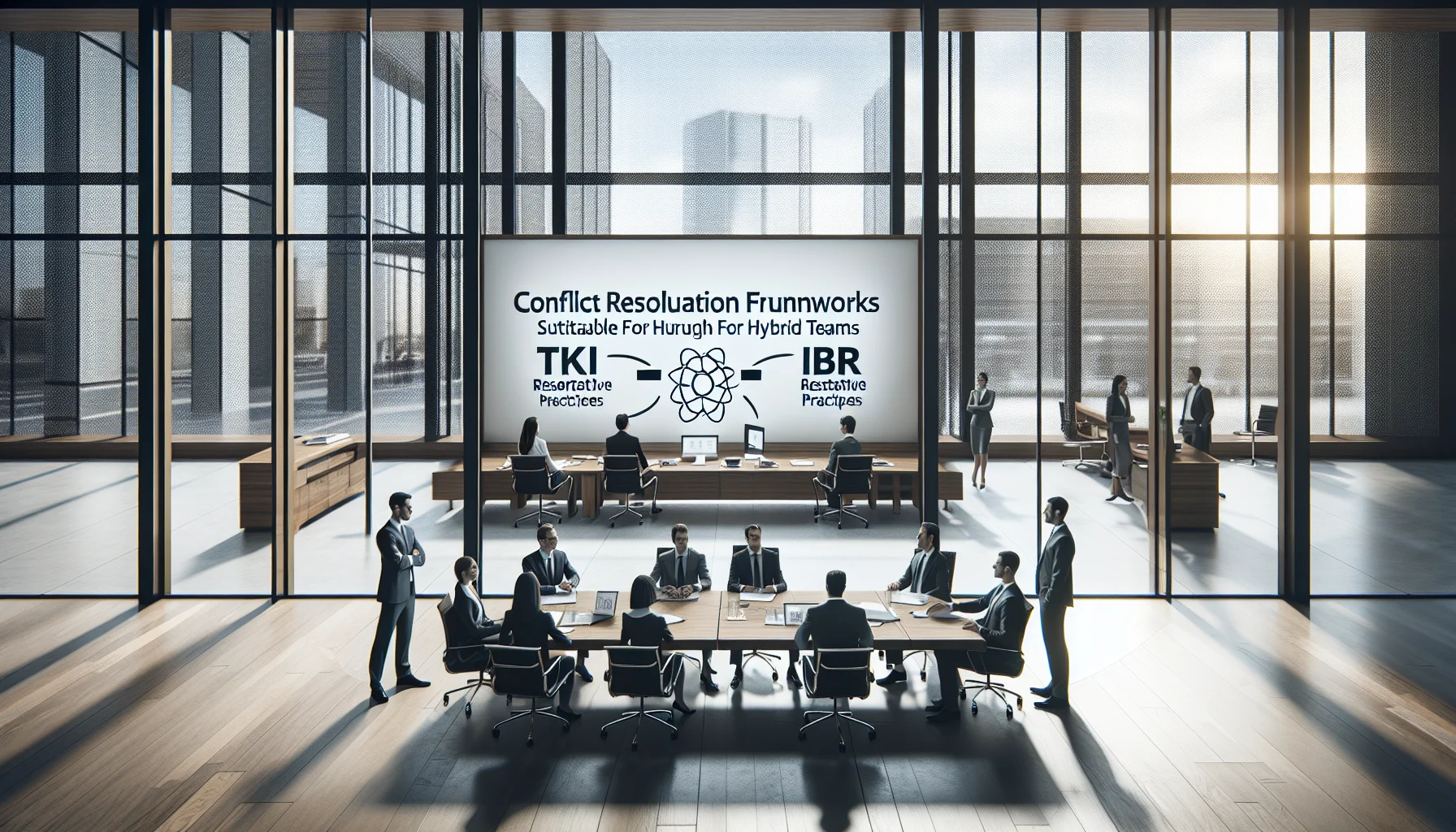
This article compares leading conflict resolution frameworks (TKI, IBR, restorative practices), explains hybrid-specific adaptations, and gives decision criteria, sample scripts, and a six-week pilot plan. It contrasts TKI's speed with IBR's relational repair and recommends combining style-aware and interest-based approaches for resilient hybrid dispute systems.
Conflict resolution frameworks shape how organizations prevent, diagnose, and resolve disputes across in-office and remote settings. In our experience, hybrid teams magnify the weaknesses of one-size-fits-all approaches and require a deliberate selection of models that account for asynchronous work, psychological safety, and differing communication bandwidth.
This article compares leading conflict resolution frameworks, adapts each for hybrid dynamics, provides decision criteria, sample scripts and templates, a pilot rollout plan, and a short case contrasting two popular approaches. Use these actionable steps to pick and implement a model that fits your culture and operational realities.
At the top of most organizational toolkits are a few established conflict resolution frameworks that translate well into hybrid workplaces:
Each of these conflict resolution frameworks has different assumptions about power, transparency, and process. In our experience, hybrid teams benefit when a chosen model balances clarity of procedure with flexibility for remote participation.
Hybrid teams introduce friction points: asynchronous misinterpretation, unequal visibility, and meeting-time logistics. Adapting any of the standard conflict resolution frameworks requires explicit protocol changes to address these issues.
Below are practical adaptations for three leading models.
The TKI model is valuable because it clarifies personal styles. For hybrid teams, codify how each mode is used in different contexts—e.g., reserve "competing" for safety-critical decisions while encouraging "collaborating" for policy changes. Add asynchronous self-assessments so teammates can share style awareness before heated exchanges.
Tips:
IBR depends on building trust and exploring interests; both are fragile across screens. In our experience, hybrid teams must create regular rituals for relational work—structured 1:1s, rotating “connection” time at the start of meetings, and written interest inventories to avoid lost nuance in chat.
Tips:
Restorative conferences require careful facilitation to ensure equal voice. Hybrid adaptations include using co-facilitators—one onsite, one remote—to manage dynamics, pre-session coaching for participants, and a shared digital circle protocol that sets speaking order and visual cues.
Tips:
Selecting the right model means matching organizational needs to framework strengths. Ask whether you need speed, relational repair, behavioral accountability, or development of conflict competence. We’ve found a simple weighted decision matrix works well for teams evaluating options.
Key decision criteria include:
Use a 1–5 score for each criterion, multiply by weights that reflect your priorities, and compare total scores for each model. This quantitative approach reduces bias and addresses the common pain point that one-size-fits-all frameworks get imposed without cultural calibration.
Practical scripts reduce ambiguity. Below are short, adaptable scripts and a documentation template to use across conflict resolution frameworks.
Opening script for a hybrid mediated conversation:
Asynchronous check-in template (pre-meeting):
These templates aid any of the dispute resolution frameworks and help surface information before live interactions, which is critical for hybrid teams where context can be lost.
Operational tools are useful (for example, real-time engagement metrics and pulse surveys). This process requires real-time feedback (available in platforms like Upscend) to help identify disengagement early and prompt timely interventions without escalating conflict.
Rolling out a new model requires careful piloting. A six-week pilot provides a fast feedback loop while limiting risk. Below is a recommended pilot plan that scales across teams and roles.
Critical success factors include a clear escalation path, facilitator coaching, and transparent reporting. Avoid mandating a single model immediately; instead, use pilot data to adapt rules and training for broader adoption.
Scenario: Two cross-functional teammates disagree about feature priorities. The conflict escalates to missed deadlines and strained emails. We compared two approaches: TKI-driven directive intervention vs. IBR-facilitated negotiation.
TKI approach: The manager used a TKI analysis, identified a competing style in one stakeholder, and instituted a decision rule: deadlines set by product lead with documented rationale. The result was fast resolution and restored schedule but left lingering relational strain and lower buy-in from the other teammate.
IBR approach: A trained facilitator led an IBR session, documented interests (user impact, timeline, visibility), and negotiated a phased delivery that addressed both parties' core concerns. Resolution time was longer, but teammate commitment and cross-functional trust improved.
Key takeaway: conflict resolution frameworks oriented to quick structure (TKI) perform well when time and clarity are priorities; interest-based models (IBR) excel when **sustained collaboration** and long-term cohesion matter. The best practical choice depends on whether you value speed over relational repair or vice versa.
Choosing and adapting conflict resolution frameworks for hybrid teams is a strategic decision that affects trust, productivity, and retention. In our experience, combining a style-aware model (like TKI) for quick operational decisions with an interest-based or restorative overlay for relational repair creates a resilient hybrid conflict system.
Next steps:
CTA: Start by scoring your organization's needs using the decision criteria in this article, run a focused pilot with one team, and iterate based on measurable outcomes to find the right mix of frameworks for your hybrid workplace.
The Upscend Team provides actionable insights on technology and business strategy.
Book a walkthrough and we'll show you how it applies to your own content.
 Workplace Culture&Soft Skills
January 5, 2026
This article explains which collaboration platforms hybrid teams should pilot to reduce digital misunderstandings by prioritizing threading, presence indicators, searchable archives, integrations, and governance. It gives a vendor-neutral comparison, recommendations by org size, and a 90-day implementation checklist with measurable pilot metrics.
 Workplace Culture&Soft Skills
January 5, 2026
This article explains legal considerations when resolving hybrid team conflicts, covering jurisdiction, evidence preservation, data privacy, discrimination law, cross-border and union obligations. It provides a pre-escalation checklist, sample preservation and counsel‑notification wording, plus lessons from anonymized cases to help managers reduce liability and resolve disputes fairly.
 Workplace Culture&Soft Skills
January 5, 2026
This article presents four hybrid team conflict case studies across industries — a startup, consultancy, manufacturer, and nonprofit — each with diagnosis, interventions, timelines, stakeholders, tools, and measurable outcomes. Readers get a repeatable playbook: define ownership, set async norms, centralize docs, design equitable meetings, and track 2–3 KPIs in a 6–12 week pilot.
 Business Strategy&Lms Tech
January 27, 2026
This article outlines conflict resolution trends in 2026, centering on AI-enabled coaching, microlearning conflict modules, and organizational changes for hybrid teams. It explains vendor choices, manager competencies, and gives a 3-step 90-day pilot plan with measurable outcomes to validate impact.