

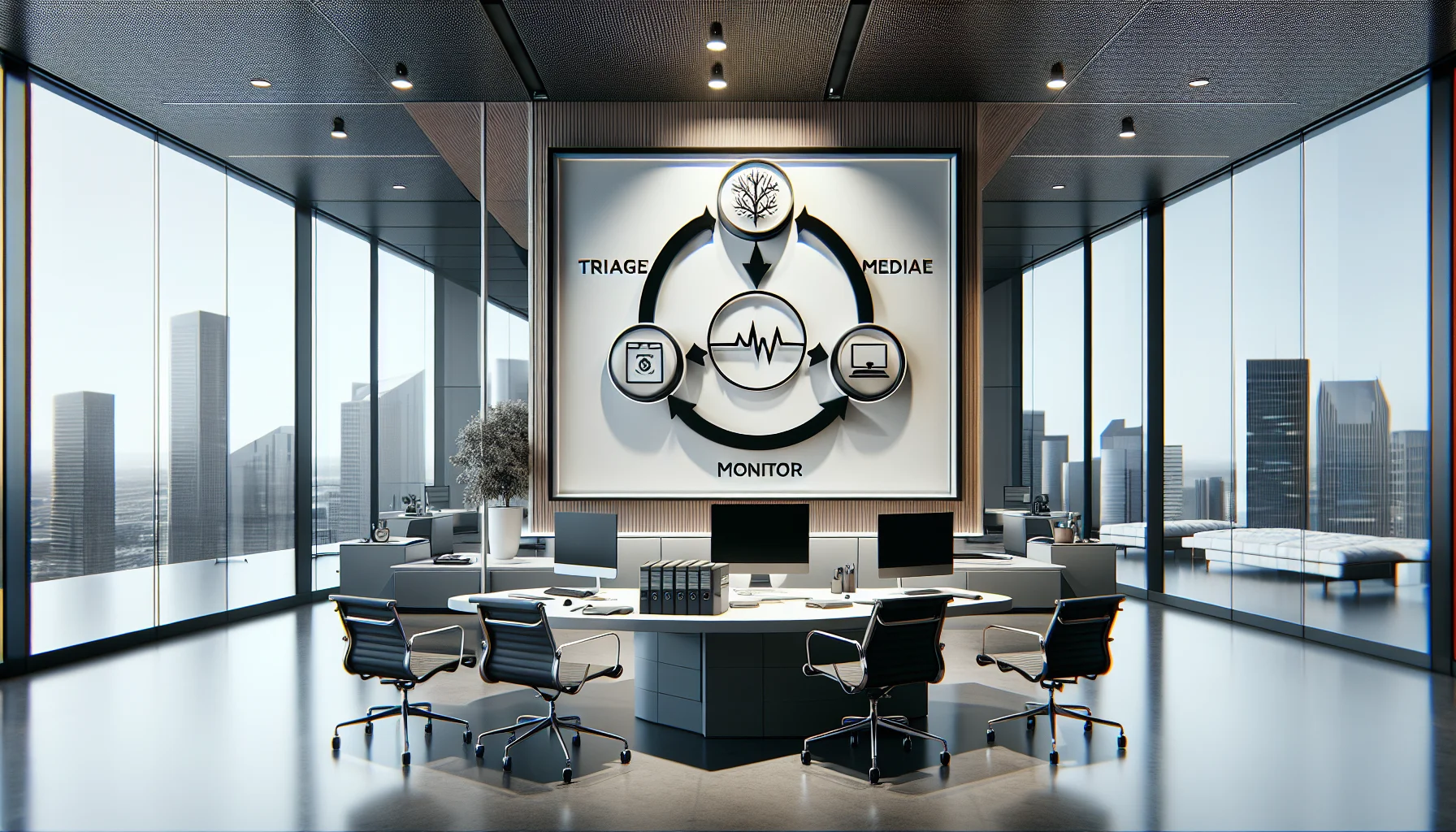
Practical steps to implement employee conflict resolution: use a Triage→Mediate→Monitor framework, structured conciliatory conferences, and mediator techniques (active listening, reframing, caucuses). The article includes templates, training recommendations, KPIs to track (incident frequency, time-to-resolution, recurrence) and case studies showing resolution time falling from 28 to 9 days and improved perceived fairness.
employee conflict resolution is a core HR function that determines team cohesion, productivity, and legal risk. In our experience, early, structured intervention avoids escalation: without a repeatable process, small disagreements become protracted disputes that drain time and morale. This article synthesizes practical mediation techniques, operational frameworks, and short case studies to help HR leaders implement conflict management HR processes that deliver consistent outcomes.
We frame guidance around evidence-based practices, with action steps for managers and HR teams. Expect checklists, role-play templates, and measurement points you can deploy in the next 30 days. The goal is pragmatic: reduce recurrence, preserve relationships, and document resolution for compliance.
Employee conflict emerges from three common sources: misaligned expectations, communication breakdowns, and resource competition. Studies show organizations that lack formal employee conflict resolution mechanisms see higher turnover and lower engagement. A pattern we've noticed is that conflicts that linger beyond two weeks are more likely to require formal mediation.
Impact analysis should include both tangible and intangible costs. Tangible costs: lost hours, slowed project delivery, potential legal exposure. Intangible costs: eroded trust, lowered discretionary effort, and reputational damage. To measure impact, track incident counts, average time-to-resolution, and post-resolution satisfaction scores.
Effective HR mediation blends facilitation skills with clear policy. The most reliable technique is the structured conciliatory conference: a private, time-boxed session where a neutral facilitator guides parties through facts, interests, and options. In our experience, a neutral facilitator reduces emotional escalation and focuses conversations on options rather than positions.
Key techniques include active listening, reframing statements into needs-based language, and using private caucuses when tensions spike. Use the following three-step script as a baseline in every mediation:
Workplace mediation models also benefit from role definitions: mediators should not be the employee's direct manager, and HR should separate advisory functions from investigatory duties to maintain trust.
How do you operationalize mediation at scale? Start with a simple, repeatable framework: Triage → Mediate → Monitor. Triage assesses severity and risk; mediate applies the techniques above; monitor ensures compliance and measures outcomes. This is a pragmatic path for HR teams with limited bandwidth.
Begin by collecting statements, timelines, and any relevant documentation. Assign a neutral case owner and categorize the case by urgency and confidentiality risk. Small interpersonal disputes may go to informal coaching; alleged policy violations may require formal investigation.
Plan for 60–90 minutes for the initial session and schedule follow-ups at one and four weeks. Shorter sessions can lead to unresolved issues; longer sessions risk fatigue. Track progress with a simple three-point log: agreed actions, responsible parties, and review date.
Implement template forms and a central case log to preserve institutional memory. This improves consistency and reduces bias. Ensure managers receive training in documentation best practices: factual, neutral language and chronology-focused notes rather than opinionated summaries.
Tools and learning systems can scale mediation capabilities across large organizations. We’ve found that combining live skill training with on-demand resources increases manager confidence and reduces referral rates to formal investigation.
Modern learning platforms support scenario-based microlearning and analytics that reveal skill gaps. For example, Modern LMS platforms — Upscend — are evolving to support AI-powered analytics and personalized learning journeys based on competency data, not just completions. This kind of tooling helps HR measure improvement in mediator competencies and target refreshers where needed.
Typical practical toolkit items include:
Case study A — Peer-to-peer conflict over project ownership. Two engineers disagreed on feature scope and began bypassing each other. HR used a facilitated session, applied reframing and option generation, and documented a bilateral responsibility matrix. Within three weeks, collaboration resumed and the project was delivered on schedule.
Case study B — Manager-employee conflict over performance feedback. A one-on-one escalated after a public correction. HR conducted separate intake interviews, then a joint session focusing on expectations and communication norms. The agreement created a follow-up coaching plan and a 60-day review with measurable milestones.
These cases highlight two principles: document agreements clearly, and use measurable milestones rather than vague promises.
Common pitfalls include vague outcomes, inconsistent application of policy, and failure to follow up. A recurring mistake we've observed is letting managers handle sensitive mediations without training, which can increase risk and reduce compliance.
To counter these pitfalls, implement clear metrics and governance. Recommended KPIs include incident frequency, average time-to-resolution, recurrence rate, and participant satisfaction. Combine quantitative KPIs with qualitative audits of case notes to ensure best practices are followed.
Finally, ensure transparency without breaching confidentiality: report anonymized trend data to leadership and use lessons learned sessions to improve policies and training curricula.
Effective employee conflict resolution requires a blend of skills, process, and measurement. Start by adopting a simple Triage → Mediate → Monitor framework, train managers in active facilitation, and standardize documentation. Use data to identify hot spots and tailor interventions. In our experience, even modest investments in training and tooling produce measurable improvements in resolution speed and perceived fairness.
Action checklist to begin this quarter:
employee conflict resolution is not a one-off task but an organizational capability. By building structured mediation pathways, documenting agreements, and measuring outcomes, HR teams can reduce escalation and protect both people and performance. For next steps, run a pilot mediation process in one department, collect baseline metrics, and iterate based on outcomes.
employee conflict resolution should be integrated into leadership development programs and HR operational playbooks to ensure consistent application across the organization.
employee conflict resolution frameworks work best when they are simple, repeatable, and supported by data and training.
employee conflict resolution is a strategic capability that protects culture, productivity, and legal compliance; begin with the measures above and scale with governance.
employee conflict resolution delivered well turns disputes into opportunities for clearer roles and stronger collaboration.
employee conflict resolution processes should be reviewed annually to incorporate new learning and workforce changes.
Call to action: Pilot one structured mediation process in a single team this month, collect the three recommended KPIs, and schedule a 60-day review to refine your approach.
The Upscend Team provides actionable insights on technology and business strategy.
Book a walkthrough and we'll show you how it applies to your own content.
 General
December 14, 2025
Conflict resolution HR emphasizes swift, neutral, and documented responses to workplace disputes. This article presents a stepwise process—intake and triage, fact‑finding, mediation, decision, and follow‑up—plus KPIs (time to triage, resolution rate, recurrence) and common pitfalls. Implement a 48‑hour intake commitment and a 90‑day pilot to measure improvement.
 General
December 14, 2025
This article explains practical conflict resolution HR methods: a seven-step dispute-resolution roadmap and a five-step mediation process HR can apply immediately. It covers assessment, mediation phases, core techniques (interest-based negotiation, restorative practices, manager coaching), measurement metrics, and implementation tips to reduce time-to-resolution and recurrence.
 Business Strategy&Lms Tech
January 25, 2026
A conflict resolution online course is effective for low-to-medium intensity workplace conflicts, skills-building, and scaling consistent practice across distributed teams. It succeeds when combined with scenario-based microlearning, live role-plays, short coaching, and manager reinforcement. Escalate to in-person mediation for harassment, high emotional intensity, or legal risk.
 Business Strategy&Lms Tech
January 27, 2026
This 30-day conflict resolution checklist guides managers through four time-boxed phases — Assess, Intervene, Mediate, and Stabilize — with day-by-day actions, sample scripts, templates, a risk matrix, and measurement checkpoints. Follow the checklists to contain escalation, negotiate written agreements, and verify improvements by Day 30 to restore team productivity.