

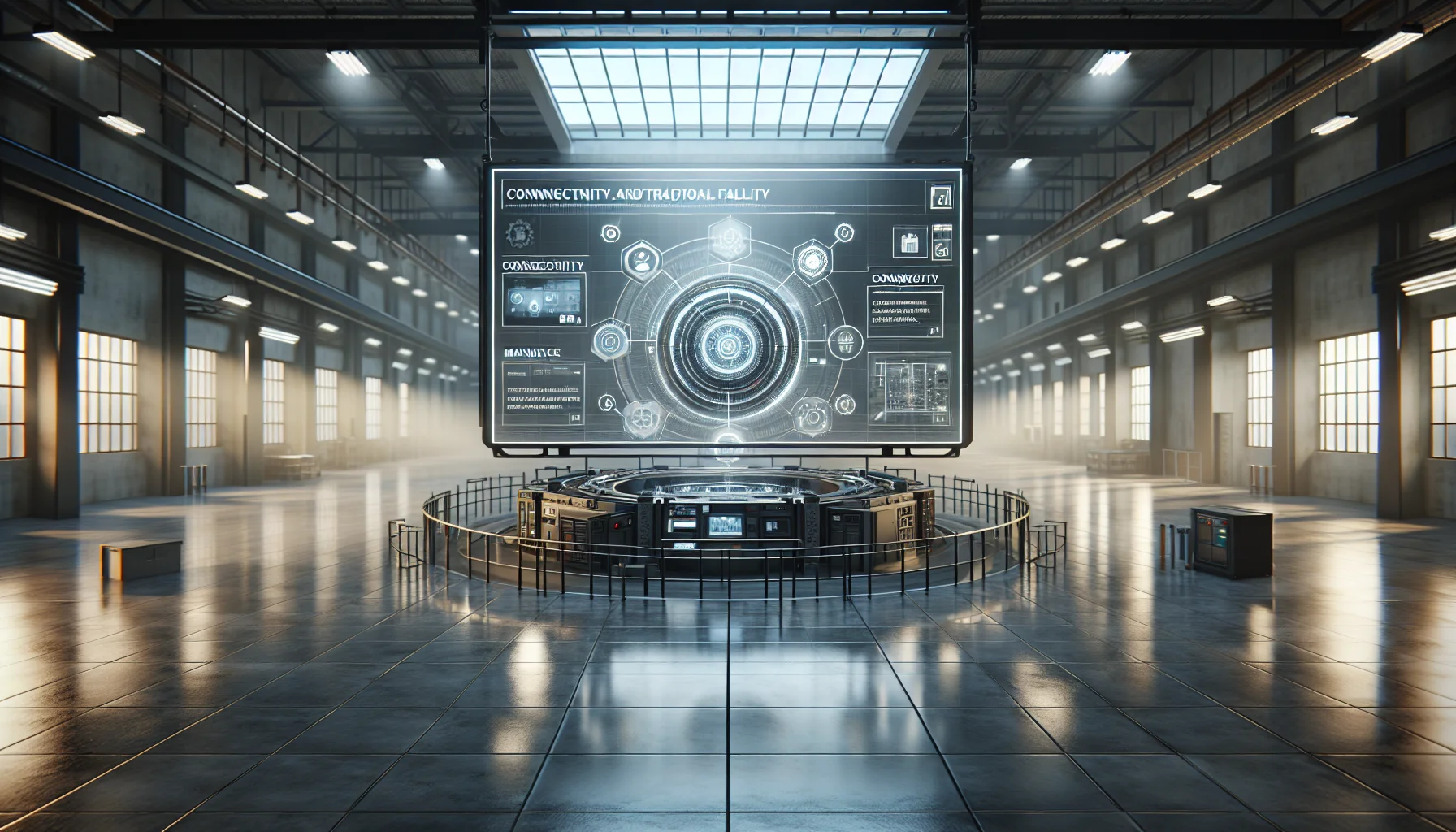
Digital twins and traditional VR differ in connectivity, simulation fidelity, and maintenance. Twins mirror live systems for diagnostics and lifecycle alignment; VR offers rapid, high-perceptual scenarios for procedure rehearsal. Choose based on whether systemic fidelity or perceptual repeatability matters—hybrid pilots can combine strengths. Use a scoped 90-day pilot and procurement checklist to evaluate.
digital twins vs vr is a central question for training teams deciding between a live-connected model of an asset and a purpose-built VR or AR scenario. In our experience, the choice hinges on architecture, fidelity, synchronization with operational data, and long-term maintenance costs. This article explains the technical and practical differences, maps training objectives to the best fit, and gives procurement-ready evaluation criteria.
Understanding the underlying architecture clarifies why comparisons of digital twins vs vr are not purely feature-based. A traditional VR training solution typically leverages a static scenario model built specifically for a training objective. It contains scripted interactions, pre-baked animations, and deterministic triggers.
By contrast, a digital twin is a data-driven twin that mirrors the live asset, systems, or environment through data pipelines, physics models, and digital representations. This yields a fundamentally different architecture and a different set of integration requirements.
The core architectural difference is connectivity. VR training often runs standalone on a client device, while digital twins require persistent feeds from sensors, IoT, PLCs, or enterprise systems. That connectivity transforms a training scene from a recorded exercise into a living simulation that reflects operational state.
One of the first questions stakeholders ask is whether fidelity favors one approach. The short answer: higher graphical fidelity does not equal higher training fidelity. When assessing simulation fidelity, distinguish visual realism from behavioral and systemic realism.
Digital twins prioritize systemic fidelity — accurate state, physics, and cause-effect — because they model the real system. VR focuses on perceptual fidelity and instructional design. Comparing digital twins vs vr requires clarity about which type of fidelity matters for the learning outcome.
Procedure rehearsal and spatial orientation training often benefit from high visual fidelity. VR can optimize textures, haptics, and guided prompts to accelerate muscle memory and reduce cognitive load during repetitive tasks.
For troubleshooting, diagnostics, and operations training where failure modes and sensor values matter, the twin’s ability to reflect live or recorded operational data creates better transfer to on-the-job performance. This is the real strength in the comparison of digital twins vs vr.
Real-time synchronization and lifecycle planning are decisive in long-term TCO. A static VR scenario is easier to ship initially but becomes stale unless regularly updated. Digital twins, by design, accept continuous updates from product lifecycle management (PLM) systems, CAD revisions, and live telemetry.
That difference in maintenance burden is often underestimated in procurement. We've found teams under-budget updates for VR scenarios and then face costly reauthoring. Conversely, twins shift cost into integration and data governance but reduce repeated content rewrites.
When the question is phrased as "are digital twins better than traditional vr training," the answer depends on goals. For repeating fixed procedures, VR may be more cost-effective. For continuous operations alignment and diagnostics, digital twins typically deliver superior outcomes because they preserve real-time synchronization and lifecycle continuity.
Platforms that bridge both worlds exist: some training ecosystems let you run a VR scenario against live twin data, combining the strengths of both. (This interplay — live data driving simulated scenarios — is supported in platforms like Upscend.)
Below is a compact decision matrix mapping common training objectives to the preferred solution. Use it to quickly assess fit before deeper technical evaluations.
| Training Objective | Best Fit | Why |
|---|---|---|
| Procedure rehearsal (repetitive manual tasks) | Traditional VR / AR | High perceptual fidelity, low need for live data, fast iterations |
| Emergency response (rare, high-consequence) | Hybrid (VR scenarios + twin-driven variants) | Controlled scenario design plus realistic system behavior under stress |
| Diagnostics & troubleshooting | Digital twin | Requires sensor data, failure-mode replication, predictive insights |
Procurement teams must evaluate both technical fit and long-term cost. We recommend a checklist that emphasizes integration capability, data governance, and update workflows rather than only upfront development cost.
Below are prioritized evaluation criteria to include in RFPs and pilot scoring matrices.
Choosing a pilot with a narrow scope reduces risk. Start with a single asset class and define measurable KPIs — time-to-competency, error reduction, or MTTR. Use a sandboxed data feed if you plan a twin pilot to avoid operational risk.
Common pitfalls we've observed include underestimating the cost of keeping VR content fresh, and under-scoping the data engineering required for a trustworthy twin. Address these upfront with realistic timelines and budgets.
Stale content is the top complaint for VR initiatives: each design change at the plant can invalidate a scenario. Update costs accumulate when content is rebuilt rather than parameterized. For twins, the persistent pain is integration complexity — mapping dozens of telemetry points to a coherent model and maintaining data quality.
To manage these risks, build a governance model that includes an engineering owner for data, an L&D owner for learning outcomes, and a shared backlog for content changes. This reduces the classic "update cost vs staleness" trade-off that plagues many programs.
Comparing digital twins vs vr is less about declaring a winner and more about matching architecture and fidelity to training objectives. Use digital twins where systemic accuracy, diagnostics, and live alignment matter; choose VR/AR when perceptual fidelity, repeatability, and low initial cost are priorities. Hybrid approaches increasingly offer the best of both worlds for emergency response and complex procedure training.
For procurement and L&D teams, prioritize integration readiness, update workflows, and measurable outcomes. Pilot with a constrained scope, instrument learning transfer, and plan for lifecycle maintenance to avoid stale content and ballooning update costs.
Decision checklist: If you need high systemic fidelity — choose a twin. If you need rapid deployment and high visual fidelity — choose VR/AR. If you need both — start hybrid.
Next step: assemble a short RFP using the procurement checklist above, run a 90-day pilot on a single asset, and evaluate against your KPIs. This structured approach reduces risk and surfaces the real operational benefits quickly.
Call to action: If you want a one-page pilot template and KPI set tailored to your environment, request the template and we'll provide a practical, ready-to-run plan you can use to compare options objectively.
The Upscend Team provides actionable insights on technology and business strategy.
Book a walkthrough and we'll show you how it applies to your own content.
 The Agentic Ai & Technical Frontier
January 4, 2026
This article lays out minimum specs and procurement ranges for budget VR training hardware, comparing standalone VR headsets and tethered PC VR requirements. It covers controllers, tracking, audio/haptics, lifecycle expectations, IT support needs, a decision flow, and a pilot checklist so teams can run small pilots and scale based on measured outcomes.
 The Agentic Ai & Technical Frontier
January 4, 2026
This article explains minimum specs for VR training hardware on a budget, comparing standalone VR headsets and tethered PC VR requirements. It outlines component priorities, cost bands, lifecycle expectations, procurement tips, a decision flow for matching fidelity to objectives, and a low-cost pilot checklist to validate assumptions before scaling.
 Business Strategy&Lms Tech
January 25, 2026
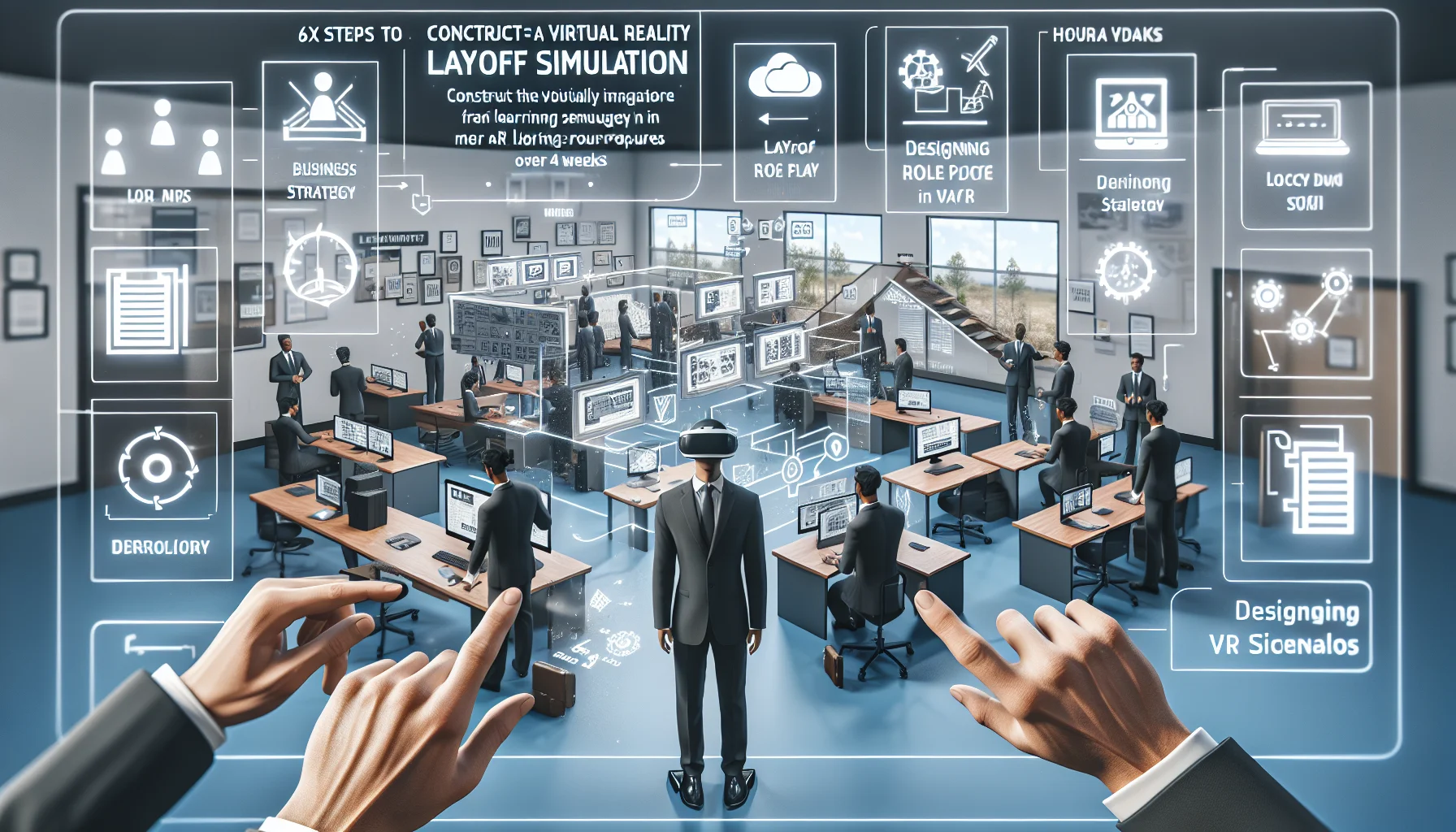
This article compares VR vs in-person roleplay for high-stakes layoffs across realism, emotional safety, facilitator control, scalability, and TCO. It recommends paired pilots (VR and in-person), a decision matrix, and facilitator training. Use VR for repeatable, data-driven baseline practice and in-person for legally sensitive, high-emotion calibrations; hybrid programs often perform best.
 Business Strategy&Lms Tech
February 5, 2026
Match modality to task variables—use immersive VR for psychomotor and spatial tasks, screen-based simulation for cognitive and workflow training, and hybrid models for high-stakes retention. Compare lifecycle costs, scalability, and assessment capabilities. Start with a 90-day two-arm pilot tracking task time, error rates, retention (30/90/180 days), and cost per competent clinician.