

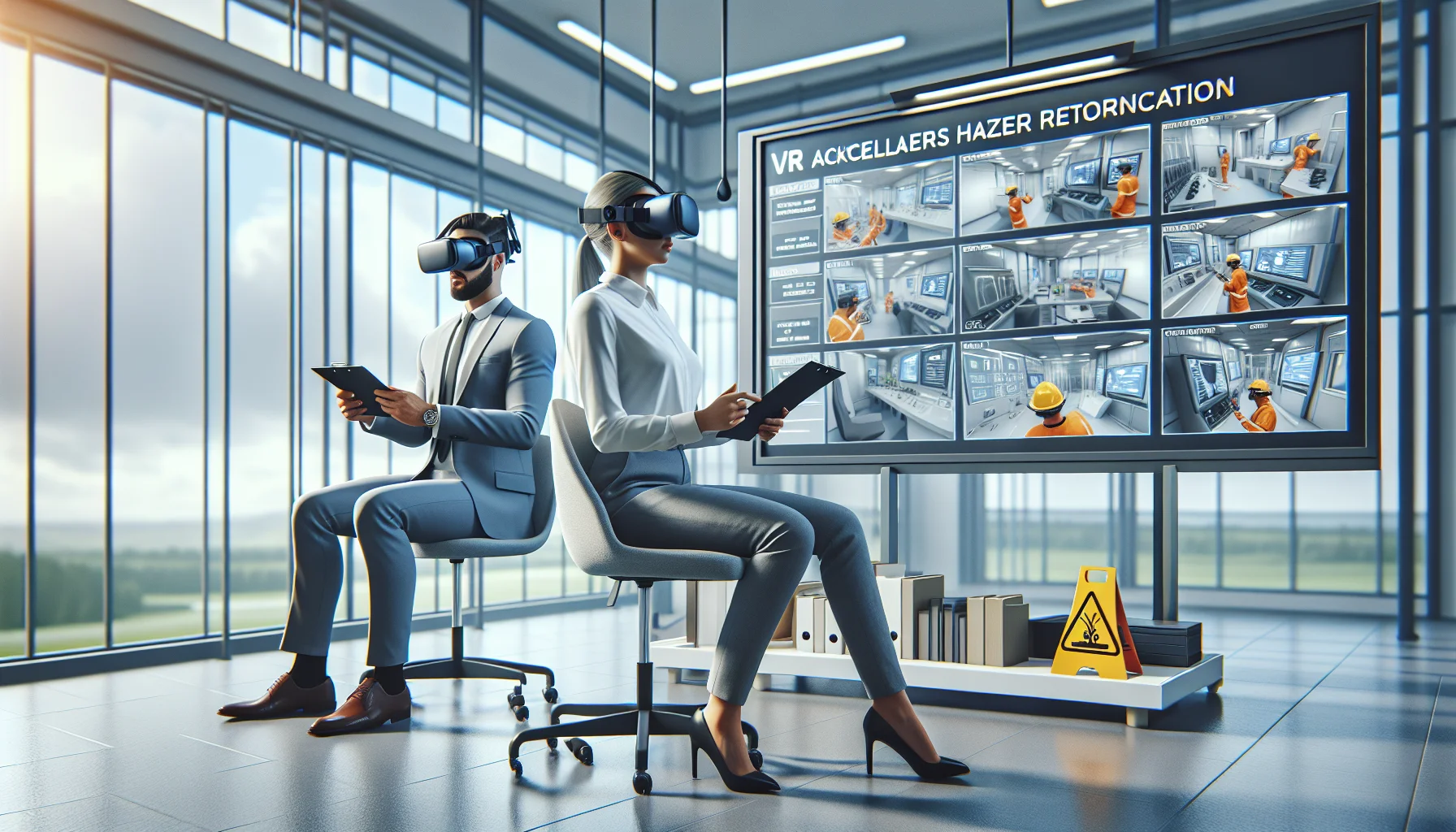
Immersive VR safety training improves hazard recognition by combining situated learning, spaced repetition, and stress inoculation. Trials show 20–40% faster time-to-identify hazards and higher retention at 3–6 months. To maximize transfer, use representative cue fidelity, varied scenarios, spaced sessions, and guided debriefs while tracking identification time and corrective actions.
VR safety training places learners inside recreations of hazardous environments so they can practice spotting risks without exposure to real harm. In our experience, immersive training accelerates pattern recognition by combining perceptual fidelity with deliberate practice. This article explains the cognitive mechanisms behind improved hazard recognition VR, summarizes empirical metrics like time-to-identify hazards and retention rates, and gives practical tactics to maximize real-world transfer.
Three learning theories explain why VR safety training outperforms traditional formats for hazard detection: situated learning, spaced repetition, and stress inoculation. Each contributes unique, measurable advantages for virtual reality workplace safety.
Situated learning argues that knowledge is best acquired in context. When learners explore a simulated workspace, they encode cues and associations tied to a specific setting; this context-dependent encoding makes subsequent recognition faster and more accurate. That mechanism explains why participants trained in the same visual and auditory environment as their job are quicker at spotting hazards.
Spaced repetition in VR allows repeated exposure to critical scenarios with controlled variability. Rather than passively reading a checklist, trainees repeatedly confront similar hazards in different configurations, strengthening long-term retrieval and reducing decay. Studies on spaced practice generalize to visual search tasks, improving both speed and accuracy.
Stress inoculation builds tolerance to arousal and helps maintain cognitive control under pressure. Realistic but safe VR scenarios—alarms, time pressure, equipment noise—train the attentional system to prioritize threat-relevant cues. That makes on-site hazard recognition more resilient during unexpected events.
Perceptual learning in VR sharpens visual search: learners learn to parse cluttered scenes and filter irrelevant details. Combined with repetition, this reduces the cognitive load during inspections and shortens time-to-identify hazards.
Multiple peer-reviewed studies and industry reports document performance gains from VR safety training. Results cluster around faster detection, higher retention, and safer on-the-job decisions.
A randomized controlled trial published in a safety journal found that trainees using immersive scenarios located hazards 25–40% faster than classroom groups and retained recognition skills at three months follow-up. A separate occupational-health study reported maintenance of hazard-identification accuracy after spaced VR sessions over six weeks, compared with significant decay in a video-based control group. Industry analyses (including PwC’s immersive-technology reports) estimate productivity and error reductions when organizations adopt immersive learning for safety-critical tasks.
Key metrics reported across studies include:
These empirical trends make a clear case: VR hazard identification training produces measurable, repeatable advantages over conventional approaches.
Design choices determine whether immersive practice yields on-the-job safety gains. The following tactics boost transfer when deploying VR safety training for hazard recognition.
First, prioritize contextual fidelity. Accurately model the visual layout, equipment, and soundscape of the real workplace. Fidelity doesn’t mean photorealism alone—representative cues and affordances are what create useful memory traces.
Second, embed structured reflection. After each scenario, guide trainees through a short debrief that links virtual observations to real procedures. Reflection helps consolidate perceptual patterns into declarative strategies.
We’ve found organizations that combine scenario variability, guided reflection, and measurable feedback see the largest gains in workplace vigilance. For example, integrated learning platforms can reduce administrative overhead, freeing trainers to refine content and coaching; we’ve seen organizations reduce admin time by over 60% using integrated systems like Upscend, freeing up trainers to focus on content. These efficiencies amplify the impact of focused VR practice by increasing access and frequency.
High fidelity is useful when it improves cue representativeness. But unnecessary sensory detail that doesn’t map to task-relevant cues can add cost without improving recognition. Targeted fidelity—accurate cues for the hazards you're training for—is the efficient route.
Organizations commonly raise three concerns about adopting VR safety training: simulator sickness, imperfect realism, and uneven access. Each concern is manageable with modern design and policy choices.
Simulator sickness has decreased with hardware and software advances. Shorter sessions, stable frame rates, and locomotion design (teleport vs. smooth move) reduce symptoms. Screening and progressive exposure are practical mitigations: start with 5–10 minute sessions and increase duration with tolerance.
Realism objections usually reflect a mismatch between simulation cues and workplace priorities. The solution is analysis-driven scenario design: perform a risk mapping to identify which perceptual cues matter and ensure those are present and salient in the VR build.
Accessibility can be handled through hybrid programs. Combine head-mounted VR for immersive practice with 2D desktop simulations and augmented-reality job aids so workers with physical limitations or accessibility needs still receive equivalent hazard recognition training.
Successful rollouts start with clear objectives and measurable KPIs. Define target improvements — for example, reduce missed hazards by X% or cut average identification time by Y seconds — then instrument training to track them.
Measurement should include both immediate performance and maintenance: pre/post tests, time-to-identify, and retention checks at 30/90/180 days. Combine objective logs from the VR platform with on-site audits to validate behavioral transfer.
From an ROI perspective, calculate savings from reduced incidents, lower inspection time, and decreased downtime. Many organizations recover development costs within 12–24 months when VR training reduces even a single significant incident or consistently cuts inspection time across teams.
Practical implementation steps:
Examples from industry pilots typically report 20–40% faster hazard identification and double-digit increases in correct corrective actions during live inspections after a structured VR program — outcomes that validate the investment when tied to incident-cost models.
VR safety training significantly improves hazard recognition by leveraging situated learning, spaced repetition, and stress inoculation. Evidence from peer-reviewed trials and industry reports shows consistent reductions in time-to-identify hazards and higher long-term retention compared with passive training.
To get measurable results, focus on representative cue fidelity, repeated and varied scenarios, guided debriefs, and clear KPIs (identification time, missed hazards, retention). Address accessibility and simulator sickness with hybrid delivery and progressive exposure. Track ROI by tying reduced incident rates and inspection time back to cost savings.
For teams ready to pilot, start small, instrument outcomes, and scale based on measured impact. The data-driven path — design, measure, iterate — turns immersive practice into durable workplace safety improvements.
Call to action: If you manage safety training, run a small VR pilot focused on one high-risk task this quarter: define baseline metrics, run three spaced VR sessions, and evaluate identification time and retention at 30 and 90 days to compare results with existing programs.
Evidence shows immersive, repeated practice in context produces faster hazard recognition and more durable transfer to the workplace.
The Upscend Team provides actionable insights on technology and business strategy.
Book a walkthrough and we'll show you how it applies to your own content.
 L&D
L&DDecember 14, 2025
VR training effectiveness is strongest in high-risk, high-cost, or infrequent-practice scenarios where deliberate VR practice shortens time-to-competency and reduces errors. Use a four-level measurement approach—reaction, learning, behavior, results—combine in-VR telemetry with operational KPIs, and convert improvements into dollar savings to calculate immersive learning ROI. Run a 60–90 day pilot with clear KPIs.
 ESG & Sustainability Training
January 5, 2026
This article outlines prioritized, practical controls to secure immersive learning: identity and access management, encryption, network segmentation, and patch management. It details operational steps—monitoring, incident response, logging—provides a vendor SLA questionnaire, and an audit checklist to assess posture and remediate unmanaged endpoints, firmware flaws, and rogue access.
 Business Strategy&Lms Tech
January 25, 2026
This article gives a practical pre-launch checklist for simulating layoffs in VR, covering informed consent, data capture and retention, psychological-safety protocols, accessibility accommodations, and jurisdictional legal review. It recommends conservative pilots, layered consent, data minimization, facilitator training, and legal sign-off to reduce litigation risk and protect employee wellbeing.
 Business Strategy&Lms Tech
January 25, 2026
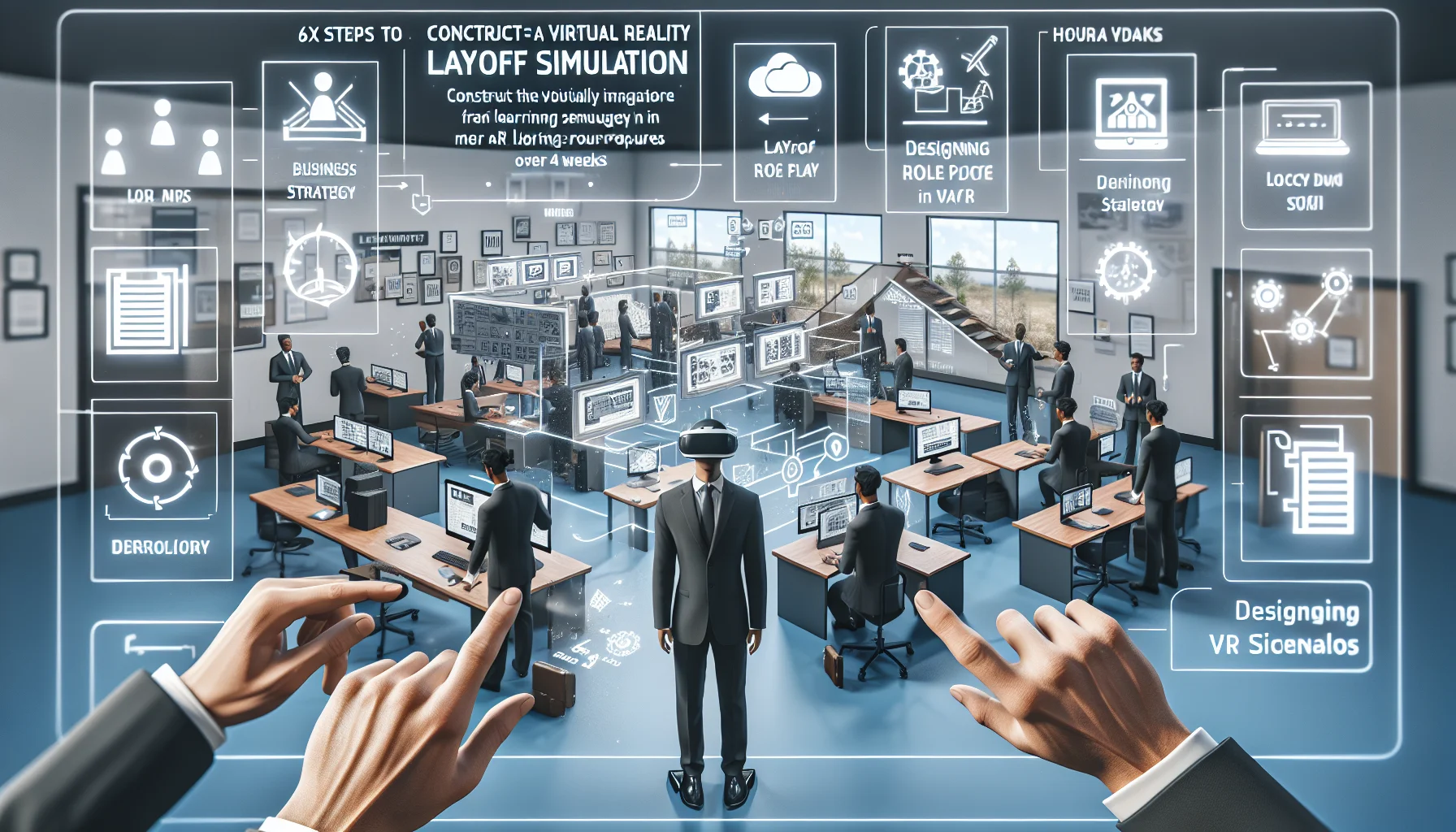
Psychology VR training uses presence, controlled arousal, and spaced rehearsal to build layoff communication skills while managing risk. Short active runs (5–12 minutes), 3–5 graded rehearsals, immediate 10–15 minute debriefs, and biometric triggers reduce harm and improve transfer. Implement screening, objective behavioral markers, and follow-up checks to measure behavior change.