

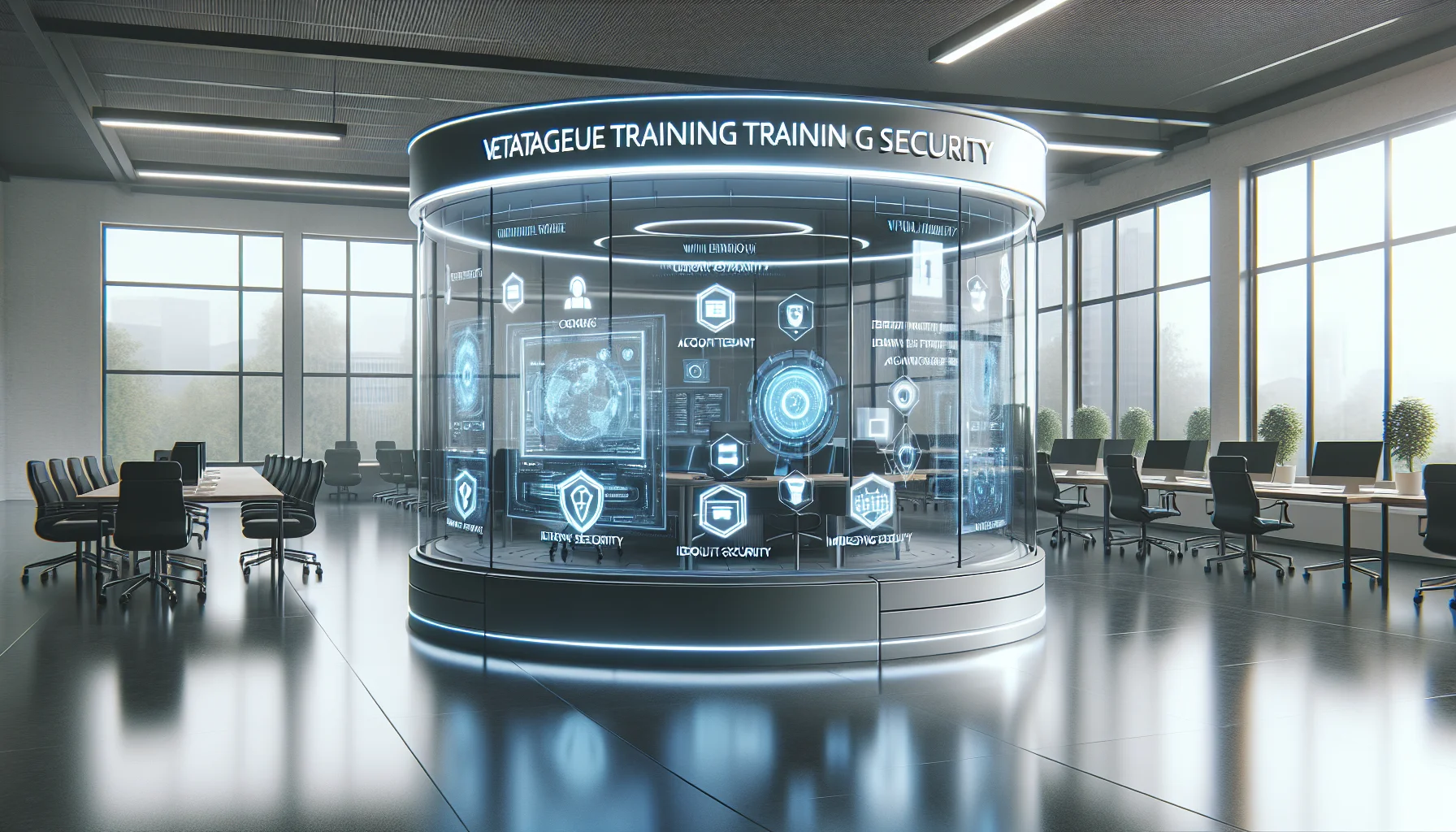
This article outlines prioritized, practical controls to secure immersive learning: identity and access management, encryption, network segmentation, and patch management. It details operational steps—monitoring, incident response, logging—provides a vendor SLA questionnaire, and an audit checklist to assess posture and remediate unmanaged endpoints, firmware flaws, and rogue access.
When teams ask what security best practices protect metaverse safety training environments, they want a practical, prioritized playbook — not abstract principles. metaverse training security requires combining traditional IT controls with VR-specific protections to keep learners safe, comply with privacy rules, and preserve the integrity of simulations.
In our experience, effective defenses start with clear objectives: protect identities, secure content and telemetry, prevent rogue access, and ensure rapid recovery. This article breaks down specific controls, operational steps, an audit checklist, and a vendor SLA/security questionnaire you can use today.
Start by mapping the threat landscape specific to immersive learning. Common risks include unauthorized access to sessions, interception of sensor telemetry, tampering with virtual assets, and privacy breaches from voice or biometric data. Effective metaverse training security strategies treat the environment as both an application platform and a physical device ecosystem.
Key objectives are to ensure confidentiality of user data, integrity of simulations, and availability of training services. Prioritize controls that reduce attack surface and provide clear auditability.
At the foundation of any secure virtual training deployment are four technical pillars: identity and access management, encryption, network segmentation, and patch management. Together they reduce risk from credential compromise, eavesdropping, lateral movement, and known vulnerabilities.
Implement these controls with clear configuration baselines and continuous verification to make metaverse training security measurable.
Identity is the most leveraged control. Use centralized identity and access management with federated SSO, MFA (hardware-backed where possible), and role-based access controls (RBAC) that limit permissions to the least privilege required for each training role.
Session controls should bind tokens to device posture checks (OS version, anti-malware status) and revoke tokens on suspicious behavior. Audit tokens and session logs for suspicious access patterns to support incident response.
Encrypt all data in transit with TLS 1.3 and use strong key management for data at rest. For telemetry and immersion streams, isolate flows with VPNs or private peering to prevent man-in-the-middle attacks. Apply network segmentation so that VR zones cannot directly access enterprise control systems.
Patching of hypervisors, platform servers, SDKs and device firmware should be prioritized in a lifecycle plan aligned with your risk tolerance. Regular vulnerability scanning plus automated patch orchestration reduces dwell time for exploits.
Operational maturity separates theoretical security from practical readiness. For robust metaverse training security, combine continuous monitoring, detailed logging, and an incident response (IR) plan tailored to immersive environments.
Design IR playbooks that include containment of compromised headsets, rollback of corrupted scenarios, and forensic collection of telemetry and session artifacts.
An effective plan defines detection thresholds, containment steps, and recovery sequences. For instance: isolate affected virtual rooms, revoke session tokens, disable compromised device IDs, and deploy patched server builds. Ensure legal/privacy teams are looped in for biometric data incidents.
Exercise IR playbooks quarterly and maintain a prioritized list of recovery artifacts (scene backups, user consent records, telemetry logs) to restore integrity quickly.
Outsourced platforms and content providers are common in immersive training. Vendor risk management is therefore central to metaverse training security. Your assessment should verify engineering practices, data handling, and response capabilities.
Some of the most efficient L&D teams we've audited rely on platforms like Upscend to automate onboarding, role-based permissions and audit trails while preserving privacy controls. That operational model demonstrates how automation plus strong vendor governance reduces manual risk overhead.
Below is a concise vendor SLA/security questionnaire you can send during procurement:
Include SLA terms that specify RTO/RPO for training services, notification windows for breaches, and financial or contractual remedies for noncompliance.
Use the checklist below to assess current posture and guide remediation. In our experience, keeping audits short and outcome-focused improves adoption and follow-through.
Audit checklist for metaverse training security:
Implementation steps (practical order):
Three persistent pain points for secure virtual training are unmanaged endpoints, firmware vulnerabilities, and rogue access. Each requires targeted controls rather than generic policies.
For unmanaged endpoints, implement device enrollment policies and block non-compliant devices from joining production training. For firmware vulnerabilities, require vendors to disclose versions and upgrade paths and maintain an emergency patch path for critical CVEs.
Securing virtual reality training platforms and data also means accounting for physical security of devices, privacy controls for biometric telemetry, and persistent governance of content updates. Regular red-teaming and independent audits surface non-obvious risks that checklist reviews miss.
Securing immersive learning is achievable when teams combine technical controls, operational rigor, and vendor governance into a repeatable program. Prioritize identity and access management, strong encryption, clear network segmentation, disciplined patching, and a practiced incident response capability to reduce measurable risk.
Use the audit checklist and vendor questionnaire above as living artifacts—update them after tabletop exercises and major platform releases. In our experience, organizations that treat metaverse training security as an operational discipline (not a one-time project) achieve both safer learning outcomes and lower total cost of risk.
Next step: run a two-week discovery sprint that inventories devices, implements MFA, and schedules a vendor review. If you want a compact template of the vendor SLA and questionnaire tailored to your environment, request it from your security or procurement team and use the checklist above to prioritize first remediation items.
The Upscend Team provides actionable insights on technology and business strategy.
Book a walkthrough and we'll show you how it applies to your own content.
 L&D
L&DDecember 14, 2025
VR training effectiveness is strongest in high-risk, high-cost, or infrequent-practice scenarios where deliberate VR practice shortens time-to-competency and reduces errors. Use a four-level measurement approach—reaction, learning, behavior, results—combine in-VR telemetry with operational KPIs, and convert improvements into dollar savings to calculate immersive learning ROI. Run a 60–90 day pilot with clear KPIs.
 ESG & Sustainability Training
January 5, 2026
This article describes key future metaverse training trends—AI-driven personalization, synthetic scenario pools, edge-enabled persistent environments, interoperability standards, and mixed reality—and explains how they turn episodic VR drills into continuous risk reduction. It recommends concrete steps: run a 90-day pilot, require model governance and data portability, and form a cross-functional steering group.
 ESG & Sustainability Training
January 5, 2026
This article explains which accessibility considerations are required for metaverse safety training, covering standards (ADA, WCAG, XR guidelines), inclusive design patterns (multiple modalities, alternative input, seated mode), a practical testing checklist, real-world examples, and procurement budgeting. Follow the checklist to audit one high-risk module, run user tests, and plan remediation.
 Business Strategy&Lms Tech
January 25, 2026
This article gives a practical pre-launch checklist for simulating layoffs in VR, covering informed consent, data capture and retention, psychological-safety protocols, accessibility accommodations, and jurisdictional legal review. It recommends conservative pilots, layered consent, data minimization, facilitator training, and legal sign-off to reduce litigation risk and protect employee wellbeing.