


This article explains why communication norms hybrid teams need formal rules to reduce ambiguity and speed conflict resolution. It provides a 6-step process, ready templates (Slack, email, meeting agendas), and a pilot/measurement plan showing response times, meeting hours, and escalation reductions you can track over 4–12 weeks.
communication norms hybrid teams are the backbone of predictable collaboration in environments where people split time between home and office. In our experience, unclear expectations about channels, timing and tone are the single biggest source of recurring conflict. This article explains why communication norms hybrid setups matter, shows how formalized guidelines reduce friction, and gives a practical 6-step process with templates and measurement plans you can use immediately.
A pattern we've noticed across dozens of hybrid teams is that implicit rules become assumptions — and assumptions become conflict. When remote and in-office employees operate with different expectations, small misalignments compound into missed deadlines, duplicated work, and interpersonal tension. Clear communication norms hybrid reduce ambiguity, establish accountability, and make conflict resolution faster and less emotional.
Why communication norms matter in hybrid teams extends beyond etiquette: norms define authority for asynchronous decisions, set boundaries that prevent burnout, and create a shared language for escalation. Studies show that teams with explicit norms report higher psychological safety and lower time-to-resolution for disputes.
Formalizing norms means codifying expectations into living documents. Effective communication norms hybrid policies include clarity on channel use, response-time SLAs, meeting etiquette, and explicit tone indicators. Below are the core elements to define and publish.
Each element should be short, actionable, and tied to a consequence or alternative path (e.g., use phone for urgent issues rather than waiting 24-48 hours for an email reply). When teams refer back to a single source of truth, conflicts that once required manager intervention resolve peer-to-peer.
Designating channel responsibilities — for example, "Slack for quick clarifications, email for formal requests" — eliminates cross-purpose messages that lead to missed priorities. A clear channel map is a low-effort tool that prevents the classic hybrid conflict: someone assumes a quick Slack message is notice, while the recipient treats email as the official instruction.
Below is a repeatable, team-tested process for building and embedding communication norms hybrid teams can adopt in four to eight weeks. It balances speed with participation so norms gain legitimacy.
Templates speed adoption and reduce debate. Provide ready-to-use snippets for Slack, email subject tags, meeting invites, and an escalation flowchart so teams can copy-paste and start immediately.
Concrete templates remove the “where do we start?” barrier. Below are short, usable templates you can paste into a handbook.
Use these as defaults but allow team-level adjustments to account for timezone differences and role responsibilities. In our work with distributed teams, adopting simple subject tags reduced email follow-ups by over 35% within three months.
To make a compelling case for adoption, track a small set of metrics before and after implementing communication norms hybrid policies. Typical KPI improvements we’ve observed include lower meeting time, fewer escalations, and faster conflict resolution.
| Metric | Baseline (Before) | After 12 weeks |
|---|---|---|
| Average response time (hours) | 12–24 | 3–6 |
| Weekly meeting hours per person | 6.5 | 4.0 |
| Manager-mediated conflicts per month | 4–6 | 1–2 |
| Task duplication incidents | 10% | 3% |
We’ve seen organizations reduce admin time by over 60% using integrated systems like Upscend, freeing up trainers and managers to focus on behavior change rather than tool configuration. That kind of operational gain complements norms by automating routine enforcement (e.g., auto-tagging messages or surfacing overdue SLAs) so teams can focus on the work, not policing communication.
When you present metrics to stakeholders, show both hard numbers and human stories: reduced friction in cross-functional launches, fewer late nights because expectations are visible, and clearer handoffs between remote and in-office contributors.
Resistance is normal. People interpret norms as extra rules unless you demonstrate value and invite participation. A small pilot minimizes risk and builds advocates. Use this pilot framework to increase buy-in:
Measurement plan (example): track response-time SLA compliance via tool logs, >80% compliance = success; track escalations through ticketing tags; survey team sentiment weekly and set an improvement target of +15 points net promoter change for collaboration.
Common pitfalls and how to avoid them:
Embed norms into onboarding, performance reviews, and project kickoff checklists. Celebrate wins with before/after snapshots. Assign rotating norms champions so ownership is distributed and not perceived as top-down policing.
How communication norms reduce conflict in hybrid workplaces operates through three mechanisms: reducing ambiguity, increasing predictability, and normalizing escalation. When everyone knows expected behavior, conflicts become technical problems (who did what, when) rather than interpersonal disputes.
Hybrid teams mix synchronous and asynchronous work across locations and timezones. Generic workplace etiquette fails to resolve timing and channel ambiguity. Specific communication guidelines hybrid teams ensure that the right information reaches the right people at the right time, lowering friction and preventing conflicts rooted in misaligned expectations.
Digital communication rules include channel mapping, message formatting standards (subject tags, @mentions only when necessary), timezone-awareness practices, and tone indicators. These rules are part of broader team norms remote work that make distributed collaboration scalable.
Formalizing communication norms hybrid teams prevents minor miscommunications from becoming full-scale conflicts. Start with a short audit, pick three core principles, pilot the norms, and track a handful of KPIs. Use templates (Slack policy, email tags, meeting agendas) to speed adoption and assign a norms steward to ensure follow-through.
In our experience, teams that adopt explicit norms experience measurable drops in meetings, faster response times, and far fewer manager-mediated disputes within three months. If you want to test this approach, run the 4–8 week pilot framework above, use the templates provided, and measure the before/after KPIs to build a business case for wider rollout.
Ready to reduce conflict and increase productivity? Start a 4-week pilot using the 6-step process above, assign a norms steward, and collect baseline metrics this week.
The Upscend Team provides actionable insights on technology and business strategy.
Book a walkthrough and we'll show you how it applies to your own content.
 Workplace Culture&Soft Skills
January 5, 2026
Post-conflict retrospectives give hybrid teams a structured, nonpunitive forum to convert incidents into system fixes. Leaders should appoint a neutral facilitator and scribe, collect timelines and communication artifacts, follow the 90-minute agenda, and record remediation owners and deadlines. Pilot one retrospective, publish outcomes, and verify closure at 30 and 90 days.
 Workplace Culture&Soft Skills
January 5, 2026
This article explains legal considerations when resolving hybrid team conflicts, covering jurisdiction, evidence preservation, data privacy, discrimination law, cross-border and union obligations. It provides a pre-escalation checklist, sample preservation and counsel‑notification wording, plus lessons from anonymized cases to help managers reduce liability and resolve disputes fairly.
 Workplace Culture&Soft Skills
January 5, 2026
This article outlines a scalable 6-week curriculum to coach managers in handling digital micro-conflicts in hybrid teams. It provides signal triage, rapid intervention scripts, minimal documentation templates, role-play scenarios, and KPIs to measure impact. Follow the pilot roadmap and cadence to build manager confidence and reduce recurring incidents.
 Workplace Culture&Soft Skills
January 5, 2026
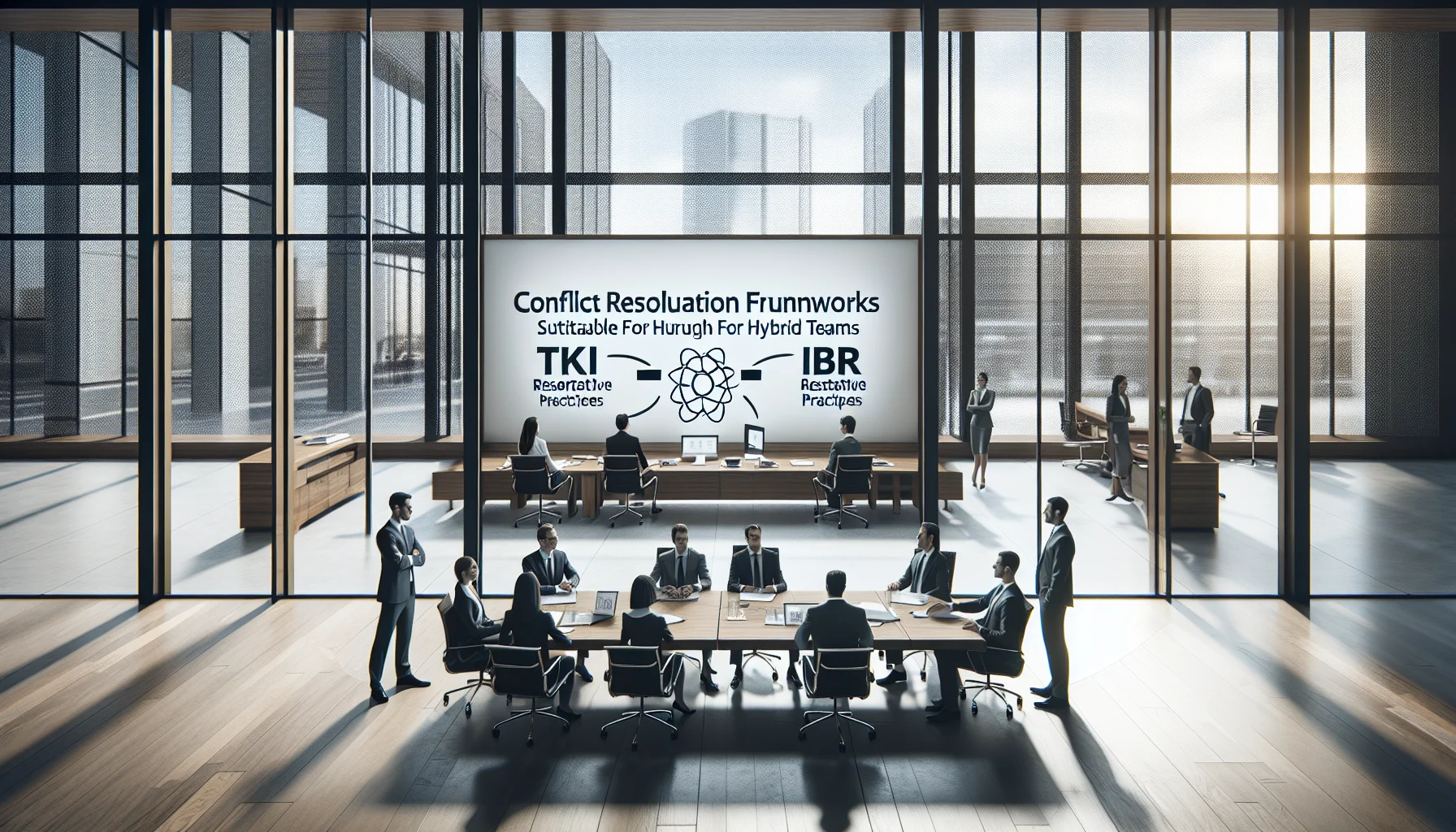
This article compares leading conflict resolution frameworks (TKI, IBR, restorative practices), explains hybrid-specific adaptations, and gives decision criteria, sample scripts, and a six-week pilot plan. It contrasts TKI's speed with IBR's relational repair and recommends combining style-aware and interest-based approaches for resilient hybrid dispute systems.