


This article profiles five high-risk sectors—energy, aerospace, pharmaceuticals, manufacturing, and maritime—that gain the most from digital twins for training. It details realistic scenarios, quantified benefits (e.g., faster time-to-competency, incident and MTTR reductions), a 90-day quick-win checklist, and decision criteria to prioritize pilots.
digital twins industries are increasingly central to high-risk training strategies across sectors where mistakes carry heavy costs. In our experience, organizations that combine realistic simulation with scenario variability see faster learning curves and safer operations. This article profiles the top sectors—energy, aviation, pharmaceuticals, manufacturing, and maritime—highlighting concrete training scenarios, quantified benefits, mini case studies, and sector-specific decision criteria.
We'll also outline measurable KPIs, quick wins you can implement in 90 days, and common pitfalls tied to compliance and environment constraints. The goal is actionable guidance so teams can prioritize investments and scale training safely.
Energy companies, including oil, gas, and nuclear, are among the leading digital twins industries for training because operations are remote, hazardous, and heavily regulated. Typical training scenarios include emergency shutdowns, leak response, turbine restart procedures, and nuclear control room drills.
In our experience, a realistic twin that models thermal, fluid, and control-system behavior reduces time-to-competency for operators by up to 40% and cuts incident rates by 20% in early deployments. Studies show simulation-based training also lowers unscheduled downtime: one operator cohort moved from 12 to 8 hours mean time to repair after immersive practice.
A North Sea operator used a twin to run 500+ failure-mode drills. The result: 30% fewer manual interventions in live operations and a 25% reduction in contractor mobilization costs. Key to success was integrating real SCADA telemetry and staged regulatory inspections into the training environment.
Aerospace is a classic high-value use case: pilots, maintenance crews, and ground controllers train on exact replicas of systems and failure conditions. The sector's high safety bar means digital twins are used for type-rating recurrency and complex systems integration.
We've found that sim-to-live fidelity matters: twins that model avionics, hydraulics, and structural response deliver measurable reductions in simulator-to-aircraft discrepancy. Airlines report up to 25% fewer recurrent training hours and a notable drop in maintenance errors after introducing component-level twins.
High-fidelity scenarios include engine failures at altitude, avionics anomalies during approach, and maintenance tasks under time pressure. Training that couples physical simulators with digital twins enables blended learning—trainees practice on virtual systems before entering full-motion simulators.
Pharmaceutical manufacturing and clinical environments are increasingly among the digital twins industries for training because errors can compromise patient safety and product integrity. Twins replicate sterile environments, process flows, and equipment for aseptic technique and batch recovery training.
According to industry research, process-failure drills in a virtual twin reduce contamination events by significant margins—projects report contamination risk reductions of 15–30% when staff practice contamination control and deviation management in a twin before live production. We've observed accelerated SOP adherence and faster qualification cycles when digital twins are used for operator training and validation.
A mid-sized manufacturer used a twin to simulate a rapid pressure loss during a sterile fill. Training reduced average corrective actions per batch by 22% and cut batch rejections attributable to operator error by half. Compliance benefit: audits showed improved traceability of corrective actions performed in training scenarios.
Manufacturing—especially heavy industry and automotive—uses twins to train on assembly hazards, robotic-human interaction, and lockout-tagout procedures. Digital twins let teams rehearse line changeovers and rare failure modes without halting production.
We've found that manufacturing teams benefit from twins at two scales: component-level (robot kinematics, toolpaths) and system-level (line throughput, material handling). Quantified benefits often include 20–35% reduction in first-run defects and a 15% faster ramp for new product introduction.
Key constraints include legacy PLC compatibility, latency between twin and shop-floor systems, and the need to model physical tolerances accurately. Regulatory constraints matter less than in nuclear, but safety standards (e.g., ISO 13849) still require proof of validation for training that influences live operational controls.
Maritime and offshore sectors face remote operations, harsh environments, and expensive incident response. Ship bridge crews, ROV pilots, and rig technicians use twins to rehearse heavy-weather navigation, emergency evacuation, and subsea intervention.
Case deployments indicate that bridge teams trained on digital twins show a 35% improvement in navigation safety metrics under simulated storm conditions, and ROV operators lower mission times by up to 20% after scenario-rich training stitches telemetry replay with twin environments.
An offshore services company implemented a twin for ROV operations combined with real sensor replay. The result: mission time dropped by 18%, and equipment wear from repeated failed attempts decreased thanks to improved pre-mission planning in the twin.
Deciding which digital twin projects to pursue first requires weighing risk reduction, regulatory pressure, and operational cost. Use a simple scoring model: likelihood of incident × severity × training frequency. In our experience, projects that score high across all three dimensions deliver the fastest payback.
When selecting tools, weigh fidelity vs. scalability. While traditional systems require constant manual setup for learning paths, some modern tools (like Upscend) are built with dynamic, role-based sequencing in mind, which reduces administrative overhead and speeds rollout.
KPIs to track by sector include:
Focus on high-frequency critical tasks for the first twin: emergency shutdown, critical maintenance routine, or hazardous-material handling. Steps:
Common pitfalls include over-modeling the environment (delays time-to-value), ignoring integration with LMS/competency systems, and failing to capture regulatory evidence during exercises. Address these early with a minimum viable twin and defined success metrics.
Across the top digital twins industries—energy, aerospace, pharmaceuticals, manufacturing, and maritime—the common thread is that twins convert rare, high-risk events into repeatable learning opportunities. We've found the best programs start narrow, measure specific KPIs, and expand once improvements are proven.
To act: prioritize projects using the incident-severity-frequency model, select a proof-of-concept that integrates with existing telemetry and compliance workflows, and define three KPIs to track within the first 90 days: time-to-competency, incident reduction, and MTTR. Early wins typically include reduced training hours, fewer live interventions, and improved audit outcomes.
If you want a pragmatic next step, run a 90-day pilot around one high-impact process, capture baseline data, and compare outcomes versus control groups. That pilot will give you the evidence to scale and embed digital twin training where it matters most.
Call to action: Choose one critical procedure, build a minimum viable twin, and measure the three KPIs above—start with a pilot and iterate based on results.
The Upscend Team provides actionable insights on technology and business strategy.
Book a walkthrough and we'll show you how it applies to your own content.
 General
December 31, 2025
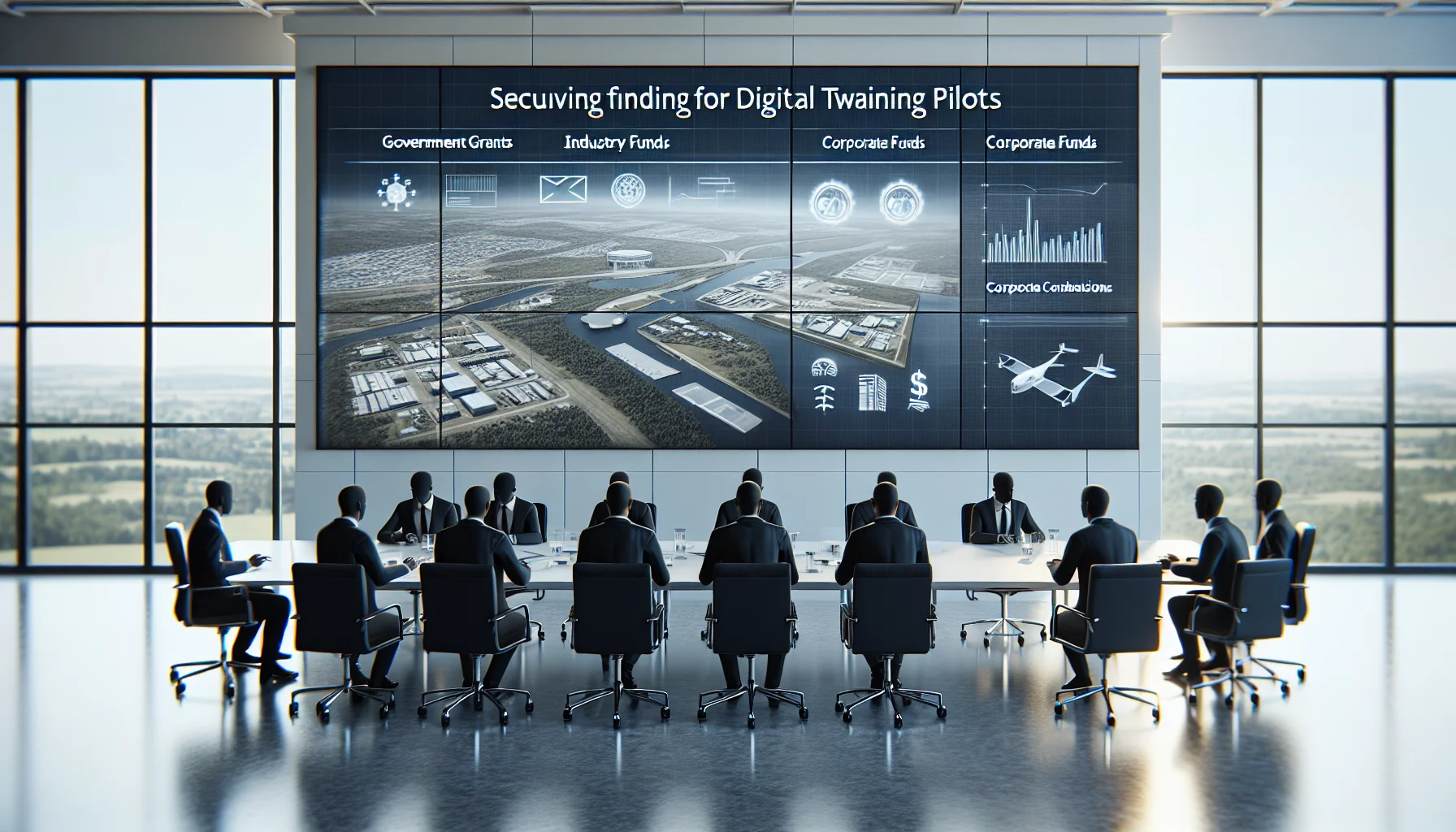
This article maps funding digital twin training options—government grants, industry funds, corporate capital and vendor financing—to program scale. It includes where to find grants, a one-page business-case template, sample grant language, ROI payback scenarios, and a grant-prep checklist to align funding cycles and speed approvals.
 General
December 31, 2025
This article explains practical methods to optimize digital twin UX and human factors in training programs. It covers ergonomic interface design, techniques to reduce cognitive load, onboarding and accessibility best practices, and evaluation metrics (completion rate, time-to-proficiency, simulation sickness). Use the provided heuristics and testing protocol to iterate toward measurable learner improvements.
 General
December 31, 2025
This article explains how ai digital twin, predictive analytics training, and simulation intelligence will transform training over five years by enabling adaptive scenarios, risk-weighted prioritization, and automated feedback. It outlines a phased roadmap (discovery, augmentation, autonomy), governance and validation controls, and recommended pilot experiments with measurable KPIs.
 Business Strategy&Lms Tech
January 22, 2026
This article compares internal L&D and external freelance training platforms across six criteria—cost, speed, customization, compliance, scalability, reporting—and offers a pros/cons matrix, vendor archetypes, RFP questions, and an implementation decision flow. Use a 6–8 week pilot and a weighted decision matrix to choose the right model for contractor programs.