

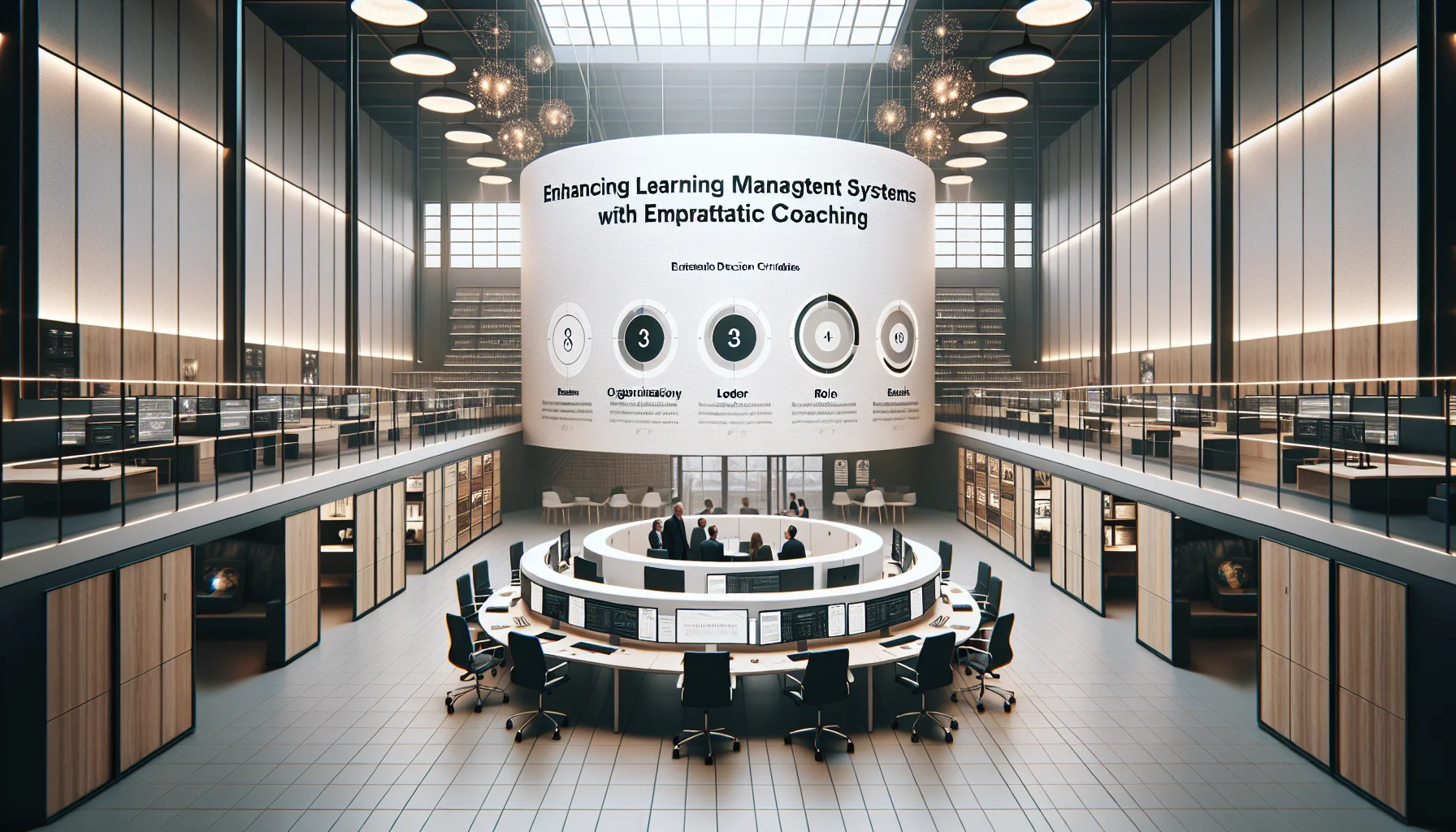
Use three decision criteria—behavioral complexity, leader role, and organizational risk—to decide when to supplement LMS with coaching. Pair LMS microlearning with group or 1:1 coaching according to complexity, follow a 12-week integration workflow, and standardize coach training and measurement to scale consistent behavior change and track ROI.
Deciding when to supplement LMS with coaching is a common challenge for talent and leadership teams. In our experience, the LMS delivers scalable knowledge transfer, but it often fails to change nuanced interpersonal behaviors without live support. This article maps clear decision criteria, practical models, cost-benefit estimates, workflows, and selection guidance so you can choose when to supplement LMS with coaching and when to rely on self-paced learning alone.
We’ll focus on real-world signals — behavioral complexity, leader role, and organizational risk — that indicate you should supplement LMS with coaching, plus implementation patterns for combining LMS courses with coaching for leadership empathy.
Use three practical criteria to decide whether to supplement LMS with coaching: behavioral complexity, leader role, and risk profile. Each criterion identifies learning gaps an LMS can’t close alone.
Behavioral complexity: when the empathy skill requires context-sensitive judgment (e.g., delivering constructive feedback to diverse teams), an LMS introduces concepts but cannot simulate the emotional nuance. We’ve found that when tasks require role-specific adjustments or repeated habit change, you should supplement LMS with coaching.
Senior leaders and first-line managers have different stakes. Senior leaders influence culture broadly; weaknesses in emotional intelligence have multiplying effects. If the leader role is high-impact, organizations should supplement LMS with coaching to secure follow-through and model behavior.
For emerging managers, a blended approach (LMS plus targeted coaching) often yields faster behavior adoption than either method alone.
High-risk situations — repeated employee complaints, low engagement scores, or regulatory exposure — mean the organization should supplement LMS with coaching immediately. Coaching reduces repeated incidents through tailored interventions and accountability.
Decision checklist (quick):
Choosing an execution model affects cost, reach, and fidelity. Common models include 1:1 coaching, group coaching, and peer mentoring. Each supports combining LMS courses with coaching for leadership empathy in different ways.
Here’s how they typically map to needs: 1:1 coaching is best for deep behavior change in senior leaders; group coaching is efficient for cohorts with shared challenges; peer mentoring scales practice with lower cost.
For high behavioral complexity, choose 1:1 coaching plus LMS modules for pre-work and skill refreshers. For moderate complexity, group coaching and peer mentoring can be effective when combined with scenario-based LMS content.
Example configuration:
Case 1 — Engineering leader cohort: We used an LMS for baseline theory and monthly group coaching to practice empathetic 1:1s. Engagement rose 18% and voluntary turnover dropped among the cohort.
Case 2 — Customer-facing managers: The LMS taught empathy frameworks; targeted 1:1 coaching addressed difficult conversations with escalated clients and reduced complaint resolution time by 30%.
Operational tip: integrate short LMS lessons as prep for coaching sessions to maximize live practice time.
Financially, coaching costs range widely; ballpark estimates we use for planning:
Compare these costs to expected benefits: improved retention, fewer HR incidents, and better team performance. For a mid-sized company, replacing one high-turnover manager can offset several coaching engagements.
Scalability pain points are real: coach variability and inconsistent measurement undermine results. To manage this, standardize coach training, use calibrated frameworks, and require coach certification and periodic calibration sessions.
Operational controls we recommend:
Data tracking is critical; build simple dashboards to monitor progress and flags for escalation (real-time analytics available in platforms like Upscend).
An effective integration workflow aligns microlearning with live coaching and measurable outcomes. Below is a practical 12-week workflow we’ve used when combining LMS courses with coaching for leadership empathy.
Sample 12-week workflow (high level):
Tracking outcomes: combine qualitative and quantitative measures — 360 feedback, behavior observation checklists, and business KPIs tied to empathy (retention, escalation rates). We recommend quarterly reviews and a simple RAG (red/amber/green) status for leader progress.
Coach selection criteria should include experience in leadership development, demonstrated EQ, and a proven method for coaching behaviors (not just theory). For internal coaches, require a certification program aligned to your LMS competencies and a mentorship period with senior coaches.
Coach training checklist:
In summary, decide to supplement LMS with coaching when skill application is complex, the leader’s role is high-impact, or the organizational risk is elevated. Use a blended model — LMS for consistent knowledge transfer plus targeted coaching for behavior change — and standardize coach training to maintain consistency at scale.
Start small with a pilot that includes clear success metrics (behavioral rubrics, business KPIs) and a defined workflow for integrating LMS lessons with coaching touchpoints. In our experience, pilots that pair LMS microlearning, group practice, and selective 1:1 coaching deliver the fastest, most reliable improvements in empathy and leadership EQ.
Next step: Run a two-quarter pilot with one leader cohort, document baseline metrics, and apply the 12-week workflow above to test ROI. If you want a template or a pilot checklist, request the implementation pack and we’ll share a ready-to-use plan.
The Upscend Team provides actionable insights on technology and business strategy.
Book a walkthrough and we'll show you how it applies to your own content.
 Lms
LmsDecember 28, 2025
This article explains how integrating coaching and assessments into an LMS accelerates emotional intelligence by converting assessment data into personalized practice, accountability loops, and scalable micro-coaching. It outlines models (bot, human, peer), adaptive pathways, scheduling workflows, vendor choices, ROI metrics, and an implementation checklist for a 90-day pilot.
 Workplace Culture&Soft Skills
January 4, 2026
Simulations for empathy training in an LMS pair realistic scenarios, repetition, structured feedback, and debriefs to convert awareness into observable behavior. Use a mixed-fidelity approach—avatar/chatbots for scale, branching video for assessment, and live role-play for deep transfer—anchored by micro-skill rubrics and psychological safety.
 Psychology & Behavioral Science
January 12, 2026
Use readiness signals—turnover risk, succession gaps, and project complexity—to decide when to add mentorship LMS. Start with a 6-month rollout: configure matching and scheduling, run a 1:1 or group pilot, then scale. A 90-day curriculum and recording features convert tacit expertise into reusable LMS assets and shorten time-to-competency.
 Business Strategy&Lms Tech
January 26, 2026
This buyer's checklist helps L&D managers evaluate empathy coaching platforms by prioritizing coaching delivery, measurement, integrations and data governance. It includes vendor shortlists, an RFP template, cost models, and a copyable two-week pilot plan to surface measurable behavior change before scaling.