


Simulations for empathy training in an LMS pair realistic scenarios, repetition, structured feedback, and debriefs to convert awareness into observable behavior. Use a mixed-fidelity approach—avatar/chatbots for scale, branching video for assessment, and live role-play for deep transfer—anchored by micro-skill rubrics and psychological safety.
simulations for empathy training are powerful because they bridge cognitive learning and embodied practice: learners don't just read about perspective-taking, they enact it. In our experience the best implementations pair realistic scenarios with safe repetition, structured feedback, and measurable behavior change. This article explains the learning mechanisms, compares fidelity trade-offs, outlines debriefing techniques, and gives practical, scalable guidance for building role-play LMS modules that actually move the needle on empathy.
simulations for empathy training come in several distinct formats, each suited to different learning goals and constraints. Knowing the trade-offs up front helps L&D teams choose the right blend of realism, accessibility, and measurement.
Below are the primary types you'll see in a modern role-play LMS environment, with quick notes on when to use each.
Branching video offers high narrative control and clear cause-effect lines. Learners select responses and move down different video branches; the system records choices for feedback. These are ideal when you need consistent, repeatable experiences with scenario-based learning empathy outcomes.
Avatar or chatbot conversations enable high-frequency practice with lower facilitator overhead. When paired with good natural language understanding, they support authentic dialogic practice and can simulate power dynamics or emotional cues at scale.
Live role-play—either with trained actors or peer pairs—creates the highest emotional fidelity. It is the best option for developing deep relational skills but needs strong facilitation and time for debriefs.
At the core of effective simulations for empathy training are learning mechanisms that convert abstract awareness into observable behavior. We've found three mechanisms consistently drive transfer:
1) Experiential encoding: acting out a situation creates richer memory traces than passive reading. When learners role-play a customer complaint or a colleague's anxiety, they encode emotional and contextual cues together.
Deliberate, repeated practice with targeted feedback accelerates skill acquisition. In scenario-based learning empathy modules, micro-skills (open questions, reflective statements, boundary-setting) are isolated, practiced, and scored.
Simulations create low-stakes space for learners to experience discomfort and learn regulation strategies. Over time, repeated exposure reduces avoidance and increases capacity to tolerate difficult conversations.
Choosing fidelity level is a strategic decision. Below is a concise comparison of low, medium, and high fidelity options including expected cost bands and outcome expectations for empathy learning.
| Fidelity | Typical tools/vendors | Cost range (per seat, approximate) | Primary outcomes |
|---|---|---|---|
| Low (avatar/chatbot) | BranchTrack, basic chatbots | $5–$25 | Repetition, situational scripts, basic scoring |
| Medium (branching video) | Articulate/Storyline + custom video services | $30–$120 | Improved decision-making, scenario nuance, measurable choices |
| High (live actor/Mursion) | Mursion, Kognito, bespoke actor services | $200–$1,000+ | Deep relational change, transfer to complex interactions |
Expected outcomes scale with fidelity but so do costs and logistical complexity. In our experience a mixed model—low-fidelity micro-practice plus periodic high-fidelity coached sessions—produces the optimal ROI on empathy development.
Design choices determine whether simulations for empathy training become a checkbox or a behavior-change engine. Use these patterns to maximize learning transfer and participant safety.
Structured micro-skills: break empathy into teachable moves (acknowledgment, curiosity, boundary-setting). Each micro-skill should have a clear rubric and short practice window.
Debriefing is where experience becomes learning. Use a three-step debrief: (1) describe what happened, (2) analyze decisions using the rubric, (3) plan a different response. Keep debriefs non-judgmental and focused on observable behaviors.
Some of the most efficient L&D teams we work with use platforms like Upscend to automate this entire workflow without sacrificing quality. They route recordings to facilitators, apply scoring rubrics consistently, and enable just-in-time facilitator notes that scale debrief quality across cohorts.
Implementing simulations for empathy training requires an operational plan: pick vendors, define scoring, train facilitators, and scale without losing quality. Below are practical steps we've used with enterprise clients.
Vendor selection: map requirements to vendor strengths. For avatar-driven scale choose Kognito or BranchTrack; for high-fidelity actor-driven practice evaluate Mursion or local actor networks. For authoring branching video, Articulate combined with a video studio is common.
Keep scoring anchored in behavior. Use 3–5 point rubrics for each micro-skill and record examples of "meets", "exceeds", and "needs development." Automate capture where possible and keep human review for edge cases.
To scale human-led sessions without diluting quality, follow these steps:
Automation can support this model: schedule actor sessions, surface learner recordings, and track facilitator calibration. This hybrid approach keeps the emotional authenticity of human role-play while delivering throughput at scale.
When deploying simulations for empathy training teams routinely encounter three pain points: insufficient realism, participant vulnerability, and noisy scoring. Address each explicitly in design and operations.
Realism: If scenarios feel contrived, learners disengage. Use real transcripts and consult subject-matter experts to write scripts. Pilot test with representative users and iterate quickly.
Vulnerability is essential but must be managed. Start with low-stakes avatar practice, then progress to live peers, and reserve high-stakes actor sessions for volunteers or coached groups. Set safety protocols and give learners opt-out routes with alternative assignments.
Bias in scoring undermines trust. Use clear rubrics, multi-rater scoring, and periodic calibration sessions. Where possible, augment human scoring with objective markers (turn-taking, question counts) captured by the LMS.
Finally, measure impact with longitudinal metrics: pre/post empathy scales, behavioral change observations, and business KPIs tied to interpersonal outcomes (e.g., NPS, attrition in caregiving roles).
Designing effective simulations for empathy training in an LMS is a systems problem: content, facilitation, measurement, and ops must align. Start small with a clearly defined micro-skill, validate with a pilot cohort, and scale using a hybrid fidelity model—low-fidelity practice for repetition and periodic high-fidelity coached sessions for transfer.
Quick checklist to get started:
Sample scenario script (short):
Context: A team member, Jaime, is late on deliverables due to caregiving responsibilities.
Learner role: People manager practicing empathy-first inquiry.
Script: Manager: "I noticed the timeline slipped—are you okay and is there context I don't have?" (pause for response). If Jaime says caregiving is the issue, manager: "Thank you for sharing; what support would help you balance this week?" Close with a plan and check-in commitment.
Ready to pilot? Start with one micro-skill, run three iterations with different fidelity levels, and measure both learner confidence and behavioral change. That sequence will give you early wins and the evidence to expand the program.
Book a walkthrough and we'll show you how it applies to your own content.
The Upscend Team provides actionable insights on technology and business strategy.
 Lms
LmsJanuary 13, 2026
This playbook explains how to communicate LMS interventions with a privacy-first, tiered approach. It provides manager scripts, email templates, escalation flows for three risk tiers, and a sample follow-up schedule. Implementers will find checklists, measurement suggestions, and privacy language to reduce surveillance perception while increasing targeted support.

January 26, 2026
Digital empathy training helps remote leaders close intent-understanding gaps, improving retention, collaboration, and customer outcomes. The article provides an 8–12 week modular program—short microlearning cards, live role-plays, facilitator notes, simple rubrics, and vendor criteria—and recommends piloting two modules with 10 leaders and monthly pulse surveys to measure early impact.
 Business Strategy&Lms Tech
January 26, 2026
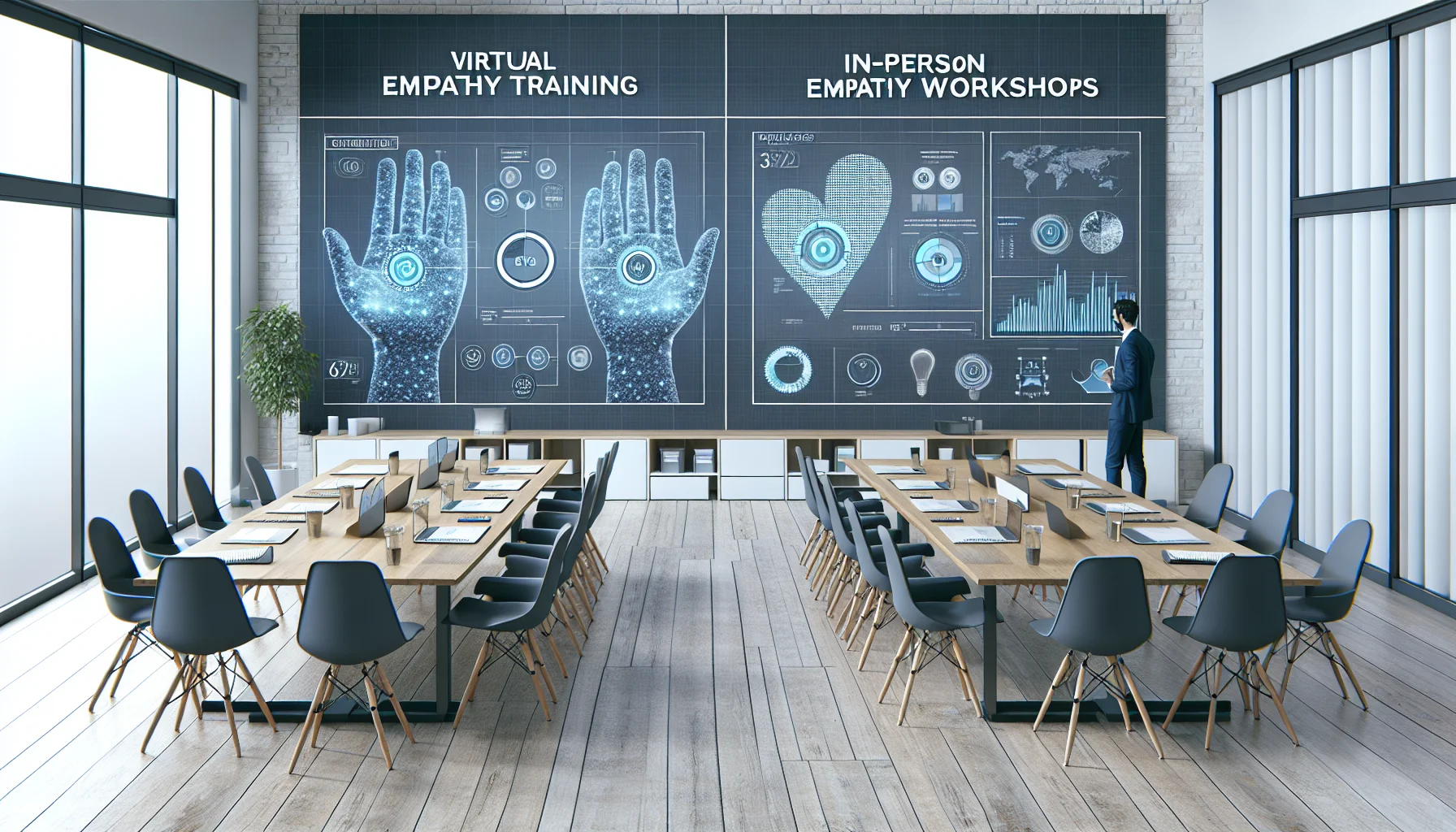
This article compares virtual empathy training and in‑person workshops across outcomes, evidence, cost, and design. Virtual programs scale and retain knowledge when they use spaced practice and micro-simulations; in-person delivers stronger affective shifts and role-play fidelity. For most organizations a hybrid model with mixed-method evaluation and facilitator training is recommended.
 Lms&Ai
February 5, 2026
This case study shows a 280-bed hospital used three co-designed VR empathy scenarios (handoff, medication counseling, discharge) with 20-minute immersions, 25-minute debriefs, and LMS microlearning. Pilot units recorded a 48% decline in formal complaints, an 11-point satisfaction gain, and a 34% improvement in clinician empathy over 12 months.