


This article defines the forever learner mindset as continuous, integrated practice—curiosity, growth orientation, and micro-practice—distinct from one‑off training. It summarizes research connecting ongoing learning to higher retention and engagement, and provides a 90-day framework: diagnose friction, design micro-practices, enable managers, and measure behavioral outcomes.
forever learner definition is more than a dictionary entry; it’s a practical lens for hiring, development, and retention strategies. In our experience, teams that adopt a forever learner mindset treat learning as a continuous thread through the workday rather than a checkbox completed in a one-day course.
This article defines the concept, contrasts it with one-off training, describes behavioral signals, summarizes research linking learning mindsets to retention and engagement, and offers practical steps HR and L&D teams can implement immediately.
Definition of forever learner combines attitude and practice: an ongoing, proactive pursuit of skill growth integrated into daily work. A forever learner seeks feedback, experiments with new approaches, and treats tasks as opportunities to learn.
This is distinct from occasional upskilling because it embeds continuous improvement into routines, peer interactions, and decision-making. In short, the forever learner is both a mindset and a behavior pattern.
The phrase answers two questions: "what is lifelong learning?" and "how does that look at work?" Practically, a forever learner definition includes these characteristics:
Organizations often confuse training completion with culture change. Completing a course is an event; becoming a forever learner is an ongoing process. That difference shapes whether new skills stick or fade.
One-off training signals: certificate, elapsed time, and short-term assessment. A forever learner signals: habit formation, collaborative knowledge sharing, and iterative improvement.
Short courses can close immediate gaps, but research and practice show retention and transfer drop dramatically without reinforcement. A single training session rarely changes an employee learning mindset long-term.
Recognizing a forever learner requires watching for both psychological traits and organizational supports. Psychologically, it maps closely to curiosity and growth mindset; organizationally, it requires time, recognition, and systems that make learning visible.
Below are observable signals and structural enablers that reliably predict whether a team is moving from training events to a learning culture.
In business terms, a forever learner definition implies employees who continuously adapt to changing customer needs and technologies. It’s visible when teams debrief after calls, experiment with A/B tests, and share small wins during meetings.
Evidence links continuous learning to lower turnover and higher engagement. According to industry research, employers that invest in continuous learning report higher retention rates and faster internal mobility.
Academic studies echo this: growth-oriented learning cultures correlate with lower turnover intentions and increased job satisfaction. A meta-analysis on learning orientation found consistent relationships between organizational learning practices and retention outcomes.
"Employees who see opportunities to grow are more likely to stay and perform better over time." — workplace learning research synthesis
In our experience implementing learning programs, the turning point for most teams isn’t just creating more content — it’s removing friction. Tools that make learning part of the workflow, surface analytics, and personalize nudges can shift behavior quickly. The turning point for many practitioners we advise comes when they combine measurement with low-friction delivery; tools like Upscend help by making analytics and personalization part of the core process.
Another expert observation comes from educational psychology: Carol Dweck’s research on growth mindset shows that beliefs about learning influence persistence and response to challenges. Organizations that promote a growth narrative see greater experimentation and resilience.
Multiple sources converge: corporate learning reports, Gallup-style engagement studies, and peer-reviewed meta-analyses. The consistent pattern is clear — perceived learning opportunities are a top predictor of employee retention and internal promotion rates.
Moving from training events to a forever learner culture requires deliberate systems: small experiments, manager enablement, and measurement that ties learning activity to business outcomes.
Below is a simple framework teams can use to pilot a forever learner approach in 90 days.
Companies that embrace this mindset see faster capability development and improved retention because learning becomes an employee value proposition. Shifting to a forever learner approach reduces time-to-competency and signals investment in careers.
Common pitfalls to avoid:
Jasmine joined a mid-sized SaaS company as a customer support rep. After one-off onboarding, she felt stagnated and considered leaving. The company piloted a micro-learning program: weekly 10-minute problem-solving labs and manager-led reflection sessions.
Within nine months Jasmine moved into a product specialist role, citing consistent micro-practice and visible career pathways as the reason she stayed. Her story illustrates how a clear employee learning mindset can convert training into retention.
To summarize, the forever learner definition is a practical, observable blend of curiosity, growth orientation, and integrated practice. It matters because it turns learning into a retention lever rather than a compliance task.
Start small: map learning friction, pilot micro-practice, enable managers, and measure outcomes tied to retention. Expect cultural shifts to take time, but note that even modest changes in workflow-integrated learning yield measurable retention improvements.
If you want to pilot a focused approach, begin with a 90-day experiment that includes manager coaching, micro-practice, and simple retention metrics. Track results, iterate, and scale what works.
Call to action: Commit to one concrete experiment this quarter—identify one role, design a micro-practice, and measure its impact on both performance and intent to stay; use the data to expand the program.
The Upscend Team provides actionable insights on technology and business strategy.
Book a walkthrough and we'll show you how it applies to your own content.
 General
December 24, 2025
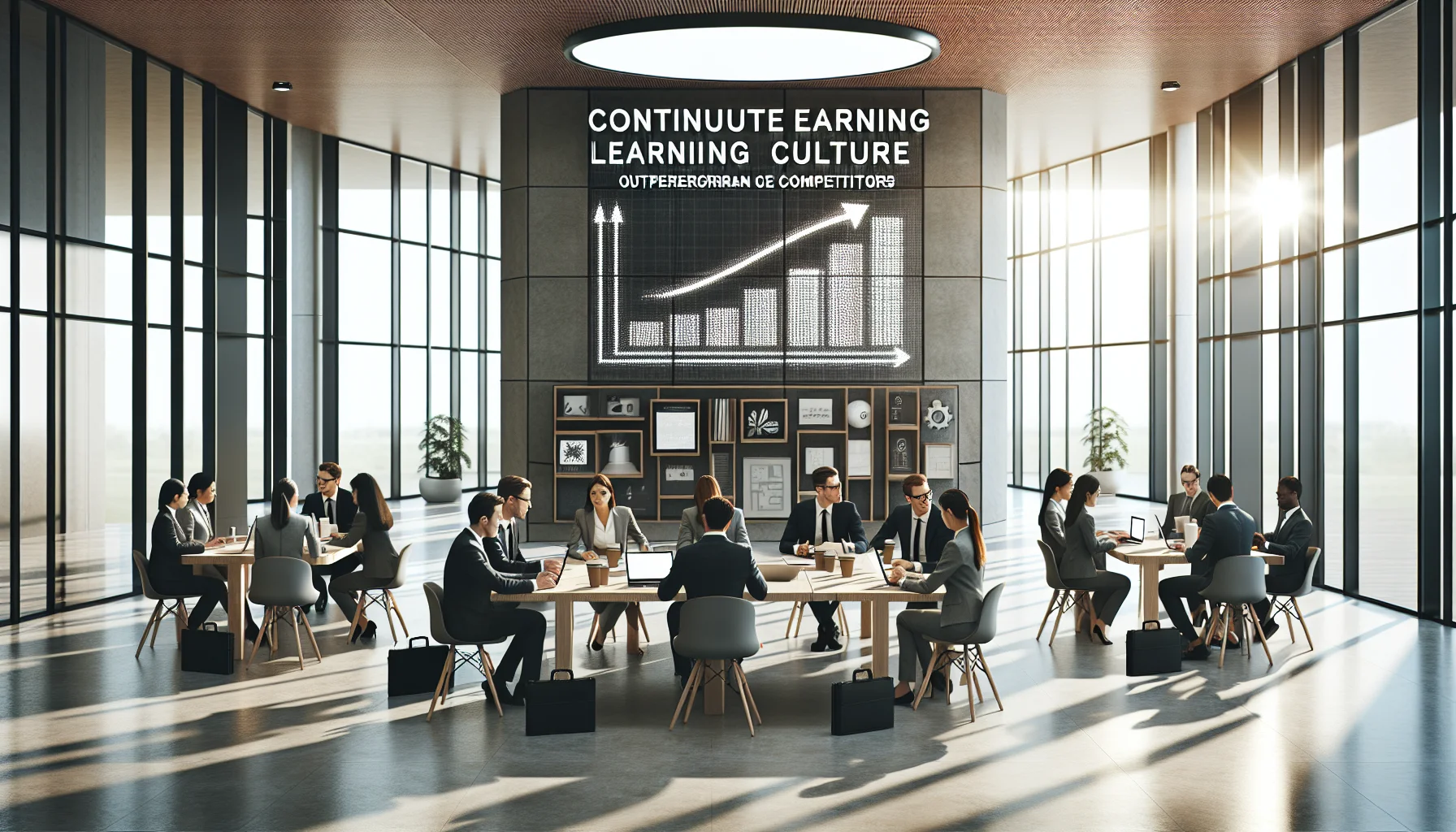
Continuous learning cultures outperform competitors by accelerating capability adaptation, increasing employee engagement, and driving operational innovation. A centralized learning system amplifies this by unifying content, competencies, and analytics so managers can target gaps, embed learning in workflows, and measure leading indicators to link learning activity to business outcomes.
 Institutional Learning
December 24, 2025
Analytics reveal gaps but don't create lasting change; pairing them with a continuous learning culture — role-based sequencing, micro-practice, manager coaching, and lightweight governance — embeds skills into daily work. Measure with leading and lagging indicators and run a 90-day pilot loop to iterate and sustain behavioral change.
 Workplace Culture&Soft Skills
January 4, 2026
This article explains how to shift from compliance-driven mandatory training to a continuous learning culture. It outlines the core pillars (autonomy, psychological safety, recognition), roles for L&D and managers, technology and measurement frameworks, a 12-month timeline, sample KPIs, and practical pilot steps to create curious learners.
 Emerging 2026 KPIs & Business Metrics
January 12, 2026
Continuous learning retention sustains Experience Influence Score by replacing one-off courses with programmatic journeys: targeted microlearning, timed refresh cycles, manager enablement, and governance. Monitor skill retention, re-engagement and application scores, run rapid experiments to combat fatigue, and use recognition to reinforce behavior. Implement a 30/90/180 cadence and measure manager-validated application.