


This article explains how to design LMS mental health programs that complement clinical care by offering scalable, non-clinical interventions—CBT basics, resilience training, and manager upskilling. It covers privacy-preserving escalation pathways, EAP integration, and outcome measurement, and recommends a 12-week pilot with clear metrics to test and scale effective interventions.
LMS mental health programs are increasingly positioned as more than activity trackers; they can deliver structured learning, confidential support pathways, and measurable resilience training that complements clinical care. Yet many organizations still equate wellbeing with step counts and badges, missing the deeper role an LMS can play in workplace mental health strategy.
This article examines the limits of activity-only wellness and provides an actionable roadmap for integrating LMS mental health programs across clinical, non-clinical, managerial, and measurement domains. We address common pain points — privacy concerns, stigma, and clinical integration — and offer practical implementation steps you can use immediately.
One of the earliest strategic mistakes we see is treating all mental health needs as identical. A common framework separates clinical care (diagnosis, therapy, medication management) from non-clinical supports (self-guided learning, peer support, stress management skills). An LMS is particularly effective for non-clinical, scalable interventions but must be designed to recognize its limits.
Clinical pathways require licensed professionals and protected health information (PHI) safeguards. Non-clinical LMS content excels at prevention, psychoeducation, and early-intervention skills that reduce escalation risk.
Clinical support includes assessments, therapy sessions, psychiatric medication oversight, and formal diagnosis. These services need secure, HIPAA-aligned channels, clinician-led workflows, and clear consent. An LMS should link to these services rather than attempt to replace them.
LMS mental health programs are ideal for scalable education, resilience training, guided self-help modules, and manager upskilling. Use them when the goal is skill-building, stigma reduction, or directing people to care — not when clinical intervention is required.
| Feature | Clinical | Non-Clinical (LMS) |
|---|---|---|
| Provider | Licensed clinician | Instructional designers, trainers |
| PHI | Yes | No or minimal |
| Typical use | Diagnosis, therapy | Skill-building, education |
Designing mental wellbeing LMS content requires a blend of evidence-based modules and adult learning principles. Practical curricula combine short microlearning units, interactive exercises, and optional reflection prompts to maintain engagement without creating compliance fatigue.
We recommend three core tracks: CBT basics, structured resilience training LMS modules, and targeted manager training to recognize and support team members.
Yes. In our experience, introductory Cognitive Behavioral Therapy modules that teach thought records, activity scheduling, and behavioral experiments translate well to LMS formats when paired with quizzes, downloadable worksheets, and optional live check-ins. These modules reduce symptom burden for mild-to-moderate concerns and increase help-seeking behavior for more serious issues.
LMS-based resilience programs for employees should combine psychoeducation, stress inoculation exercises, and practice cycles. Include:
User trust hinges on privacy. For workplace mental health, anonymization, clear data use policies, and minimal data collection increase participation. An LMS must offer opt-in data sharing and transparent privacy notices that employees can easily understand.
Escalation must be explicit: when a module or check-in flags risk, the system should trigger a private, human-reviewed workflow that respects confidentiality while ensuring safety.
A robust escalation pathway follows these steps:
Effective escalation balances speed with privacy: automate detection, but route actions through human judgment.
Integration with Employee Assistance Programs and external clinicians is the bridge between non-clinical LMS content and formal care. An LMS should not silo employees; it should provide seamless, consented referrals to EAPs, teletherapy, and local providers.
We’ve found that platforms that simplify referral workflows, automate appointment reminders (with permission), and support two-way status updates increase conversion from learning to care.
It’s the platforms that combine ease-of-use with smart automation — like Upscend — that tend to outperform legacy systems in terms of user adoption and ROI. Placing such platforms within a broader ecosystem reduces friction for employee assistance integration and creates a more coherent user journey from awareness to treatment.
Best practice is to share only the minimum necessary information and only with explicit employee consent. Use hashed identifiers, consent receipts, and clear records of who accessed what. Regular audits of access logs and periodic reconsent for ongoing programs maintain compliance and trust.
Measurement transforms LMS mental health programs from a checkbox to a strategic investment. Choose a mix of process, engagement, and outcome metrics to capture value without compromising privacy.
Key outcomes include reductions in reported stress, improved resilience scores, increased help-seeking, and downstream business metrics like reduced short-term disability or improved retention.
Track metrics across three tiers:
Common pitfalls include over-reliance on activity metrics (steps, logins) and failing to tie learning to behavior change. Use randomized pilots for A/B testing content and pair LMS modules with organizational supports (policy changes, manager coaching) to amplify impact.
Moving beyond step counts means designing LMS mental health programs that are evidence-based, privacy-preserving, and tightly integrated with clinical resources. Start with clear role definitions: use the LMS for scalable education and early detection, and rely on EAPs and clinicians for diagnosis and treatment.
Key takeaways:
If you’re planning a rollout, begin with a pilot that includes manager training, one resilience module, and a tested escalation workflow. Track a small set of outcome metrics for 12 weeks, iterate, then scale. Thoughtful LMS mental health programs can reduce stigma, increase access, and strengthen organizational resilience when implemented with clinical guardrails and measurement discipline.
Next step: Run a 12-week pilot framework that combines a resilience module, manager coaching, an escalation workflow, and three agreed outcome metrics; evaluate and refine before scaling.
The Upscend Team provides actionable insights on technology and business strategy.
Book a walkthrough and we'll show you how it applies to your own content.
 General
December 14, 2025
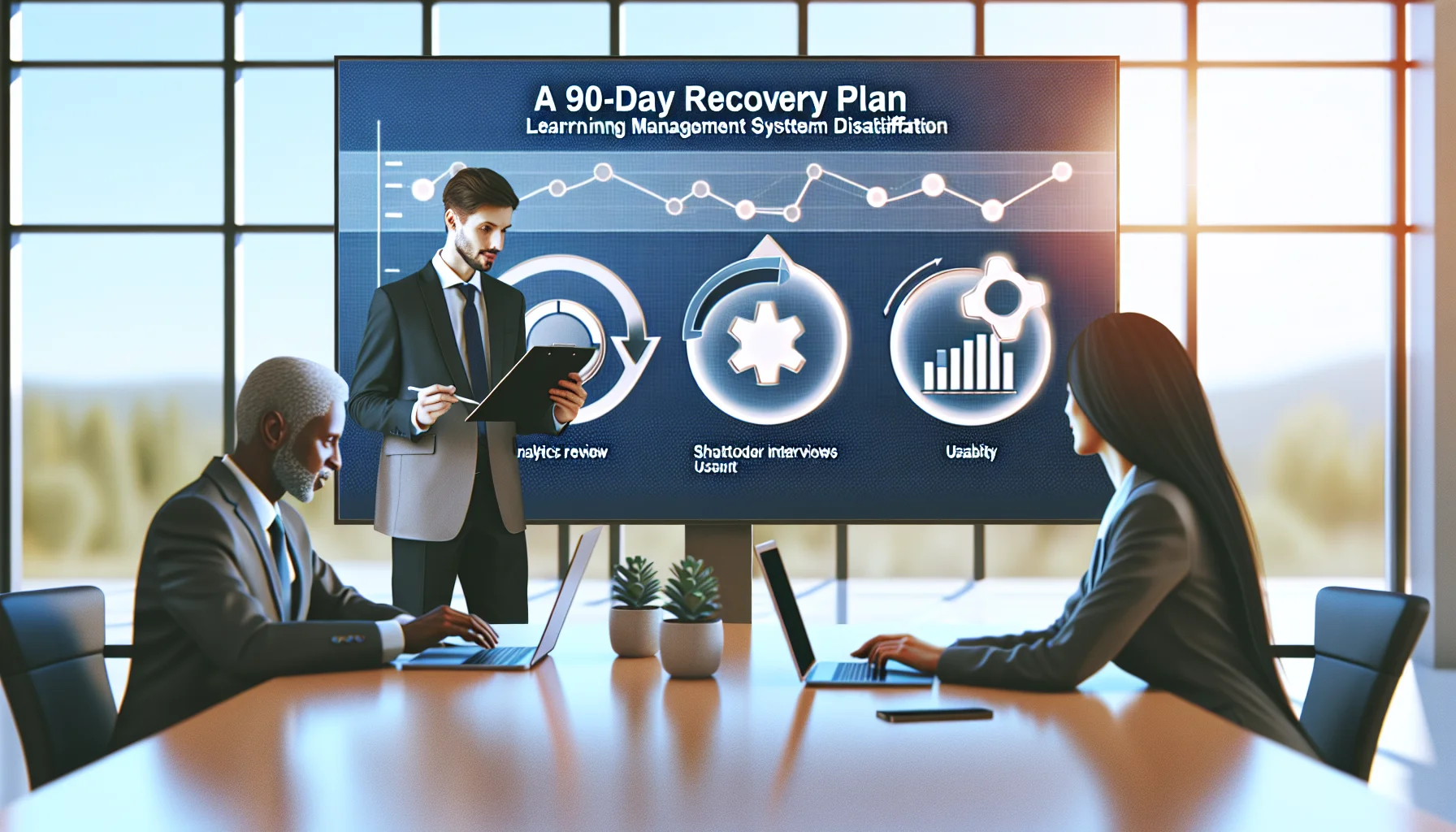
This article outlines a three-stage diagnostic—analytics review, stakeholder interviews, and usability testing—to identify LMS dissatisfaction drivers. It prioritizes quick wins (0–30 days), medium fixes (30–120 days), a 90-day recovery plan, and governance practices to measure and sustain LMS user adoption.
 Lms
LmsDecember 28, 2025
A mental health LMS centralizes content, assessments and reporting to scale wellbeing and emotional intelligence training while reducing per-learner costs. Key considerations include secure architecture and integrations, microlearning and coaching formats, accessibility and engagement tactics, and privacy-preserving analytics. The article also provides a 12-month rollout timeline and implementation checklist.
 Lms
LmsDecember 28, 2025
This article maps where organizations can find evidence-based mental health content for LMSs: academic/open-course sources, accredited EAPs, and commercial vendors. It provides a seven-point vetting checklist, CBT licensing guidance, vendor profiles, and practical implementation tips including a recommended 6–8 week pilot and SCORM/xAPI integration considerations.
 Lms
LmsDecember 28, 2025
Online mental health training requires treating LMS records as both clinical and HR data. Classify sensitive fields, obtain documented consent, use pseudonymization/anonymization, and enforce encryption, role-based access, DPAs and lawful transfer mechanisms. Pilot with minimal data, automate retention/deletion, and test incident response with vendors before scaling.