

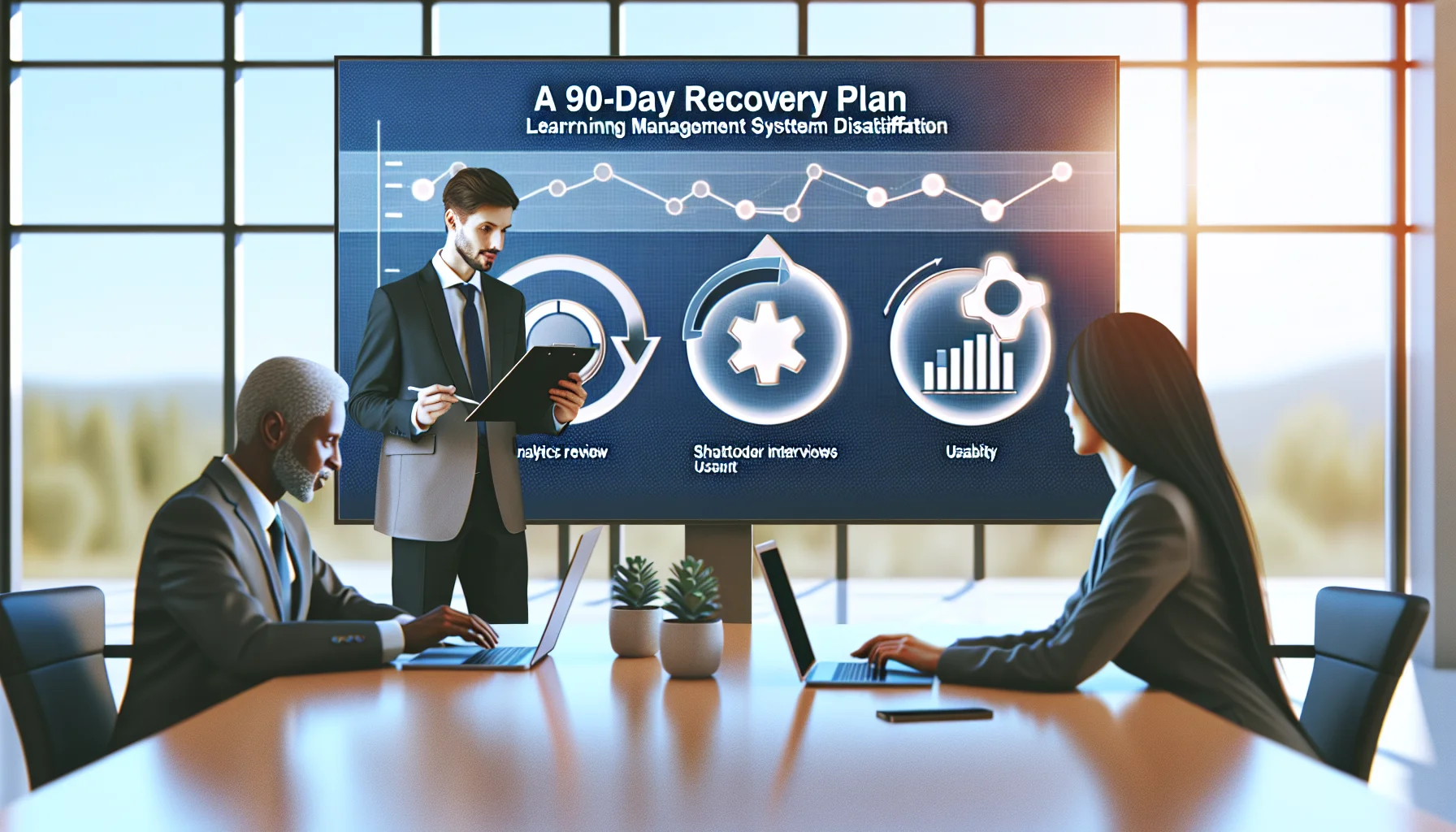
This article outlines a three-stage diagnostic—analytics review, stakeholder interviews, and usability testing—to identify LMS dissatisfaction drivers. It prioritizes quick wins (0–30 days), medium fixes (30–120 days), a 90-day recovery plan, and governance practices to measure and sustain LMS user adoption.
LMS dissatisfaction shows up as low completion rates, repeated support tickets, and quiet churn. In our experience, the most successful recoveries begin with a structured diagnosis and clear, prioritized fixes rather than an immediate platform swap. This article is a complete guide to resolving LMS user complaints and offers an operational framework to diagnose, fix, and prevent the most common learning management system problems.
You’ll get step-by-step diagnostic checks, concrete remediation tactics to fix LMS problems, and governance patterns to avoid repeating the same LMS issues. The recommendations reflect real-world patterns we’ve seen across corporate, academic, and nonprofit deployments.
Understanding root causes is the fastest route to remediation. A pattern we've noticed is that LMS dissatisfaction rarely stems from a single failure — it is usually a combination of poor UX, mismatched expectations, and weak organizational processes.
Common categories of learning management system problems include integration gaps (SSO, HRIS), content relevance, reporting that doesn’t inform decisions, and lack of clear support. Studies show that usability issues increase support costs and reduce trust rapidly, especially when learners perceive the system as an obstacle.
Integration problems create friction: broken single sign-on, misaligned user roles, or missing data feeds make even a competent LMS feel unusable. In our experience, resolving these early reduces churn and addresses many downstream complaints.
Content that’s outdated or poorly structured is a major driver of complaints. Users will tolerate clunky navigation if content feels fresh and relevant; conversely, excellent UX cannot compensate for irrelevant learning material. Prioritize a content audit before changing platforms.
Diagnosing LMS dissatisfaction should be systematic, measurable, and repeatable. Start with a short loop of data collection, qualitative investigation, and hypothesis testing to avoid costly missteps.
We recommend a three-stage diagnostic: analytics review, stakeholder interviews, and usability testing. Each stage uncovers different facets of the problem and together they build an evidence base for remediation.
Pull reports on completion rates, time-on-task, login frequency, and error logs. Look for pages with high drop-offs and features with low adoption. These metrics surface where users get stuck and help prioritize fixes that have measurable ROI.
Conduct 15–30 minute interviews with representative users — learners, managers, and admins. Use open questions to surface expectations versus reality. We’ve found that a few targeted interviews often reveal mismatches in role setup or communication that explain broader data trends.
Once you know what’s broken, act with a mix of quick wins and medium-term changes. Quick wins restore confidence and free time to tackle complex issues. In our experience, teams that balance both outperform those who chase feature parity.
Below are tactical steps to fix LMS problems and rebuild momentum with users.
Target fixes that require low effort but high visibility: repair SSO issues, create clear “start here” learning paths, publish an FAQ, and fix reporting errors that generate support volume. Quick wins reduce noise and are psychologically valuable to users.
Address structural issues: redesign navigation, curate high-value content, and implement role-based dashboards. Pair design changes with communications and manager enablement so new workflows stick.
Adopting best practices often involves tools plus process. The turning point for most teams isn’t just creating more content — it’s removing friction. Tools that surface clear analytics and enable targeted personalization help bridge that gap.
A pattern we've noticed: teams that improved LMS dissatisfaction the fastest combined a governance cadence with tooling that made insights accessible to content owners and managers. For example, the turning point for some organizations came when analytics were integrated into everyday workflows; tools like Upscend help by making analytics and personalization part of the core process.
One company we worked with used event-level reports to identify 10% of courses that generated 50% of support tickets. They remediated those courses and republished concise versions, reducing support tickets by 42% within two months.
Another example involved enabling front-line managers with a simple report showing team progress and skill gaps. That shifted ownership away from L&D and improved completion rates because managers could act directly.
Prevention requires aligning people, process, and product. A governance model that assigns clear owners, cadences, and KPIs prevents recurring LMS issues and keeps adoption healthy.
Key governance elements include clear content ownership, release cadences, and a feedback loop that turns user insights into prioritized backlog items.
We recommend a lightweight committee with a monthly review of analytics, a content roadmap, and a triage queue for user requests. Documenting decisions reduces repeated debates and speeds execution.
Set minimum standards for course length, navigation, and accessibility. Enforce them with templates and pre-publish checks. Consistency reduces cognitive load and lowers complaints about variability.
Recovery is a process, not a one-time project. Define a simple measurement plan to monitor progress and ensure improvements persist. Focus on leading indicators as well as outcomes.
Leading indicators include first-week return rate, manager check-ins, and frequency of support requests per user. Outcome indicators include completion rates, time to competence, and satisfaction surveys.
Structure a 90-day plan with weekly sprints that combine quick wins and staged fixes. Include key milestones, owners, and a communications plan to keep stakeholders aligned. Track against baseline metrics captured during your initial diagnosis.
After stabilization, embed continuous improvement: quarterly content audits, monthly governance reviews, and an open channel for user feedback. This keeps the system adaptive and minimizes future LMS dissatisfaction.
Common pitfalls to avoid: overhauling the LMS without diagnosing root causes, ignoring manager workflows, and failing to communicate changes. These missteps often regenerate the same complaints you intended to solve.
To summarize, resolving LMS dissatisfaction requires a blend of data-driven diagnosis, prioritized fixes, and governance that prevents relapse. Start small, measure quickly, and scale proven remedies.
Next step: run the three-stage diagnostic this month: analytics, interviews, and usability tests. Then prioritize two quick wins and one medium-term fix to demonstrate momentum. That approach consistently reduces complaints and improves LMS user adoption.
Call to action: If you want a ready-to-use diagnostic checklist and a 90-day recovery template to implement immediately, request the template and run the first analytics review this week to begin reversing LMS dissatisfaction.
The Upscend Team provides actionable insights on technology and business strategy.
Book a walkthrough and we'll show you how it applies to your own content.
 L&D
L&DDecember 14, 2025
This article explains why LMS dissatisfaction arises—from UX, content fit, integrations, and governance—and offers a three-step diagnostic and prioritized roadmap. It lists quick wins (simplify navigation, fix links, microlearning) and longer structural fixes (SSO, governance, curriculum redesign), plus metrics and a measurement cadence to track improvements.
 L&D
L&DDecember 14, 2025
This article shows how to diagnose LMS dissatisfaction using seven engagement and behavioral metrics plus targeted learning survey questions. It explains how to combine NPS and CSAT with behavioral signals like search abandonment and session paths, and presents a five-step remediation plan with timelines (4–8 weeks for UX fixes, 8–12 weeks for content). Use the sample questions to establish a baseline and run small experiments.
 General
December 14, 2025
This article identifies common LMS dissatisfaction causes across technical, UX, and organizational domains. It presents a five-step diagnosis framework—telemetry, micro-surveys, task tests, stakeholder mapping, and impact-effort prioritization—and recommends short sprints, cross-functional squads, and governance to deliver measurable improvements within 8–12 weeks.
 General
December 14, 2025
This article presents a concrete 90‑day LMS adoption plan for HR and learning teams. It covers baseline assessment, a three-phase rollout (Days 1–30, 31–60, 61–90), manager-led engagement, role-based onboarding, and a 14‑day measurement cadence. Use rapid pilots, targeted communications, and iterative fixes to increase LMS adoption and reduce user dissatisfaction.