


Integrated LMS connections to HRIS, SSO, SCIM and APIs automate provisioning, improve security, and enable unified reporting. This article covers integration types, technical standards, implementation steps (Discovery→Design→Prototype→Scale→Operate), mitigation of common failures, and case examples (Workday, SAP, Salesforce) with a practical pilot checklist to accelerate time-to-value.
LMS integrations are no longer optional for organizations aiming to scale learning, maintain compliance, and connect talent processes. In our experience, companies that treat learning as an embedded business capability—rather than a siloed function—see measurable improvements in productivity and retention.
This article explains the primary types of LMS integrations, the concrete benefits of LMS integrations with HR systems, technical patterns like API LMS and SCIM, plus real-world examples and a practical checklist you can act on today.
Most organizations implement several categories of LMS integrations to cover identity, HR data, content, CRM, and analytics. These are the core integration types that deliver operational value:
Each integration type answers a specific operational need: identity and access, HR context, content delivery, or business intelligence. Combining them creates compounding value—automated provisioning plus unified reporting, for example, eliminates manual reconciliation work.
HRIS integration syncs hires, terminations, promotions, and org changes into the LMS. This eliminates manual user management and ensures learning assignments follow the employee lifecycle.
A single sign-on LMS improves UX and security. It reduces password-related helpdesk tickets and lets you enforce corporate authentication policies, including MFA and conditional access.
When planned and executed correctly, LMS integrations unlock measurable outcomes. In our experience, organizations reduce administrative overhead, accelerate time-to-competence, and improve compliance reporting within months.
Key business benefits include:
Studies show integrated learning platforms can lower cost-per-learner and increase training completion rates. We’ve seen organizations reduce admin time by over 60% using integrated systems like Upscend, freeing up trainers to focus on content and learner support rather than manual tasks.
Integrated systems improve learner experience by providing context-aware learning (role, location, tenure) and reduce redundant enrollments. For HR and L&D teams, automated processes free capacity for program design and strategic initiatives.
Technical choices determine whether integrations are resilient, secure, and maintainable. The common patterns are API LMS integrations, SCIM for identity provisioning, and standardized content protocols (xAPI/SCORM/LTI).
Important technical elements:
Security must be baked in: use least privilege API keys, rotate credentials, encrypt data at rest and in transit, and apply role-based access controls. Plan for batch and incremental sync patterns to balance currency and performance.
API LMS endpoints are ideal for course and event operations; SCIM excels at identity and provisioning. A hybrid approach—SCIM for users and API for learning events—gives the best balance of simplicity and control.
Concrete examples help translate theory into action. Three common enterprise patterns show typical implementation choices and outcomes:
Workday -> LMS: Organizations often implement HRIS integration from Workday to the LMS to sync hires, business titles, and cost centers. This enables targeted compliance training tied to payroll and job role changes.
SAP SuccessFactors -> LMS: With SAP, larger enterprises typically use a combination of SCIM provisioning and an API LMS to pass learning assignments back to SAP for talent analytics.
Salesforce -> LMS: Sales teams benefit from CRM-LMS integrations that surface role-specific product training and renewal learning in the salesperson's workflow. Syncing learning status back into Salesforce improves opportunity readiness metrics.
These integrations also show how to combine connectors: HRIS for identity and role data, API for events, and CRM syncs for context. Together they create a single source of truth across People Ops and revenue teams.
Typical outcomes include faster onboarding, higher training completion, and easier audit readiness. Organizations that combine HRIS integration with analytics report better correlation between training and performance metrics within 6–12 months.
This how to integrate LMS with HRIS step by step guide is a practical framework you can follow to reduce risk and accelerate time-to-value.
Practical tips: use reversible migrations during pilot phases, maintain a canonical data dictionary, and automate reconciliation reports that compare HRIS and LMS counts daily.
Security steps include using delegated OAuth where possible, IP allowlisting for API traffic, minimal-scoped service accounts, and end-to-end encryption. Log all provisioning events for audit and compliance.
Integration projects often fail for predictable reasons. Address these proactively to preserve schedule and value.
Common operational mitigations include automated reconciliation jobs, alerting for failed syncs, and a rollback plan for schema changes. A pattern we've noticed is that early investment in testing and monitoring reduces long-term support costs substantially.
When selecting tools and vendors, evaluate out-of-the-box connectors for Workday, SAP, and Salesforce, and favor platforms with robust APIs and community-supported adapters.
Prioritizing LMS integrations with HR and business systems is a strategic move that reduces operational friction, strengthens security posture, and links learning to measurable business outcomes. The combination of automated provisioning, SSO, content connectors, and analytics transforms learning from a cost center to a performance lever.
Start with a focused pilot: connect basic HR attributes and SSO first, measure administrative savings and completion rates, then iterate toward event-driven analytics and CRM connections. Use the checklist below to get started.
In our experience, teams that follow a stepwise approach and prioritize trusted standards recover their implementation costs quickly and avoid common pitfalls. If you want to move from planning to results, assemble a cross-functional team, run a short pilot, and measure both administrative and learner KPIs.
Next step: review your HRIS and LMS documentation, map the top five attributes to sync, and schedule a two-week pilot to validate provisioning and reporting flows.
The Upscend Team provides actionable insights on technology and business strategy.
Book a walkthrough and we'll show you how it applies to your own content.
 General
December 22, 2025
This article identifies which LMS integrations produce the highest ROI for HR and L&D: HRIS syncs, SSO, payroll feeds and targeted API connectors. It explains technical approaches, implementation playbooks, and KPI frameworks to quantify impact. Start with a 90-day pilot, measure time-saved and time-to-proficiency, then scale proven integrations.
 General
December 22, 2025
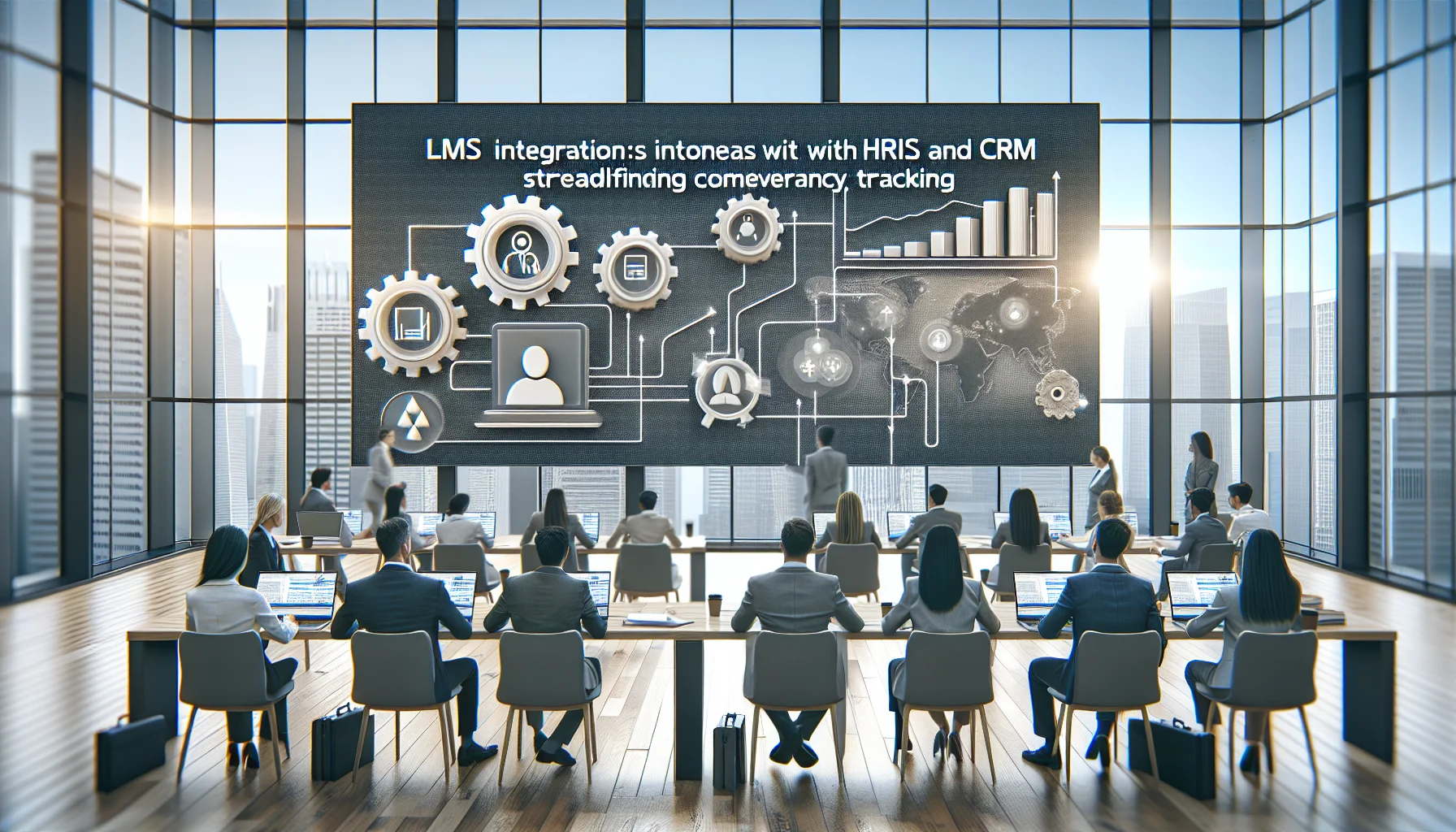
This article explains how LMS integrations with HRIS and CRM streamline onboarding, competency tracking, and sales enablement by automating lifecycle events and closing data silos. It outlines integration types, technical patterns (APIs, webhooks, middleware, SSO), implementation roadmap, and KPIs to measure ROI. Use a 90-day pilot to validate admin-hour savings and data accuracy.
 General
December 22, 2025
Integrations make LMSs part of everyday workflows by automating provisioning, consolidating reporting, and surfacing learning in collaboration tools. This article explains integration patterns (pre-built connectors, SCORM/xAPI/SAML, LMS APIs), HRIS and SSO best practices (SCIM, SAML/OIDC), Slack/Teams use cases, and a three-phase pilot→expand→govern roadmap.
 Business Strategy&Lms Tech
January 25, 2026
This article explains technical requirements and patterns for connecting LMS and HR systems using LMS HR integration APIs. It covers REST APIs, webhooks, SCIM provisioning, SCORM and xAPI content handling, and SSO. Architects get workflows, troubleshooting steps, and a checklist to design reliable, auditable integrations.