


This article explains how interactive empathy tools complement branching scenarios in DEI training by combining emotional immersion with decision-based practice. It outlines technologies (VR, AR, chatbots), integration patterns, cost vs. impact, accessibility fixes, and a pilot checklist to help L&D teams choose the smallest viable empathy intervention and measure behavioral outcomes.
In the field of DEI learning design, interactive empathy tools are emerging as a powerful complement to classic branching scenarios. In our experience, blending immersive engagement with decision-driven narratives improves knowledge retention and behavioral transfer. This article explains why that pairing works, which complementary technologies to consider, practical integration patterns, a pragmatic cost vs. impact assessment, and three mini-case studies (one with XR).
Readers will get an actionable framework for deciding when to pilot advanced tech like VR empathy vs. when to deploy lightweight interactive modules that scale quickly.
Branching scenarios provide structured decision points where learners see consequences of choices. Interactive empathy tools layer emotional realism and perspective-taking around those decisions. A branching scenario might show the "what" — an outcome — while immersive tools show the "why" by simulating lived experience.
We've found that learners exposed to both styles demonstrate faster attitude shifts and stronger intent to change behavior. Studies show that perspective-taking exercises increase bias reduction when paired with reflective debriefs; immersive DEI tools create stronger emotional encoding, and branching scenarios create cognitive rehearsal.
To expand the branching scenario toolkit, consider a layered tech stack: VR empathy for full presence, AR overlays for on-the-job prompts, live role-play platforms for nuance, and conversational agents for scalable reflection. Each tool solves a different learning friction point.
Below are core options and what they add to branching scenarios.
Interactive empathy tools in VR enable embodied perspective-taking—critical for issues like microaggressions or accessibility barriers. XR sessions allow learners to feel spatial and social dynamics, increasing retention of emotional context. These are best used for high-impact scenarios where empathy is the primary objective.
AR adds on-the-job prompts and rapid micro-simulations that link branching decisions to real workflows. Use these where time-to-apply is short and situational cues matter. They pair well with scenario-based assessments that validate real-world behavior change.
Role-play platforms connect learners to trained facilitators or peers, preserving nuance. Chatbots and scripted simulations scale reflective conversations—useful for low-cost reinforcement after a branching module.
When integrating, use composable patterns that let teams mix-and-match modalities. A reliable pattern starts with a short empathy trigger, moves into a branching decision tree, then closes with a reflective micro-simulation or chatbot-led debrief.
Two practical patterns we've used successfully:
In our experience, modular pipelines reduce production risk: keep the branching engine and empathy module loosely coupled so you can upgrade one without reauthoring the other. Some of the most efficient L&D teams we work with use platforms like Upscend to automate this entire workflow without sacrificing quality.
Budget decisions should reflect desired outcomes. Interactive empathy tools vary widely: a basic chatbot or 360° video costs far less than fully custom VR, but yields different impact profiles. Map expenditures to outcomes before choosing a modality.
Quick comparison:
| Modality | Typical Cost Range | Impact Profile |
|---|---|---|
| Chatbot + branching | Low ($5k–$25k) | Scalable, reflective practice |
| 360° video / AR | Medium ($25k–$100k) | Moderate immersion, good retention |
| Full VR / XR | High ($100k+) | Highest empathy impact, limited scalability |
To prioritize ROI, focus on the smallest viable empathy experience that produces measurable behavior change. Use experimental designs (A/B test branching alone vs. branching + empathy tool) and measure both affective and behavioral KPIs.
Common objections are legitimate: VR hardware introduces accessibility and cost hurdles; role-play scales poorly; bespoke simulations take time. But design choices can mitigate these risks.
A common implementation path is to pilot with accessible, lower-cost modules (360° video + branching) while designing XR assets in parallel. This staged approach reduces time-to-value and keeps programs inclusive.
Deciding whether to pilot advanced XR or lightweight modules comes down to target audience, learning objectives, and measurement constraints. Use this checklist to decide:
If the goal is to shift deep-seated attitudes across leadership teams, piloting XR with a small, high-influence cohort makes sense. If the goal is broad policy compliance and behavioral nudges, start with branching plus chatbots or AR micro-simulations.
Implementation tips:
Combining interactive empathy tools with branching scenarios bridges emotional insight and practical decision-making. In our experience, the most effective DEI programs use a mix of modalities—chatbots and simulations for scale, AR for context, and XR for leadership-level empathy work—deployed in modular patterns that support iteration.
Start small with a measurable pilot: define outcomes, choose the smallest viable empathy intervention, and pair it with a branching scenario that trains the desired behaviors. Measure both affective and behavioral change, iterate, and scale the components that deliver the best impact per dollar.
Next step: Identify one DEI challenge (e.g., bystander intervention, inclusive hiring) and design a 6–8 week pilot that pairs a branching scenario with one empathy module. Use the patterns in this article to scope goals, production, and evaluation.
The Upscend Team provides actionable insights on technology and business strategy.
Book a walkthrough and we'll show you how it applies to your own content.
 Workplace Culture&Soft Skills
January 4, 2026
Simulations for empathy training in an LMS pair realistic scenarios, repetition, structured feedback, and debriefs to convert awareness into observable behavior. Use a mixed-fidelity approach—avatar/chatbots for scale, branching video for assessment, and live role-play for deep transfer—anchored by micro-skill rubrics and psychological safety.
 Business Strategy&Lms Tech
January 26, 2026
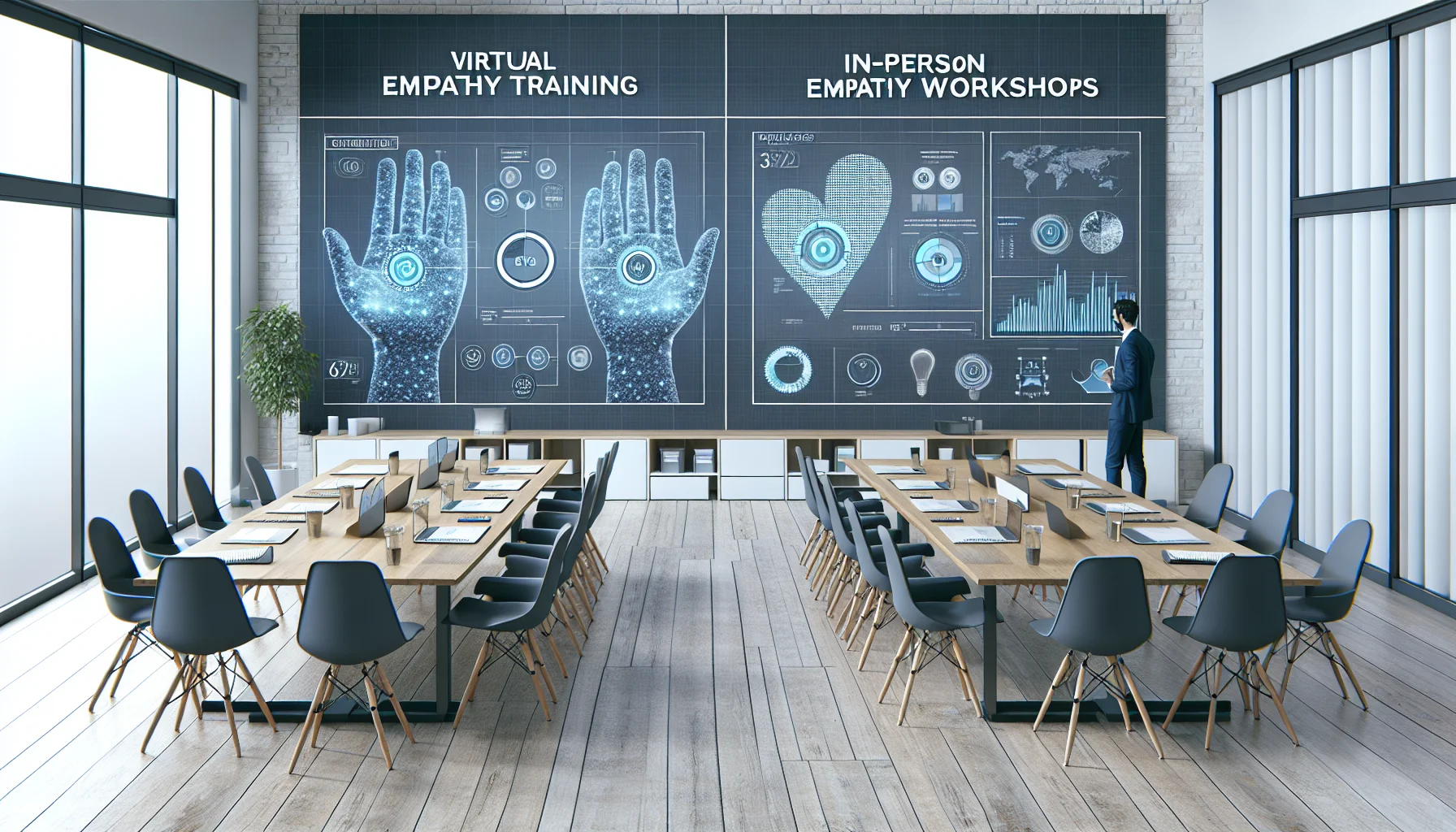
This article compares virtual empathy training and in‑person workshops across outcomes, evidence, cost, and design. Virtual programs scale and retain knowledge when they use spaced practice and micro-simulations; in-person delivers stronger affective shifts and role-play fidelity. For most organizations a hybrid model with mixed-method evaluation and facilitator training is recommended.