

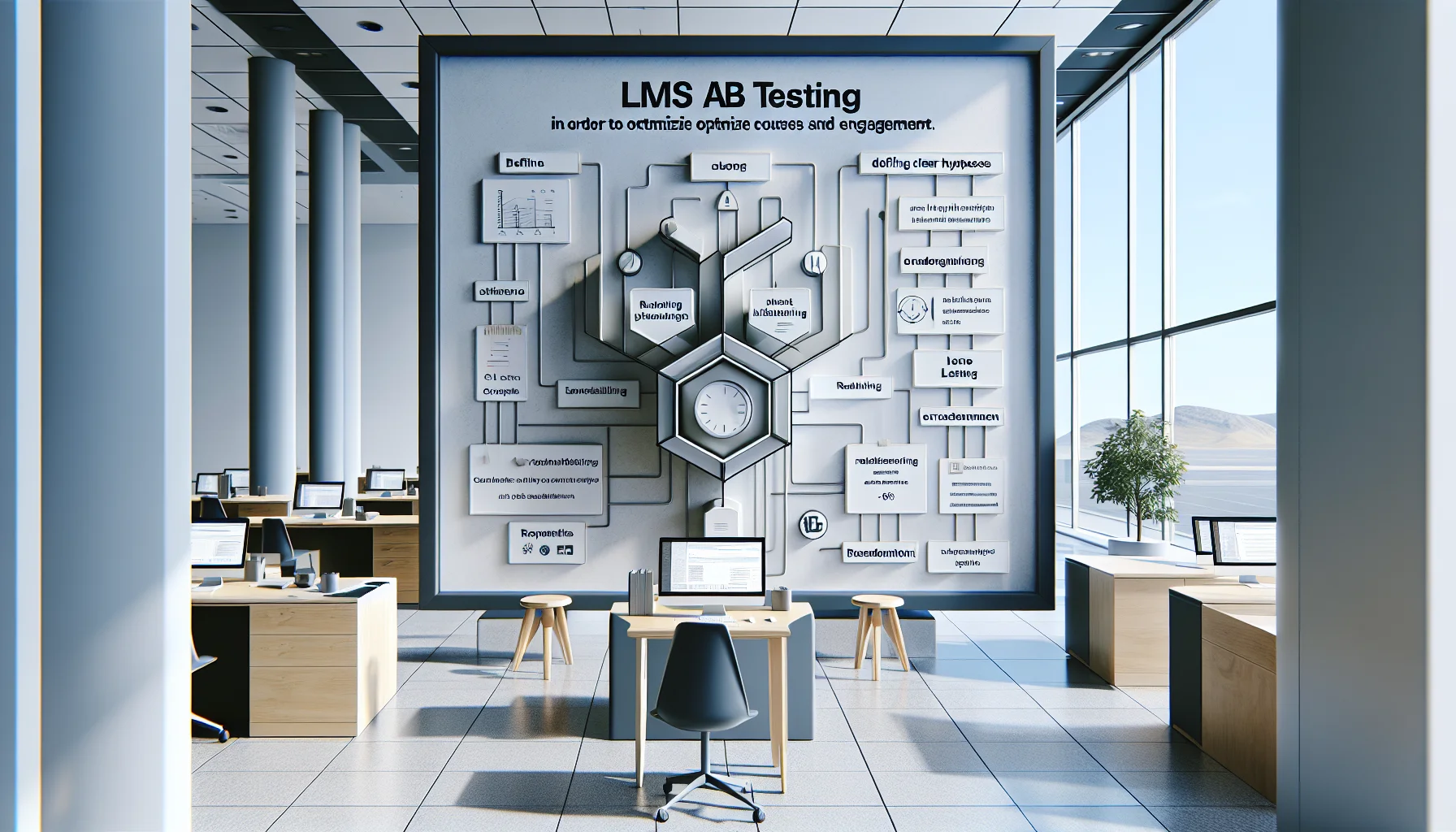
Actionable steps for running LMS A/B testing: define clear hypotheses, randomize assignment, and track primary metrics like completion and retention. The article explains sample-size rules, analysis checks, implementation options (native LMS or API/LTI), and offers practical test ideas and a checklist to avoid common pitfalls.
LMS A/B testing is a practical way to answer the central question every learning leader faces: which design choices improve learning and engagement? In our experience, structured experiments inside a learning management system reveal non-obvious, high-impact changes — from microcopy and sequencing to media type and assessment timing. This article outlines a repeatable approach for running reliable learning experiment LMS initiatives, with step-by-step guidance, measurable metrics and concrete examples you can adapt.
We’ll cover experiment design, technical setup, analysis and common pitfalls. Expect actionable checklists and frameworks you can use whether you manage compliance training, onboarding, or continuous learning programs.
Organizations run A/B tests in an LMS to move decisions from opinion to evidence. A/B testing for training helps teams test specific hypotheses about learner behavior, course performance testing, and content effectiveness with real users instead of relying on intuition. We've found that even small changes — a visible progress bar, a shorter video, a clearer assessment prompt — can shift completion rates and knowledge retention measurably.
Benefits include faster iteration cycles, clearer ROI on content development, and prioritized investments where they matter most. Running controlled experiments also builds organizational confidence in learning strategy and supports data-driven conversations with stakeholders.
Good LMS A/B testing starts with a clear hypothesis and measurable outcomes. A weak or vague hypothesis yields ambiguous results. Begin by articulating the problem, proposing a change, and defining success criteria. For example: "If we shorten lesson videos from 10 to 4 minutes, then completion rates will increase by 10%." That statement ties the intervention directly to a metric.
Key design elements include sample size, randomization method, duration, and the isolation of variables. Treat the LMS as an experimental platform: avoid simultaneous changes that can confound results.
Focus on high-impact, actionable hypotheses. Prioritize tests using a simple rubric: potential impact, implementation cost, and measurement feasibility. Common hypotheses involve content length, assessment timing, onboarding nudges, and format swaps (video vs text).
Examples of testable hypotheses: "Adding a two-question pre-assessment increases post-course mastery" or "Introducing an inline knowledge check reduces help-desk escalations."
Sample size matters. Use power calculations to estimate the number required to detect a meaningful effect. If you lack statistical tools, start with a minimum viable experiment: run the test for a fixed period (e.g., 4–8 weeks) and track variability. Small populations need larger effect sizes or pooled experiments across cohorts.
Rule of thumb: don't run a test on under 100 active learners unless you're testing an effect expected to be very large.
Implementation is where good experiments either succeed or fail. Effective LMS A/B testing requires coordination between instructional design, analytics, and platform configuration. Start by mapping the learner journey and identifying touchpoints where the variant can be delivered cleanly (for example, course landing page, module order, or assessment timing).
Next, decide on randomization and assignment. Many modern LMS platforms support cohort-based assignment or rule-based branching; when native support is limited, use unique enrollment links or an external experimentation tool integrated via LTI or API.
Options vary by platform. Use built-in features when available (randomized release, A/B content widgets). If the LMS lacks native randomization, generate assignment IDs externally and enroll learners into the assigned variant via automation. Always log assignment time and variant ID so you can trace results.
Best practice: preserve anonymity and privacy while capturing the minimum identifiers needed for analysis (variant, cohort, completion timestamp).
Choosing the right metrics distinguishes a meaningful experiment from noise. For training, useful primary metrics include completion rate, pass rate, time to completion, and long-term retention measured by follow-up assessments. Supplement with engagement metrics: session duration, click paths, and drop-off points.
Statistical analysis should confirm whether observed differences are unlikely to be due to chance. Use confidence intervals and p-values appropriately, and report effect sizes rather than just statistical significance.
Statistical significance is one part of the decision. Ensure the effect size is meaningful operationally. A 1% uplift with a tiny p-value might not justify redesigning an entire course. Consider confidence intervals, pre-registered stopping rules, and multiple comparison corrections when running many simultaneous tests.
Practical tip: combine quantitative results with qualitative feedback (surveys, interviews) to validate that changes improved perceived learning — not just behavior that optimizes for the metric.
Concrete examples help teams start quickly. Below are reproducible test ideas that map to typical learning objectives and technical feasibility across common LMS platforms.
Each example includes a hypothesis, metric, and brief implementation note to make it easy to run the experiment.
| Test | Hypothesis | Primary metric |
|---|---|---|
| Video length | Shorter videos increase module completion | Completion rate |
| Interactive quiz after topic | Immediate quiz increases retention | Post-course assessment score |
| Progress nudges | Automated reminders reduce drop-off | Time-to-completion |
Other examples include A/B testing for training on assessments (changing pass thresholds), layout variations (single-column vs multi-section), and sequencing experiments (microlearning first vs full lesson first). These examples let you test trade-offs between engagement and depth of learning.
A learning experiment LMS project can fail for predictable reasons: underpowered samples, confounded variables, biased assignment, or corporate pressure to stop tests early. We’ve found that maintaining a disciplined protocol — predefining endpoints and analysis plans — prevents many false positives.
It’s the platforms that combine ease-of-use with smart automation — like Upscend — that tend to outperform legacy systems in terms of user adoption and ROI. That observation reflects an industry trend: teams that use intuitive experiment tooling reduce setup friction and increase the volume of useful tests.
Checklist for reliable LMS A/B testing:
LMS A/B testing moves learning teams from guesswork to measurable improvement. By defining clear hypotheses, using appropriate metrics, implementing rigorous randomization, and guarding against common biases, you can optimize courses LMS-wide and demonstrate real business impact. In our experience, the most successful programs pair a lightweight experimentation cadence with a culture that values incremental gains.
Begin with two focused experiments this quarter: one low-effort content tweak and one experience change (notifications, sequencing, or layout). Use the checklist above, document outcomes, and scale winners. Over time, a steady program of course performance testing will compound into meaningful improvements in engagement and outcomes.
Call to action: Identify one course to run a controlled experiment on this month, define a single primary metric, and commit to a pre-registered analysis plan — then run the test and share the results with stakeholders.
The Upscend Team provides actionable insights on technology and business strategy.
Book a walkthrough and we'll show you how it applies to your own content.
 General
December 22, 2025
This article explains how to structure competency-based learning inside an LMS by modeling competencies as discrete, machine-readable objects. It covers modular architecture, mapping workflows, implementation phases, evidence-driven assessment, tracking for skill gap analysis, and governance best practices. Includes two case studies and measurable KPIs to guide a 90-day pilot.
 Lms
LmsDecember 23, 2025
Competency-based LMS shifts training from hours to demonstrated outcomes by mapping role outcomes to competencies, defining observable proficiency levels, and validating skills through mixed evidence. The article outlines framework design, LMS tagging and assessment rules, reporting dashboards, and a phased rollout—pilot, manager enablement, and governance—to scale validated competencies.
 HR & People Analytics Insights
January 6, 2026
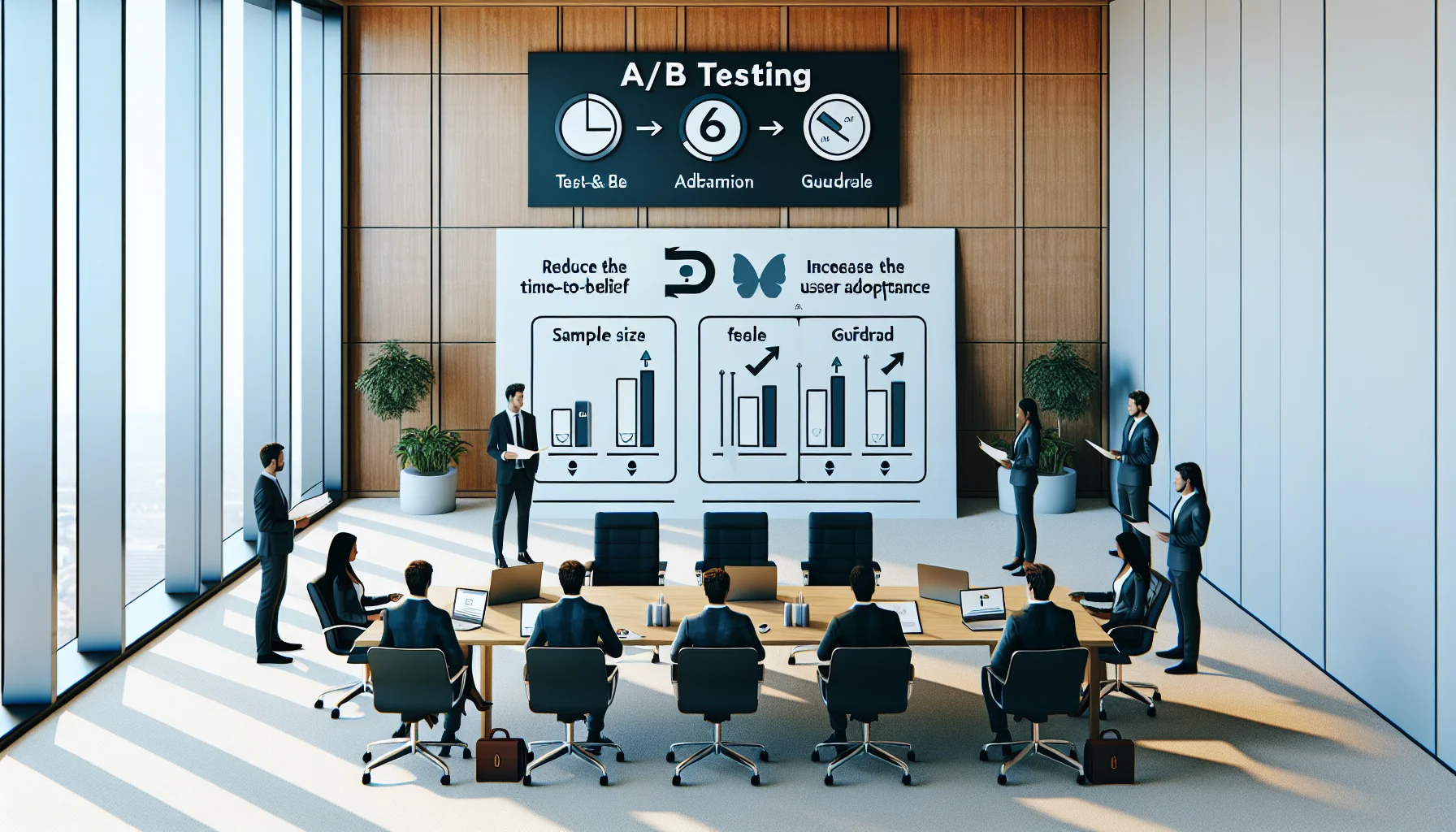
This article shows how A/B testing LMS experiments shorten learners' time-to-belief by exposing friction and measuring applied behavior. It outlines experiment design (hypothesis, metrics, sample size), tooling choices, six ready templates, an interpreted example result, and ethical guardrails—so teams can run practical tests and scale winners quickly.
 Business Strategy&Lms Tech
January 25, 2026
This article explains how to run A/B testing gamification in LMSs: form testable hypotheses, pick a single primary KPI, calculate sample size, and instrument events consistently. It covers tooling, three practical experiments (badges vs progress bars, leaderboards, reward frequency), statistical rules, common pitfalls, and rollout decision guidelines to optimize engagement.