


This article explains how to run A/B testing gamification in LMSs: form testable hypotheses, pick a single primary KPI, calculate sample size, and instrument events consistently. It covers tooling, three practical experiments (badges vs progress bars, leaderboards, reward frequency), statistical rules, common pitfalls, and rollout decision guidelines to optimize engagement.
In digital learning, A/B testing gamification is the most reliable way to move beyond intuition and measure what increases participation and completion. Teams that treat gamification as testable design elements realize sustained gains because they validate assumptions with data rather than anecdotes. Experiment-driven gamification reduces wasted engineering effort and surfaces trade-offs — for example, a feature that raises short-term logins but harms long-term retention.
Good experiment design starts with a clear hypothesis and measurable outcomes. To run effective A/B testing gamification, define "winning" up front and pick metrics that align with business goals: onboarding speed, certification throughput, or sustained learning behavior.
A practical hypothesis follows: "If we change X (gamification element), then Y (learner behavior) will change by Z%." Example: "If we replace badges with a progress bar, weekly active users will increase by 10%." Include the proposed mechanism (why it should work) and boundary conditions (which cohorts you expect to be affected).
Use primary and secondary KPIs. Primary KPIs are the core business metrics you expect to move; secondary KPIs explain behavior. For LMS experiments, prioritize business-facing metrics (e.g., course completion or certification) over vanity metrics.
Predefine learner segments (new vs returning, job function, cohort). Plan subgroup analyses in advance to avoid post-hoc fishing. This clarifies whether effects are universal or cohort-specific and helps prioritize experiments that optimize engagement LMS-wide.
Underpowered tests are a common failure. Use baseline conversion, minimum detectable effect (MDE), and desired power (commonly 80%) to calculate sample size. Smaller MDEs need larger samples: a 1–2% absolute uplift often requires tens of thousands of users, while a 5–10% relative lift is visible with a few thousand.
If cohorts are small, prefer longer duration, pooled analysis, or alternative designs rather than many tiny parallel experiments. For completion-focused tests, run for at least one full learning cycle plus an extra week for late completions. Use an online sample size calculator or platform tools when available.
Choosing the right tools matters when you A/B test gamification. The platform should support random assignment, consistent user identifiers, and event-level tracking. The stack determines how reliably you can attribute effects to the gamification change.
Implementing A/B testing gamification typically involves a random assignment engine, event collection (xAPI or analytics), and a central dashboard for KPI visualization and funnel analysis. Integrate session-level analytics with learning records so exposures and outcomes can be analyzed together. Use feature flags to roll changes out gradually and turn off variants if adverse signals appear.
Below are three practical experiments you can run in most LMS environments. Each is measurable and designed to reveal actionable insights about how to A/B test gamification elements in LMS settings.
Hypothesis: Replacing badges with a persistent progress bar will increase completion for multi-step courses.
Interpretation: If the progress bar raises completion, continuous feedback is likely the mechanism. If badges win, social signaling or perceived prestige may matter. In one mid-sized pilot (n≈4,500) a progress bar increased completion by 12% vs. badges while reducing leaderboard clicks — suggesting a shift from social to self-paced motivation.
Hypothesis: A cohort-limited leaderboard fosters friendly competition and increases weekly activity more than a global leaderboard.
Leaderboards can demotivate lower-performing learners. Track opt-outs and negative sentiment to detect harms. Consider hybrid designs that highlight top performers while emphasizing personal progress for most users.
Hypothesis: Immediate micro-rewards (points, instant feedback) boost daily engagement but may reduce long-term intrinsic motivation compared with delayed macro-rewards (certificates).
Measure short-term uplift and long-term retention separately; a spike that collapses later differs from sustained behavior change. Use retention curves and survival analysis to compare persistence across variants.
Testing multiple gamification levers sequentially, not simultaneously, is how you learn causal effects instead of generating confounded signals.
Statistical rigor prevents costly mistakes when you experiment gamification. Pre-register your analysis plan: define the primary KPI, significance threshold (commonly p < 0.05), and whether tests are one- or two-tailed. Document stopping rules and multiple-comparison corrections up front.
Avoid peeking and stopping early based on random fluctuations. Use sequential testing methods (Group Sequential designs or alpha spending) or correct for multiple comparisons when running many variants. If you use Bayesian methods, make priors explicit and report credible intervals; Bayesian frameworks can simplify monitoring but need careful interpretation.
Report absolute differences and relative percentages with confidence intervals. Stakeholders decide more easily with "an extra 3 percentage points" than "a 15% relative lift." Be explicit about practical significance versus statistical significance when recommending engineering investments.
Misinterpretation often stems from noisy data, small cohorts, or unmeasured moderators. Below are mitigation strategies that help keep experiment gamification productive.
Noise can mask effects. Control for seasonality (launch week vs steady state) and learning bursts around deadlines. Use moving averages, bootstrap confidence intervals, and tag promotional events so you can exclude contaminated windows from primary analysis.
When cohorts are small, consider within-subject AB (crossover), pooled testing across similar courses, or prioritize qualitative feedback alongside quantitative metrics. Small samples warrant conservative conclusions; use interviews and session recordings to surface mechanisms when power is limited.
Statistical significance is not the same as practical importance. A tiny but significant lift may not justify engineering cost. Always report effect sizes, confidence intervals, and sensitivity analyses (different inclusion windows, cleaned vs raw events). Balance impact against implementation complexity and check secondary KPIs for unintended harms.
A/B testing gamification is a disciplined route to design decisions that move engagement metrics. With clear hypotheses, robust tooling, and conservative statistical rules, learning teams can separate hype from impact and iterate toward meaningful learner outcomes. Treat experiment gamification as continuous product development: small, fast tests that build cumulative knowledge.
Key takeaways:
Ready to run your first test? Draft three hypotheses tied to specific KPIs, validate tracking for required events, and schedule a minimum-duration experiment window. Share results with stakeholders including effect sizes and rollout recommendations so decisions are data-driven.
Next step: pick one low-risk gamification change (example: progress bar vs badges), calculate sample needs using baseline metrics, and launch a single randomized experiment to learn rather than assume. If you need guidance on how to A/B test gamification elements in LMS environments or want help to optimize gamification features with experiments, use this article as a checklist to get started and iterate from there.
The Upscend Team provides actionable insights on technology and business strategy.
Book a walkthrough and we'll show you how it applies to your own content.
 General
December 22, 2025
This article explains how to structure competency-based learning inside an LMS by modeling competencies as discrete, machine-readable objects. It covers modular architecture, mapping workflows, implementation phases, evidence-driven assessment, tracking for skill gap analysis, and governance best practices. Includes two case studies and measurable KPIs to guide a 90-day pilot.
 General
December 22, 2025
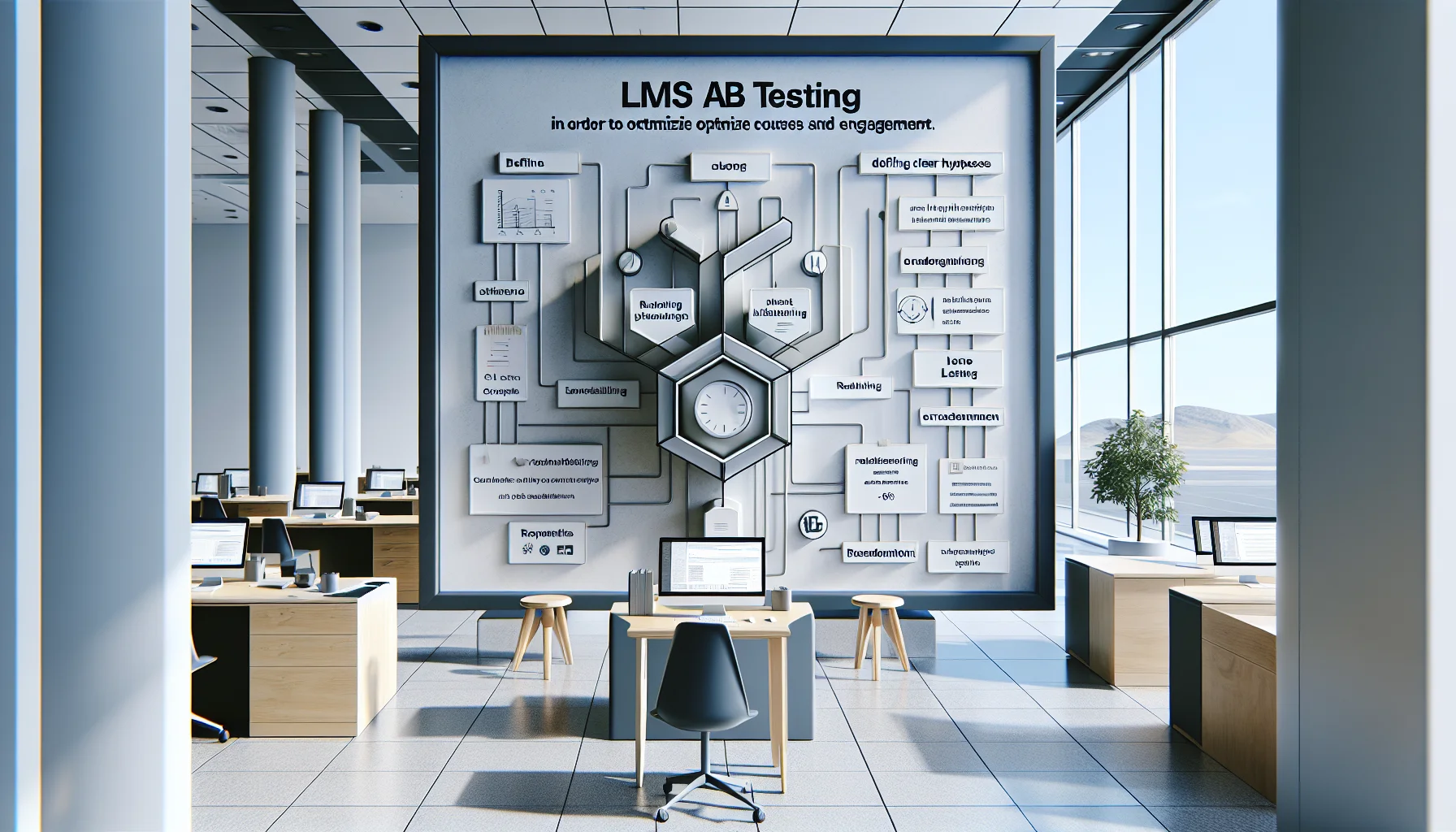
Actionable steps for running LMS A/B testing: define clear hypotheses, randomize assignment, and track primary metrics like completion and retention. The article explains sample-size rules, analysis checks, implementation options (native LMS or API/LTI), and offers practical test ideas and a checklist to avoid common pitfalls.
 Lms
LmsDecember 23, 2025
Competency-based LMS shifts training from hours to demonstrated outcomes by mapping role outcomes to competencies, defining observable proficiency levels, and validating skills through mixed evidence. The article outlines framework design, LMS tagging and assessment rules, reporting dashboards, and a phased rollout—pilot, manager enablement, and governance—to scale validated competencies.
 Lms
LmsDecember 24, 2025
This article explains why gamification LMS succeeds across sectors and outlines practical design patterns — progress systems, micro-challenges, leaderboards, and badges — that increase engagement and skill transfer. It recommends a staged rollout: define outcomes, run a 4-week pilot, measure return rate and on-the-job performance, then iterate using cohort analysis and learner feedback.