


This article explains step-by-step how to run hybrid DEI learning workshops using branching scenarios to practice empathy. It covers pre-work checklists, facilitator guides, live debrief scripts, breakout roles/timing, and post-work measurement. Facilitators will learn practical templates and rehearsal tips to ensure psychological safety and measurable behavior change.
hybrid DEI learning blends live facilitation with scenario-based practice to create deeper empathy and behavioral change. In our experience, pairing carefully designed branching scenarios with clear facilitator roles and structured debriefs produces more actionable outcomes than lecture-only formats. This playbook outlines a step-by-step approach for facilitators running hybrid DEI sessions, including pre-work, live debriefs, breakout activity designs, role assignments, scripts, and post-work reflection.
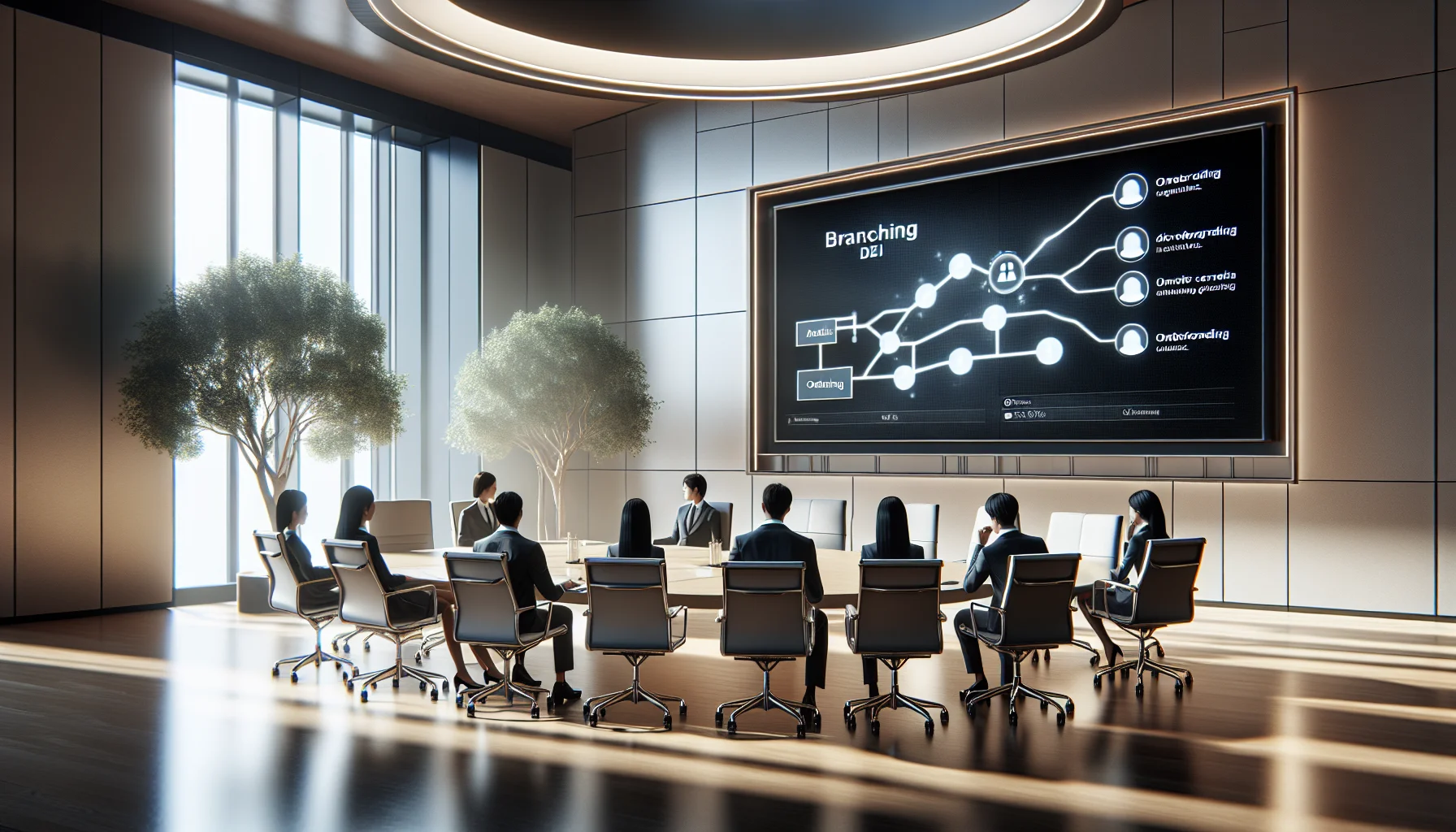
Branching scenarios let learners experience consequences, test responses, and see alternative perspectives in a controlled, repeatable environment. For hybrid DEI learning, scenarios can be delivered to in-room participants via printed prompts and to virtual attendees via an LMS or shared document, keeping decisions synchronized across modalities.
We've found that three mechanisms drive impact:
Empathy practice in hybrid DEI learning needs safe iteration, targeted feedback, and relevance. Studies show that practice with immediate, behavior-focused feedback improves skill adoption. For blended learning, that means combining asynchronous scenario runs with synchronous debriefs to solidify learning.
Good pre-work eliminates friction and aligns expectations. For hybrid DEI learning, send concise pre-work that primes values, outlines logistics, and assigns roles. We've found that short, specific tasks reduce drop-off and create richer live discussions.
Pre-work checklist (send 5–7 days before):
Facilitator guides should include the scenario tree, expected learner pathways, and key learning points for each branch. Provide facilitators with a one-page flow map so they can quickly locate discussion nodes during live facilitation.
Train facilitators on the branching logic and common learner reactions. Practice co-facilitation rounds and role-play the most challenging branches. In our experience, 60–90 minutes of rehearsal for each new scenario reduces facilitator uncertainty and improves timing.
Running hybrid DEI workshops with branching scenarios requires choreography: timing, shared artifacts, and a clear moderator. The core design combines an initial asynchronous scenario run, small-group role practice, and a facilitated full-group debrief.
Basic session rhythm (90 minutes example):
Scripts and facilitator language keep hybrid groups aligned. Use concise prompts and explicit timing cues. Sample debrief starter: "Describe the decision you made and the outcome you observed. What surprised you?" Follow with targeted questions that link to behavior change (scripts below).
To manage engagement across remote and in-person participants, use a shared decision board (digital whiteboard or live document) and replicate in-room artifacts virtually. This reduces the feeling of separation that frequently undermines hybrid DEI learning.
Use these scripted prompts to maintain psychological safety and surface learning:
Debriefs are where learning transfers into practice. For hybrid DEI learning, facilitators must explicitly manage voice equity so remote participants aren't marginalized. Assign a co-host to monitor chat and virtual hand-raises, and call on remote voices by name.
Begin debriefs with a psychological safety script that we use: "This is a learning space; mistakes are expected. Share observations, not judgments. Assume good intent and speak from your experience." Repeat this before sensitive branches.
Use structured round-robin responses to ensure balanced participation. If time is tight, use a "popcorn + 2" rule: quick popcorn comments, then ask two people for a 60-second reflection. This balances energy and depth in mixed groups.
For platforms and monitoring, it's practical to combine a live facilitator dashboard with participant analytics (available through Upscend) to spot silent participants or uneven engagement patterns during debriefs.
When a conversation becomes heated, pause and name the behavior: "I notice elevated emotion. Let's take 60 seconds to breathe." Then move to an evidence-based question: "What part of the scenario made you feel this way?" This centers observation over accusation and protects safety for participants who are more vulnerable.
Breakouts are the engine of empathy practice. For hybrid DEI learning, mix remote and in-room participants into the same small groups whenever possible, with one designated person to summarize and share back to the larger group.
Essential breakout roles (assign at table start):
Timing template for a 30-minute breakout:
Facilitator best practices for hybrid empathy training include pre-assigning roles, setting explicit timeboxes, and circulating prompts to the groups. In our workshops, rotating the observer role yields richer reflections and reduces defensiveness.
Post-work closes the learning loop. For hybrid DEI learning, follow-up must be immediate and specific to keep momentum. Send a one-page summary with the group's key insights, a short reflection survey, and concrete behavior nudges for the next 7–14 days.
Measurement and accountability options:
We've found that linking scenario branches to measurable behaviors reduces ambiguity. For example, map scenario choices to three observable behaviors that observers can rate on a simple 1–5 rubric during peer check-ins. This provides both qualitative and quantitative signals for impact.
Downloadable facilitator checklist: include pre-work items, a 90-minute timing template, debrief scripts, role cards, and a post-work measurement plan in your facilitator pack. Use the checklist to standardize delivery across facilitators and cohorts.
Running successful hybrid DEI workshops using branching scenarios is operational work: design scenarios with clear learning targets, rehearse facilitators, scaffold safe debriefs, and mandate post-work accountability. Our experience shows that when facilitators use structured timing templates, explicit role assignments, and focused debrief scripts, hybrid DEI learning produces measurable shifts in behavior.
Common pitfalls to avoid: under-preparing facilitators, ignoring remote engagement, and skipping the post-work accountability loop. Address these by investing in rehearsal time, assigning a virtual co-host, and collecting short behavioral commitments after each session.
Facilitator best practices for hybrid empathy training summarized: rehearse scenarios, use role rotations, keep debriefs behavior-focused, and measure short-term actions. With those pieces in place, branching scenarios become a reliable tool for building empathy across distributed teams.
Ready-to-use: download the facilitator checklist and 90-minute timing templates to standardize your next hybrid session. Use the checklist to align co-facilitators, confirm tech, and ensure every breakout has a recorder and observer. That small operational investment increases participant engagement and learning transfer.
Call to action: Download the facilitator checklist now to implement these steps in your next hybrid DEI learning session and run a rehearsal with your facilitation team this week.
The Upscend Team provides actionable insights on technology and business strategy.
Book a walkthrough and we'll show you how it applies to your own content.
 ESG & Sustainability Training
January 5, 2026
Branching scenarios embedded in onboarding make DEI learning contextual and actionable, boosting retention and measurable behavior change. Use a role-first, modular pattern: pilot cohorts, automated HRIS enrollment, scenario libraries, localization, and leader reinforcement. Track choice analytics, iterate content, and scale with governance to avoid maintenance debt.
 ESG & Sustainability Training
January 5, 2026
This article presents a practical decision matrix and heuristics to choose between branching scenarios and passive eLearning for DEI. It covers five criteria (complexity, emotional risk, audience scale, budget, assessment), offers sample scenarios and implementation steps, and provides a quick checklist to pilot and measure results before scaling.
 ESG & Sustainability Training
January 5, 2026
This article maps options for training internal teams to write and manage DEI branching scenarios, comparing vendor-led workshops, vendor-neutral programs, and consultants. It provides a 3-day train-the-trainer syllabus, maturity milestones, KPIs, common fixes, and budget ranges to help L&D move from vendor dependency to sustainable in-house authorship.
 Talent & Development
January 28, 2026
Adaptive scenarios convert static case studies into evolving problem spaces that, paired with AI tutors, personalize coaching and accelerate executive critical thinking. The article covers adaptive architectures, immersive VR/AR, microlearning, ethics and governance, expected ROI, and a 3-step readiness checklist for piloting adaptive scenarios in 2026.