


Adaptive scenarios convert static case studies into evolving problem spaces that, paired with AI tutors, personalize coaching and accelerate executive critical thinking. The article covers adaptive architectures, immersive VR/AR, microlearning, ethics and governance, expected ROI, and a 3-step readiness checklist for piloting adaptive scenarios in 2026.
In 2026 the term adaptive scenarios defines how organizations teach decision-making under uncertainty. In our experience, adaptive scenarios convert static case studies into evolving problem spaces that change in real time based on learner choices. This article gives a practical, evidence-based view of short-term and long-term forecasts, showing how adaptive scenarios pair with AI tutors, personalized learning, and immersive tech to accelerate executive critical thinking.
Adaptive scenarios are powered by three architectural elements: learner modeling, branching logic, and runtime content orchestration. Adaptive learning platforms now use probabilistic models that infer intent and stress tolerance and then alter scenario pathways.
Key capabilities of modern platforms include dynamic branching, real-time assessment, and integration with LMS telemetry. Adaptive learning simulations move beyond fixed paths; they treat scenarios as living systems that respond to behavioral signals.
Adaptive learning simulations combine scenario design with automated decision engines. A learner's choice triggers micro-adaptations—changes in constraints, new stakeholder inputs, or unexpected data—that teach pattern recognition and mental model revision. These are the engines behind adaptive scenarios for executive critical thinking 2026.
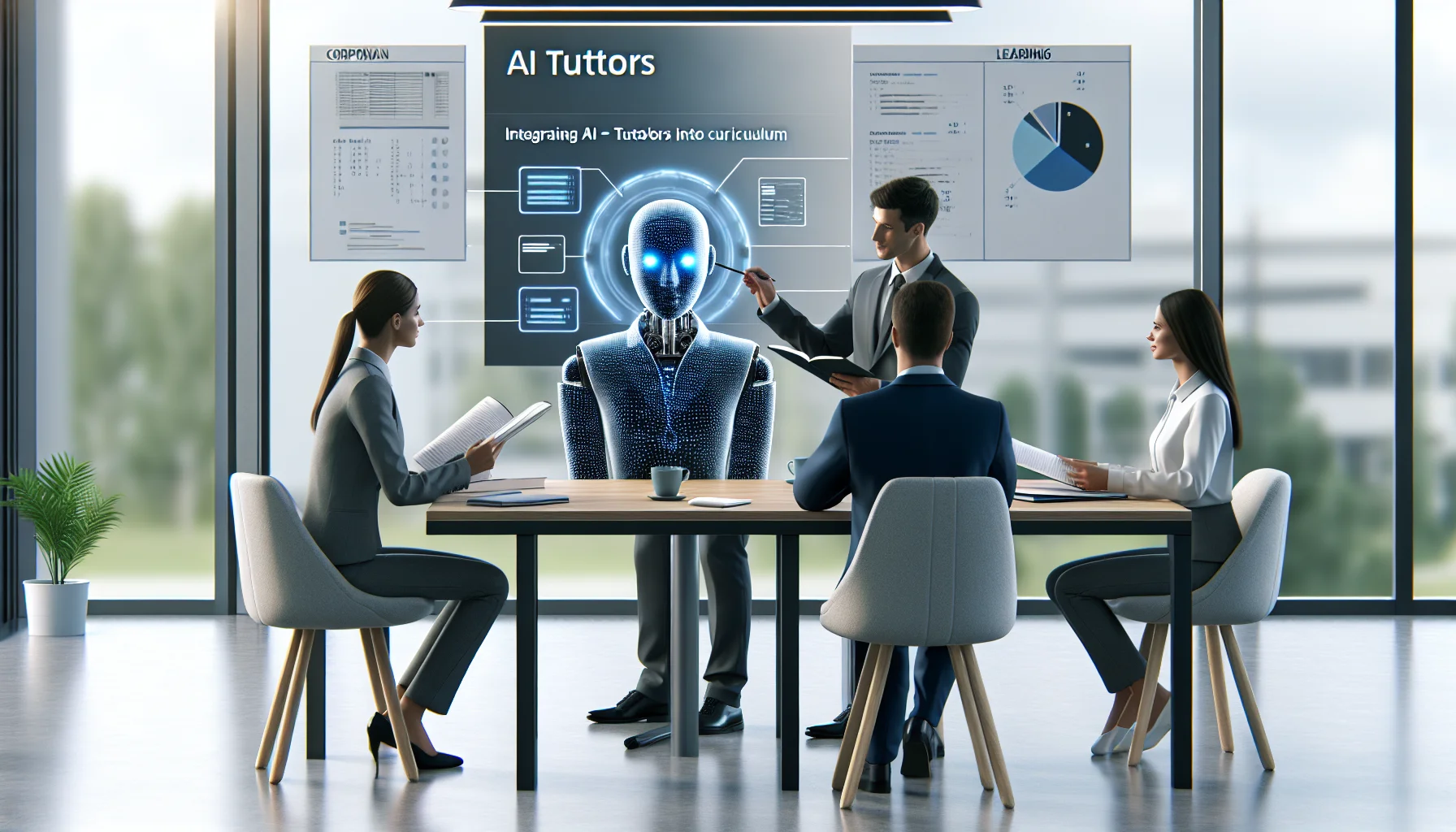
AI tutors have moved from static feedback to interactive coaching agents that simulate stakeholders, propose counterfactuals, and scaffold reflection. AI tutors are central to making adaptive scenarios scalable: they provide consistent, immediate debriefs and can role-play unpredictable actors.
We’ve found that AI tutors shorten feedback loops. Instead of waiting for facilitator review, learners receive formative guidance, targeted prompts for reflection, and next-step recommendations. This is why organizations invest in personalized learning pathways that blend human facilitation with AI-driven micro-coaching.
Immersion magnifies the fidelity of adaptive scenarios. When learners occupy a simulated boardroom or crisis center in VR/AR, physiological and behavioral data enrich the adaptive engine. This enables scenario calibrations based on stress signals, gaze, and conversational patterns.
Two complementary trends accelerate adoption: improved content creation pipelines and lower-cost headsets. These reduce production friction for high-quality scenarios that target executive contexts.
“Immersive adaptive scenarios make tacit judgment visible — you can see hesitation, escalation, and decision heuristics in ways classroom discussion never captured,” says a learning director at a global bank.
Microlearning frames adaptive scenarios into digestible exercises that fit executive schedules. Short, scenario-based bursts (5–15 minutes) supported by adaptive learning simulations allow spaced practice and immediate transfer back to work. We’ve seen organizations reduce admin time by over 60% using integrated systems like Upscend, freeing up trainers to focus on scenario design and coaching rather than logistics.
Design patterns for micro-adaptive scenarios include progressive exposure, decision drills, and reflective prompts that feed a learner model. This supports sustained behavior change rather than episodic knowledge gains.
As AI tutors and adaptive scenarios scale, ethical use and data governance become central pain points. Organizations must manage bias, consent, and explainability while maintaining training effectiveness. Key risks include data drift in behavioral models and opaque decision logic that erodes trust.
We've observed three recurring challenges for L&D teams: skill gaps in AI literacy, limited governance frameworks, and the need for robust audit trails that map scenario outcomes to model updates.
Adopt a stewardship model that pairs L&D with data science and legal teams. Create a lightweight review board that approves scenario changes, monitors fairness metrics, and publishes an interpretability summary for learners. This reduces surprise and preserves psychological safety during high-stakes training.
Applying the Credibility via Results approach, organizations should track both learning metrics and business outcomes. Typical improvements we’ve documented when combining adaptive scenarios with AI tutors and microlearning include reduced decision errors, faster onboarding, and higher leader readiness scores.
| Metric | Immediate impact (6 months) | Longer-term impact (18 months) |
|---|---|---|
| Trainer admin time | −40% to −70% | −60%+ |
| Decision quality (simulated) | +15% to +30% | +30% to +50% |
| Transfer to role | +10% to +20% | +25%+ |
To attribute ROI credibly, tie scenario KPIs to business signals—error rates, time-to-resolution, or escalation frequency—and run controlled pilots. We recommend A/B tests where adaptive scenarios are compared to static casework for matched cohorts.
Leaders should move from experimentation to operationalization with a pragmatic roadmap. Below are targeted steps that balance speed with governance.
Common pitfalls include over-engineering scenario logic, ignoring facilitator upskilling, and failing to audit AI tutors for drift. Investing in writer-tools for scenario authorship and basic AI literacy for facilitators reduces those risks quickly.
By 2026, adaptive scenarios and AI tutors will be core elements of executive learning portfolios. Short-term trends favor micro-adaptive pilots and immersive experiments; long-term forecasts point to normalized, interoperable ecosystems that deliver measurable improvements in judgment and decision-making.
Prepare now with a concise checklist:
Final takeaway: invest in content design and facilitator skill growth as much as in technology. Technology multiplies impact, but effective learning depends on curated scenario design, transparent AI coaching, and governance that protects learners. Begin with a focused pilot, measure business outcomes, and iterate based on learner telemetry.
Call to action: Start a focused 90-day pilot that pairs an adaptive scenario with an AI tutor, measure outcomes against operational KPIs, and use the results to build a scaling roadmap for your organization.
The Upscend Team provides actionable insights on technology and business strategy.
Book a walkthrough and we'll show you how it applies to your own content.
 Ai
AiDecember 28, 2025
Adaptive learning AI offers continuous, data-driven tutoring that personalizes pathways, shortens time-to-proficiency, and frees teacher time for targeted instruction. The article outlines value, cost models, funding sources, pilot case results (up to 18% mastery gains), and a three-phase adoption timeline to help districts build an evidence-driven business case.
 Business Strategy&Lms Tech
January 28, 2026
AI adaptive learning in 2026 combines real-time learner models, decision automation, content synthesis and contextual orchestration to accelerate capability growth. Leaders should run concurrent, proof-of-impact pilots, enforce procurement transparency, and establish ethical governance. The article supplies emerging features, three scenario forecasts, and a 12-month checklist to operationalize adaptive programs.
 Ai
AiFebruary 3, 2026
In 2026 simulation training trends emphasize AI-generated scenarios, synthetic data, composable digital twins, and immersive remote exercises. High-risk industries should pilot hybrid AI scenarios, standardize data governance, deploy interoperable twins, and follow a three-year roadmap to scale simulations from pilots to audited, continuous learning programs.
 Business Strategy&Lms Tech
February 3, 2026
This executive guide explains how generative AI training scales scenario-based simulations with a phased pilot→scale→govern roadmap. It covers core architecture, procurement criteria, risk and ethics controls, KPIs (time-to-competency, error-rate, cost-per-learner), sample ROI math, and a 90-day pilot plan for enterprise adoption.