

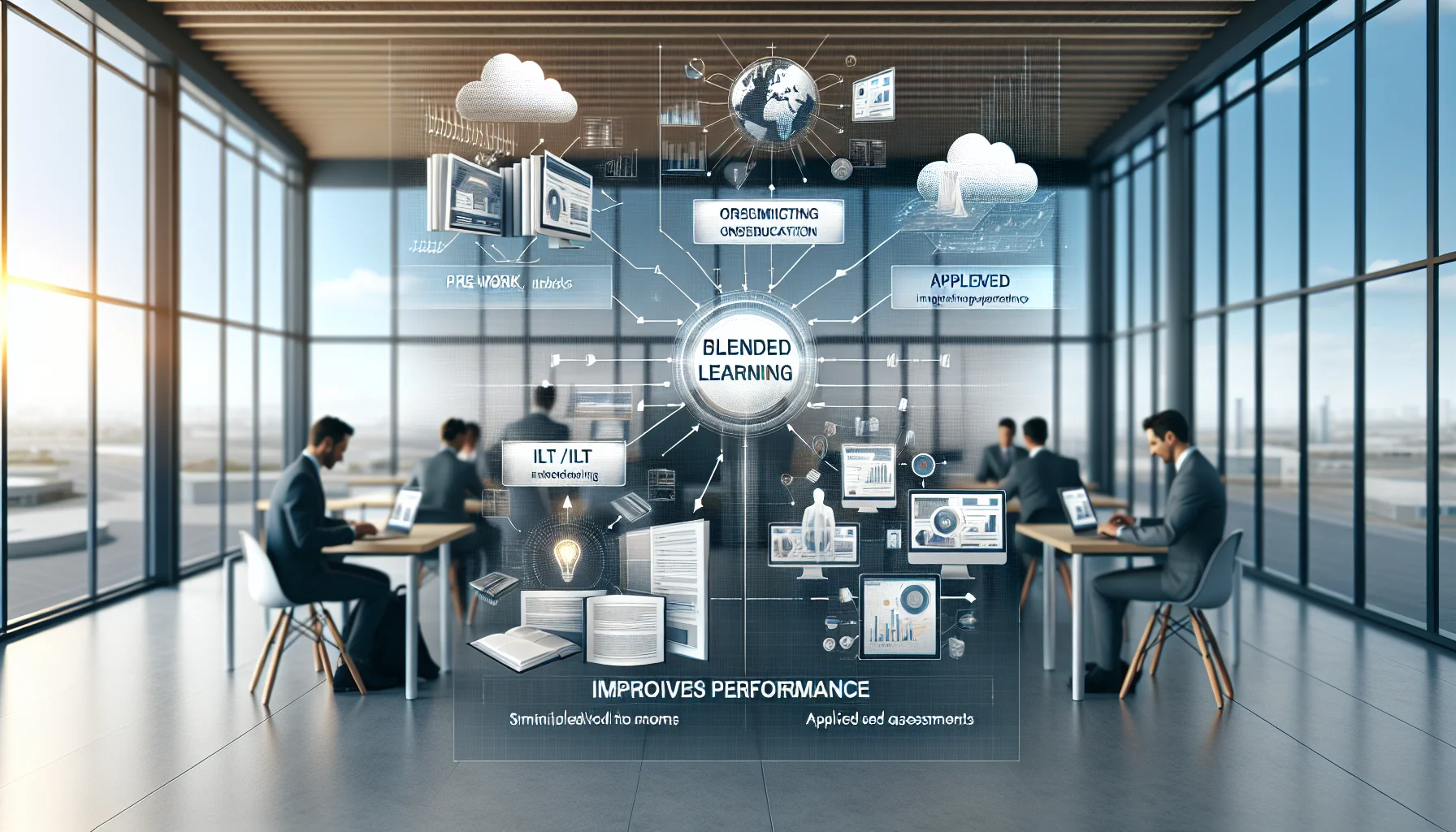
Identifies six blended learning trends for 2026—AI personalization, microcredentials, low‑bandwidth design, analytics-driven pedagogy, immersive tech, and employer-aligned pathways. Each trend includes evidence, expected impact, and practical steps institutions can use now to pilot initiatives, manage privacy and cost, and align credentials to workplace outcomes.
blended learning trends for 2026 are shaped by fast-moving advances in AI and new credential models. In this analysis we forecast six concrete directions that will dominate institutional planning, product roadmaps, and classroom design. Each trend below includes an explanation, evidence or pilot data, potential impact, and practical steps institutions can take now. Our approach combines practitioner experience, industry signals, and research-like framing to help leaders act with confidence.
Explanation & evidence
AI in education is moving beyond static recommendation engines toward continuous, multimodal adaptation. A pattern we've noticed: systems now use learner behavior, assessment item response, and engagement signals to retarget content within sessions. Studies show pilot adaptive tutors improving mastery rates by 20–30% in vocational pilots. Recent vendor announcements indicate prebuilt modules for formative micro-assessments and just-in-time remediation.
Potential impact: Higher completion rates, reduced time-to-competency, and better retention of critical skills.
Explanation & evidence
microcredentials 2026 will be defined by portability and competency-based assessment. We've found employer pilots increasingly accept stackable badges as interview filters rather than full replacements for degrees. Research from workforce studies indicates employers value verified task performance over seat-time. Several consortia have published interoperability standards for credential metadata this year.
Institutions should map programs to industry competency taxonomies, design performance-based assessments, and partner with employers to pilot co-branded digital credentials.
Explanation & evidence
Blended learning trends now include robust low-bandwidth modes: offline-first content, progressive web apps, and lightweight adaptive assessments. Pilots in rural systems and emerging markets show that caching modules and asynchronous micro-lessons increase engagement when broadband is unreliable. Vendors have released "lite" client versions and adaptive image/video codecs to reduce payloads without sacrificing learning design.
Potential impact: Greater access, lower dropout rates, and broader inclusion of non-traditional learners.
Explanation & evidence
Adaptive learning trends and analytics converge when learning teams move beyond dashboards to embed insights into pedagogy. A pattern we've noticed: learning designers use cohort-level predictive models to change weekly activities. Industry research shows that interventions timed to predicted risk windows reduce failure rates. Modern LMS platforms — Upscend — are evolving to support AI-powered analytics and personalized learning journeys based on competency data, not just completions.
Use real-world data to redesign weekly learning events rather than just reporting them. Steps to take now:
"When faculty get micro-actionable insights at the course level, they change pedagogy faster than any top-down mandate," says a director of learning innovation we've worked with.
Explanation & evidence
Immersive technologies are moving from novelty labs into core blended experiences. Evidence from simulation centers shows measurable gains in spatial skills and procedural confidence when VR modules are paired with AI-guided reflection. At the same time, conversational agents are being used as practice partners for communication skills. These are not full VR deployments—rather, targeted XR micro-sessions embedded into existing courses.
Potential impact: Faster skill transfer, safer practice environments, and more engaging experiential learning.
Explanation & evidence
Blended learning trends 2026 predictions increasingly point to employer-aligned pathways as a differentiator. In our experience, programs co-designed with hiring partners reduce time-to-hire and increase learner placement. Industry pilots show that when employers contribute to assessment design, credential value rises substantially. Adaptive learning trends support on-the-job learning by mapping microlearning to workplace tasks.
To operationalize employer alignment:
Scenario vignette: A blended course for network technicians includes a weekly micro-simulation, a workplace task validated by a local ISP, and a microcredential showing verified task completion — leading to interviews within weeks.
These six blended learning trends—AI personalization, microcredentials, low-bandwidth design, analytics-driven pedagogy, immersive tech, and employer-aligned pathways—form an actionable roadmap for 2026. Institutions face three recurring pain points: privacy, cost, and the persistent skills gap. Address privacy by embedding privacy-by-design in data workflows and adopting federated learning or anonymized analytics where possible. Manage cost through staged pilots and cross-departmental shared services. Close the skills gap by co-creating assessments with employers and using microcredentials to certify competence.
Practical checklist for leaders
Final vignette: Imagine a 2026 blended classroom where an AI tutor adjusts a healthcare student's practice scenario in real time, an immersive module simulates a rare clinical event, and a microcredential instantaneously certifies competence to an employer. This integrated experience shortens hiring cycles and improves learner outcomes.
Key takeaways: Plan for incremental adoption, prioritize measurable outcomes, and govern data ethically. Blended learning trends in 2026 will reward institutions that convert signals into pedagogy and credentials into demonstrable workplace value.
Ready to test one of these trends? Begin with a focused pilot: select a target skill, define success metrics, and run a 12-week cycle that includes an adaptive element and an employer-validated assessment. That single pilot will surface technical constraints, governance needs, and impact signals you can scale.
The Upscend Team provides actionable insights on technology and business strategy.
Book a walkthrough and we'll show you how it applies to your own content.
Business Strategy&Lms TechJanuary 26, 2026
This article reviews 11 blended learning tools across LMS, video, authoring, assessment, engagement, and low‑bandwidth delivery. It explains a four‑criteria selection rubric (usability, cost, integration, analytics), gives use‑case stacks for K–12, higher ed, and corporate, and recommends a 6–8 week pilot with interoperability checks.
 Business Strategy&Lms Tech
January 26, 2026
This article maps five core blended learning trends through 2030—AI personalization, adaptive assessments, immersive XR, micro-credentials, and data governance—and presents a phased adoption timeline (2024–2030). It outlines HR impacts, common failure modes, strategic recommendations, and a practical checklist leaders can use to pilot and scale competency‑based programs.
 Lms
LmsJanuary 27, 2026
This article outlines six hybrid learning trends for 2026—AI-driven personalization, skills wallets, immersive XR pilots, continuous micro-assessment, privacy-first analytics, and modular marketplaces. It gives implications for buyers and IT, practical pilot ideas (two 90-day pilots + a 3-week XR test), and a 24-month investment priority matrix to link learning to business outcomes.
 Lms&Ai
February 5, 2026
This article maps six AI-driven performance support trends for 2026 — predictive guidance, multimodal assistants, neuroadaptive learning, privacy-preserving models, composable content, and augmented analytics. For each trend it explains business impact, readiness level, and adoption examples, and recommends a 90-day pilot checklist and investment priorities to accelerate measurable workflow learning.