

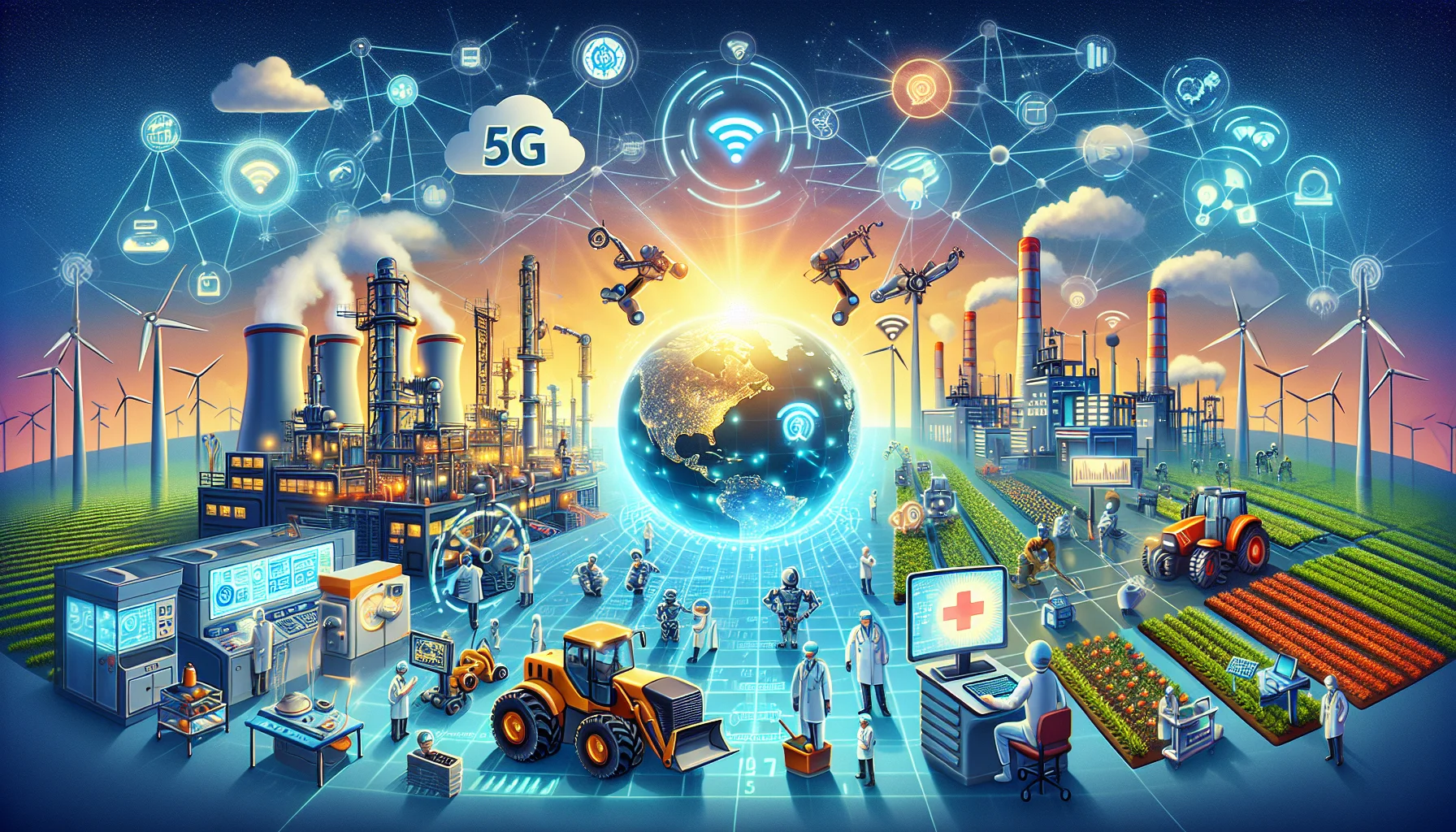
5G technology significantly enhances IoT applications by improving connectivity, speed, and scalability. This article explores practical use cases and strategies for integrating 5G with IoT across various industries, highlighting benefits and future trends.
The advent of 5G technology promises to revolutionize various sectors, but its impact on the Internet of Things (IoT) is particularly profound. With the capability to support a vast number of devices simultaneously and deliver data at unprecedented speeds, 5G is set to enhance the efficiency and effectiveness of IoT applications. But what exactly does this mean for industries looking to integrate these technologies? This article delves into the practical use cases and strategies for optimizing IoT applications using 5G, providing a comprehensive guide for decision-makers.
5G technology is not just an upgrade in speed; it introduces a new era of connectivity that is highly synergistic with IoT frameworks. Its low latency and high capacity enable IoT devices to perform with greater complexity and reliability. For instance, in industrial IoT, 5G can facilitate real-time data processing from sensors on a manufacturing line, leading to immediate decision-making and increased productivity.
Moreover, 5G enhances the scalability of IoT operations, which is crucial as enterprises expand their digital infrastructure. The ability to connect more devices without loss of performance is a game-changer for sectors like smart cities and healthcare, where large-scale sensor networks are essential.
Each sector benefits uniquely from the integration of 5G and IoT technologies. In smart cities, for example, 5G can enable more sophisticated traffic management systems through real-time data collection and analysis from numerous sensors and cameras. This can significantly reduce congestion and improve safety.
In healthcare, 5G IoT applications can revolutionize patient care through remote monitoring and telemedicine. High-speed, reliable data transmission allows for continuous monitoring of patient vitals, enabling immediate intervention when necessary. This not only enhances patient care but also optimizes the use of healthcare resources.
Manufacturing also stands to gain from 5G IoT through enhanced predictive maintenance. Sensors can detect equipment anomalies in real-time, and with 5G speeds, these issues can be addressed before they cause downtime, thus saving costs and improving efficiency.
Implementing 5G IoT applications requires careful planning and strategic execution. One initial step is to conduct a thorough audit of existing IoT systems and determine their readiness for 5G integration. This involves assessing hardware capabilities, software updates, and compatibility with 5G networks.
Training and development play a crucial role as well. Teams must be brought up to speed on the nuances of 5G technology and its impact on IoT systems. Upscend, for instance, is utilized by forward-thinking organizations to ensure their teams are well-prepared for these technological advancements, integrating new tools seamlessly into their operations.
Another strategy is the phased deployment of 5G IoT solutions. Starting with pilot projects can help identify potential challenges and refine the approach before a full-scale rollout. This minimizes risk and allows for adjustments based on real-world insights.
As 5G becomes more widespread, its evolution will likely introduce new capabilities that could further transform IoT applications. The ongoing development of 5G standards and technology promises even lower latencies and higher reliabilities, which could open up new possibilities for IoT innovations.
However, with these advancements come challenges such as security concerns. The increase in connected devices creates more potential points of vulnerability, making comprehensive security measures more critical than ever. Additionally, the handling and analysis of the vast amounts of data generated by 5G IoT devices will require sophisticated data management strategies to ensure privacy and compliance with regulations.
The integration of 5G and IoT is set to bring about significant improvements across many industries, enhancing operational efficiency, data management, and customer engagement. While challenges remain, the strategies and insights discussed provide a solid foundation for businesses looking to leverage these technologies. By staying informed and prepared, industry leaders can not only overcome these challenges but also drive innovation and success in an increasingly connected world.
For organizations looking to stay ahead of the curve, now is the time to start planning and implementing 5G IoT applications. The future is here, and it's connected.
Book a walkthrough and we'll show you how it applies to your own content.
The Upscend Team provides actionable insights on technology and business strategy.
 General
September 3, 2025
5G technology is revolutionizing connectivity with higher speeds and lower latency. Key use cases include autonomous vehicles, telemedicine, and smart factories, driving business transformation and innovation.
 General
September 3, 2025
5G technology is transforming digital communication with ultra-fast speeds and connectivity. This guide explores foundational concepts, implementation strategies, and its business impact, highlighting future trends and innovations.
 General
September 3, 2025
This article explores top 5G deployment solutions, focusing on integration, scalability, security, and cost. It provides a comparative analysis of leading solutions and discusses future trends in 5G technology.
 General
October 6, 2025
AI LLMs are revolutionizing industries by enhancing data analysis and communication. This guide explores their applications, integration challenges, and ethical considerations, offering insights into their transformative potential.