

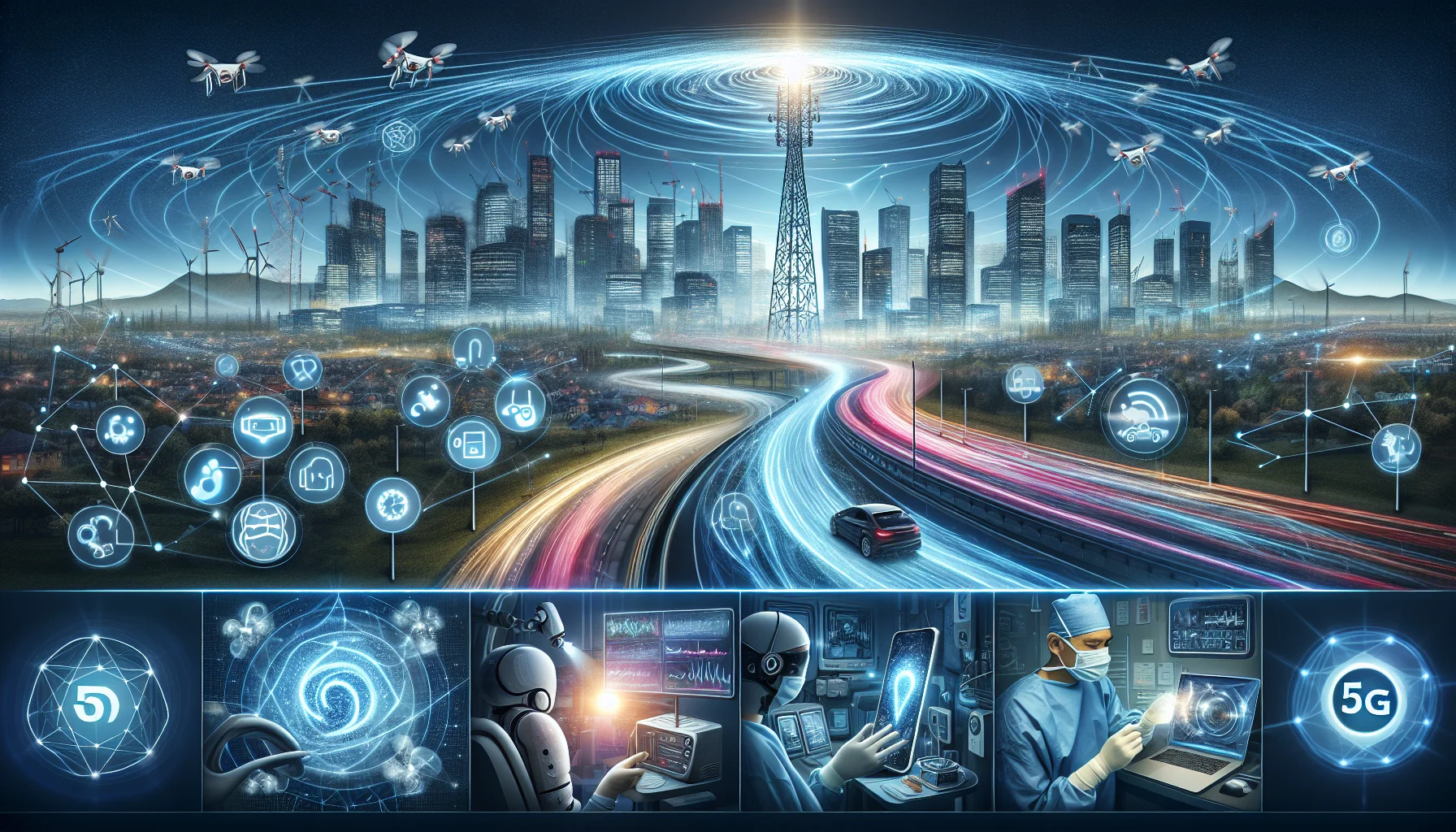
5G technology is revolutionizing connectivity with higher speeds and lower latency. Key use cases include autonomous vehicles, telemedicine, and smart factories, driving business transformation and innovation.
The fifth generation of wireless technology, commonly known as 5G, promises to revolutionize our digital landscape. But what exactly does this entail? As we delve into the transformative capabilities of 5G, we'll explore not just the technical specifications, but also the practical applications that will change industries. This discussion is not merely theoretical; it's a preview of the imminent technological enhancements that will affect everything from mobile internet speeds to IoT connectivity.
5G technology stands distinct from its predecessors with its ability to provide higher data speeds, reduced latency, and greater connectivity density. The backbone of 5G is its use of higher-frequency bands in the radio spectrum which allows data to be transmitted at much faster speeds than before. However, these frequencies have a shorter range and are more susceptible to interference, which has necessitated the development of new infrastructure technologies.
In the deployment of 5G, technologies such as Small Cells, Massive MIMO (Multiple Input Multiple Output), and beamforming are pivotal. These technologies work together to amplify signal quality and range, addressing the challenges posed by high-frequency transmission. The implications of these advancements extend beyond sheer speed enhancements, paving the way for real-time data processing and support for a multitude of IoT devices.
One of the most anticipated impacts of 5G is its potential to support emergent technologies like autonomous vehicles and telemedicine. For autonomous vehicles, 5G's low latency is crucial for the near-instantaneous communication required between sensors and decision-making algorithms. Similarly, in telemedicine, 5G facilitates remote monitoring and consultations, which rely on high-definition video streaming and real-time data sharing.
Industrial IoT is another significant area benefiting from 5G. Factories equipped with sensors that monitor machine performance and environmental conditions can leverage 5G for timely data analysis, leading to enhanced predictive maintenance and operational efficiency. These applications demonstrate the critical role that robust, real-time data communication plays across various sectors.
Despite its benefits, the deployment of 5G comes with its set of challenges. High on this list is the infrastructure requirement. Upgrading from 4G to 5G isn't just a matter of software updates; it involves substantial physical changes in the form of new antennas and transmitters. Moreover, the higher frequency bands of 5G have lower penetration capabilities requiring a denser network of antennas, potentially escalating the cost and complexity of urban deployments.
Another significant hurdle is ensuring security in an increasingly connected world. The vast number of devices connected to 5G networks opens new avenues for cyberattacks. Therefore, robust cybersecurity measures are integral to safeguarding user data and ensuring system integrity.
5G is set to transform businesses by enabling more agile, intelligent, and data-driven operations. For instance, retailers can use 5G to enhance customer experiences through augmented reality shopping and personalized promotions delivered in real-time as customers shop. Similarly, in manufacturing, 5G can drive the implementation of smart factories where machinery and equipment are interconnected, allowing for more precise control and efficiency.
Moreover, the role of 5G in business continuity cannot be understated. With its reliable and fast connectivity, 5G supports remote working capabilities, ensuring that businesses remain operational regardless of physical office constraints. This adaptability has been particularly crucial during the global shifts prompted by events such as the COVID-19 pandemic.
Looking ahead, the future of 5G holds vast potentials that extend into various sectors including smart cities, virtual reality, and beyond. As urban areas become more congested, smart city applications of 5G can manage everything from traffic flow to energy use, making cities more livable and efficient. In the realm of entertainment and media, 5G will enhance user experiences with faster download speeds and higher-quality streaming capabilities.
As we continue to witness the rollout of 5G, it's clear that this technology will be at the heart of digital transformation strategies across industries. From enhancing user experiences to enabling new business models, 5G will play a pivotal role in shaping the next era of technological innovation.
The Upscend Team provides actionable insights on technology and business strategy.
Book a walkthrough and we'll show you how it applies to your own content.
 General
September 3, 2025
5G technology is transforming digital communication with ultra-fast speeds and connectivity. This guide explores foundational concepts, implementation strategies, and its business impact, highlighting future trends and innovations.
 General
September 3, 2025
This article explores top 5G deployment solutions, focusing on integration, scalability, security, and cost. It provides a comparative analysis of leading solutions and discusses future trends in 5G technology.
 General
September 3, 2025
5G technology significantly enhances IoT applications by improving connectivity, speed, and scalability. This article explores practical use cases and strategies for integrating 5G with IoT across various industries, highlighting benefits and future trends.