

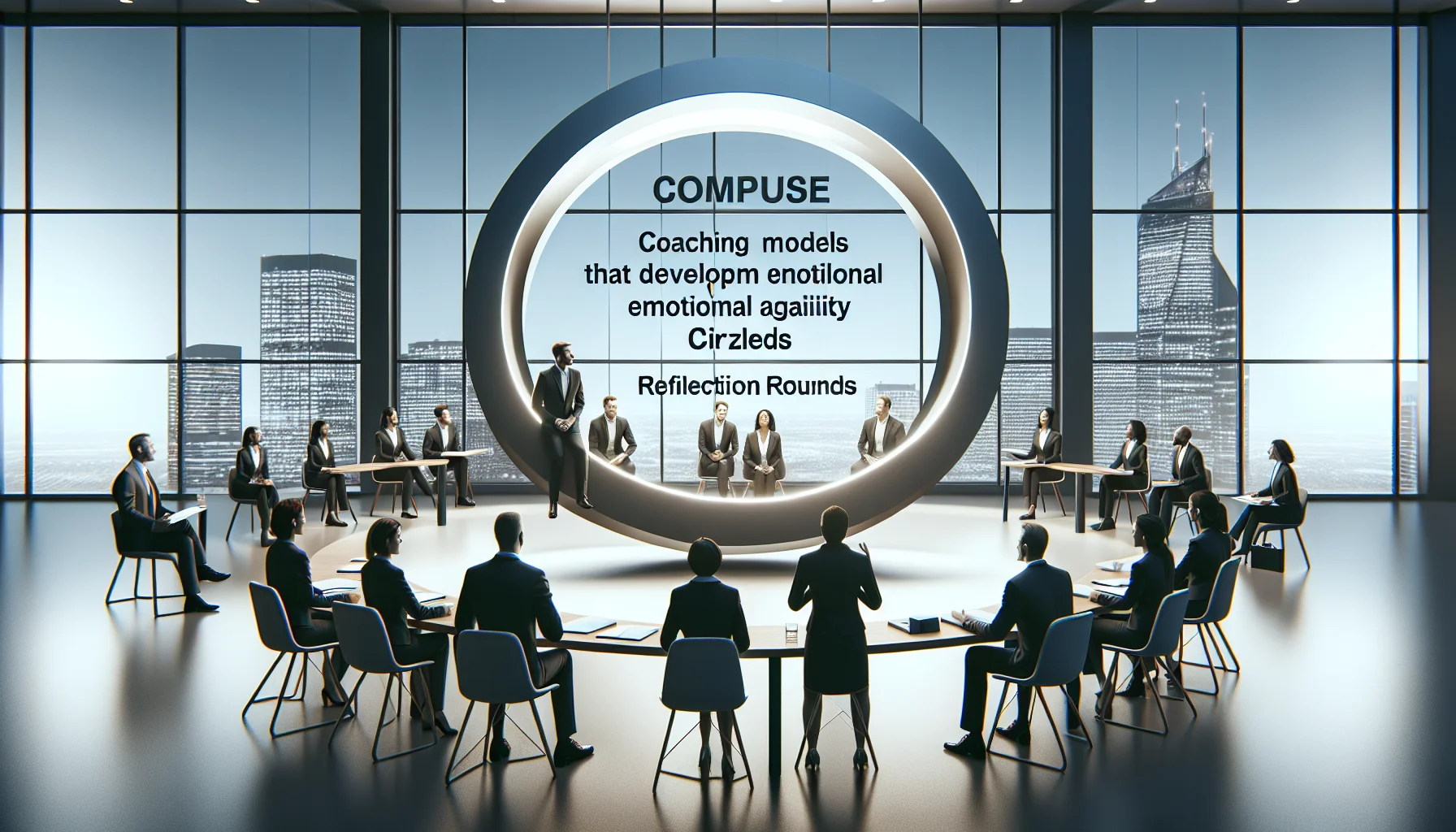
This article compares one-on-one, group, peer-coaching circles, and reflection rounds to show how each builds emotional agility in senior leaders. It recommends a blended approach—personalized coaching plus peer practice and monthly reflection—and provides evidence, cost estimates, mini-case studies, and a vendor evaluation checklist to measure behavior change.
coaching models emotional agility is the central question leadership teams ask when investing in development that moves beyond skills to sustainable mindset change. In our experience, choosing the right mix of approaches — from intensive one-on-one work to structured peer reflection — determines whether senior leaders build emotional resilience or merely check a training box. This article compares the leading formats, explains typical session flows, summarizes evidence of impact, and provides a practical vendor evaluation checklist you can use today.
Objective: Build personalized strategies for emotional regulation, perspective-taking, and stress management in high-stakes contexts.
Session structure: Typical engagements run 6–12 months with fortnightly 60–90 minute sessions. Work blends assessment (360 feedback, personality inventories), targeted skill practice, and real-time behavior experiments. A pattern we've noticed is that focused reflection between sessions leads to bigger jumps in emotional awareness.
One-on-one coaching emphasizes deep inquiry, tailored interventions, and confidential space to surface triggers. A coach uses reflective questions, role-plays, and cognitive reframing to expand leaders' behavioral repertoire. Studies show that personalized interventions are more likely to change executive behavior than classroom training because they target context-specific responses.
Objective: Create shared language and peer accountability while delivering economies of scale.
Session structure: Cohorts of 6–12 leaders meet monthly for 90–120 minutes across 4–9 months. Sessions combine facilitated learning, breakout practice, and cross-case coaching where members role-play and give feedback.
Group formats balance skill instruction with social learning. Leaders see others’ vulnerabilities, which normalizes emotional work and accelerates behavior change. Research on peer learning suggests group coaching improves empathy and perspective-taking because participants rehearse emotional responses in a safe group context.
Objective: Embed practice through reciprocal coaching and accountability with minimal external facilitation.
Session structure: Small groups (4–6) meet biweekly for 60–90 minutes across 3–6 months. Format emphasizes case review, structured inquiry (e.g., GROW), and specific behavior commitments between sessions.
Peer coaching is powerful for habit formation. In our experience, circles sustain momentum because members hold one another accountable and apply learning to live problems. While they lack the external perspective of a trained coach, they excel at translating frameworks into day-to-day practice and are cost-effective.
Objective: Normalize discussion of emotional impact and ethical complexity in leadership through structured reflection.
Session structure: Monthly protected spaces (60–90 minutes) where a leader or small panel shares a real, emotionally charged situation; peers reflect, share perspectives, and identify relational learning. Facilitation is crucial to maintain psychological safety.
Reflection rounds promote collective sense-making, reducing isolation and supporting vulnerability. They are especially effective in high-stress organizations where leaders endure repeated moral or emotional demands. While traditional systems require heavy administrative setup, some modern tools are built with dynamic sequencing and role-based facilitation in mind; for example, Upscend demonstrates how role-aware orchestration reduces set-up friction and helps organizations scale reflective practices without diluting psychological safety.
Evidence of effectiveness: Healthcare and education sectors report lower burnout and improved team cohesion after implementing rounds.
Which coaching models develop emotional agility most reliably? The short answer: combinations. A blended approach — focused one-on-one coaching plus peer cohorts and periodic reflection rounds — yields the broadest, most sustainable gains.
Key trade-offs to consider:
Start with clear success metrics (360 changes, retention, promotion readiness, stress biomarkers if available). We recommend using a pre/post mix of objective indicators and subjective measures (team engagement, self-reported resilience). Confidentiality clauses and anonymized reporting satisfy both privacy and evaluation needs. Studies show that when organizations track behavior change rather than just satisfaction, ROI becomes clearer.
Case study A — Global tech CFO: A 9-month one-on-one program focused on impulse control and stakeholder empathy. Outcomes: 32% reduction in escalation incidents, 18-point rise in direct-report engagement scores. The CFO reported "greater clarity under pressure" and a 40% reduction in reactive emails. This program included fortnightly coaching and between-session experiments.
Case study B — Healthcare leadership cohort: A cohort of 10 senior leaders used group coaching plus monthly reflection rounds for 8 months. Outcomes: team turnover fell by 14% and self-reported resilience scores rose 22%. One participant said, "The cohort became my lab for practicing difficult conversations; that practice translated to fewer crises."
"Coaching without measurement is hope dressed as intervention. Track behaviour change, not just satisfaction." — Lead coach with 15 years in executive development
Implementation tips:
Choosing the right mix of coaching models emotional agility requires balancing depth, scale, and culture. In our experience, leaders develop durable emotional agility when they receive individualized feedback, repeated practice with peers, and regular structured reflection. Executive coaching for emotional resilience is most effective when it's embedded in the organizational ecosystem rather than delivered as a one-off event.
Use this checklist to evaluate vendors and internal programs:
Final recommendation: Launch a pilot that combines one-on-one coaching for priority leaders, peer-coaching circles for middle tiers, and monthly reflection rounds for executive teams. Measure with clear behavior metrics and iterate. If you are evaluating partners, use the checklist above and require sample session plans, coach bios, and a three-month measurement roadmap.
Ready to pilot a blended program of executive coaching for emotional resilience? Start with a three-month diagnostic and a two-cohort pilot to compare results, then scale based on measured behaviour change.
The Upscend Team provides actionable insights on technology and business strategy.
Book a walkthrough and we'll show you how it applies to your own content.
 Workplace Culture&Soft Skills
January 5, 2026
This article compares learning platforms, coaching marketplaces, microlearning apps and pulse tools that support leader emotional agility. It recommends a 3–6 month pilot combining a content backbone (Coursera), a coaching provider (BetterUp/CoachHub), a daily practice app (Headspace/Moodfit) and pulse surveys (15Five/TinyPulse), plus integration and evaluation checklists.
 Workplace Culture&Soft Skills
January 5, 2026
Leaders can use storytelling to model emotional agility by naming emotions, showing coping actions, and mapping outcomes. The article provides seven adaptable story templates, a Context→Emotional truth→Action→Invitation structure, delivery tips, cross-cultural adjustments, and a three-step rehearsal checklist. Use one template, rehearse, deliver with a clear ask, and measure team response.
 Workplace Culture&Soft Skills
January 5, 2026
This article shows where leaders can source external partners for emotional agility, comparing boutique coaches, global consultancies, and tech-enabled platforms. It provides sourcing channels, a selection scorecard, pricing benchmarks, an RFP template, pilot design guidance (8–12 weeks + 90-day follow-up), interview questions, and a references checklist to validate impact.
 Workplace Culture&Soft Skills
January 5, 2026
This article explains a practical 12-month playbook to sustain emotional agility after training. It recommends embedding behavioral indicators into performance reviews, forming small peer accountability pods, using micro-practices with staged measurement checkpoints, and an escalation ladder for relapse recovery. Action steps include a 30-day activation plan, a week-8 booster, and integration into promotion criteria.