


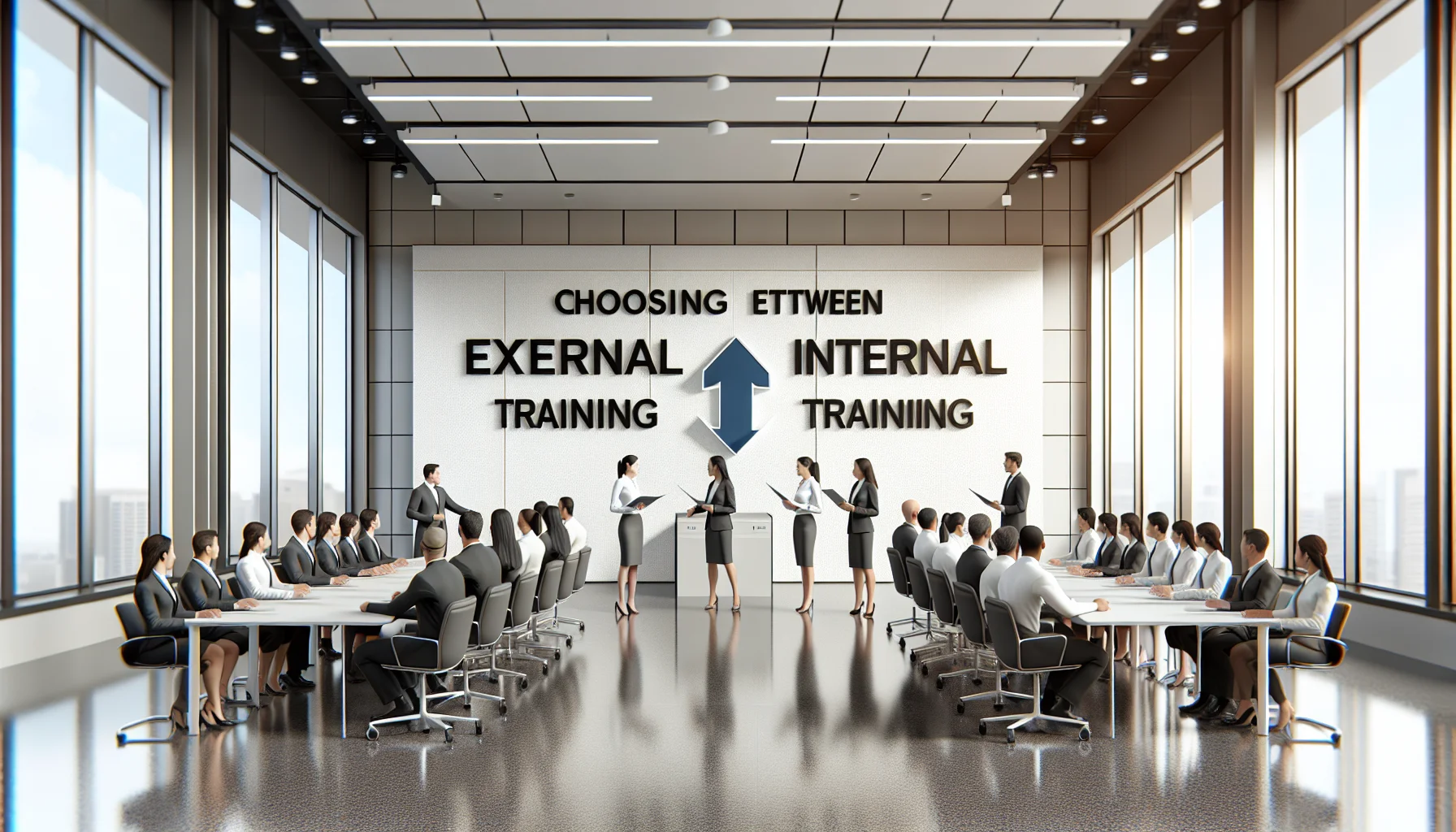
This article explains when external facilitation is preferable to internal trainers for inclusive leadership programs. Use five decision criteria—credibility, neutrality, cost, scalability, contextual knowledge—and a decision matrix to guide choice. It outlines hybrid models, 6–24 month transition timelines, essential vendor IP terms, and practical next steps for piloting and capability transfer.
external facilitation is often the pivotal decision in designing durable inclusive leadership programs. In our experience, the choice between external facilitation and internal trainers hinges on a small set of strategic trade-offs: credibility, neutrality, cost, scalability and contextual knowledge. This article breaks those trade-offs into a practical decision matrix, highlights hybrid delivery models, explains how to build internal capability, and reviews vendor partnership terms HR leaders need to negotiate.
We’ve found that clarity up front — not ideology — reduces friction. Below is a compact roadmap to help HR teams decide when to use external facilitation for inclusive leadership programs and how to manage the transition to internal ownership.
external facilitation is preferable when a program requires immediate training credibility with skeptical stakeholders, when perceived neutrality is essential, or when internal resources lack scale. In contrast, internal trainers win when deep context and long-term continuity matter more than initial impact.
Use these five criteria as a checklist:
We recommend scoring each criterion 1–5 for your program. Programs scoring high on credibility and neutrality but low on contextual needs point to external facilitation. Programs high on context and continuity are better served by internal trainers.
Below is a concise decision matrix HR teams can use during stakeholder discussions. It frames the trade-offs and gives a recommended approach based on typical scenarios.
| Scenario | Typical Need | Recommended Approach |
|---|---|---|
| Leadership team resistance to DEI topics | High credibility + neutrality | external facilitation for initial executive sessions, then transfer to internal trainers |
| Large global rollouts with varied contexts | Scalability + local contextualization | Hybrid model: external-designed curriculum + internal trainers |
| Ongoing capability building and culture reinforcement | Continuity + internal knowledge | Invest in internal trainers, supported by periodic external facilitation |
When uncertainty persists, pilot an executive program with external facilitation. Use metrics (engagement, behavior change, manager coaching uptake) to decide whether to scale with external partners or build internal capability.
One of the most practical patterns we’ve seen blends the strengths of both approaches: external facilitation to jump-start momentum and a structured capability build for internal trainers. Hybrid models reduce upfront cost while preserving training credibility.
Common hybrid architectures:
Practical tools that automate analytics and personalization help hybrid models scale faster. The turning point for most teams isn’t just creating more content — it’s removing friction. Tools like Upscend help by making analytics and personalization part of the core process, which speeds handoffs and reduces rework during the transition from external to internal delivery.
Hybrid approaches often reduce total cost of ownership. The upfront expense of external facilitation is offset by lower long-term delivery costs and faster behavior change, but only if the program includes a clear capability-transfer plan.
Transition plans are where many programs fail. We’ve found that a structured 6–12 month transfer program prevents knowledge loss and protects intellectual property.
Key elements of a successful transition:
Address IP transfer explicitly. We’ve seen contracts that unintentionally restrict the company’s use of materials; insist on a clause that grants the organization ownership or perpetual license to facilitator guides, participant materials, and recordings once milestones are met.
Expect 6–12 months for basic competence and 12–24 months for mastery across multi-site organizations. The timeline depends on cohort size, geographic spread, and the complexity of organizational dynamics.
Negotiating terms with external partners requires clear priorities: deliverables, IP transfer, data rights, and continuity planning. We recommend these non-negotiable contract elements when engaging external facilitation vendors:
Cost remains a common pain point. In our experience, the cheapest option is rarely the most cost-effective; prioritize vendors that demonstrate measurable outcomes and transparent pricing. Ask vendors to map expected ROI using real metrics: leader behavior change rates, manager coaching adoption, and retention changes in targeted cohorts.
Few HR teams budget for maintenance. Include annual refreshes and an ongoing advisory retainer for 12–18 months to protect continuity after the initial deployment.
Example 1 — External jump-started culture change: A multinational financial firm faced public incidents that had damaged trust. Leadership needed credible, neutral facilitation to model accountability. An external facilitation team delivered an intensive executive series, facilitated candid dialogues, and trained a cohort of internal coaches. Within 9 months, reported psychological safety scores rose and disciplinary incidents decreased. The external facilitator’s credibility accelerated leadership accountability.
Example 2 — Internal trainers were more effective: A tech company with rapid onboarding needs and a localized culture found that building internal trainers produced better long-term results. Internal facilitators integrated inclusive leadership practices into manager 1:1s and performance calibration meetings, creating consistent reinforcement. Over two years, promotion equity improved and learning became embedded in workflows.
Common pitfalls from these examples:
Deciding between external facilitation and internal trainers is not binary. Use a decision matrix based on training credibility, neutrality, cost, scalability, and contextual knowledge to guide choices. Hybrid models and structured transitions produce the best balance of short-term impact and long-term sustainability.
Practical next steps:
If you’d like a ready-to-use decision matrix and facilitator selection checklist tailored to your organization, request a sample plan aligned to your timeline and budget. This will help you move from debate to measurement quickly.
The Upscend Team provides actionable insights on technology and business strategy.
Book a walkthrough and we'll show you how it applies to your own content.
 Lms
LmsDecember 23, 2025
This article presents a practical framework to decide between external vs internal training using a five‑axis weighted scoring model (cost, speed, customization, IP, scalability). It includes a decision matrix, vendor due‑diligence checklist, sample RFP prompts, and a 6–12 month pilot plan to validate vendor impact before scaling.
 Psychology & Behavioral Science
January 12, 2026
Use a four‑factor decision framework—role criticality, regulatory constraints, scale, and cost—to decide when to apply personalized vs standardized training for neurodivergent learners. Start with a standardized core, add UDL and modular adaptive components, and reserve fully personalized paths for high‑impact, high‑risk roles; measure time‑to‑competency, errors, and retention.
 Business Strategy&Lms Tech
January 21, 2026
Internal mobility training can reduce hiring costs, accelerate time-to-productivity, and preserve culture when roles have adjacent skill overlap or high relational complexity. Use performance × potential selection, competency ladders, 3–6 month roadmaps and 90-day pilots with coaching. Track time-to-productivity, retention, and cost-per-hire equivalent to validate pilots.
 Business Strategy&Lms Tech
January 22, 2026
This article compares internal L&D and external freelance training platforms across six criteria—cost, speed, customization, compliance, scalability, reporting—and offers a pros/cons matrix, vendor archetypes, RFP questions, and an implementation decision flow. Use a 6–8 week pilot and a weighted decision matrix to choose the right model for contractor programs.