


Practical methods to measure psychological safety in virtual discussions using behavioral KPIs, short pulse surveys, and leader dashboards. The article defines voice, inclusion, and feedback-loop metrics, recommends a weekly/biweekly/monthly cadence, offers a survey question bank, and outlines dashboard visuals and action triggers for leaders running a 90-day pilot.
To measure psychological safety in virtual discussions you need a practical, data-driven approach that captures voice, inclusion, and feedback loops without violating trust. In our experience, leaders who succeed combine observational metrics, structured surveys, and operational dashboards so they can spot trends and intervene before issues escalate. This article lays out measurable dimensions, recommended psychological safety metrics, a survey question bank tailored for distributed teams, a data cadence, and a leader-facing dashboard blueprint.
Before you decide how to measure psychological safety, break the concept into operational dimensions you can instrument: voice (who speaks and can make suggestions), inclusion (who is heard and validated), and feedback loops (how concerns are raised and resolved). Each dimension must map to observable behaviors and data sources in virtual discussions.
Voice is measurable through participation counts, speaking time distributions, and frequency of idea submissions. Capture both synchronous signals (who speaks in meetings, how often someone interrupts) and asynchronous signals (messages posted, threads started). To control bias, combine raw counts with normalized rates per role, meeting type, and time zone.
Inclusion can be measured by response rates to prompts, follow-up actions after suggestions, and patterns of acknowledgement (e.g., explicit calls-out or private follow-ups). Feedback loops are operational: track the time from concern raised to owner assignment and to resolution. Those timestamps let you build the “closed-loop” KPI that shows whether voices result in change.
Choose a mix of leading and lagging indicators to measure psychological safety in virtual discussions. Leading KPIs give early warning; lagging KPIs capture outcomes. A balanced set helps leaders act with precision instead of reacting to anecdotes.
Each KPI should be tied to an operational definition so data engineers and people ops collect consistent signals.
| KPI | Type | Target |
|---|---|---|
| Participation rate | Leading | > 75% of attendees contribute |
| Anonymous submissions | Leading | Stable or declining trend after interventions |
| Escalation incidents | Lagging | Fewer repeat incidents; faster resolution |
Surveys remain the most direct way to measure psychological safety in virtual discussions because they capture perception alongside behavior. Good survey design for remote teams reduces bias, protects anonymity, and increases response rates.
Interpretation guidance: treat a change of 0.3 points on a 5-point scale as meaningful for teams under 50 people. For small teams, present aggregated roll-ups and qualitative summaries to avoid singling out individuals.
Surveys tell you "what people feel"; behavioral KPIs tell you "what people do." Use both to avoid false conclusions.
Decide on a cadence that balances signal and noise: weekly behavioral metrics, biweekly pulse surveys, and monthly deep-dive reports is a pragmatic baseline to measure psychological safety while keeping operational overhead manageable. In our experience, leaders who adopt this cadence catch trends early and can pilot interventions quickly.
Weekly: automated meeting analytics (participation, speaking share). Biweekly: short pulse survey for attitude and sentiment. Monthly: aggregated dashboard refresh with trend lines and anomaly detection. For initiatives, run targeted micro-surveys after interventions (e.g., after a manager coaching period).
Practical note: the turning point for most teams isn’t just creating more data — it’s removing friction. Tools like Upscend help by integrating meeting analytics, anonymized feedback collection, and personalization into the review process, making it quicker for leaders to close feedback loops and see whether interventions move the needle.
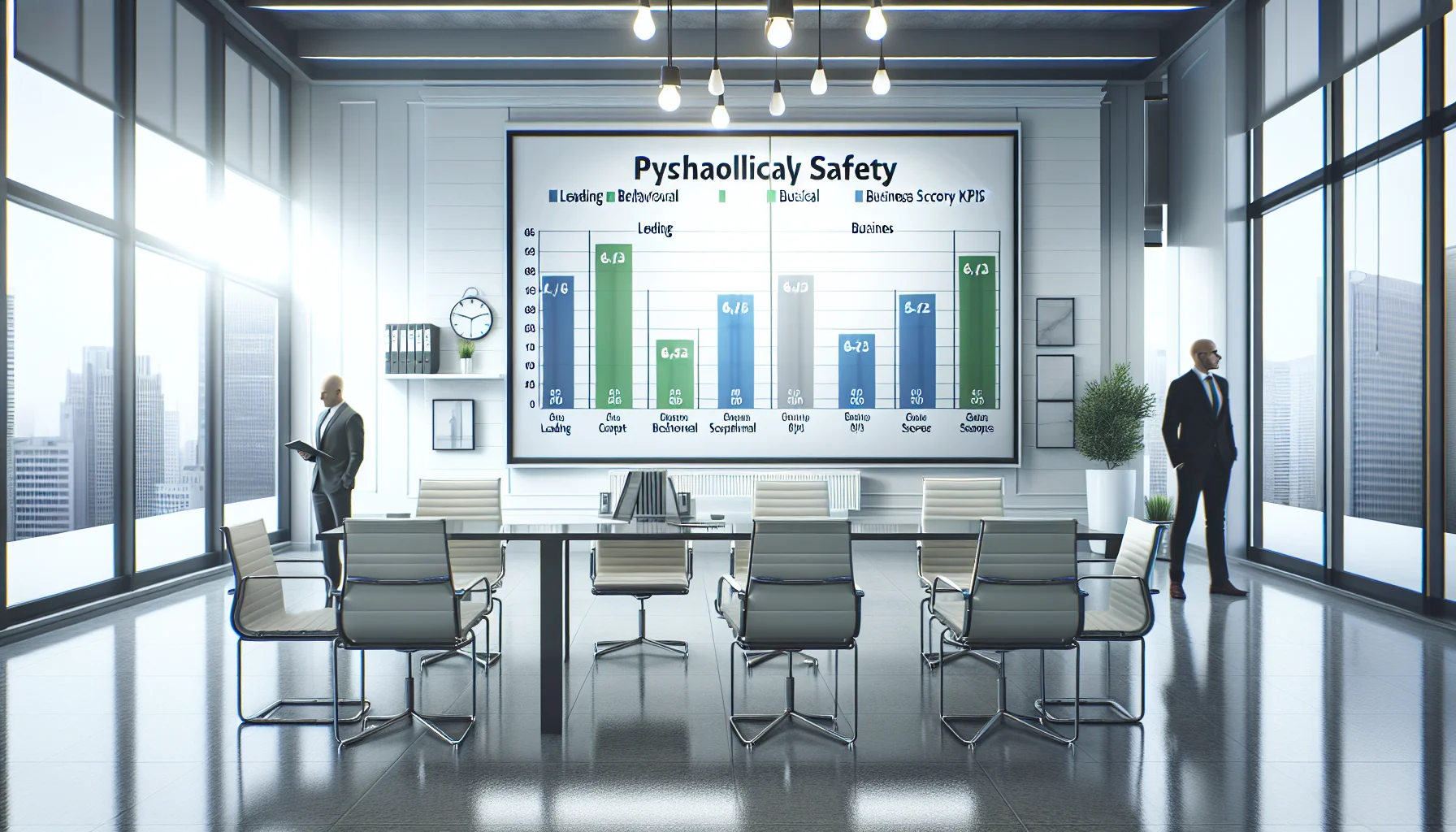
A leader-facing dashboard should show a small set of reliable visuals: heatmaps for participation distribution, trend lines for sentiment and anonymous submissions, and a side panel with the latest pulse results and interpretation notes. Present both high-level KPIs and the ability to drill to team or meeting-level detail.
Before: a static report listing raw participation counts and a long text log of comments. After: an interactive dashboard with:
| Question | Avg score | Interpretation |
|---|---|---|
| Comfort speaking up | 3.6 | Below target — prioritize meeting facilitation training |
| Concerns acknowledged | 4.2 | Strong follow-through; maintain current process |
| Anonymous submissions | 5 per 100/mo | Moderate signal — review recurring themes |
Interpretation notes: when participation rate falls but sentiment remains high, investigate meeting format (e.g., an update meeting that doesn’t invite discussion). When anonymous submissions spike alongside falling sentiment, treat this as an early warning and schedule qualitative interviews.
Dashboard metrics for remote team safety should include alert thresholds and recommended next steps. For example, auto-generate manager action items when the participation rate drops by >10% month-over-month or when time-to-resolution for escalations exceeds a set SLA.
To reliably measure psychological safety in virtual discussions, combine behavioral KPIs, a disciplined pulse survey program, and leader dashboards that surface context and action. Start with a minimal set of engagement KPIs and expand as data quality improves. Watch for small-sample bias, avoid metric theater, and keep privacy front-and-center.
Immediate checklist:
When implemented correctly, this approach turns anecdote into reliable insight and empowers leaders to act decisively on team safety. If you want a practical starting template, begin with the KPIs listed here and run a 90-day pilot to validate your measurements and interventions.
Next step: Run a 90-day pilot using the proposed cadence and KPIs, then review the dashboard with your leadership team to set targets and ownership for sustained improvement.
The Upscend Team provides actionable insights on technology and business strategy.
Book a walkthrough and we'll show you how it applies to your own content.
Workplace Culture&Soft SkillsJanuary 5, 2026
This article shows how to embed psychological safety into performance reviews through behavior-based competencies, calibrated feedback, paired outcome+process KPIs, and targeted recognition. It provides sample competency descriptors, calibration rules, two brief case studies, and a six-month implementation checklist so L&D and HR can pilot and scale evidenced alignment.
 Workplace Culture&Soft Skills
January 5, 2026
This article presents a balanced scorecard of psychological safety KPIs—leading, behavioral, and business outcomes—and gives operational formulas, baselines, and a sample quarterly dashboard. It explains converting changes into dollar impacts, handling attribution (difference‑in‑differences, staged rollouts), and an implementation checklist to run a 90‑day pilot and measure L&D ROI.
 Psychology & Behavioral Science
January 27, 2026
Describes how to measure psychological safety in remote courses by combining quantitative participation metrics (participation variety, response latency, repeat engagement, dropout triggers) with tuned sentiment and content analysis. Recommends data sources, dashboards, alert playbooks, and a three-week pilot approach: baseline, intervention, and measurement to iterate on thresholds and lexicons.
Psychology & Behavioral ScienceJanuary 27, 2026
Short pulses, platform signals and focused qualitative probes together create reliable measures of psychological safety in virtual classrooms. Use 5–8 targeted items on a 5‑point Likert scale, convert responses into a 0–100 composite index with weighted constructs, map thresholds to action triggers, and pair results with participation metrics for prioritized interventions.