

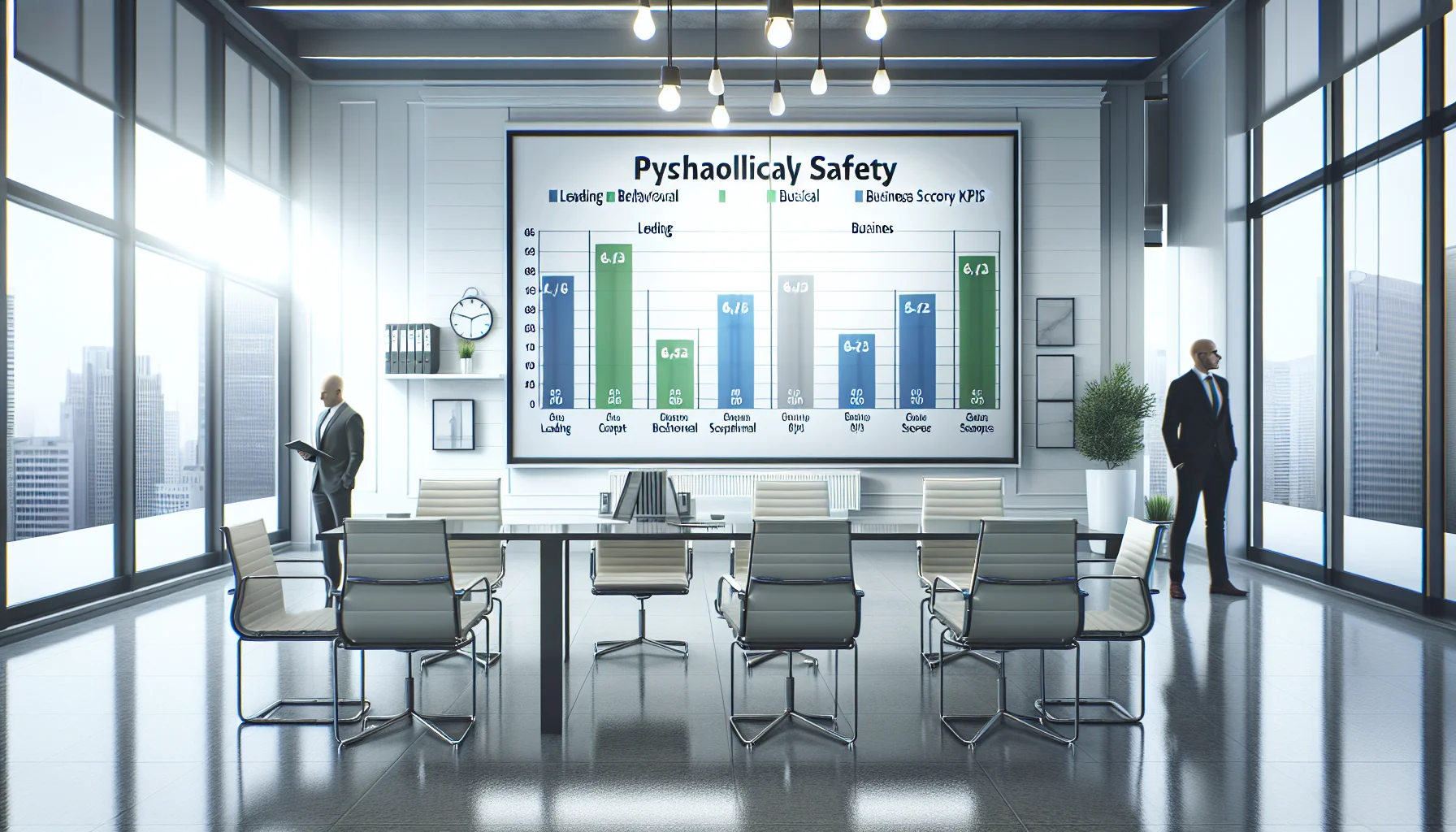
This article presents a balanced scorecard of psychological safety KPIs—leading, behavioral, and business outcomes—and gives operational formulas, baselines, and a sample quarterly dashboard. It explains converting changes into dollar impacts, handling attribution (difference‑in‑differences, staged rollouts), and an implementation checklist to run a 90‑day pilot and measure L&D ROI.
psychological safety KPIs are the foundation for proving that investment in a safer, more open workplace pays off. In our experience, L&D teams that move beyond anecdotes and track a balanced set of metrics can tie safety culture changes to real business outcomes. This article lays out a practical, implementable scorecard, formulas, baseline examples, and a sample quarterly dashboard so you can start measuring psychological safety KPIs with confidence.
Measuring psychological safety KPIs answers two questions leaders always ask: is the program working, and is the investment justified? L&D ROI metrics require both leading indicators (what’s changing now) and lagging business outcomes (what changed later).
We've found that teams that map safety program activity to business outcomes retain talent better, see fewer error cascades, and accelerate innovation. The point of measurement is not to police behavior but to reflect patterns that inform coaching, design improvements, and budgeting.
L&D ROI metrics for psychological safety are best viewed as a combination of cost-avoidance (reduced incidents, lower attrition) and value-creation (more ideas implemented, faster time-to-market). That dual lens helps justify upfront spend and ongoing program maintenance.
A balanced scorecard groups metrics into leading indicators, behavioral indicators, and business outcomes. Tracking all three gives L&D a defensible path from training and interventions to measurable impact.
Below is a recommended core set. Each item is framed as a KPI you can operationalize and report.
When asked "which KPIs to track for psychological safety ROI," prioritize a mix: two leading, three behavioral, and three outcome metrics. The exact set depends on your org's strategic priorities (e.g., product velocity vs. safety compliance), but the balanced approach keeps your reporting credible.
Operational definitions and formulas turn vague ideas into repeatable metrics. Below are formulas and baseline examples that we've used successfully.
Psychological safety survey score — Formula: (Sum of item scores / max possible score) × 100. Baseline example: If the team average is 3.6/5, score = (3.6/5)*100 = 72%. Track trend and percent change quarter-over-quarter.
Error reporting frequency — Formula: (Reports per month / employee count) × 1000. A rising number can indicate safer reporting habits rather than more errors; cross-reference with outcome severity to interpret.
Peer feedback frequency — Formula: (Feedback instances logged per month per employee). Baseline: 0.5–1 per month moves toward a feedback culture; 2+ indicates strong practice.
To translate behavioral change into dollars, use these simple conversions:
These formulas let you present a conservative ROI estimate: sum the dollar impacts, divide by program cost, and present a benefit-cost ratio and payback period.
In our work, we've also seen utility from tools that stitch disparate signals into a single view. Platforms that integrate pulse surveys, idea capture, and manager dashboards help teams operationalize KPIs — Upscend is an example that makes analytics and personalization part of the core process.
A sample dashboard should surface trend lines, variance from baseline, and a simple dollarized ROI. Present both percentages and raw counts so non-L&D stakeholders can interpret impact.
| KPI | Q1 Baseline | Q2 Result | % Change | Interpretation |
|---|---|---|---|---|
| Psychological safety score | 68% | 74% | +8.8% | Improved openness after manager training |
| Pulse response rate | 52% | 63% | +21.2% | Better engagement with shorter pulses |
| Idea submissions /100 | 6 | 11 | +83.3% | More psychological safety for speaking up |
| Retention rate | 87% | 90% | +3.4% | Estimated savings: $120K vs. replacement costs |
| Time-to-market (weeks) | 16 | 14 | -12.5% | Faster decision-making with constructive dissent |
Include a short narrative below the table that ties the increases to specific interventions (e.g., manager workshops, peer-coaching pilots) and a conservative dollar estimate of benefits. This makes safety program ROI tangible to finance partners.
Attribution is the hardest part of measuring psychological safety KPIs. Behavior changes precede financial outcomes, and multiple initiatives often run simultaneously. Accepting uncertainty and using triangulation reduces risk of overclaim.
We recommend three practical approaches:
Plan for lagged effects: survey improvement often shows within 1 quarter, behavioral shifts in 1–2 quarters, and business outcomes in 2–4 quarters. Flag these lags in executive reporting so stakeholders have realistic expectations.
Implementing psychological safety measurement requires purpose, governance, and tooling. Below is a practical checklist to start reporting reliably.
Common pitfalls to avoid:
Engagement metrics matter: higher pulse response rates and idea submissions are early signals that your interventions are working. Combine those with behavioral logs to build a credible narrative for safety program ROI.
Tracking the right psychological safety KPIs turns a qualitative aspiration into a measurable L&D program with defensible ROI. Use a balanced scorecard, define clear formulas, set baselines, and present both trends and conservative dollar impacts. Staged pilots and difference-in-differences designs strengthen attribution, and tooling that reduces friction makes measurement sustainable.
We've found that L&D teams that report monthly, show 2–4 quarter improvements, and translate changes into simple cost or revenue impacts secure ongoing investment. Start with three leading indicators, three behavioral measures, and two business outcomes — then expand the dashboard as data quality improves.
Next step: Run a 90-day pilot using the scorecard above, collect two baseline periods, and present a one-page dashboard to stakeholders. That evidence-focused approach will make your safety program ROI case clear and actionable.
The Upscend Team provides actionable insights on technology and business strategy.
Book a walkthrough and we'll show you how it applies to your own content.
 Lms
LmsDecember 25, 2025
This article prescribes a compact L&D KPI framework anchored on time-to-competency and four complementary metrics: competency retention, performance lift, time-to-productivity and cost-per-competent-employee. It supplies operational formulas, role-specific benchmark ranges (finance, sales, support), dashboard layer guidance and a one-page executive report template to demonstrate impact.
 Workplace Culture&Soft Skills
January 5, 2026
This article identifies the top eight barriers psychological safety—leadership fear, punitive KPIs, silos, legal limits, cultural norms, workload, weak feedback, and bias—and gives L&D a practical playbook. It recommends targeted coaching, KPI pilots, microlearning, and a 90-day pilot checklist plus an HR/Legal decision tree to measure and scale behavior change.
 Workplace Culture&Soft Skills
January 5, 2026
This article shows how to embed psychological safety into performance reviews through behavior-based competencies, calibrated feedback, paired outcome+process KPIs, and targeted recognition. It provides sample competency descriptors, calibration rules, two brief case studies, and a six-month implementation checklist so L&D and HR can pilot and scale evidenced alignment.
 Workplace Culture&Soft Skills
January 5, 2026
This article presents four psychological safety case study examples where L&D led programs across small, mid-market, and enterprise settings. It outlines objectives, step-by-step implementations, common challenges, measurement approaches, and outcomes — showing repeatable playbook elements, scaling strategies, and a practical checklist for piloting and measuring impact.