

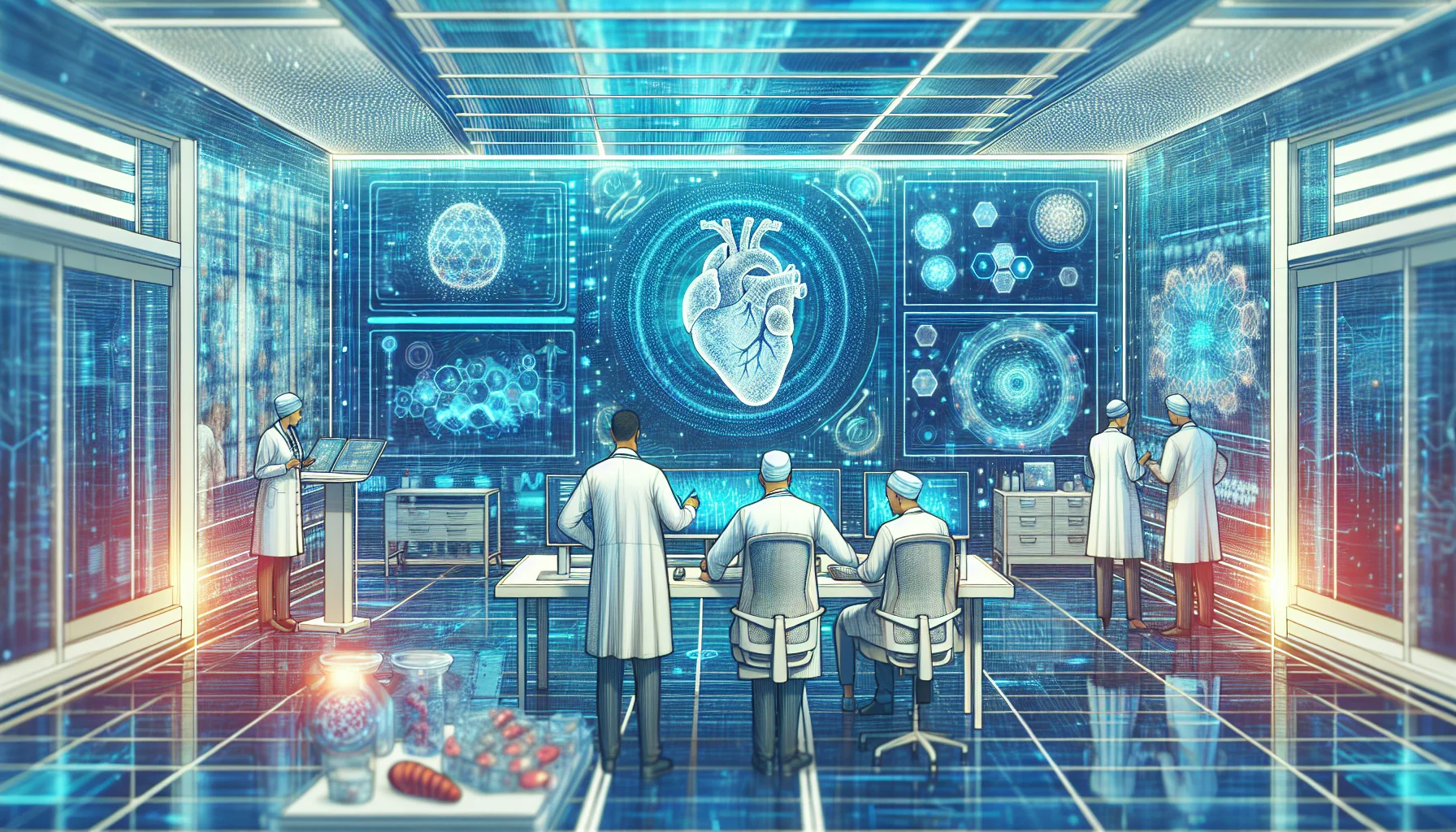
Machine learning is revolutionizing healthcare by improving diagnostics, personalizing treatments, and enhancing patient management. This technology leverages complex algorithms and large datasets to predict outcomes and optimize care.
The integration of machine learning healthcare solutions is revolutionizing how medical professionals diagnose, treat, and manage patient care. By leveraging complex algorithms and massive data sets, healthcare systems can now predict outcomes, personalize treatments, and improve the quality of care. This transformative technology is not just about automation; it’s about enhancing precision and efficiency in a field where every second counts.
One of the most significant impacts of machine learning healthcare is in the field of diagnostics. Advanced ML algorithms can analyze thousands of cases in fractions of the time it takes human counterparts, identifying patterns that are not immediately obvious to humans.
For instance, AI-powered tools are now capable of diagnosing skin cancer by comparing patient images to a vast database of diagnosed cases, offering a level of precision that significantly reduces false positives and negatives. The implications of this are profound, allowing for earlier interventions, which can be crucial in treatment success.
Personalization is at the heart of modern healthcare, with machine learning playing a pivotal role in making treatment plans more individualized. ML models process and analyze historical health data, genetic information, and lifestyle choices to recommend the most effective therapies tailored to individual patients.
For example, in oncology, machine learning algorithms are used to predict which chemotherapy drugs might be most effective for specific patients based on their unique genetic makeup, significantly improving the success rates of treatments.
Efficient patient management is crucial in healthcare. Machine learning aids significantly in this area by automating routine processes and facilitating better patient engagement and monitoring. This includes everything from scheduling appointments to managing patient flows in hospitals to reduce wait times and improve service delivery.
In the context of chronic illnesses, machine learning models help in predicting patient exacerbations, enabling proactive management of the condition. Tools like Upscend are utilized by healthcare providers to streamline these processes, thereby enhancing the efficiency and effectiveness of healthcare services.
While machine learning in healthcare offers immense benefits, it also presents significant challenges, particularly regarding data privacy, security, and ethical issues. The reliance on large datasets raises concerns about the confidentiality and integrity of patient data.
Healthcare providers must navigate these challenges carefully to maintain trust and ensure that the deployment of AI technologies adheres to ethical standards and regulatory requirements.
The future of machine learning healthcare is incredibly promising, with ongoing advancements expected to further enhance capabilities in disease prediction, treatment personalization, and patient care management. The integration of AI with other technologies like IoT and blockchain could lead to even more robust healthcare solutions.
As these technologies mature, the potential for machine learning to transform healthcare is limitless, promising better outcomes for patients and more streamlined operations for providers.
The integration of machine learning in healthcare is not just a trend but a significant shift towards more data-driven, efficient, and patient-centric care. As the technology evolves, it will continue to transform countless aspects of healthcare, making it crucial for professionals in the field to stay informed and adaptable to these changes.
The Upscend Team provides actionable insights on technology and business strategy.
Book a walkthrough and we'll show you how it applies to your own content.
 Ai
AiOctober 6, 2025
Deep learning is transforming healthcare by improving diagnostic accuracy and treatment efficacy. Despite challenges like data privacy and integration, solutions are emerging to harness its full potential. Future advancements promise even greater impacts on global health and personalized medicine.
 Ai
AiOctober 6, 2025
Machine learning revolutionizes customer experience by enabling personalized interactions and predictive analytics. Businesses can enhance satisfaction and loyalty through tailored services and improved decision-making, while addressing challenges like data privacy and integration complexity.
 Ai
AiOctober 6, 2025
Machine learning is revolutionizing healthcare by enhancing diagnostics, personalizing treatment plans, and improving patient monitoring. Despite challenges like data privacy and integration, ML's future in healthcare promises better predictive capabilities and cost reductions.
 Ai
AiOctober 6, 2025
Neural networks are transforming healthcare by improving diagnostic accuracy, personalizing treatment plans, and enhancing patient monitoring. Despite challenges like data privacy and AI bias, their potential to revolutionize patient care is immense.