

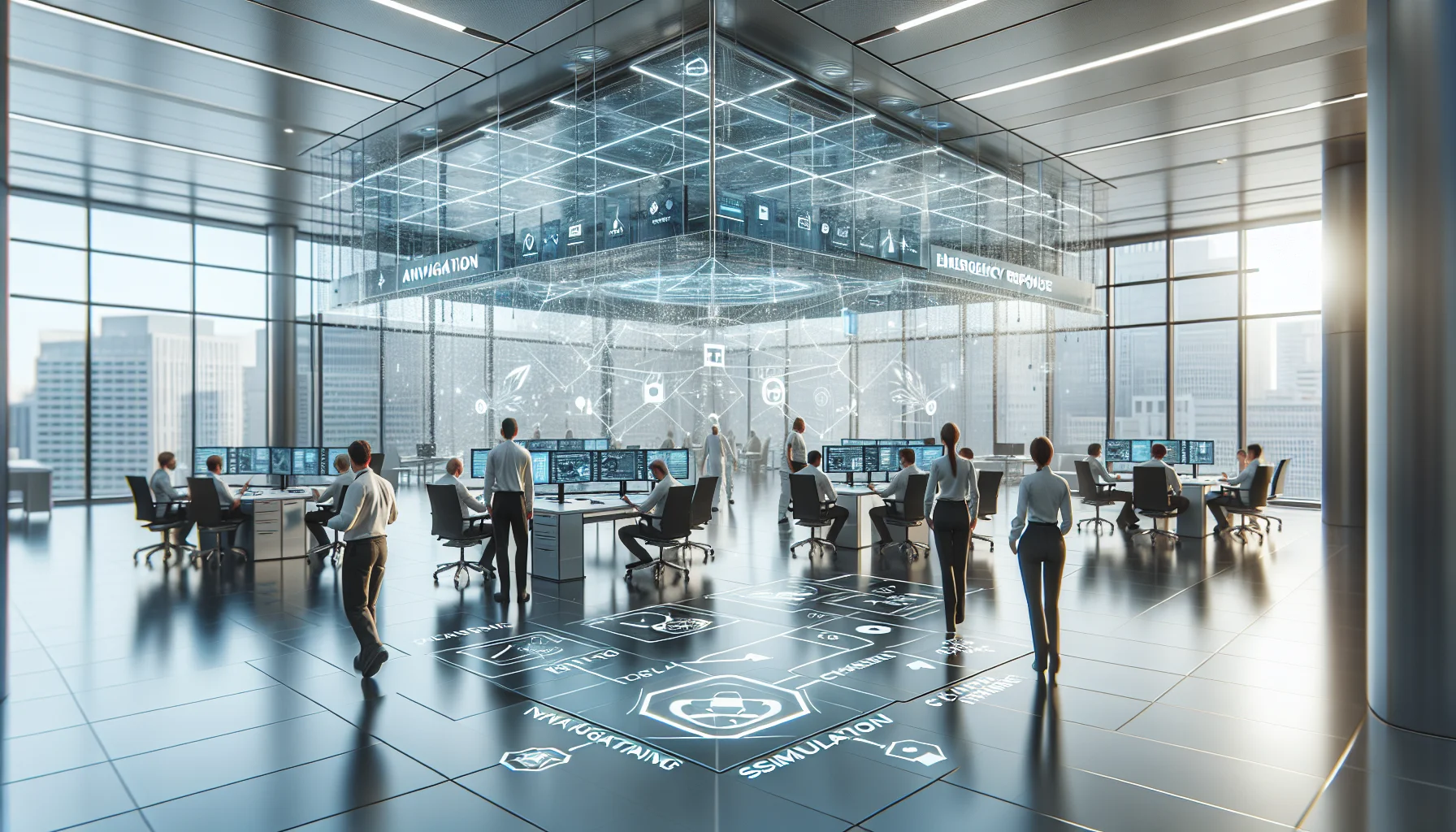
This article explains how to design realistic emergency response metaverse scenarios by defining SMART objectives, conducting stakeholder hazard mapping, scripting deterministic branching, and applying stress inoculation with safety controls. It includes a chemical-spill example, assessment rubrics, and debrief workflows so teams can pilot, measure, and iterate effectively.
Designing realistic emergency response metaverse scenarios demands a clear blend of instructional design, technical capability, and operational realism. In our experience, the most effective programs begin with precise objectives, repeatable hazards, and a rigorous feedback loop.
This article walks through step-by-step how to design believable, safe, and assessable emergency response metaverse training: from stakeholder interviews and hazard mapping to scripting, stress inoculation, and post-scenario debriefs. Practical templates, a chemical spill example, and assessment rubrics are included so teams can implement quickly.
Start with clear, measurable goals. Ask: what specific decisions, actions, or communications should participants demonstrate by the end of the session? Write objectives at three levels: knowledge, skills, and behaviors.
Good objectives reduce scope creep and help prioritize which elements of the emergency response metaverse scenario must be realistic, which can be abstracted, and which require high-fidelity simulation. Use SMART criteria (Specific, Measurable, Achievable, Relevant, Time-bound) and map each objective to observable criteria.
Interview people who own the process: operations, safety, security, HR, and legal. These interviews reveal realistic failure modes, cultural nuances, and constraints that shape credible metaverse emergency scenarios.
Combine interviews with a hazard mapping workshop to identify high-risk locations, probable triggers, and worst-case consequences. Translate that map into scenario assets (rooms, equipment, ventilation) and decide which elements require high-fidelity physics or AI-driven NPCs.
Writing the scenario script is where training becomes believable. Create a base timeline with key events, then design branching paths that reflect realistic choices and mistakes. Each branch should be meaningful and lead to measurable outcomes.
We recommend a three-tier branching model: immediate actions (seconds), tactical choices (minutes), and strategic coordination (tens of minutes). Scripts should specify environmental state changes (alarms, smoke density), NPC behaviors, and audit logs for replay and scoring.
Keep branches limited and testable. Over-complex branching increases QA time and dilutes learning. Use decision points that map directly to your virtual emergency training design metrics and ensure every branch returns data for assessment.
Implement triggers and timers as deterministic elements to maintain reproducibility. Where randomness adds realism, parameterize it so facilitators can lock seeds for graded assessments in later runs.
Balancing realism against participant safety and well-being is central to credible training. Use graded exposure: start with guided, low-stress runs and increase complexity and sensory load across repetitions to build resilience.
Introduce physiological stressors carefully—ambient noise, time pressure, and visual cues—while retaining a facilitator-controlled safe exit. Communicate pre-briefs and allow opt-outs. We've found that staged escalation with clear checkpoints delivers strong learning while protecting mental health.
Incorporate controlled audio-visual stressors, haptic prompts, and crowd behaviors. Use objective monitoring (heart rate, gaze) where privacy permits to adapt intensity in real time. This is essential for credible crisis simulation virtual reality training.
The turning point for most teams isn’t just creating more content — it’s removing friction. Tools like Upscend help by making analytics and personalization part of the core process, so facilitators can tune stress load and branching probability based on learner history without rebuilding scenarios.
Below is a practical, deployable example that illustrates how to translate requirements into a runnable emergency preparedness VR exercise. The scenario centers on a moderate chemical leak in a production bay requiring rapid evacuation and coordination with emergency services.
Scenario outline: a lab technician knocks over a container of volatile solvent in a confined bay. Vapors spread; alarms activate. Participants must identify hazard class, don PPE, initiate partial or full evacuation, and communicate with a virtual incident commander.
Use a rubric combining objective logs and facilitator ratings. Score categories might include Recognition (0–3), Response Time (0–3), Procedure Compliance (0–4), Communication (0–3), Team Coordination (0–3). A pass threshold could be 12/16 with no critical failures.
Include replayable recordings and heatmaps so learners can see movement patterns and team chokepoints. This supports rapid, evidence-based debriefs and feeds continuous scenario improvement.
Assessment must be transparent and tied to objectives. Combine automated telemetry with structured facilitator scoring. Provide learners with a clear rubric before the session and use the post-scenario debrief to align perception with recorded behavior.
Effective debriefs follow this flow: reactions (safe space), facts (what the logs show), analysis (what drove decisions), and application (what will change). Use replay clips to illustrate decision points and introduce micro-learning to fix recurring errors.
Designing credible emergency response metaverse scenarios requires disciplined instructional design, stakeholder engagement, careful scripting, and psychological safeguards. Focus on measurable objectives, limited branching, and reproducible assessment to scale impact.
Common pitfalls to avoid include over-complicating branches, neglecting facilitator training, and failing to consider legal or psychological protections. Always include informed consent, an opt-out process, and post-scenario support for distressed participants.
Practical next steps: run a small pilot with a cross-functional panel, measure against your rubric, iterate on scenario fidelity, and document legal counsel recommendations. With a repeatable design loop you can safely extend training to diverse teams and hazards using the best practices for virtual emergency response training design described above.
To operationalize quickly, export your rubric and timeline into your LMS and schedule three staged runs: orientation, guided, and assessment. Continuous improvement cycles and facilitator calibration ensure that your emergency response metaverse program matures from novelty to operational readiness.
Call to action: Begin by drafting one clear objective for a pilot scenario and assembling a cross-functional review team to create your first hazard map; use the example chemical spill rubric above to run a single-session pilot and iterate from the data collected.
The Upscend Team provides actionable insights on technology and business strategy.
Book a walkthrough and we'll show you how it applies to your own content.
 ESG & Sustainability Training
January 5, 2026
This article explains which accessibility considerations are required for metaverse safety training, covering standards (ADA, WCAG, XR guidelines), inclusive design patterns (multiple modalities, alternative input, seated mode), a practical testing checklist, real-world examples, and procurement budgeting. Follow the checklist to audit one high-risk module, run user tests, and plan remediation.
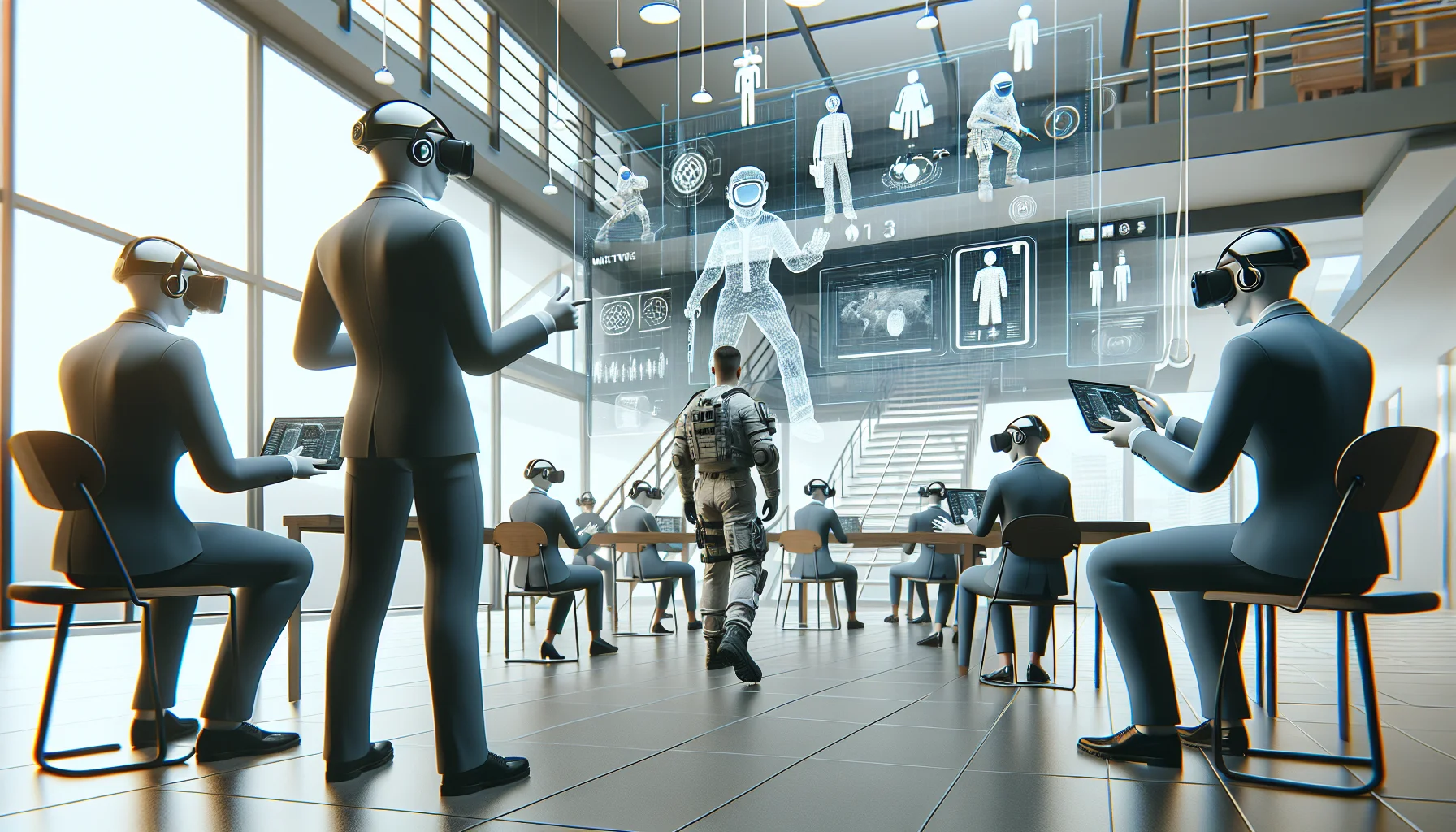 ESG & Sustainability Training
January 5, 2026
Metaverse safety simulations let distributed teams rehearse high-risk scenarios with lower physical risk and higher retention than video-only methods. The article explains four deployment patterns, technical baselines, outage contingencies, and consistent assessment rubrics to make remote team metaverse training measurable and compliant. Run a pilot with mixed connectivity to validate outcomes.
 Business Strategy&Lms Tech
January 22, 2026
This article provides a practical deepfake incident response playbook for organizations using synthetic media in training, detailing 60-minute containment steps, notification timelines, legal/PR coordination, technical remediation, and post-incident review. Readers get templates, scripts, KPI suggestions, and a 24–72 hour timeline to implement immediate and follow-up actions.
 Business Strategy&Lms Tech
February 3, 2026
This case study shows how a metropolitan hospital used generative AI to automate emergency response simulations, enabling weekly short drills, automated injects, and real-time scoring. Over six months mean time-to-decision dropped 36% and protocol adherence rose to 84%, while drill frequency increased tenfold. Practical templates and implementation tips are included.