

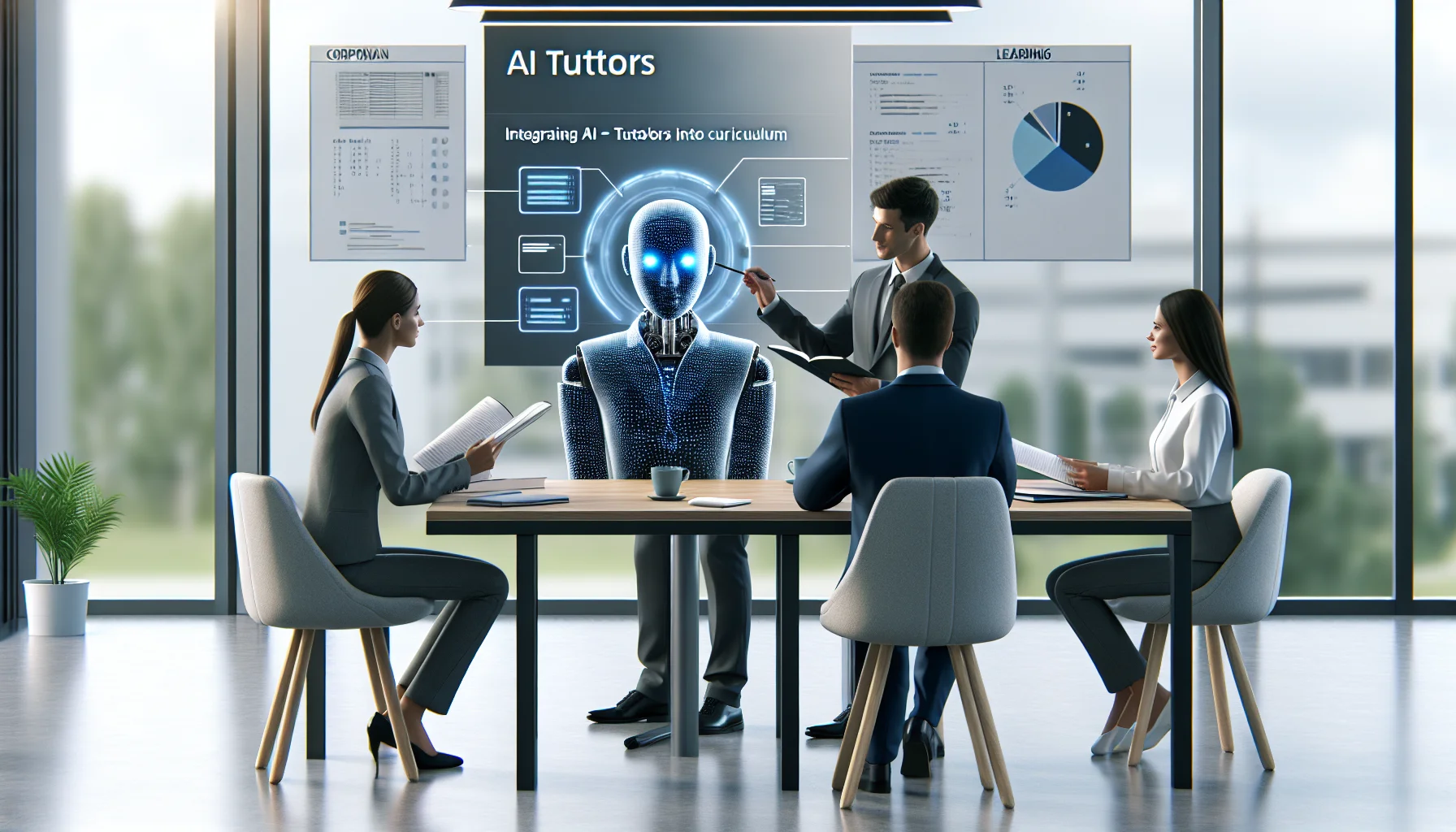
An AI learning strategy aligns learning investments with business outcomes to enable workforce reskilling and rapid skill adaptation. The article presents four ecosystem pillars (content orchestration, personalization, analytics, integrations), a three-tier skills taxonomy, a 90-day pilot checklist, KPIs tied to outcomes, and common pitfalls with mitigation steps.
Executive summary: An AI learning strategy aligns learning investments with business outcomes to enable workforce reskilling, rapid skill adaptation, and measurable performance uplift. In our experience, companies that treat learning as a strategic capability — not just a cost center — reduce disruption risk from automation and accelerate internal mobility. This article defines an AI learning strategy, explains how it integrates with an LMS strategy, and provides a practical roadmap, implementation checklist, KPIs, a sample competency matrix, and anonymized case examples for both an enterprise and an SMB.
Automation, AI-driven decision systems, and shifting market demand are compressing job lifecycles. Studies show that a significant portion of current roles will change substantially within five years. An effective AI learning strategy anticipates which roles will be augmented, which will be automated, and which will grow. We've found that organizations that invest in targeted learning reduce time-to-competency by up to 40% during transitions.
Key drivers:
Future-proofing isn't a one-off program; it's a strategic loop: identify needs → design learning pathways → measure impact → iterate. That loop is the core of a resilient AI learning strategy.
An effective LMS strategy must be designed around four pillars. Each pillar maps to capabilities that together form a comprehensive AI-enabled learning environment.
The pillars are content orchestration, personalization, analytics & measurement, and systems integration. Content orchestration means modular, competency-aligned learning assets that can be recombined for different roles. Personalization leverages AI to adapt learning paths and micropractice schedules. Analytics turn engagement and performance signals into skills intelligence. Integrations connect HRIS, ATS, performance systems, and operational data streams so learning maps to business outcomes.
Practical considerations include open content standards (xAPI), LRS support, single sign-on, and APIs for data flow. This integration architecture should be visualized as a layered diagram: learner experience layer → content/authoring layer → AI personalization layer → data & integration layer → governance layer.
Operational detail: this process requires real-time feedback (available in platforms like Upscend) to help identify disengagement early and route learners to coaching or bite-sized remediation.
Start with a business-outcome-first approach. Map strategic objectives to critical capabilities, then to role-specific competencies. A practical taxonomy uses three tiers: core business skills, role-level technical skills, and future-proofing skills (AI fluency, data literacy, complex problem solving).
Follow this step-by-step method we use:
Sample competency matrix (simplified):
| Role | Competency | Foundational | Intermediate | Advanced |
|---|---|---|---|---|
| Data Analyst | Data Literacy | Can query datasets | Builds dashboards | Designs data models |
| Customer Rep | AI Augmented Decisioning | Understands AI outputs | Interprets recommendations | Tunes decision rules |
Link assessments and badges to these levels to create visible pathways for internal mobility and workforce reskilling.
A staged approach reduces risk and builds credibility. Our recommended sequence: pilot a high-impact use case, evaluate and refine, then scale with governance and cost controls. A clear governance model defines ownership for data, content, and change management.
Governance essentials: data privacy rules, model validation cadence for AI personalization, a change control board for curriculum updates, and a funding model that ties budgets to measurable ROI.
Measurement must be tied to business outcomes. The right KPIs show both learning efficacy and operational impact. We recommend a two-tier KPI model: learning metrics and business outcome metrics.
Design dashboards that layer leading indicators (engagement, practice frequency) over lagging indicators (performance improvement, retention). A KPI dashboard mockup should present filters by role, competency, and time window, with anomaly detection for sudden drops in engagement.
Measure what matters: align at least one KPI to a clear financial or operational outcome before scaling.
There are recurring failure modes in workforce reskilling programs. Address these proactively.
We’ve found that pairing skill adaptation targets with manager performance reviews increases completion rates by over 25% because learning becomes a measurable part of day-to-day work.
Choosing tools depends on scope and budget. For pilots, use an LMS that supports xAPI and modular content; for scaling, prioritize platforms with strong personalization engines and open APIs. Examples of vendor categories to evaluate: enterprise LMS, learning experience platforms (LXP), skills clouds, assessment vendors, and integration middleware.
Tool shortlist criteria:
Mini case examples (anonymized):
For organizations constrained by budget or integration complexity, a pragmatic approach is to start small: one critical role, one competency, and one measurable outcome. Over time, add automation and personalization where ROI is proven.
Designing and implementing an effective AI learning strategy is both a technical and organizational challenge. It requires a clear skills taxonomy, modular content, robust analytics, and governance that ties learning to outcomes. In our experience, the most successful programs are iterative: pilot, measure, refine, then scale.
Key takeaways:
If you’re ready to begin, use the 90-day pilot checklist above, build a simple competency matrix for your highest-risk roles, and select an LMS with open APIs. For practical recommendations and a tailored road map, contact your learning transformation advisor to schedule a discovery session.
The Upscend Team provides actionable insights on technology and business strategy.
Book a walkthrough and we'll show you how it applies to your own content.
 Institutional Learning
October 21, 2025
AI Integration in Learning Design enables scalable personalization and faster content production by combining human-authored curricula, AI-driven adaptive rules, and continuous feedback. The article outlines practical patterns (rule-based branching, model recommendations, nudges), implementation steps, measurement KPIs, and governance checkpoints to pilot within a 90-day framework.
 L&D
L&DDecember 14, 2025
This article outlines practical AI in learning and development use cases—personalization, automation, and analytics—and shows how to link AI to measurable performance outcomes. It recommends layered governance and an 8–12 week pilot approach. Follow a discover → pilot → scale → optimize roadmap with measurement and human oversight.
 Jobs
JobsJanuary 19, 2026
This guide explains how to reskill for AI with a clear, project-focused approach: perform a three-column skills audit, follow a 3/6/12-month learning roadmap, choose cost-effective programs, and validate skills with public projects and certifications. It includes financing options, interview checklists, and three real-world case studies with timelines and costs.
 Ai
AiJanuary 28, 2026
This article gives decision makers a practical AI upskilling strategy: a 5-step framework (skills mapping, prioritization, learning modalities, governance, measurement), templates, and a 12–24 month roadmap. It explains how to run a 90-day pilot, measure KPIs, and scale training so enterprises achieve measurable adoption and business impact.