


AI simulation training uses physics-based models, digital twins, and VR/AR to rehearse rare failures safely. Targeted pilots with measurable KPIs reduce error rates, speed time-to-competence, and improve compliance. Implement via a pilot→scale→govern roadmap with vendor selection, data governance, and safety engineering integrated up front.
AI simulation training is transforming how organizations prepare teams for rare, dangerous, and complex events. In this executive summary we define core terms — AI simulation, digital twins, and VR/AR — and outline why a research-driven approach delivers safer outcomes. In our experience, simulation programs that combine realistic physics, data-driven agents, and targeted feedback reduce avoidable errors and accelerate skill transfer.
Definitions: AI simulation uses models and synthetic data to recreate operational scenarios; digital twins are live, data-connected replicas of systems; and VR/AR are immersive interfaces for training and assessment.
High-risk sectors face a persistent gap between classroom learning and on-the-job performance. Studies show that procedural errors and compliance lapses still account for a large share of adverse events: for example, medication errors and equipment mishandling remain leading contributors to patient harm and plant incidents.
We've found that targeted simulation lowers these risks by enabling deliberate practice on realistic failures without endangering people or assets. The key benefits are error reduction, faster skill acquisition, and regulatory alignment.
According to industry research, human factors contribute to up to 70% of incidents in complex operations. Training throughput, limited access to live environments, and the rarity of critical events make traditional methods insufficient — this is where AI-driven simulation closes the loop.
Modern programs blend several stacks: physics engines for accurate dynamics, reinforcement learning agents for adaptive scenarios, digital twins to connect simulations to live telemetry, and virtual reality training interfaces to create embodiment and presence.
Architecturally, the model layers are:
| Component | Role |
|---|---|
| Physics engine | Realistic motion and failure propagation |
| RL agents | Dynamic adversaries and procedural variation |
| Digital twin | Live-data synchronization and regression testing |
Design principle: pair high-fidelity scenarios with targeted metrics to avoid training for "look and feel" instead of measurable competence.
In healthcare, synthetic patient simulation and physiology models let clinicians rehearse rare complications under realistic constraints. We've seen programs where simulated vital-sign drift and device failures produce measurable improvements in critical decision-making and handoff quality.
This section presents anonymized examples and practical outcomes. Case examples show how different technology mixes solve different operational challenges.
Example (anonymized): A tertiary hospital network deployed scenario libraries that combined VR airway management, synthetic patient physiology, and team communication scoring. After a 12-month pilot clinicians demonstrated a 45% reduction in time-to-intervention for sepsis protocols.
Practical insight: pair scenario difficulty to individual competency curves and use automated debriefing to scale instructor bandwidth.
Operational note: Modern LMS platforms — Upscend is an example — now support AI-powered analytics and personalized learning journeys based on competency data, not just completions. This integration reduced administrative lag in one study and improved remediation targeting.
Example (anonymized): A chemical plant used a digital twin of a mixing line with variable feed rates and sensor noise to run thousands of simulated abnormal events. Operators who completed the simulation curriculum cut mean time to contain valve failures by 30% and reported higher cross-team situational awareness.
We recommend a three-phase roadmap that balances risk, ROI, and change management: pilot, scale, and govern. Short, measurable pilots validate assumptions; scaling focuses on integration and content velocity; governance secures data and compliance.
Pilot checklist:
Scale tactics include content templating, automated scoring, and role-based scenario assignment. Governance should require version control, scenario QA, and a safety review board composed of SMEs and engineers.
When choosing vendors, evaluate openness, APIs, model provenance, and reporting. Insist on workflow integration with HR and LMS systems and check for off-the-shelf scenario libraries relevant to your risks.
Clear KPIs move simulation from novelty to business impact. We use three tiers of measures: leading indicators, competence metrics, and business outcomes.
Leading indicators (early): scenario completion rate, time-on-task, and rule breaches during simulation. Competence metrics: time-to-competence, checklist pass rates, and decision latency. Business outcomes: incident rate, mean time to recovery, and cost per prevented event.
| KPI | Target |
|---|---|
| Error rate in controlled scenarios | -30% within 6 months |
| Time-to-competence | -25% across cohort |
| ROI benchmark | 1.5–3x within 24 months (dependent on incident cost) |
Benchmarking: set conservative ROI assumptions and run sensitivity analysis against incident frequency and avoided cost.
Regulations and privacy law shape acceptable simulation practices. In healthcare, HIPAA-equivalent protections apply to simulated PHI; in manufacturing, proprietary process data may be contractually protected. Always perform a data classification and apply least-privilege access to simulation logs.
Safety engineering must be integrated up front. Use runbook constraints in models, red-team scenario testing, and a risk register that maps simulation failure modes to mitigation strategies.
Vendor selection checklist (condensed):
AI simulation training is a strategic capability for high-risk industries. It reduces error, accelerates competence, and creates measurable ROI when implemented with clear pilots, governance, and KPIs. We've found that combining digital twins, VR/AR, and reinforcement learning produces the best balance of realism and scalability.
Final recommendations: start small, measure early, and prioritize safety and explainability over hype.
Call to action: To apply these principles, run a focused pilot targeting one high-impact competency, and measure time-to-competence and incident precursors for three cohorts — use the results to build your scale plan.
The Upscend Team provides actionable insights on technology and business strategy.
Book a walkthrough and we'll show you how it applies to your own content.
 Ai
AiJanuary 6, 2026
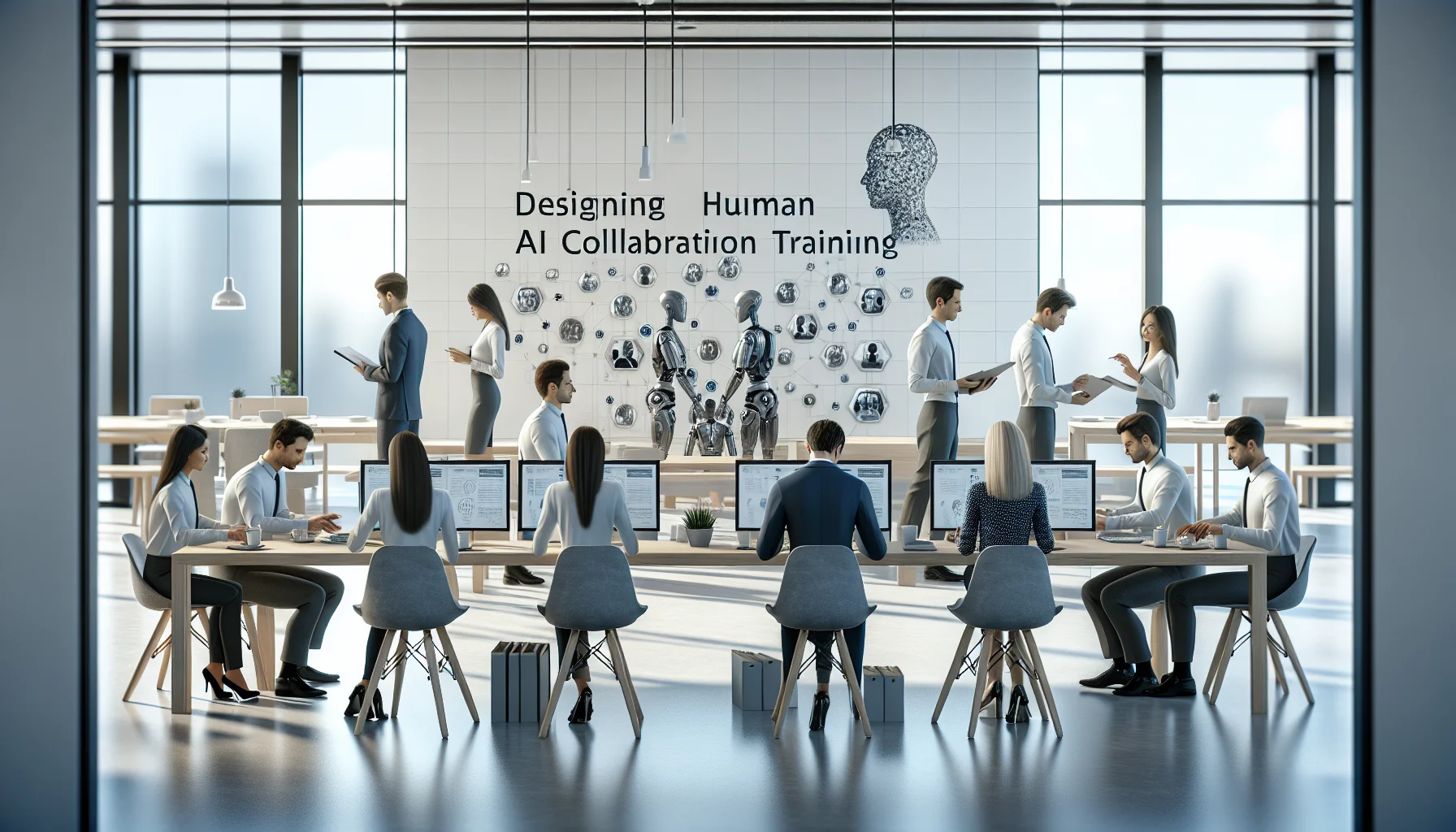
Step-by-step process to design human-AI collaboration training: assess needs, map personas, build role-specific competency maps, and deliver modular curricula with microlearning and simulations. Pilot, measure adoption and business KPIs, then scale via train-the-trainer and automated assessments. Includes templates and two case examples showing measurable impact.
 Business Strategy&Lms Tech
January 21, 2026
Provides a practical, risk-managed 90-day AI co-pilot training program for warehouse staff, with a week-by-week curriculum, sample lessons and role-plays, KPI measurement methods, LMS integration tips, and a cost template. Designed for limited shift hours and mixed literacy, it prioritizes microlearning, on-the-job coaching, and measurable operational uplift.
 Ai
AiFebruary 3, 2026
In 2026 simulation training trends emphasize AI-generated scenarios, synthetic data, composable digital twins, and immersive remote exercises. High-risk industries should pilot hybrid AI scenarios, standardize data governance, deploy interoperable twins, and follow a three-year roadmap to scale simulations from pilots to audited, continuous learning programs.