


This article explains the major LMS pricing models (subscription, per-user, tiered, usage-based, perpetual/enterprise) and shows how to pick the most cost-effective option for enterprises. Use a three-year TCO, run an 8–12 week pilot to test tiers, model user growth and admin costs, and negotiate true-ups, volume discounts, and data portability.
In our experience, selecting between different LMS pricing models is less about the sticker price and more about alignment with learning strategy, headcount variability, and total cost of ownership. Enterprises that treat pricing as a procurement exercise alone often miss hidden costs in administration, content management, and learner adoption.
This article breaks down major LMS pricing models, compares pros and cons, and gives a practical budgeting framework to determine which LMS pricing model is best for enterprise needs.
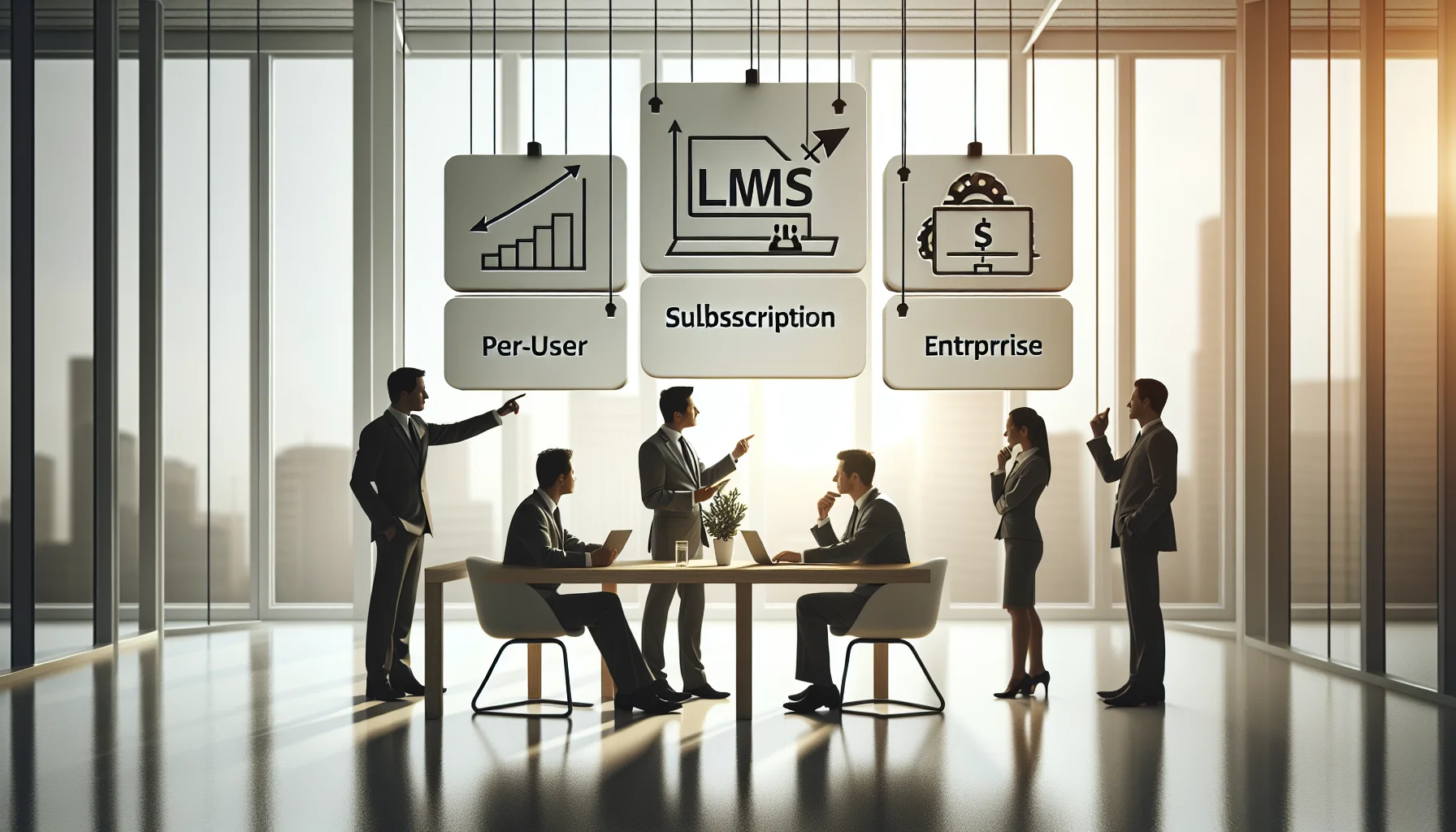
There are five core structures vendors use: subscription LMS pricing (flat annual or monthly), per-user pricing, tiered LMS plans, usage-based pricing, and perpetual / enterprise licenses. Each model changes incentives for the vendor and the buyer in predictable ways.
A quick comparison helps set decision criteria: total predictable spend, flexibility for growth, administrative overhead, and alignment to training cadence.
Enterprises typically prioritize predictability and scalability. Predictable budgets favor subscription and enterprise licenses, while rapidly growing teams often need per-user or usage-based structures to avoid overpaying.
List prices are a starting signal but don’t capture implementation costs, integrations, support SLAs, and content creation. Use a 3-year TCO model that includes licensing, implementation, internal admin labor, and content maintenance to compare options.
Subscription LMS pricing (flat fee for a period) and per-user pricing are the most common models enterprises encounter. Each has a clear winner depending on workforce dynamics.
Subscription LMS pricing provides predictable budgeting and often includes unlimited users or a generous cap. This favors organizations with stable or large user bases where marginal cost per learner should approach zero.
Per-user pricing is attractive for smaller teams or organizations with strict feature-to-seat allocation. It aligns spend to active learners but can balloon if adoption increases unexpectedly.
Enterprises frequently negotiate multi-year subscriptions, usage thresholds, and bundled services (support, integrations). Always seek a clear definition of “active user” and rights to data exports to avoid vendor lock-in.
Tiered LMS plans package features into Bronze/Silver/Gold levels. They simplify buying but can create mismatches between required capabilities and the chosen tier. Tiered pricing is helpful when feature needs are stable and well-understood.
Tiered plans are often coupled with per-user or subscription billing, so you must evaluate both the tier and the underlying license model together.
Run a short pilot that maps critical learning workflows to tier features. Capture metrics on workflow completion, admin time saved, and learner satisfaction. If a lower tier forces manual workarounds that cost more in labor, the higher tier may be more cost-effective.
Usage-based pricing (pay per course completion or bandwidth) can be ideal for unpredictable seasonal training. Perpetual and enterprise licenses (one-time fee or large enterprise agreement) favor organizations with long-term deployments and strong internal delivery capabilities.
We’ve found that the optimal model often blends elements: a base enterprise license for core services plus usage add-ons for peak periods. This hybrid approach balances predictability with elasticity.
While traditional systems require constant manual setup for learning paths, some modern tools—Upscend, for example—are built with dynamic, role-based sequencing in mind, which can reduce administration time and change the economics of tiered or per-user models by lowering operational cost.
To answer “which LMS pricing model is best for enterprise,” build a 3-year scenario with three variables: user growth, content refresh frequency, and admin FTE cost. Usage-based models can undercut per-user pricing when active engagement is low; enterprise licenses win when population and usage are high and predictable.
| Model | Best for | Downside |
|---|---|---|
| Subscription LMS pricing | Large, steady user base | May pay for unused capacity |
| Per-user pricing | Small/variable populations | Cost balloons with adoption |
| Tiered LMS plans | Clear feature needs | Feature lock-in or missing capabilities |
How to budget for an enterprise LMS requires shifting from line-item quotes to an operational budgeting exercise. Estimate the annual recurring licensing, and layer in implementation, integrations, content, and internal staff effort.
We recommend a three-part budget structure: baseline licensing, implementation & integrations, and ongoing operations. Treat change management and content as first-class costs—many rollouts fail when these are underfunded.
Include contingency (10–20%) for unexpected integrations or scaling needs. Track actuals quarterly to adjust forecasts and renegotiate renewal terms if adoption outpaces projections.
Negotiate trial periods with conversion credits, cap support hours, and insist on data portability. These reduce long-term vendor dependence and allow you to re-evaluate pricing models as usage patterns emerge.
Successful procurement focuses on total cost and operational impact. Below is a compact checklist to validate vendor proposals and internal readiness.
Common pitfalls include choosing per-user pricing without modeling adoption, accepting feature-limited tiers that force add-on purchases, and underestimating internal change management. Address these in the RFP and score vendor responses on operational cost, not just license price.
Tip: include a clause that ties renewal increases to CPI or a fixed percentage to avoid unexpected license inflation.
Choosing among LMS pricing models is a strategic decision that should be evaluated against predictable spend, scalability, and operational cost. In our experience, enterprises with stable, large user populations benefit from subscription or enterprise licensing, while organizations with variable engagement should model per-user and usage-based options carefully.
Use the three-year TCO method, pilot critical features across tiers, and negotiate contractual protections (true-ups, data portability, and fixed uplift). A structured pilot and clear operational KPIs reduce the risk of selecting a pricing model that looks good on paper but costs more in administration and lost adoption.
Next step: run a 12-week pilot using the budgeting framework above, capture adoption metrics, and use the implementation checklist to compare at least three vendors on identical scenarios. That practical evidence will tell you which model minimizes your enterprise LMS cost while maximizing learner impact.
The Upscend Team provides actionable insights on technology and business strategy.
Book a walkthrough and we'll show you how it applies to your own content.
 L&D
L&DDecember 21, 2025
Short answer: choose based on cohorts, utilization and governance. Use a 3‑year TCO with licensing, implementation, content, integrations and maintenance buckets. Enterprise licenses suit 10k+ high‑use organizations; per‑active pricing helps when many users are dormant; subscription/modules work for rapid deployment but watch module costs. Negotiate clear active definitions and fixed‑scope services.
 General
December 22, 2025
This article explains dominant LMS pricing models—subscription, per-user, per-course, and enterprise—and compares their risks and best uses. It shows how to break total cost into licensing, implementation, support, and variable charges, and offers negotiation tips, pilot guidance, and a three-year TCO approach to select the model that matches growth and content strategy.
 Lms
LmsDecember 24, 2025
This article evaluates LMS pricing models — per-user, subscription, enterprise, and usage-based — and recommends which fits different sectors and company sizes. It outlines a three-phase evaluation (discovery, 3-year TCO normalization, pilot) and provides a checklist and vendor questions to surface hidden admin costs and reduce deployment risk.
Business Strategy&Lms TechJanuary 25, 2026
This article compares LMS pricing models—subscription (SaaS), per-user, tiered packages, and perpetual on-premises licenses—explaining cost drivers, hidden fees, and a three-scenario TCO analysis. It provides negotiation tactics and a checklist to normalize vendor quotes, model 3–5 year cashflows, and reduce renewal surprises for procurement and learning leaders.