

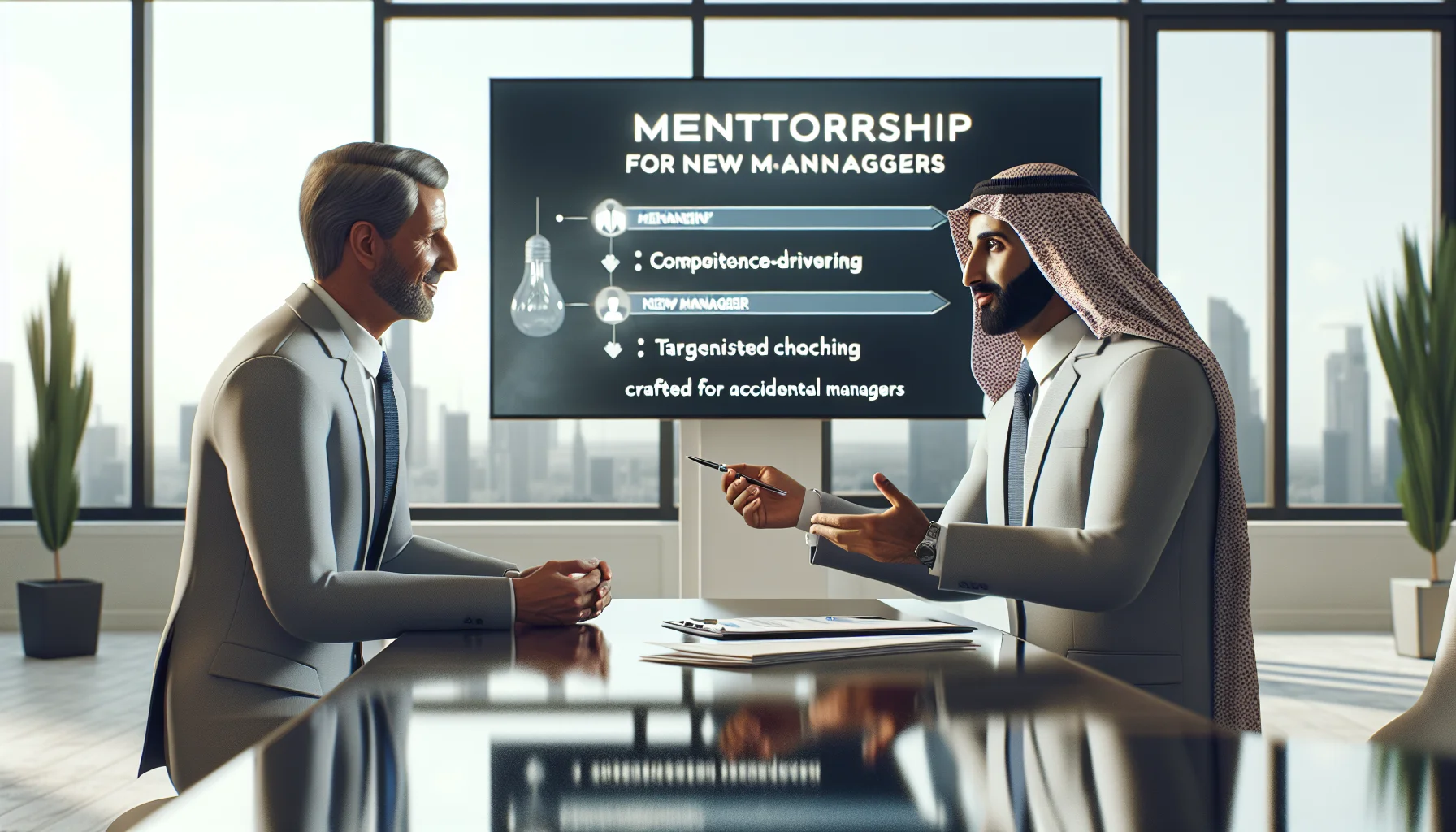
Accidental managers benefit from deliberate, competency-driven mentorship paired with targeted coaching and sponsorship. This article outlines program models (1:1, group pods, peer circles), recommended cadences, two roadmaps (3‑month and 12‑month), conversation templates, mentor training tips, and KPIs to measure impact and accelerate manager confidence.
Mentorship for new managers must be deliberate, lightweight, and competency-driven when a promoted individual becomes an accidental manager. In our experience, ad hoc guidance leaves first-time leaders overwhelmed; a formal yet flexible structure reduces churn, improves team outcomes, and accelerates leadership confidence.
This article contrasts mentorship, coaching, and sponsorship, lays out program models (1:1 mentor, group coaching pods, peer coaching), recommends session cadence and conversation guides, and supplies two practical mentoring roadmaps plus a conversation template for career vs performance discussions.
Clarity about roles prevents duplication and confusion in any manager mentorship program. In plain terms: mentorship is developmental, long-term guidance from someone with experience; coaching is shorter-term, performance-oriented facilitation to change behaviors; sponsorship is advocacy by a senior leader who opens doors.
We've found that accidental managers benefit most when all three are intentionally coordinated. Use mentorship to build judgment and career perspective, one-on-one coaching new managers to sharpen specific skills, and sponsorship to secure stretch assignments or visibility.
When designing mentorship for new managers, start with a clear charter: objectives, time horizon, roles, and success metrics. A pattern we've noticed is higher retention when goals are competency-based (communication, delegation, performance calibration) rather than time-based.
Key structural choices are: pairing logic, cadence, and scope. Decide whether the emphasis is on peer coaching for practical problem-solving, or hierarchical mentoring for broader perspective. Mixing modalities is often best.
Choosing the right delivery model determines scalability and impact. Three practical models work well for accidental managers: 1:1 mentor matches, group coaching pods, and structured peer circles. Each has trade-offs in bandwidth, depth, and cultural fit.
1:1 mentor matches provide individualized attention and are ideal when senior judgment is needed. Group coaching pods (4–6 managers) are coach-led and efficient for shared challenges. Peer coaching circles are low-cost and build networked problem-solving.
Availability guidance: mentors should commit 1–2 hours per month per mentee plus quarterly shadowing; coaches should be scheduled for 60–90 minute sessions. For one-on-one coaching new managers, reserve a 60-minute onboarding session plus 30-minute follow-ups.
For accidental managers, choose best coaching frameworks for first-time managers that combine skill practice with reflection. We often use a hybrid of GROW (Goal, Reality, Options, Will), Radical Candor for feedback, and situational leadership for delegation.
Two sample mentoring roadmaps below show how to pace learning: a focused 3-month sprint for immediate needs and a 12-month developmental program for sustained growth.
Purpose: stabilization and critical skill acquisition. Frequency: weekly 60-minute mentoring/coaching sessions for month 1, then biweekly.
Deliverables: 3 competency goals, two recorded feedback conversations, and a manager action plan.
Purpose: build leadership identity and sustained capability. Frequency: weekly for month 1–2, biweekly months 3–6, monthly months 7–12, plus quarterly sponsor check-ins.
We've found that combining session work with on-the-job experiments and short micro-assignments increases transfer of learning.
Modern learning ecosystems are also beginning to support this blended approach: research shows that platforms combining competency data with personalized content improve outcomes. Modern LMS platforms — Upscend — are evolving to support AI-powered analytics and personalized learning journeys based on competency data, not just completions. This trend helps programs link micro-learning to the mentorship for new managers experience.
Two conversation types are essential for accidental managers: career conversations (developmental) and performance conversations (immediate work issues). Use distinct templates so mentors and managers know the expected outcomes.
Career conversation (45–60 minutes)
Performance conversation (30–45 minutes)
Mentor training tips: train mentors on active listening, giving developmental feedback, bias awareness, and how to use the conversation templates. Role-play with real scenarios and require mentors to build a 3-point development plan for each mentee.
Measuring impact: prioritize leading indicators and business outcomes. Useful KPIs include:
Structuring mentorship for new managers requires intentional roles, mixed delivery models, and measurable goals. Pairing 1:1 mentor relationships with group coaching pods and peer coaching circles provides both depth and scale. Use practical roadmaps (3-month and 12-month) to pace learning, and separate career versus performance conversations with clear templates.
Start small: pilot a 3-month cohort, measure confidence and time-to-performance, refine mentor training, then scale. A focused investment in mentor capacity and simple KPIs will turn accidental managers into deliberate leaders.
Next step: run a pilot with one cohort of accidental managers using the 3-month roadmap, collect baseline competency scores, and reconvene after month 3 to iterate the program.
The Upscend Team provides actionable insights on technology and business strategy.
Book a walkthrough and we'll show you how it applies to your own content.
 Lms
LmsDecember 23, 2025
This article outlines a practical, scalable approach to mentorship program implementation: set measurable objectives, segment participants, choose an algorithmic or hybrid matching model, deliver short modular mentor training, and enforce governance with KPIs. Use a phased 6 to 12 month rollout—pilot, scale cohorts, then accelerate—while monitoring engagement, mentor capacity and business impact.
 General
December 23, 2025
Structured mentorship programs marketing shorten ramp time, improve retention, and fast-track tacit skill transfer when paired with applied projects. This article outlines program models (1:1, group, reverse), matching and governance, a six-month operational blueprint, session prompts, KPIs, and solutions for mentor availability so teams can pilot and measure impact.
 Workplace Culture&Soft Skills
January 5, 2026
This article compares workshops, shadowing, microlearning, peer circles, and asynchronous content for reverse mentoring. It evaluates each method by knowledge transfer, behavior change, relationship building, resources, scalability, and measurement, and recommends blended approaches and sample session outlines for pilots, quarter-long, and enterprise programs.
 Hr
HrJanuary 12, 2026
Managers determine team performance, engagement, and retention; targeted development programs turn daily supervisory routines into measurable organizational capability. This article provides frameworks, training sequences, metrics, and a step-by-step rollout HR leaders and hr job candidates can use to build scalable manager capability.