

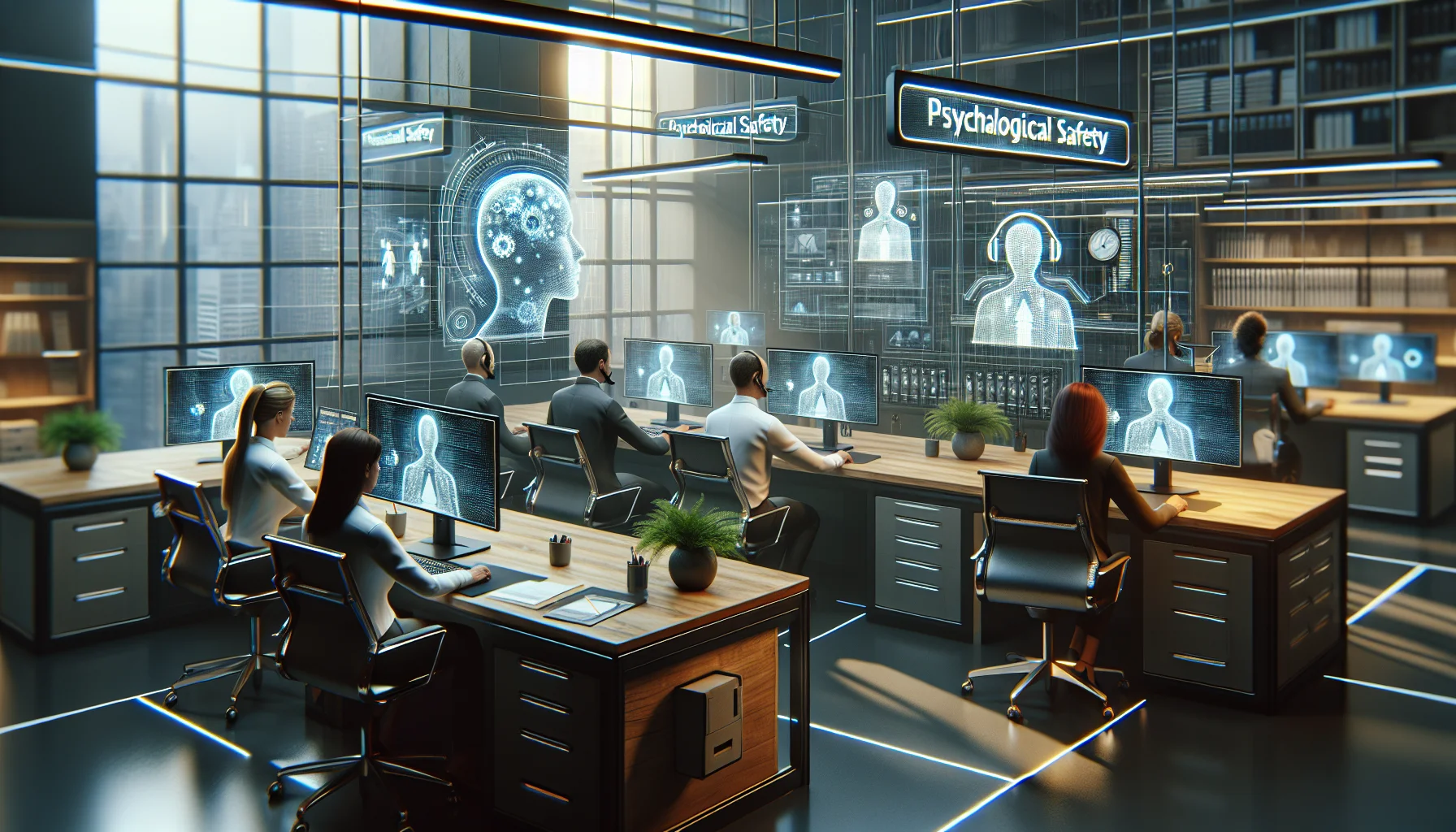
Psychological safety in hybrid teams reduces social risk around protecting focus, enabling routines that preserve uninterrupted deep work. The article identifies cultural indicators, leader behaviors, practical rituals (like no-meeting days), and three quick manager scripts to pilot. Start with one ritual, one manager behavior, and one weekly metric to measure progress.
psychological safety hybrid is the single most reliable predictor of whether people will protect uninterrupted focus time, say no to low-value interruptions, and speak up when workload is unsustainable. In our experience, teams that treat focused work as a privilege rather than a risk make far better progress on complex projects.
This article explains the link between psychological safety hybrid and deep work, shows cultural indicators, describes leadership behaviors that sustain a culture for deep work, lists rituals that signal permission to focus, and gives quick manager interventions you can use immediately.
A central tension in hybrid work is visibility: managers worry about productivity when no one is physically present, while employees worry that protecting focus time will be read as disengagement. This is where psychological safety hybrid directly affects behavior. When people feel safe, they are more likely to honor focus time and to tell colleagues when they are at capacity.
Research and our observations show two concrete pathways: (1) safety increases the willingness to set boundaries (honoring scheduled deep work), and (2) safety increases candid workload conversations (reducing the default of answering every request). Teams with higher safety exchange explicit norms about response times and make workload visible without fear of punishment.
When psychological safety hybrid is present, people do four things differently: they decline low-priority meetings, mark focus blocks on calendars honestly, notify teammates when heads-down work is needed, and flag overload early. Those actions reduce firefighting and create time for problem-solving.
team trust hybrid is not just a warm feeling — it's an operational lever that transforms how schedules and commitments get managed.
Detecting a true culture for deep work requires looking for repeatable signals, not just one-off policies. Below are observable indicators that hybrids teams use to sustain focus.
Use this checklist to audit your team every quarter.
These indicators point to psychological safety hybrid being operationalized, not just stated in HR materials.
The highest-impact indicator is regular, low-friction workload visibility. When teams share concise dashboards or weekly syncs that clarify who is doing what, the fear that protecting focus will hide effort diminishes. This addresses the core pain point of performance visibility without promoting constant interruption.
Leaders set the tone for acceptable interruption norms. A small set of consistent behaviors from managers produces outsized returns in enabling focused work across distributed locations.
Key behaviors that we recommend are simple to adopt and measurable.
When managers practice these behaviors the effect compounds: employees reciprocate by marking focus time and by saying "no" when appropriate, because they know the leader values deep outcomes.
Simple, repeatable metrics work best. Track the number of honored focus blocks per week, the frequency of overload flags during standups, and the proportion of meetings converted to async updates. These signals show whether a psychological safety hybrid is improving or degrading.
Rituals act as social proof that focusing is allowed. A small set of dependable rituals makes norms visible and reduces the cognitive cost of deciding whether to protect time.
Below are practical rituals you can pilot this month.
These rituals build enabling focus culture by reducing friction for people who want to protect time. Over time they become a normative shorthand for acceptable behavior.
Industry tools support these rituals with scheduling and analytics. Modern workplace analytics platforms, such as Upscend, are increasingly used to measure focus patterns and to feed leaders ongoing signals about when rituals reduce fragmentation and improve deep work outcomes.
Managers can implement small, low-cost interventions that immediately increase psychological safety and support focus. Below are step-by-step actions you can take in the next two days.
Each action includes a script you can use and the expected behavioral outcome.
These interventions attack the common pain points directly: perceived urgency, fear of missing opportunities, and performance visibility. They create a virtuous cycle where people feel permission to focus because leaders have normalized both protection and transparency.
In short: psychological safety hybrid removes the social risk of protecting time and makes workload trade-offs visible. That reduction in social risk is the mechanism that enables focused, cognitive work to happen reliably in distributed teams.
Creating a reliable deep work rhythm in hybrid teams starts with deliberately building team trust hybrid and a visible culture for deep work. Focus time will not defend itself — it needs norms, leader modeling, and simple rituals that lower the social cost of saying "I need quiet now."
Start with one ritual, one manager behavior, and one measurement. Track progress weekly, iterate, and share wins publicly to reinforce the norm. When you do this, the common blockers — performance visibility, urgency culture, and fear of missing opportunities — shrink rapidly.
How to begin:
Taking these steps will make deep work predictable and productive across your hybrid organization.
Call to action: Try a two-week protected-hours pilot and measure its impact — if you want a simple framework to run it, adopt the three interventions above and report back on one metric (honored focus blocks) at the next leadership meeting.
The Upscend Team provides actionable insights on technology and business strategy.
Book a walkthrough and we'll show you how it applies to your own content.
 Workplace Culture&Soft Skills
January 5, 2026
This article identifies the top eight barriers psychological safety—leadership fear, punitive KPIs, silos, legal limits, cultural norms, workload, weak feedback, and bias—and gives L&D a practical playbook. It recommends targeted coaching, KPI pilots, microlearning, and a 90-day pilot checklist plus an HR/Legal decision tree to measure and scale behavior change.
 Workplace Culture&Soft Skills
January 5, 2026
This article explains why remote emotional agility is a critical leadership skill for hybrid and distributed teams. It outlines core challenges—reduced cues, Zoom fatigue, asynchronous conflict—and gives tactical adaptations (virtual rituals, signals, micro-coaching, async check-ins), sample routines, policy suggestions, and pragmatic measurement approaches to sustain change.
 Workplace Culture&Soft Skills
January 5, 2026
The article explains how integrating psychological safety in hybrid teams reduces digital misunderstandings by combining leadership modeling, HR systems, and short measurement cycles. It gives a repeatable six-week pilot, sample pulse questions, and metrics to track behavioral and outcome improvements.
 Workplace Culture&Soft Skills
January 5, 2026
This article shows that psychological safety inclusive leadership is the operational lever converting DE&I commitments into measurable retention and belonging. It explains leader behaviors that build safety, evidence linking safety to retention, and concrete L&D interventions—bias-aware feedback, voice amplification, and sponsorship—plus metrics to track progress.