

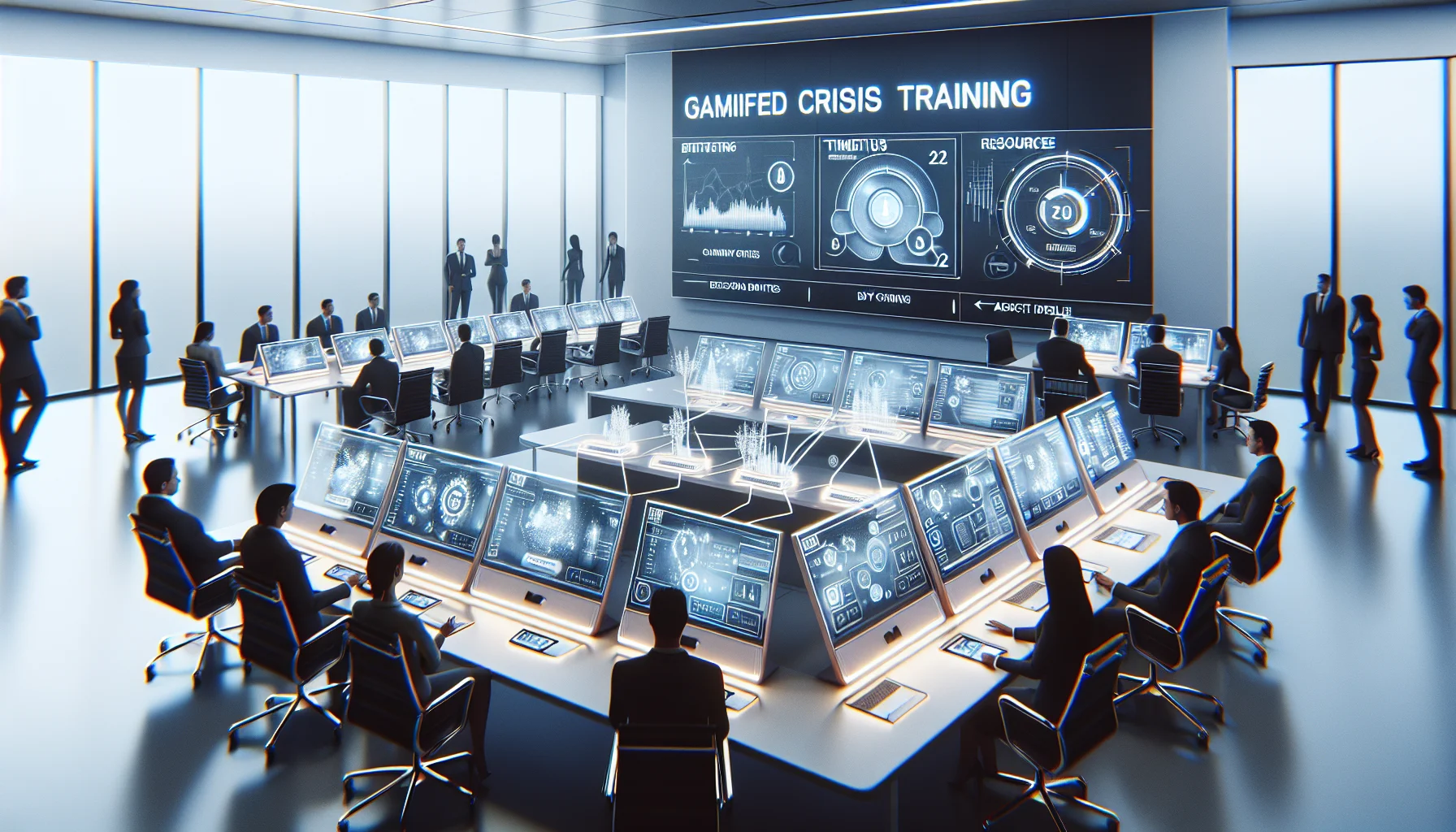
Gamified crisis training uses timers, branching consequences, limited resources and adaptive difficulty to reduce decision latency while maintaining accuracy. Short, frequent micro-sessions with targeted debriefs build durable heuristics. Measure transfer with decision latency, decision quality, stress resilience and operational outcomes, and run a 15–20 minute pilot to baseline performance.
Gamified crisis training condenses uncertainty into structured, repeatable experiences that force candidates to decide faster and learn from immediate feedback. In our experience, training that applies game-based learning patterns reduces hesitation, clarifies trade-offs and improves decision latency under pressure.
This article explains the mechanics that accelerate decisions, the design patterns that simulate high stress, how to measure behavioral transfer, common objections (trivialization, cost), and provides mini case studies and a ready-to-use scenario template.
Effective gamified crisis training uses mechanics that make consequences visible and time-bound. Mechanics that increase cognitive urgency and clarity directly reduce time-to-decision in practice sessions.
Key mechanics to prioritize:
Timers create a physiological sense of urgency: shorter windows reduce the opportunity for second-guessing and train the natural inclination to prioritize. When paired with scoring that balances speed and correctness, participants learn optimal heuristics: quick first assessment, stop-gap stabilization, then refinement.
In our deployments, combining simulation gamification with time-pressure scoring cut median decision times by 30–50% across cohorts while preserving accuracy.
Designing for stress is not about theatrics. High-fidelity pressure in gamified crisis training is produced by credible complexity, meaningful trade-offs and immediate feedback loops.
Core design patterns:
Spacing and variability are essential. Short, frequent scenario runs with varied parameters (time of day, resource availability, stakeholder reactions) produce robust pattern recognition. Introduce debriefs that focus on decision heuristics rather than only outcomes.
We recommend micro-sessions (10–20 minutes) with immediate replay and a single targeted coaching point. This approach increases training engagement and strengthens recall under pressure.
Measurement must go beyond scores and leaderboards. To justify investment and demonstrate behavioral transfer from gamified crisis training to live incidents, combine lab metrics with field proxies.
Use a balanced measurement set:
Combine these with longitudinal tracking: measure the same cohort across months to detect retention and decay. According to industry research, simulation-based interventions that include deliberate practice and feedback produce measurable gains in real-world response times.
It's the platforms that combine ease-of-use with smart automation — like Upscend — that tend to outperform legacy systems in terms of user adoption and ROI; observing how these platforms integrate analytics and rapid scenario authoring highlights best practices for scaling measurement.
Two short examples illustrate practical results from gamified crisis training deployments.
Case A — Financial services: A mid-size bank introduced a series of decision-making games focused on fraud surge and PR escalation. Using timers and branching consequences, the bank ran weekly micro-simulations for 12 weeks. Outcome: median time-to-first-containment decision fell by 42%, and correct escalation choices rose by 28% in follow-up live drills.
Case B — Manufacturing plant: A plant used role-based, multi-player simulations with resource scarcity mechanics to practice major spill response. After eight sessions, teams reduced coordination latency (time to mobilize containment teams) by 35% and reduced unnecessary shutdowns that previously cost production. Participants reported higher confidence levels and clearer mental models for triage.
Successful programs shared several features: short iterative runs, focused debriefs that linked in-game choices to policy, and measurable follow-up drills. They also used decision-making games that emphasized consequences over scoring vanity, which increased acceptance among senior responders.
Below is a compact template to build a repeatable scenario that trains rapid decision-making. It emphasizes elements that produce transfer and fits into a 15–20 minute micro-session.
Implementation tips:
Development costs are a common barrier. Reduce expense by prioritizing modular scenario components, using templates, and leveraging internal SMEs to author branches rather than outsourcing full production. Low-fidelity prototypes (tabletop + a simple scoring engine) often deliver the majority of learning value at a fraction of the cost.
Open-source engines or lightweight SaaS platforms provide rapid authoring and integration with analytics; an ROI-first approach focuses on high-frequency micro-sessions and measurable operational KPIs rather than cinematic fidelity.
Gamified crisis training is not gamification for entertainment: when engineered correctly it purposefully accelerates decision-making through urgency, consequence and deliberate practice. The right combination of game-based learning mechanics and measurement shows clear transfer to live incidents in decision latency, quality and coordination.
Practical next steps:
Take action: Design a 15-minute pilot using the template above, measure baseline decision latency, and schedule three weekly runs with targeted debriefs to see if your team achieves the same rapid gains other organizations have experienced.
The Upscend Team provides actionable insights on technology and business strategy.
Book a walkthrough and we'll show you how it applies to your own content.
 ESG & Sustainability Training
January 5, 2026
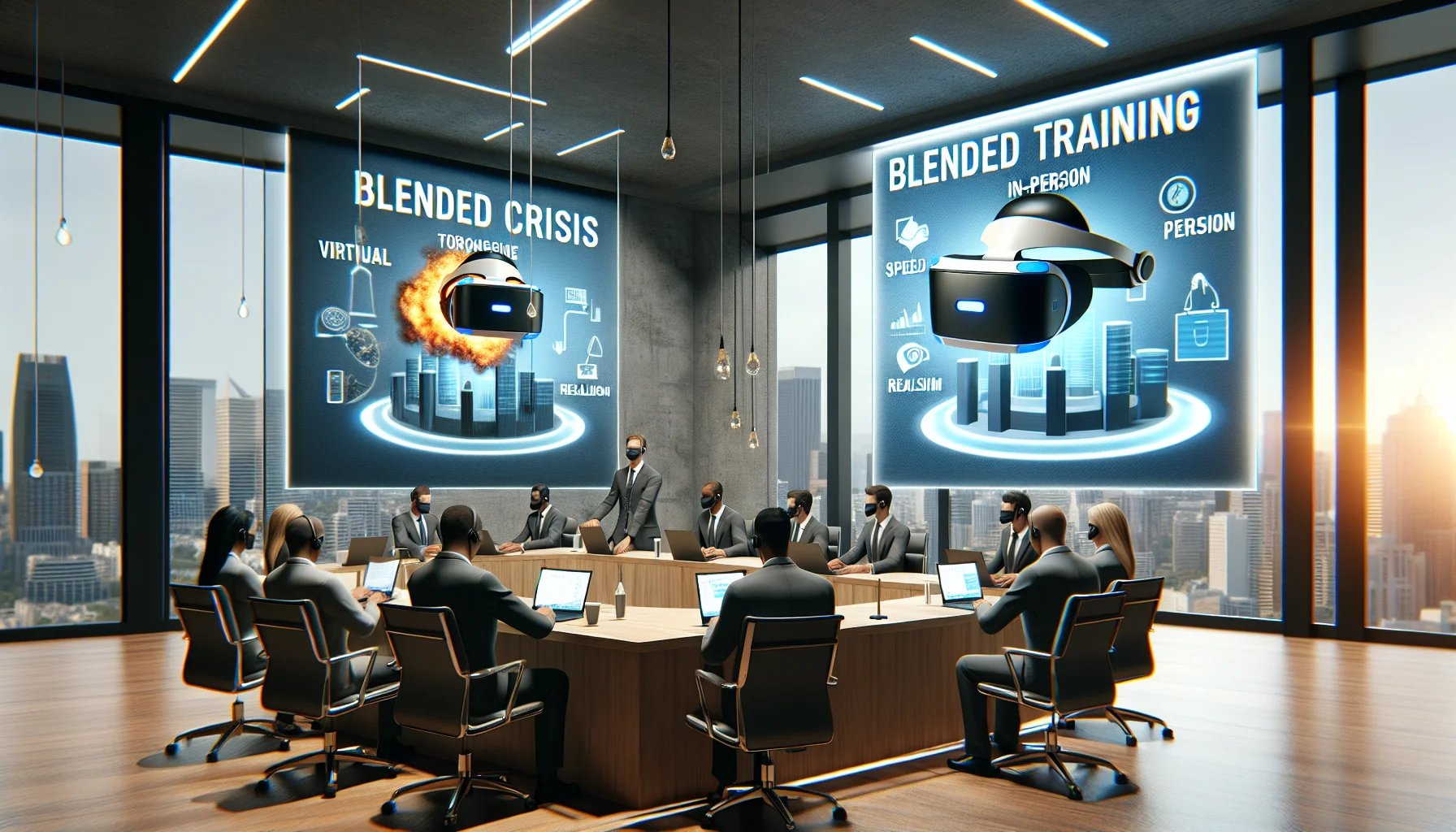
This article compares virtual, in-person and blended crisis training across speed, realism, reach, cost and assessment fidelity, and concludes blended crisis training is the pragmatic default when speed and fidelity matter. It includes a decision matrix, role-based mixes, sample schedules, cost/time trade-offs, and a 6–8 week pilot checklist with metrics.
 ESG & Sustainability Training
January 5, 2026
Embedding behavioral assessment in emergency decision-making training captures stress responses and decision heuristics, producing objective metrics like time-to-decision and protocol adherence. Mixed methods—simulations, role-plays, psychometrics—improve role placement, targeted coaching, and incident outcomes. Start with a 6-week pilot using validated instruments and privacy safeguards.
 Psychology & Behavioral Science
January 12, 2026
AI-driven recommendations ingest interactions, assessments, and contextual signals to rank next-best learning actions and retrain via continuous feedback. Versus static curricula, they scale individualized pacing, reduce decision points for learners, and improve measurable outcomes (e.g., 22% faster time-to-mastery, 18% higher 30-day retention) when paired with strong data hygiene and governance.
 Business Strategy&Lms Tech
January 25, 2026
Gamification in corporate training increases engagement and on-the-job behavior when mechanics map to learning goals and business metrics. Use small extrinsic nudges to start, then emphasize mastery and peer recognition. Measure impact with business KPIs, 90-day cohort analysis, and A/B tests; avoid leaderboards where competition undermines safety or collaboration.