

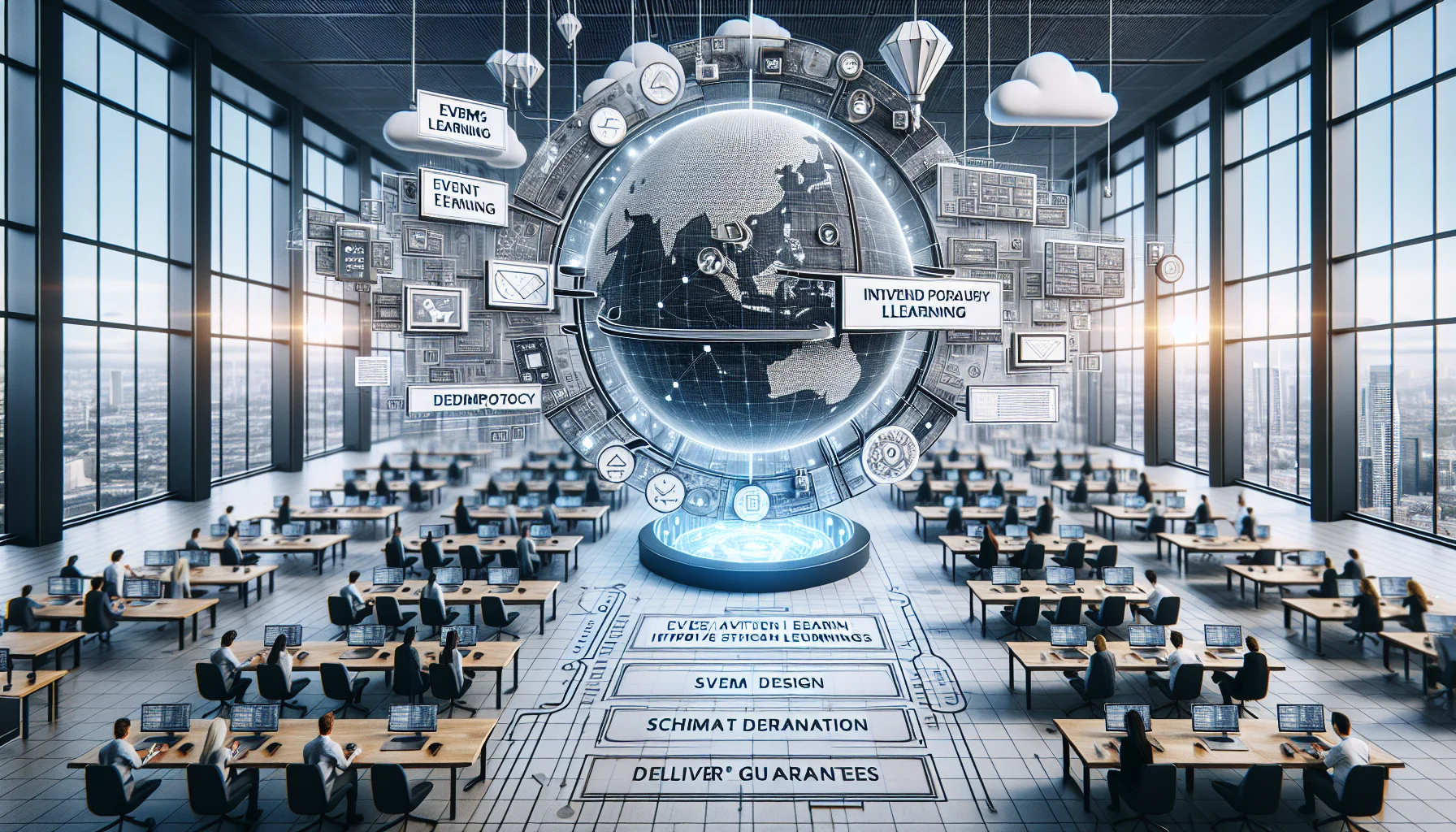
Event-driven learning replaces polling with push-based events so LMS state changes trigger immediate actions across identity, CRM, analytics, and credentialing. This article explains webhook and event-bus patterns, schema design, idempotency, delivery guarantees, error-handling, and monitoring, with concrete examples—course completion, credential issuance, and real-time notifications—to run a two-week pilot.
In this article we explain practical, production-ready patterns for event-driven learning architectures and how an LMS fits into a broader IT tech stack. Event-driven learning transforms passive systems into responsive platforms by surfacing real-time learning events to downstream services like identity, CRM, analytics, and credentialing. We've found that thoughtful event design and proven delivery strategies reduce latency, improve learner experience, and cut manual work.
This guide covers core patterns (webhooks, event bus, stream processing), event schema design, idempotency, guaranteed delivery strategies, implementation examples, error-handling, and monitoring. Expect concrete schemas, step-by-step implementation tips, and a concise case showing measurable business value.
Event-driven learning flips the model from polling and batch exports to an asynchronous, push-based ecosystem where state changes in the LMS trigger immediate actions. In our experience, this reduces system integration complexity and shortens the time from completion to action.
Key benefits include lower latency for eligibility checks, automated credential issuance, and seamless onboarding flows. An LMS that emits structured events can enable:
Adopting event-driven learning requires addressing ordering, idempotency, observability, and delivery guarantees up front. Below we unpack those patterns and provide templates you can implement immediately.
Two complementary patterns power event-driven learning: lightweight webhooks for direct, push-style notifications, and message brokers or an event bus for durable, scalable delivery. Choose the pattern based on scale, reliability needs, and integration complexity.
Webhooks are ideal for immediate, low-volume notifications. They are straightforward to implement and often used for how to use webhooks with LMS for real-time updates. Webhooks deliver HTTP POST requests to configured endpoints when key events occur (e.g., course.completed).
For webhooks, implement signature verification, a short retry policy on failure, and an ability to replay events from the LMS UI or audit API. We recommend returning standardized HTTP codes and logging each delivery attempt.
An event bus or streaming platform (Kafka, Pulsar) supports high-throughput stream processing, replayability, and ordered partitions. For enterprise-grade event-driven architecture for LMS, pair an event bus with a schema registry to validate events before consumers act.
Designing events correctly is the most important step in any event-driven learning initiative. Consistent event schemas, unique event IDs, and versioning reduce friction during integration.
Core rules we've adopted:
Example event schema (JSON representation for engineers and schema registries):
Event schema example:
{"event_id":"uuid-1234-5678","event_type":"course.completed.v1","timestamp":"2026-01-01T12:00:00Z","actor":{"id":"user:888","type":"learner"},"payload":{"course_id":"course-101","attempt_id":"att-777","score":92,"status":"passed"}}
Idempotency is essential. Consumers must be able to safely process the same event multiple times without side effects. We've found two reliable approaches:
Event ordering can be handled by partitioning keys (e.g., learner ID) in the event bus so all events for a user are processed in sequence. If absolute ordering isn't required, design consumers to be eventual-consistent and tolerant of out-of-order deliveries.
Concrete, repeatable examples make adoption faster. Below are three common flows we implement in production for event-driven learning.
Course completion trigger — When a learner completes a course, the LMS emits a course.completed event. Consumers include:
Step-by-step flow for course completion:
Credential issuance — For certs, use an idempotent command pattern. The LMS emits an event; a credentialing service requests a signed credential if no record exists for the attempt_id.
Real-time notifications and adaptive paths rely on real-time learning events. For example, a learning assistant can push reminders when a due-date event is emitted, creating a more responsive learner experience.
While traditional systems require manual setup for sequenced learning, some modern tools are built with dynamic, role-based sequencing in mind; for example, platforms like Upscend demonstrate how tighter sequencing and policy-driven routing reduce integration complexity by emitting rich context in events rather than expecting consumers to infer state.
Guaranteed delivery is a layered responsibility shared between producer, transport, and consumer. For robust event-driven learning, design for at-least-once delivery and make consumers idempotent.
Common delivery strategies:
Error-handling patterns we've implemented:
Error-handling example pattern: when a consumer receives a webhook, it responds 200 only after successful processing. If the consumer fails, it returns 5xx; the LMS retries twice with exponential backoff. After three attempts, the event lands in a DLQ with the original payload and diagnostic headers for replay.
Operationalizing event-driven learning requires end-to-end visibility. Instrument producers and consumers with tracing and standardized metrics so you can measure delivery latency, processing success, and duplication rates.
Key telemetry and alerts to implement:
We recommend a three-layer observability stack:
Additionally, maintain a schema registry and CI gates so any change to event definitions is validated against live consumers before deployment. This avoids silent contract breaks that can cause cascading failures.
Event-driven learning is a practical architecture pattern that, when designed carefully, yields faster onboarding, more responsive learner experiences, and a more maintainable integration surface. We've found implementations that follow strict schema discipline, idempotency, and observability deliver the most business value.
Start small: publish core events (course.completed, enrollment.created), implement an outbox pattern in the LMS, and wire a single consumer that demonstrates the value (provisioning or credential issuance). Track delivery metrics, add a DLQ, and iterate toward full stream processing and schema governance.
Actionable checklist:
If you want to validate an event contract or prototype a flow (for example, course completion → access provisioning), start by emitting a single canonical event and instrumenting a consumer to measure end-to-end latency. That data will guide whether you need an event-driven architecture for LMS with a dedicated bus or if how to use webhooks with LMS for real-time updates suffices for now.
Next step: pick one high-impact event (we recommend course.completed), define a minimal schema, and run a two-week pilot that measures time-to-provision and error rates. Use the results to justify moving from webhook proofs-of-concept to a full event-driven learning ecosystem.
The Upscend Team provides actionable insights on technology and business strategy.
Book a walkthrough and we'll show you how it applies to your own content.
 L&D
L&DDecember 21, 2025
This article shows how LMS analytics convert learner data into actionable insights to improve completion, mastery, and time-to-competency. It outlines core metrics, real-time dashboards, personalization techniques, and a five-step rollout including A/B testing. Readers learn practical KPIs, reporting tools, and governance needed to operationalize analytics-driven learning.
 L&D
L&DDecember 21, 2025
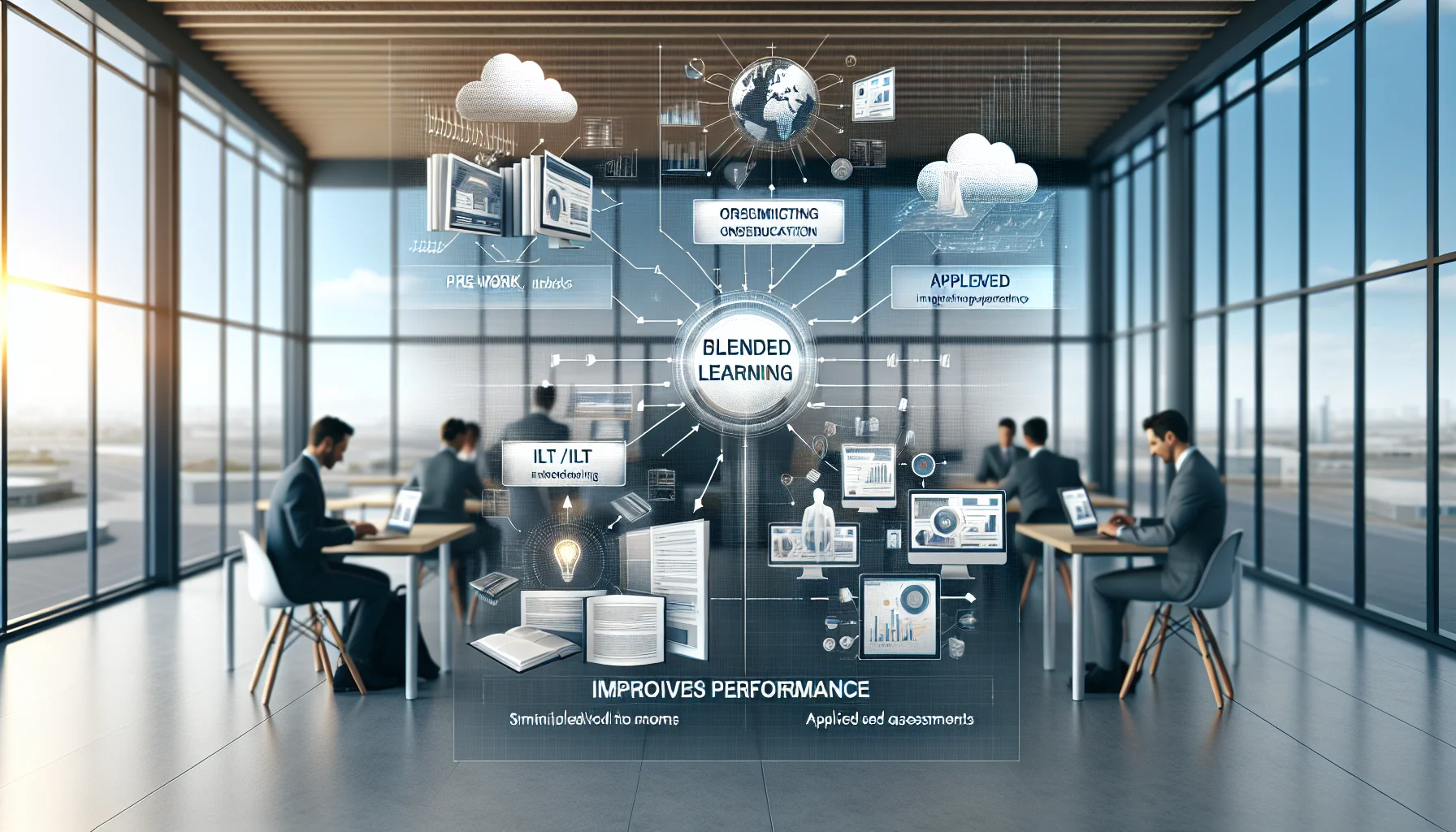
This article explains how a blended learning LMS orchestrates pre-work, ILT/VILT, applied assignments, and microlearning to improve skill transfer and measurable business outcomes. It provides workflow templates (4- and 12-week), a recommended tech stack, metrics to track, and two corporate use cases showing reduced time-to-quota and faster resolution times.
 General
December 22, 2025
This article explains how LMS course design improves completion, retention, and on-the-job performance by using backward design, microlearning, scenario-based assessments, and analytics. It provides a six-step implementation roadmap, practical tools, and common pitfalls to avoid so teams can pilot and scale measurable online training programs.
 General
December 22, 2025
This article explains how adaptive learning paths inside an LMS personalize training through diagnostic assessments, sequencing logic and continuous feedback. It outlines core components, when adaptivity yields the greatest ROI, a step-by-step pilot approach, measurement KPIs and common pitfalls with mitigation strategies for reliable implementation.