


Explains how blended learning metaverse integrates asynchronous prework, virtual simulations and evidence-based debriefs to train high‑risk tasks. Covers two models (flipped classroom, prebrief/simulation/debrief), recommended sequencing, rubric design, LMS xAPI integration, a sample three‑week curriculum, and common deployment pitfalls with mitigations.
Blended learning metaverse approaches combine instructor-led, digital and immersive methods so learners practice high-risk tasks in safe, repeatable virtual environments. In our experience, explaining how blended learning works with metaverse simulations starts with a clear division of roles: what must be learned cognitively, what is practiced procedurally, and what requires reflective debrief. This article explains practical models, recommended sequencing, assessment links to an LMS, and a sample three-week curriculum for high-risk work.
Below you'll find frameworks and implementation tips that reduce friction and improve measurable transfer from simulation to the workplace.
There are repeatable models that explain how blended learning works with metaverse simulations. The most effective patterns pair asynchronous knowledge transfer with synchronous practice in virtual worlds. Two proven models are the flipped classroom and the prebrief/simulation/debrief loop.
Both models prioritize safe, deliberate practice in the metaverse while using classroom time for coaching and reflection.
The flipped classroom moves exposition and foundational content to prework (videos, micro-lessons, readings) so live sessions become rehearsal and problem-solving time. In a blended learning metaverse setup, learners complete preparatory modules, then enter a virtual simulation to apply techniques under facilitator observation.
Benefits: higher fidelity practice, efficient use of facilitator time, and stronger peer learning during live sessions.
The prebrief/simulation/debrief model explicitly sequences psychological safety, execution and reflection. The metaverse simulation is the execution phase: learners practice a procedure in VR or mixed reality while facilitators record performance metrics. Debrief uses recorded moments, analytics and guided reflection to anchor transfer.
Use this model when procedural accuracy and decision-making under stress are critical.
Designing how blended learning works with metaverse simulations requires disciplined sequencing. A reliable sequence reduces cognitive load and ensures proficiency gains transfer to the job.
Below is a recommended order for a single competency module.
Prework and debrief strategies are central to outcomes: prework must prime decision frameworks; debrief must convert observations into corrective actions. Use explicit learning objectives in prework and tag simulation metrics to those objectives so the debrief is evidence-based rather than anecdotal.
Short, focused prework (10–20 minutes) followed by a tightly facilitated debrief (15–30 minutes) yields the best retention in VR blended learning deployments.
Assessment is how you prove that blended learning metaverse investments move the needle. We've found teams fail when assessments measure only completion rather than capability.
Align assessments to the same competencies practiced in the metaverse and make them visible in your LMS for tracking and remediation.
Effective rubrics combine objective metrics (timing, task steps completed, error count) with qualitative ratings (decision quality, teamwork). A practical rubric has 3–5 criteria with behaviorally specific anchors for measurable transfer.
LMS integration closes the loop: simulation outcomes feed completion records, remediation assignments and adaptive prework. Choose platforms that accept xAPI statements from the metaverse so you can aggregate granular performance data with course completions.
Tools that map simulation metrics to learning objectives enable targeted refreshers and support long-term competency dashboards.
This sample focuses on a high-risk confined-space entry. It demonstrates how blended learning metaverse design scales from foundational knowledge to measured on-the-job performance.
Week-by-week sequencing emphasizes repetition, escalation of complexity and formal assessment.
Activities: 60 minutes prework (policies, hazard checklists), 90-minute virtual classroom Q&A, 2 short VR walkthroughs focusing on PPE and entry procedures.
Assessment: LMS quiz (80% pass) + facilitator checklist in VR for PPE adherence.
Activities: Two metaverse simulations with branching failures (atmospheric changes, equipment failure), peer observation and short written reflection. Facilitators capture video clips for debrief.
Assessment: Performance-based rubric (detailed below) applied live in VR.
Activities: Final simulated scenario under time pressure, followed by an on-site supervised task with coach. Post-task debrief and LMS-assigned refresher modules.
Assessment: Summative rubric + supervisor observation form.
Assessment rubric (sample)
Practical deployments of hybrid training metaverse projects often stumble on three issues: coordinating schedules across locations, preparing facilitators for VR pedagogy, and quantifying on-the-job transfer. Addressing these up-front reduces program risk.
Below are mitigation strategies that we've seen work in the field.
Scheduling VR sessions is constrained by headset availability and bandwidth. Use a mix of local lab time and remote streaming where feasible, and block recurring session windows to reduce coordination overhead. Short, frequent practice sessions (20–30 minutes) are easier to schedule and preserve momentum.
Facilitators need both technical and debrief skills. Provide a facilitator train-the-trainer that covers scenario control, recording and evidence-based debrief techniques. Use facilitator calibration sessions where multiple instructors rate the same recorded simulation to align scoring and feedback.
Measuring transfer requires linking simulation performance to workplace KPIs—near-miss rates, incident reductions, or supervised task pass rates. The turning point for most teams isn’t just creating more content — it’s removing friction. Upscend helps by making analytics and personalization part of the core process, enabling teams to map simulation metrics to business outcomes and automate targeted refreshers.
When implemented with clear sequencing, aligned assessments and robust LMS integration, blended learning metaverse programs dramatically improve preparation for high-risk tasks. The core benefits come from deliberate prework, high-fidelity rehearsal in the metaverse, and evidence-based debriefs that convert performance data into learning actions.
To get started: define 3–5 measurable competencies, select or build scenarios that map to those competencies, and pilot with a small cohort to validate rubrics and scheduling before scaling.
Next step: Pilot a single competency with a two-week cycle and collect baseline KPIs. Use the rubric in this article to compare simulation scores to workplace observations, then iterate.
The Upscend Team provides actionable insights on technology and business strategy.
Book a walkthrough and we'll show you how it applies to your own content.
 ESG & Sustainability Training
January 5, 2026
Practical playbook for teams that want to procure metaverse training: define requirements, use a procurement checklist, and budget line-items including a sample 18‑month budget. It provides an RFP template, weighted vendor scorecard, TCO guidance (CAPEX vs OPEX), and negotiation levers—pilot SOWs, SLAs and support—to reduce cost surprises and speed scale-up.
 ESG & Sustainability Training
January 5, 2026
This article describes key future metaverse training trends—AI-driven personalization, synthetic scenario pools, edge-enabled persistent environments, interoperability standards, and mixed reality—and explains how they turn episodic VR drills into continuous risk reduction. It recommends concrete steps: run a 90-day pilot, require model governance and data portability, and form a cross-functional steering group.
 ESG & Sustainability Training
January 5, 2026
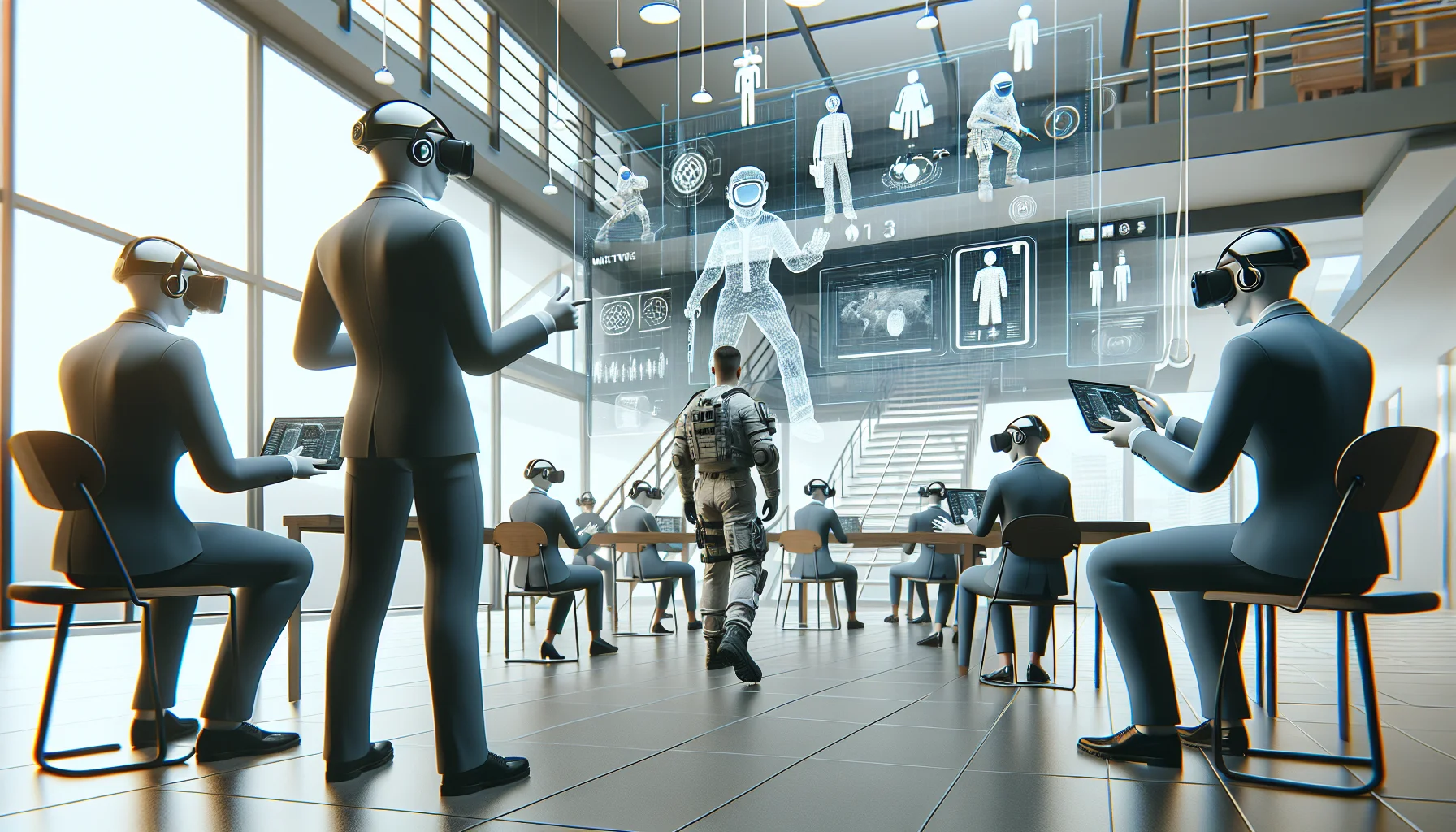
This article explains which accessibility considerations are required for metaverse safety training, covering standards (ADA, WCAG, XR guidelines), inclusive design patterns (multiple modalities, alternative input, seated mode), a practical testing checklist, real-world examples, and procurement budgeting. Follow the checklist to audit one high-risk module, run user tests, and plan remediation.
 ESG & Sustainability Training
January 5, 2026
Metaverse safety simulations let distributed teams rehearse high-risk scenarios with lower physical risk and higher retention than video-only methods. The article explains four deployment patterns, technical baselines, outage contingencies, and consistent assessment rubrics to make remote team metaverse training measurable and compliant. Run a pilot with mixed connectivity to validate outcomes.