


This article compares virtual watercooler and structured social learning, outlines pros and cons, moderation needs, and key metrics for meaningful connections. It recommends a hybrid pipeline to convert informal threads into formal learning, plus an 8-week A/B test and tactical activation, sustainment, and maturation steps leaders can run.
virtual watercooler channels are the informal hubs many remote teams use to recreate hallway chats, quick questions, and social bonding. In this article we compare the virtual watercooler to structured social learning features, evaluate trade-offs, and offer practical steps leaders can use to measure real outcomes. I’ll draw on experience, industry benchmarks, and tested frameworks to help teams decide when to prioritize a free-form digital watercooler versus cohort-based learning or topic forums.
Readers will get clear pros and cons, an engagement lifecycle model, moderation needs, metrics for meaningful connections, hybrid examples, and a simple A/B test plan you can run next month. The goal is actionable clarity—not platitudes—so you can improve culture and learning ROI.
A virtual watercooler is an informal communication space—like a Slack channel, Microsoft Teams group, or scheduled "random coffee" pairing—where work-adjacent interaction happens. These spaces mimic casual, serendipitous encounters that are central to workplace socialization and tacit learning.
In our experience, the biggest value of a virtual watercooler is its ability to create psychological safety quickly: people test ideas, share wins, and ask micro-questions without the friction of formal meetings. It supports emotional well-being, reduces isolation for remote employees, and surfaces emergent needs that structured learning programs might miss.
A digital watercooler emphasizes spontaneity and breadth; social learning platforms emphasize structure, goals, and measurable outcomes. Informal spaces reward speed and variety, while social learning features (cohorts, forums, threaded topics) reward depth and repeatable skill acquisition.
Choosing between them depends on intent: culture and quick problem-solving vs targeted knowledge transfer and retention.
Below is a direct comparison to clarify trade-offs. I’ve seen organizations default to one form and miss the complementary benefits of the other.
Decisions should weigh immediate culture needs against long-term capability building. A pattern we've noticed is that organizations with strong onboarding and mentorship still rely on a virtual watercooler for culture but use social learning platforms to standardize competencies.
Structured social learning wins on retention because it uses spaced practice, deliberate retrieval, and cohort accountability. A virtual watercooler contributes by surfacing real-world, contextual questions that can then be converted into formal learning modules or FAQs.
The smart approach is pipeline integration: harvest questions from informal channels and route them into social learning workflows.
To answer how to run a virtual watercooler for remote teams effectively, think of engagement in three phases: activation, sustainment, and maturation. Each phase requires different interventions and governance.
Activation uses prompts, welcome threads, and onboarding nudges. Sustainment relies on rituals—weekly themes, AMA sessions, and light moderation. Maturation formalizes outputs: topic threads converted to docs, highlight reels, and recognition systems.
Practical tools and integrated platforms help reduce admin overhead. We’ve seen organizations reduce admin time by over 60% using integrated systems like Upscend, freeing up community leads to focus on quality interactions rather than platform maintenance.
Moderation needs vary by scale. Small teams (under 50) can use volunteer moderators; mid-size organizations benefit from part-time community managers; large enterprises need a governance model with escalation rules and content tagging.
Moderation should prioritize signal amplification (promote useful threads), tone management (address harmful behavior quickly), and content routing (move questions into learning tracks). A light-touch policy plus escalation paths balances freedom and quality.
Automations—keyword alerts, upvotes to highlight signal, and pinned FAQs—reduce manual moderation load while preserving spontaneity.
Measuring a virtual watercooler requires different KPIs than formal learning. Focus on behavioral and relational metrics that indicate real connection and knowledge flow.
Key metrics we recommend tracking:
Operationalize measurement with weekly sampling audits, sentiment checks, and tagging systems that label threads by topic and usefulness. Combining qualitative sampling with simple quantitative thresholds gives a reliable picture without intrusive surveillance.
Three practical levers reduce noise: design constraints (topic-specific threads), micro-moderation (upvote curation), and conversion pathways (move valuable discussions into persistent knowledge stores). Use lightweight rules to avoid killing spontaneity.
For example, a “help” tag with automatic triage to a mentors channel preserves informal flow while ensuring urgent questions get visibility.
Most high-performing organizations use a hybrid model: keep a vibrant virtual watercooler for culture while using social learning platforms for skill-building. The hybrid pipeline turns ephemeral interactions into persistent knowledge.
Hybrid features commonly used include: scheduled micro-cohorts seeded from watercooler prompts, topic forums that evolve into training modules, and recognition systems that link informal contributions to performance development.
Success combines cultural and performance indicators: higher cross-functional collaboration, faster time-to-resolution for ad-hoc problems, documented learning artifacts created from informal threads, and improved retention of key skills. Use pre/post surveys and activity sampling to triangulate.
Short A/B cycles give leaders clarity on which investments yield the best ROI for their context.
Choosing between a virtual watercooler and social learning features is not an either/or decision. Informal channels provide culture and rapid problem-solving; structured social learning secures retention and measurable growth. The highest-ROI strategy is a deliberate hybrid that routes valuable informal signals into formal learning pathways.
Practical next steps:
Call to action: If you want a pragmatic starter kit, begin by auditing one month of watercooler activity, identify five recurring questions, and pilot converting those into a two-week micro-cohort—measure outcomes and iterate.
The Upscend Team provides actionable insights on technology and business strategy.
Book a walkthrough and we'll show you how it applies to your own content.
 Lms
LmsDecember 23, 2025
This article explains how virtual classroom LMS integrations blend synchronous and asynchronous learning, automate attendance and grade sync, and surface engagement metrics for measurable outcomes. It outlines technical models (LTI, API, native), design patterns, a 60-day measurement plan, and an implementation checklist to avoid common operational pitfalls.
 Business Strategy&Lms Tech
January 26, 2026
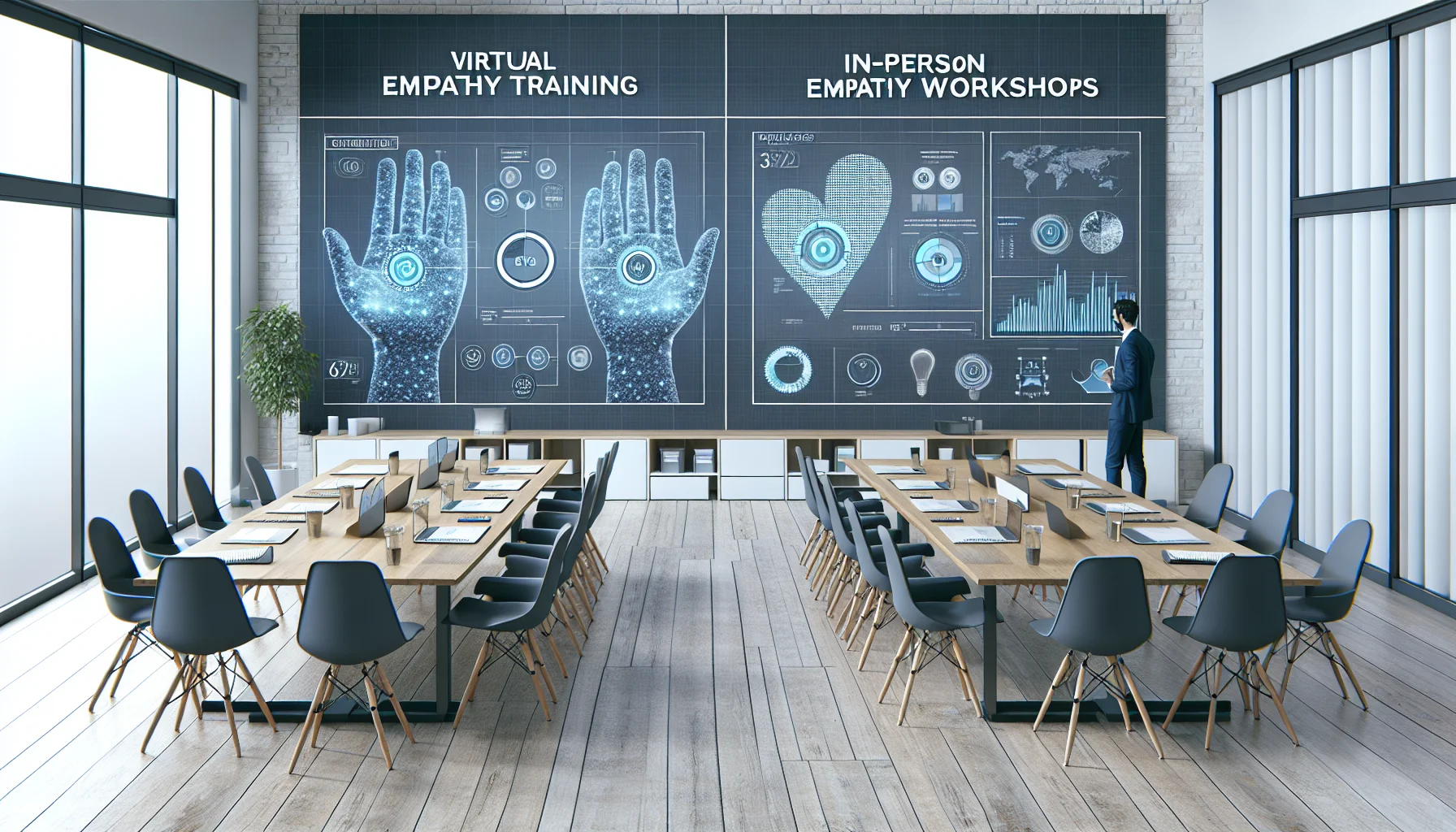
This article compares virtual empathy training and in‑person workshops across outcomes, evidence, cost, and design. Virtual programs scale and retain knowledge when they use spaced practice and micro-simulations; in-person delivers stronger affective shifts and role-play fidelity. For most organizations a hybrid model with mixed-method evaluation and facilitator training is recommended.
 Ai
AiJanuary 28, 2026
This article compares virtual mentors vs human coaches across cost, scalability, personalization, empathy and compliance, and presents decision frameworks for onboarding, performance, and career development. It recommends a three-tier hybrid model—automated baseline, human intervention triggers, continuous measurement—and a staged pilot approach with KPIs to operationalize hybrid human-AI coaching.
HrFebruary 3, 2026
This article compares virtual reality onboarding platforms for enterprises, focusing on scalability, security, analytics, and content ecosystems. It offers a vendor evaluation matrix, integration notes for LMS/xAPI, sample timelines, and a pilot-to-production checklist. Use the guidance to shortlist vendors, run production-like pilots, and negotiate SLAs and data ownership.