


Multi-tenancy LMS platforms serve multiple organizations from a single deployment while preserving tenant-specific experiences. This article compares shared-schema, schema-isolation and separate-DB patterns, outlines security/compliance controls, and explains localization levers (Arabic, RTL, branding) plus automated provisioning. CTOs and L&D heads get a checklist and a Gulf pilot workflow to map tenants to architecture tiers.
A multi-tenancy LMS is a software model that serves multiple organizations (tenants) from a single deployed platform while providing each tenant a logically separate experience. In the context of regional learning and development, a multi-tenancy LMS lets global providers deliver localized training programs to Gulf, Levant and North African subsidiaries without deploying a full stack for every country.
In our experience, organizations choose a multi-tenancy LMS to balance centralized operations with localized control: shared core services, faster rollouts, and tenant-specific customization where it matters. This article explains technical patterns, trade-offs, provisioning flows, and concrete steps CTOs and L&D heads can use when planning a regional LMS deployment.
What is a multi-tenancy LMS for training at the architectural level? There are three common patterns: shared database (shared schema), shared database with schema isolation, and separate database per tenant. Each has trade-offs in cost, isolation and operational complexity.
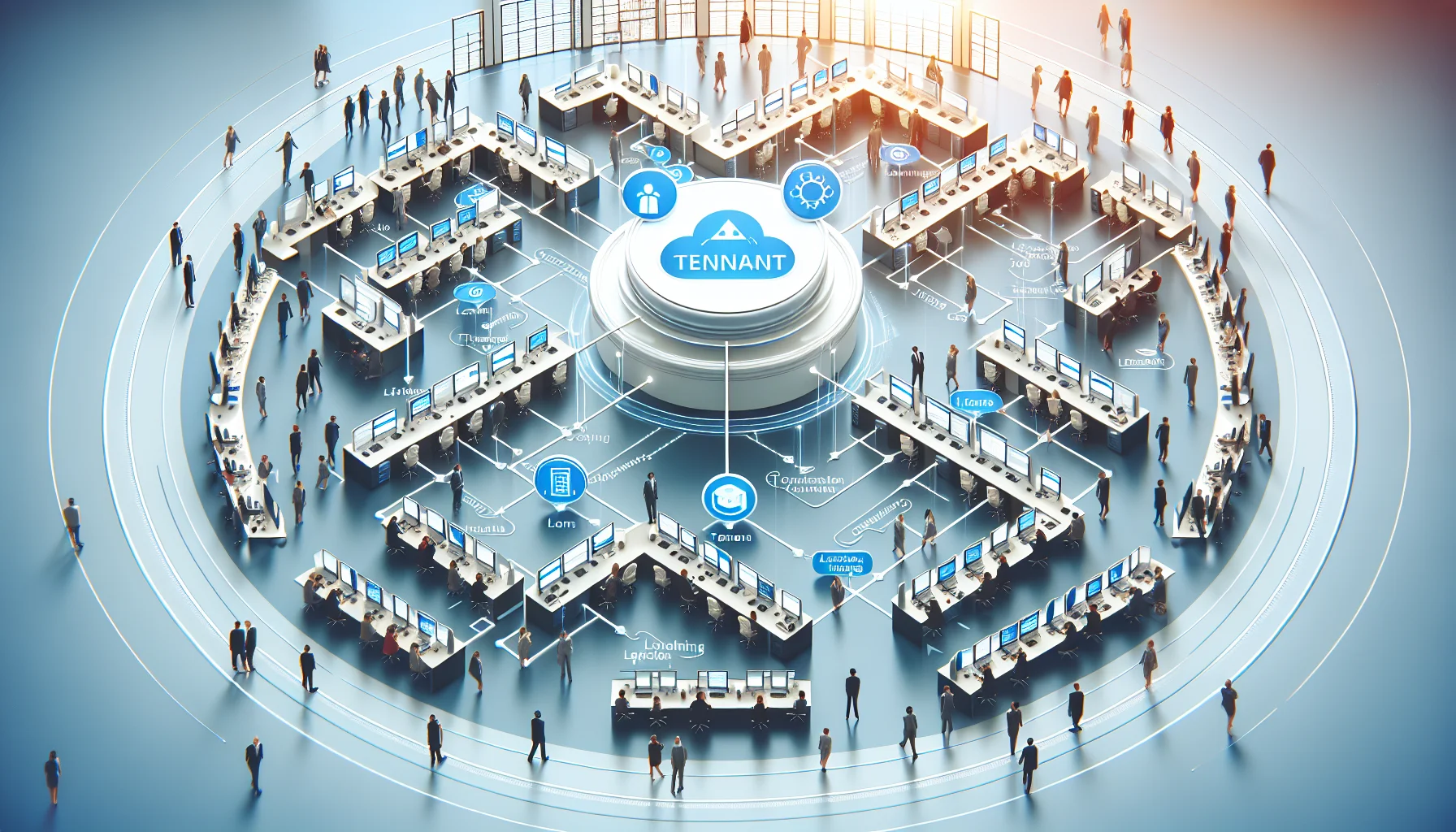
Below are the core patterns and a simple diagram-style summary to visualize differences.
Shared DB (shared schema) — single DB, tenant_id column | Schema isolation — one DB, multiple schemas | Separate DB — per-tenant databases
Each pattern maps differently to scale, backup, and compliance needs:
| Pattern | Pros | Cons |
|---|---|---|
| Shared DB (shared schema) | Lowest cost, easiest updates | Weaker logical isolation, more careful tenant-aware code |
| Schema isolation | Good balance: logical separation, simpler backups | Higher DB management complexity |
| Separate DB per tenant | Strongest isolation, easy tenant-level restore | Highest operational cost at scale |
A robust multi-tenancy LMS typically combines:
Containerization and orchestration (Kubernetes) are common for isolating runtime and delivering predictable performance across tenants while preserving a single deployment pipeline.
Localization goes beyond language: it includes content relevance, regulatory compliance, cultural customization, and tenant-level branding. A multi-tenancy LMS supports localized training by allowing tenant-specific content repos, modular language packs, and regional settings that don't affect the global core.
Practical levers:
We’ve found that a clear separation between core learning services (SCORM/xAPI, reporting engine) and presentation layers accelerates localization. Implement UI overrides at the tenant layer while keeping learning objects in a central catalog for reuse.
Security is a primary concern: customers ask about data privacy, performance isolation, and cross-tenant access risks. A multi-tenancy LMS must prove strong tenant isolation, encryption at rest and in transit, and auditable access logs to satisfy regulators in the Middle East.
Key controls to implement:
How multi-tenant LMS supports regional compliance: by combining tenant-aware encryption, per-tenant backup policies, and policy-as-code that maps regional rules to system behavior. Studies show strong auditability reduces compliance review time by a measurable amount when these controls are built into the platform.
Upscend is an example of a platform that helped organizations centralize tenant management while preserving tenant-specific compliance and customizations, and we’ve seen teams reduce admin time significantly after integrating such centralized tools into their multi-tenant operations.
Provisioning must be automated, repeatable and secure. Typical workflows include tenant registration, identity integration, content mapping and a smoke-test deployment. A robust provisioning pipeline reduces time-to-live from weeks to hours.
Example onboarding for a Gulf-based subsidiary (step-by-step):
For Gulf subsidiaries, pay attention to data residency and local authentication patterns. In our experience, keeping the content layer multi-tenant while using separate DBs for user PII solves most regulatory constraints with manageable operational overhead.
Cost depends on chosen architecture. A multi-tenancy LMS with shared DBs offers the lowest marginal cost per tenant, while separate DBs drive higher hosting and maintenance costs. Make architecture choices aligned with SLAs and compliance tiers:
Customization limits vs maintainability: too much per-tenant customization increases upgrade complexity. Keep core platform upgrades smooth by confining heavy customization to presentation and configuration layers.
Addressing upgrade complexity:
Below is a concise plan you can apply immediately.
Technical checklist (CTO):
Operational checklist (L&D heads):
Avoid these common mistakes:
We’ve noticed that teams who codify tenant policies and run regular disaster recovery drills reduce incident windows substantially.
Implementing a multi-tenancy LMS for the Middle East requires a pragmatic architecture and clear operational rules. Choose the database pattern and isolation level that match regulatory and performance needs, keep heavy customization out of core services, and automate provisioning and testing.
Actionable next steps:
Final note: prioritize observability, tenant-level SLAs and a clear upgrade path to ensure that localized training scales without creating technical debt.
Call to action: If you're planning a regional LMS rollout, start with a two-week architecture sprint that maps tenancy tiers, compliance requirements and a pilot onboarding runbook — this delivers clarity for both CTOs and L&D heads and reduces time-to-value for localized training.
The Upscend Team provides actionable insights on technology and business strategy.
Book a walkthrough and we'll show you how it applies to your own content.
 Institutional Learning
December 23, 2025
This article explains multi-tenant LMS architecture and why it supports scaling training with centralized operations and tenant-level autonomy. It outlines business benefits—lower TCO, faster rollouts, stronger governance—migration checklists, vendor evaluation criteria, and case metrics to guide pilots and procurement decisions for large organizations.
 L&D
L&DDecember 24, 2025
Practical guidance for implementing glocal training in the Middle East using a multi-tenant LMS. Covers architecture choices (single, multi, hybrid), governance roles, localization workflows (RTL, Arabic, legal sign-off), analytics and a phased roadmap with vendor checklist. Start with a pilot tenant, measure compliance, and scale with central version control.
 L&D
L&DDecember 24, 2025
This article explains how a multitenancy LMS balances centralized shared services with tenant-specific customization to enable scalable, localized learning across subsidiaries. It covers tenancy models, tenant isolation and security, integration patterns (SSO/HRIS), scaling and monitoring strategies, plus a vendor checklist and a case study showing a 35% TCO reduction.
 Business Strategy&Lms Tech
January 25, 2026
This article explains how to manage global compliance training in an LMS by treating legal rules as dynamic inputs, building a centralized taxonomy, and mapping roles to assignments. It covers localization strategies, certification cycles, technology integrations, recordkeeping and audit exports, with an actionable roadmap for piloting and scaling multi-country compliance training.