

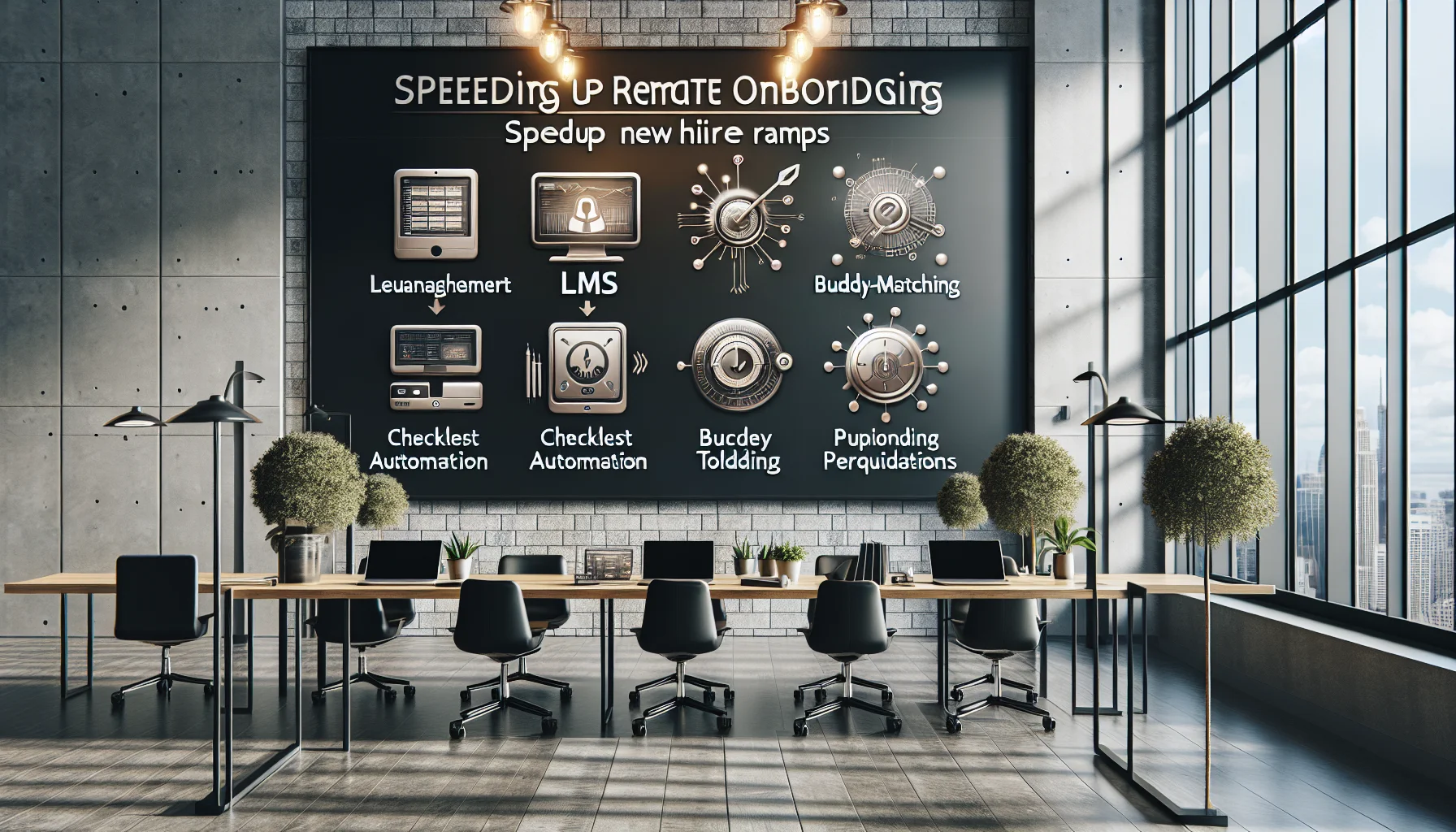
Remote onboarding tools — an LMS, checklist automation, buddy-matching, and IT provisioning — reduce admin overhead and shorten new-hire ramp. This article provides an evaluation matrix, startup and enterprise product picks, and a staged implementation checklist with HRIS and Slack integration tips to measure ramp-time KPIs.
In our experience, choosing the right remote onboarding tools is the single biggest lever for reducing new hire ramp time in distributed teams. Remote-first companies face specific pain points — manual onboarding, missing paperwork, delayed access to systems — and the right mix of platforms solves them systematically.
This article evaluates the categories of remote onboarding tools, offers an applied framework for comparison, recommends top picks for startups and enterprises, and provides implementation tips for HRIS and Slack integrations. Read on for practical, experience-driven guidance you can apply this quarter.
Remote onboarding tools are the collection of platforms and workflows that automate paperwork, deliver learning, provision IT access, and support socialization for distributed hires. They include learning management systems, checklist automation, buddy-matching apps, and IT provisioning services.
We’ve found companies that replace ad hoc processes with a coordinated stack reduce administrative overhead and accelerate time to first meaningful contribution. According to industry research, structured onboarding programs can improve performance and retention by measurable percentages — and the right tools make those programs repeatable.
Remote hires commonly struggle with delayed credentials, unclear role ramp plans, and social isolation. Good remote onboarding tools address these gaps by automating routine tasks, delivering role-specific learning paths, and creating predictable touchpoints with managers and peers.
Checklist automation ensures no paperwork is missed; IT provisioning guarantees access on day one; virtual onboarding platforms provide orientation and cohort experiences remotely.
When you compare remote onboarding platforms for distributed teams, use a decision matrix that scores tools across four categories: automation, learning, access, and socialization. Weight the categories based on company stage and compliance needs.
In our evaluations we score each product on:
Must-have integrations include the company HRIS (BambooHR, Workday), SSO providers (Okta, Azure AD), ticketing/provisioning (Jira, ServiceNow, Rippling), and Slack. These integrations let remote onboarding tools trigger account creation and communicate status without manual intervention.
Prioritize tools with open APIs and pre-built connectors to reduce implementation time and avoid brittle point-to-point integrations.
Below are curated picks across the four functional categories (LMS, checklist automation, buddy matching, IT provisioning). These recommendations reflect products that consistently score high on automation, integrations, and ROI for remote teams.
Startups (1–200 employees) need low-cost, flexible tools. Enterprises (200+ employees) often require compliance, SSO, and deep HRIS integrations.
| Category | Startup pick | Enterprise pick | Pricing bracket |
|---|---|---|---|
| Learning Management System (LMS) | TalentLMS | Docebo / WorkRamp | $ - $$$ |
| Checklist automation | Process Street / ClickUp | ServiceNow / Workato | $ - $$$ |
| Buddy matching / social | Donut (Slack) | GroveHR / CultureAmp cohorts | $ - $$ |
| IT provisioning & HRIS | Rippling | Okta + JumpCloud + Enterprise HRIS | $$ - $$$ |
We’ve seen organizations reduce admin time by over 60% using integrated systems like Upscend, freeing up trainers to focus on content rather than account setup. This outcome typically comes when checklist automation, provisioning, and the LMS are linked so tasks complete automatically on hire.
Ask these practical questions: Does the platform support cohort onboarding and live sessions? Can it host role-specific learning and assessments? Are analytics available for ramp time and content completion? Choose the platform that matches your learning model — self-paced vs cohort-led.
Tip: For quick wins, pair a lightweight LMS with a checklist automation tool and a Slack buddy-matching bot.
New hire ramp tools shorten the path to independent work by eliminating waiting periods and standardizing learning. The mechanisms are straightforward: automatic account provisioning reduces waiting time for systems; structured learning compresses role knowledge transfer; scheduled peer interactions accelerate cultural integration.
Measure the impact using three KPIs: time-to-first-PR/first-sale, time-to-competency, and new hire satisfaction. Improvements in these KPIs show real ROI.
In one case we advised a distributed SaaS company to combine an LMS, checklist automation, and SSO-driven provisioning. Within three months they reported a 35% reduction in time-to-first-feature and a 40% cut in HR admin hours per hire. That combination of remote onboarding tools kept task ownership visible and removed manual handoffs.
Use these real metrics as a baseline when you pilot changes: measure current ramp time, implement the stack, and track weekly progress.
Implementing new remote onboarding tools is as much change management as technology. Follow a staged rollout to limit disruption and capture early wins.
Recommended rollout steps:
Integrations are where tools deliver leverage. Connect the HRIS as the source of truth so hires trigger workflows automatically. Use Slack for real-time notifications and buddy introductions. When possible, prefer platforms with native connectors to your HRIS or middleware like Workato to minimize custom work.
Security note: Validate SSO and provisioning workflows with your security team to avoid orphaned accounts or over-provisioning.
Several recurring pitfalls slow adoption of remote onboarding stacks: too many tools, unclear ownership, and lack of measured outcomes. Avoid tool sprawl by defining ownership up front — HR owns paperwork and compliance, IT owns provisioning, managers own role-specific ramp plans.
Other practical fixes include keeping checklists short, using microlearning modules under 15 minutes, and mandating a day-one connection (manager check-in + buddy Slack thread).
Finally, ensure that you treat onboarding as productized: a repeatable, measurable experience that gets better with each cohort. That mindset change is as critical as the technology choice.
Choosing the right mix of remote onboarding tools — a capable LMS, robust checklist automation, a buddy-matching solution, and reliable IT provisioning — shortens ramp time and reduces HR overhead. Use a clear evaluation matrix, run a focused pilot, and instrument ramp KPIs to validate impact.
Start small: automate the highest-friction tasks first (paperwork and access), measure the weekly impact on ramp time, and expand. With consistent iteration, remote-first teams can transform onboarding into a competitive advantage.
Next step: Audit your current onboarding flow, select one automation to pilot this month, and track time-to-first-meaningful-work as your primary metric.
The Upscend Team provides actionable insights on technology and business strategy.
Book a walkthrough and we'll show you how it applies to your own content.
 Lms
LmsDecember 23, 2025
This article explains how to design scalable LMS onboarding that reduces ramp time and improves early retention. It covers planning 30/60/90 outcomes, building microlearning modules and 10-15 item checklists, automating workflows, tracking KPIs like 30-day completion and time-to-competency, and avoiding common pitfalls.
 General
December 23, 2025
This article explains how organizations use LMS onboarding to shorten time-to-productivity through structured pre-boarding, role-based 30/60/90 curricula, mentor integration, and HRIS syncs. It includes a ready-to-import 30/60/90 template, sales and support case examples, an HR checklist, common pitfalls, and metrics for measuring employee ramp-up.
 Lms
LmsDecember 23, 2025
This article provides a step-by-step virtual onboarding process to make remote new hire onboarding predictable, scalable and human. It covers first-72-hour priorities, logistics, learning paths, manager checklists, KPIs (days-to-first-login, time-to-first-value) and templates for schedules and communications to reduce ramp time and turnover.
 Lms
LmsDecember 23, 2025
This article outlines a practical manager-first onboarding curriculum: objectives, micro-training modules, checklists, scripts, role-plays, and 30/60/90 milestones. It explains how to train managers with a learn→practice→apply→measure cycle, delivery cadence, and KPIs to track checklist completion, ramp time, and 90-day retention. Includes sample scripts and measurement criteria.