

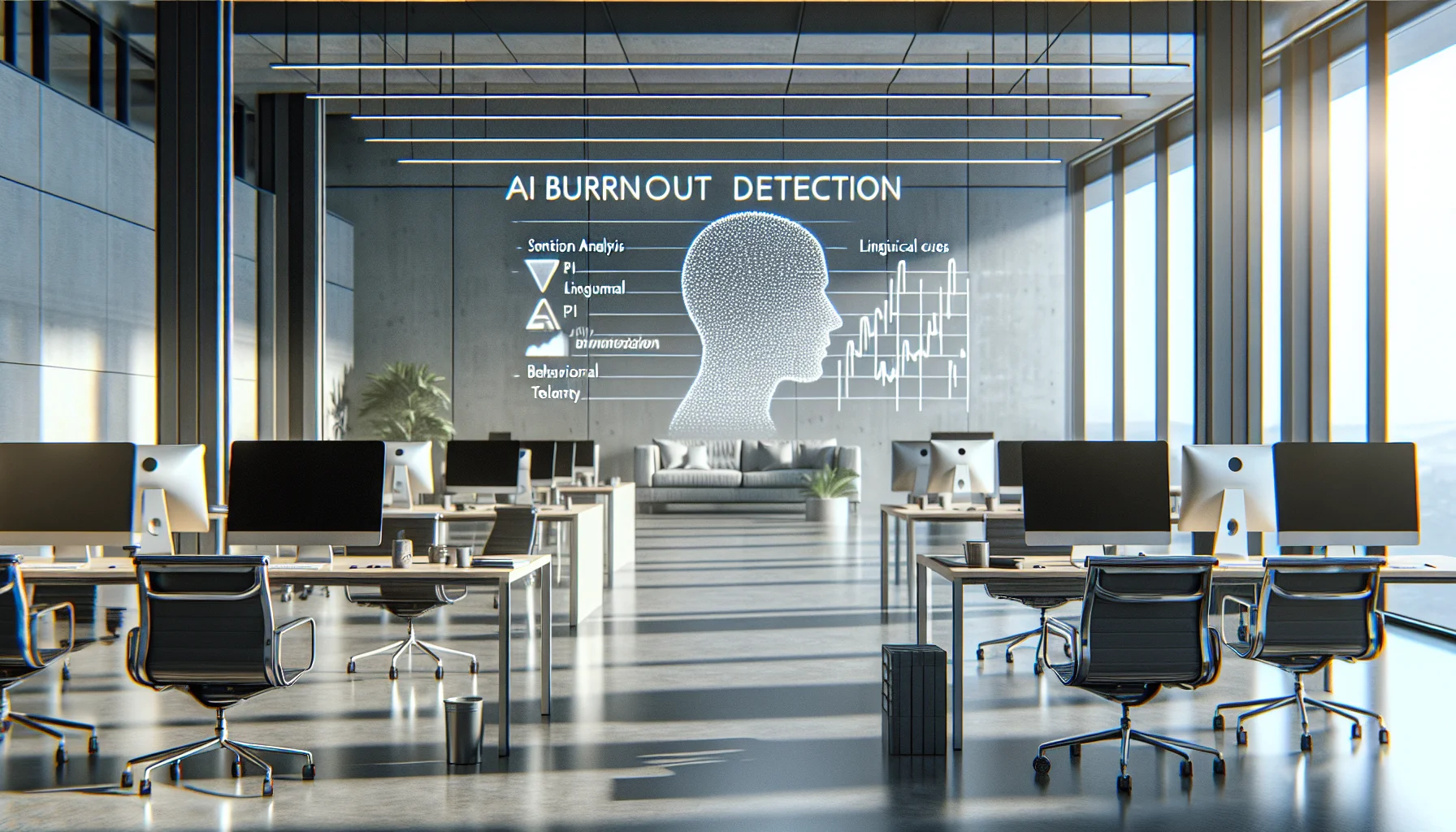
AI burnout detection combines sentiment analysis, linguistic cues, and behavioral telemetry to surface early risk signals for remote teams. Used as an assistive tool with human-in-the-loop workflows, it improves early detection while reducing false positives through ensemble rules, privacy guardrails, and bias audits. Run a short pilot with clear governance.
AI burnout detection is becoming a practical tool for managers who need early signals of stress and disengagement on distributed teams. In our experience, combining natural language processing, behavioral analytics, and thoughtful workflows surfaces patterns that humans miss while preserving managerial judgment.
This article explains what signals modern systems can surface, the limits and bias risks, how to integrate outputs into manager workflows, a short pilot case, a vendor checklist, and a sample data governance policy you can adapt.
AI burnout detection combines text sentiment, linguistic markers, and behavioral telemetry to create multi-dimensional risk signals. These systems transform noisy data into actionable insights, but they do not replace human context. Sentiment analysis wellbeing focuses on tone and affect, while activity logs and scheduling patterns reveal behavioral drift.
A pattern we've noticed is that subtle tone shifts precede big behavioral changes; the tools flag sentiment decline earlier than a missed deadline or sick day.
Sentiment analysis to spot remote employee burnout uses email, chat, and survey text to extract tone, reduced positivity, increased frustration words, and linguistic cues like more first-person negative statements. Models look for:
These signals are useful when trended longitudinally; a single frustrated message is noise, but a week-over-week decline in sentiment is meaningful.
Beyond words, machine learning burnout models ingest calendar density, meeting times, after-hours activity, ticket completion patterns, and collaboration graphs. Machine learning burnout features often include:
Combining these with sentiment creates higher-confidence alerts while preserving interpretability: managers get both the why (text) and the what (behavior).
Managers asking "how AI can help managers detect burnout" should balance capability with clear limits. In our experience, models achieve useful sensitivity but suffer from false positives when context is missing. Systems work best as amplifiers of signals, not ground truth.
AI burnout detection excels at surfacing trends; it struggles with one-off events, sarcasm, cultural language differences, and role-specific stress norms.
Common false-positive triggers include personal emergencies, brief project spikes, or idiomatic language. For example, a terse message during a tight deadline might be flagged as negative sentiment but reflects context rather than burnout. To reduce noise, we recommend ensemble rules that require multiple signal types before triggering a manager alert.
Sentiment analysis wellbeing signals should be thresholded and trended to avoid alarm fatigue.
Language models can inherit cultural and demographic bias, mistaking non-standard phrasing for negativity. A pattern we've noticed: teams with high linguistic diversity get more false flags unless models are retrained or calibrated. Always evaluate models on representative holdout datasets and run bias audits before deployment.
AI for employee wellbeing requires ongoing fairness testing and human oversight to avoid amplifying systemic bias.
Practical integration prioritizes interpretability, human-in-the-loop escalation, and privacy. We recommend placing algorithms as assistants that summarize and surface, not decision-makers that act without human review.
When designing workflows, include clear thresholds, contextual notes, and recommended manager actions so that insights translate to supportive conversations rather than punitive measures.
An effective implementation uses role-based dashboards that surface AI burnout detection flags with the supporting evidence: sentiment trend chart, recent flagged messages (redacted or anonymized), and behavioral indicators. Alerts should include confidence scores and recommended next steps like a check-in or workload review.
This process requires real-time feedback (available in platforms like Upscend) to help identify disengagement early while giving managers an easy way to confirm or dismiss an alert.
Design a three-stage workflow: detection → human review → supportive intervention. Train managers to interpret signals, ask open-ended questions, and document outcomes. We found that a short script and a quick manager training session reduced misinterpretation and improved trust.
We ran a six-week pilot with a 120-person remote team to test whether AI burnout detection could surface early risk without invading privacy. The system used anonymized weekly sentiment scores, meeting density measures, and self-reported pulse surveys.
Key steps and outcomes below illustrate a lightweight, repeatable pilot approach.
Results: AI burnout detection alerted on 18 cases; managers confirmed meaningful concern in 12 (67%). Interventions included workload rebalancing and one-week PTO; average pulse scores recovered by two points in four weeks for confirmed cases.
Choosing a vendor requires verifying model transparency, data controls, and compliance. Use the checklist below when evaluating solutions and require contractual guarantees for privacy and deletion.
AI burnout detection vendors vary widely on interpretability and access controls—compare vendors on the criteria below.
Even with good tools, teams stumble when they treat alerts as verdicts rather than prompts for human engagement. Avoid mandatory disciplinary action based on algorithmic flags and ensure managers see the signals as conversation starters.
AI burnout detection must be paired with strong guardrails: transparency, limited retention, and documented escalation paths.
Protect privacy by default: anonymize data where possible, present aggregated trends, and avoid storing full message text. Require explicit consent when exposing individual messages to managers and provide employees with access to their own derived metrics.
Sentiment analysis to spot remote employee burnout should never be used for performance punishment; frame it as a wellbeing tool.
Make outputs explainable: include the contributing signals, the time window, and a short rationale. Train managers to ask open questions, avoid assumptions, and consult HR or EAP resources before escalating.
We recommend quarterly training refreshers and a short decision tree attached to each alert to guide managers through a humane and compliant response.
AI burnout detection is a powerful amplifier for manager awareness when used responsibly. It surfaces timely signals—text sentiment shifts, calendar overload, and collaboration decay—that, when combined, predict meaningful risk. However, models are fallible and must be governed with privacy, bias mitigation, and human oversight.
If you’re starting, run a time-boxed pilot with passive telemetry and voluntary surveys, adopt a human-in-the-loop workflow, and require vendor transparency. Use the checklist and data policy above as a starting framework and iterate based on employee feedback.
Next step: Pilot a lightweight detection + manager review workflow for one team for 6–8 weeks, measure confirm rate and employee feedback, and expand only with clear governance. This measured approach preserves trust while unlocking the value of AI for healthier remote teams.
The Upscend Team provides actionable insights on technology and business strategy.
Book a walkthrough and we'll show you how it applies to your own content.
 Workplace Culture&Soft Skills
January 4, 2026
Short, focused microlearning burnout training helps busy managers detect remote burnout by converting digital signals into actionable 1:1 scripts and quick decision tasks. A six-module program of 2–10 minute lessons with micro-assessments, scenario branching, and follow-up nudges can improve detection speed and manager confidence.
 General
January 5, 2026
This article identifies seven hidden AI mistakes—like treating models as authoritative, ignoring data provenance, and skipping human review—and gives practical fixes: PLAN governance, human-in-the-loop gates, dataset documentation, and KPIs. Follow a seven-day sprint to add sourcing, thresholds, and monitoring to reduce errors and improve AI content accuracy.
 Lms
LmsJanuary 13, 2026
This article provides a practical playbook to detect burnout early with LMS analytics. It covers data collection (90-day history, HR enrichment), core features (engagement rate, drop-off velocity, assessment persistence), rule-to-ML model progression, and tiered alerting with sample pseudocode. Follow a three-week pilot and manager validation to minimize false positives.
 Lms
LmsJanuary 20, 2026
This article compares LMS analytics tools and learning analytics platforms for detecting employee burnout. It gives an evaluation framework (data fidelity, models, operationalization, governance), a vendor-agnostic scorecard, integration and privacy guidance, and an RFP checklist to run pilots and validate vendor claims before scaling.