

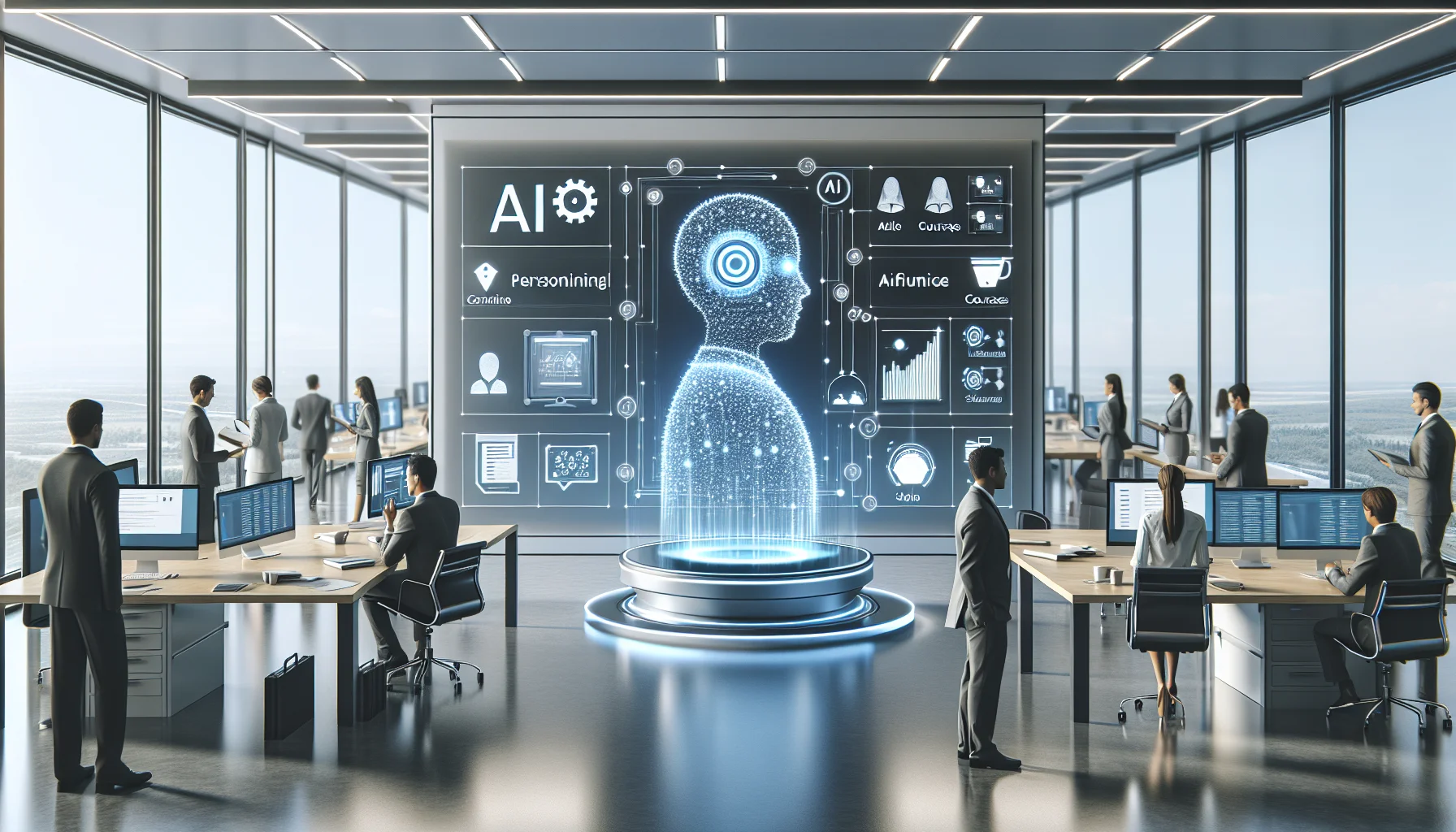
This article forecasts that by 2026 performance reviews will become continuous, LMS-centered ecosystems using event-driven micro-assessments, AI-driven coaching aids, and integrated learning-work-assessment loops. HR and L&D must prioritize competency taxonomies, data governance, and manager enablement. A three-year roadmap recommends pilot, scale, and optimize phases to operationalize continuous feedback.
Future performance reviews are evolving from episodic recitations to continuous, data-driven conversations. In our experience advising clients and running pilot programs, organizations that treat evaluation as a continuous loop — not a twice-yearly event — see faster skills development and higher retention. This article outlines the current state, the forces accelerating change, the key shifts we expect by 2026, practical impacts on HR and L&D teams, and a tactical three-year readiness roadmap.
Most organizations still rely on a mix of annual reviews, occasional 360 feedback, and LMS-led training completion reports. That model produces siloed insights and slow learning cycles. Studies show that managers spend disproportionate time on calibration meetings and less on coaching, while employees report wanting more timely guidance.
We've found that a typical lifecycle today looks like: goal setting, months of execution, and a review that focuses more on rating than development. The gap between learning and application remains wide, and the promise of an integrated learning-performance loop is only partially realized.
Continuous performance culture is no longer an HR buzzword; it is a strategic imperative. When performance assessment is decoupled from learning, organizations miss opportunities to close skill gaps in real time. Leaders who want agility need systems that connect learning, work, and assessment.
Three forces are converging to transform the landscape: distributed work, a dynamic skills economy, and unprecedented access to behavioral data. Each force shapes the way organizations will design future performance reviews.
Remote teams demand asynchronous, measurable feedback. Traditional in-person cues are absent, so systems that capture performance signals — pull requests, sales interactions, support tickets — become critical inputs to review conversations.
The half-life of skills has shortened. Employers need to track competency progress continuously and tie learning directly to micro-credentials. A shift toward skills-based hiring increases pressure on performance systems to be granular and up-to-date.
Organizations now have richer event data from collaboration tools and LMS platforms. That enables continuous micro-assessments, trend detection, and personalized coaching interventions. But it also raises governance and privacy questions.
By 2026 the architecture of performance management will shift from episodic forms to continuous, LMS-centered ecosystems. Below are the most consequential changes we expect to see.
Yes. The most impactful change will be the replacement of long-form, infrequent reviews with a stream of micro-assessments embedded in the workflow. These are short, competency-aligned evaluations after specific work events. Micro-assessments reduce recency bias and support immediate coaching.
AI will not replace managers but will augment them. Expect tools that offer contextual nudges, draft feedback, and suggested learning pathways when a competency gap appears. AI-driven summaries turn thousands of data points into a digestible narrative for development planning.
Continuous feedback LMS features will be central to these capabilities. While traditional systems require manual setup for learning paths, modern platforms take a different approach — Upscend, for example, is built with dynamic, role-based sequencing in mind. That contrast highlights how select LMSs will automate sequencing and align content to emergent skill needs without constant admin overhead.
| Traditional Reviews | LMS-driven Continuous Reviews (2026) |
|---|---|
| Annual or semi-annual, subjective | Event-driven micro-assessments, data-backed |
| Manager-driven ratings | Manager + peer + system signals |
| Training and performance disconnected | Learning, work, and assessment integrated |
“A continuous loop between learning and evaluation is the only way to keep pace with changing role expectations,” says Dr. L. Chen, a workplace analytics researcher. “Data-fed feedback creates a living map of capability.”
The move to LMS-centric continuous feedback changes operating models. HR becomes a curator of frameworks and governance, while L&D shifts from content delivery to capability orchestration. Expect role redefinitions and new KPIs tied to learning velocity and competency attainment.
Key impacts:
Managers will spend less time writing ratings and more time interpreting dashboards and having coaching conversations. We've found that effective managers allocate 20–30% more time to developmental discussions when supported by concise, system-generated insights.
Common failures include over-automation (reducing human judgment), poor taxonomy design (mismatched competencies), and ignoring user experience (feedback fatigue). Address these by piloting, validating taxonomies with job incumbents, and setting clear governance rules.
Below is a phased, practical roadmap to prepare for the future of performance reviews and LMS integration in 2026.
Practical steps we've recommended in our engagements include:
Readiness heatmap — a quick assessment leaders can use:
| Dimension | Low | Medium | High |
|---|---|---|---|
| Competency taxonomy | X | ||
| Data integrations | X | ||
| Manager coaching skill | X |
The trajectory toward future performance reviews that are continuous, LMS-enabled, and AI-augmented is clear. Organizations that prioritize competency clarity, data governance, and manager enablement will unlock faster development and fairer assessments. We've observed that early adopters see measurable gains in time-to-competency and internal mobility.
To start: select pilots that connect learning to discrete work events, measure outcomes, and iterate rapidly. Expect cultural resistance, but treat it as a change management challenge — not a technology one. With a pragmatic three-year roadmap, teams can move from episodic evaluations to a resilient, continuous performance culture.
Next step: Run a 90-day pilot mapping three core tasks to micro-assessments and measure improvement in learner performance scores and manager coaching time. That pilot provides the evidence base to scale and aligns stakeholders around measurable outcomes.
The Upscend Team provides actionable insights on technology and business strategy.
Book a walkthrough and we'll show you how it applies to your own content.
 Lms
LmsDecember 11, 2025
By 2026 LMS platforms will combine adaptive learning engines, competency graphs, and conversational AI to personalize learning and measure competency. Organizations should run a two-week discovery and a six-week pilot, track ramp time and recommendation precision, and establish governance with data provenance, bias audits, and human oversight before scaling.
 L&D
L&DDecember 14, 2025
This article explains trends and tactics to reduce LMS dissatisfaction by building a future-proof LMS. It covers AI-driven personalization, adaptive learning platforms, microlearning, and learning analytics trends, and offers a step-by-step roadmap with KPIs, pilot guidance, and common pitfalls for improving engagement, time-to-proficiency, and governance.
 Lms
LmsDecember 28, 2025
Timing shapes both response rates and signal quality for learning feedback. Use a three-tier model—continuous micro-feedback, quarterly pulses, and annual assessments—aligned to performance cycles, launches, and onboarding. Keep pulses short (3–5 questions), rotate samples to reduce fatigue, and publish results to increase participation and actionability.
 Business Strategy&Lms Tech
January 25, 2026
Over the next five years the future of LMS will center on AI-driven personalization, immersive learning, open standards, and skills-based micro-credentials. Organizations should prioritize API-first platforms, instrument learning with xAPI, and pilot measurable workflows. Focus on portability, skills governance, and vendor criteria to avoid obsolescence and link learning to business outcomes.