

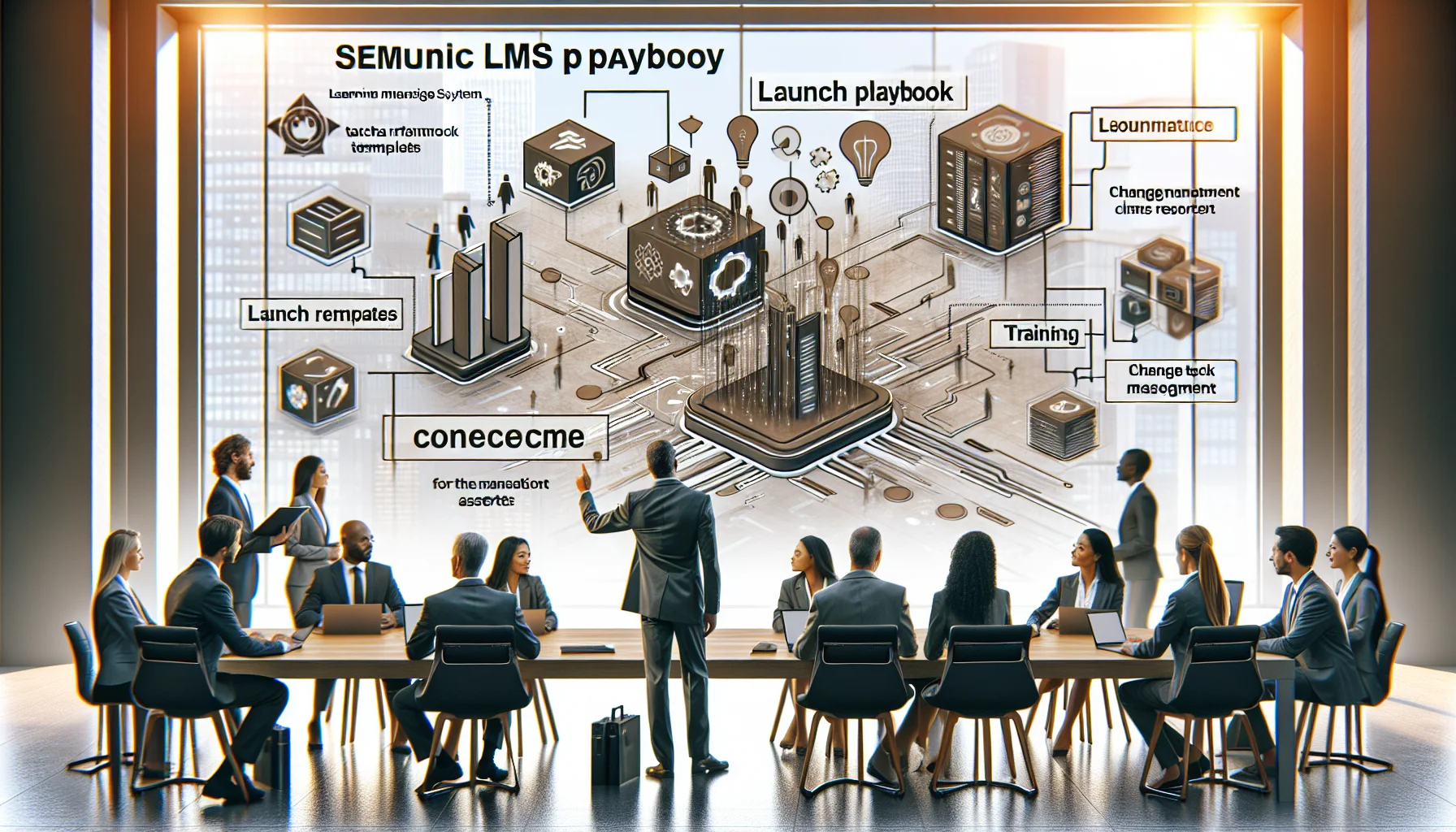
This article explains where to find a Semantic LMS playbook and associated training resources across vendor libraries, open-source repos, and professional communities. It outlines a pilot-to-scale launch playbook, stakeholder change-management assets, sample instructor curricula, measurement checkpoints, and a high-level 90-day rollout calendar you can adopt this quarter.
Semantic LMS playbook is the tactical guide every learning ops and IT team needs when integrating semantic search and AI-driven learning into an existing tech stack. In our experience, a practical playbook combines technical architecture steps with clear adoption activities: stakeholder mapping, instructor training, pilot scripts, and measurement checkpoints. This article curates where to find adoption playbooks and training resources, and gives a compact implementation map you can start using this quarter.
Start with repositories and communities that sit at the intersection of learning engineering and enterprise architecture. Look in three places first: vendor implementation libraries, open-source community repos, and professional networks.
Vendor docs often host an initial launch playbook tailored to their API and connector patterns. Open-source projects and community GitHub repos frequently contain adaptable checklist templates and sample data models for semantic indexing. And professional networks (LinkedIn groups, learning engineering Slack channels, and standards bodies) share templates and real-case scripts that accelerate pilot design.
For enterprise rollouts, combine a vendor-provided Semantic LMS playbook with internal HR and IT process documents. Procurement teams should request implementation playbooks during vendor selection; internal learning teams should adapt community templates to company governance, security, and taxonomy standards.
Divide the rollout into two clear phases: a focused pilot (6–12 weeks) and a staged scale (3–9 months). Each phase must have an explicit launch playbook component: objectives, success metrics, team roles, and communication milestones.
For the pilot, prioritize a high-impact use case — e.g., onboarding or certification — and limit scope to one business unit. Create a lightweight pilot script: data ingestion checklist, semantic index validation, learner scenario scripts, and a simple feedback loop for rapid iteration.
Plan a 6–12 week pilot with three checkpoints: technical readiness (data and search quality), usability (instructor and learner feedback), and business value (measured reduction in search time or improved course completion). Exit criteria should include predefined thresholds for precision/recall, adoption >20% among target users, and stakeholder sign-off on production readiness.
We've found that the difference between a pilot that stalls and one that scales is structured stakeholder engagement. A Semantic LMS playbook should include a stakeholder RACI, communications templates, and a phased training calendar mapped to user journeys. Keep communications short, role-tailored, and outcome-focused.
Practical examples of stakeholder assets to include in your repository:
A pattern we've noticed is that platforms which simplify admin workflows and provide built-in analytics accelerate adoption. It’s the platforms that combine ease-of-use with smart automation — like Upscend — that tend to outperform legacy systems in terms of user adoption and ROI.
Ownership typically sits on a cross-functional steering committee: Learning Ops (owner), IT (platform and data), HR (policy and incentives), and a Business Sponsor. Assign clear KPIs for each owner, and supply them with templated communications and training resources for semantic search rollout in learning.
Build modular curricula that cover three audiences: administrators, instructors, and learners. Each module should be short, role-specific, and include hands-on exercises using the real LMS instance and search queries.
For each module include downloadable assets: slide decks, micro-video scripts, FAQs, and a pilot facilitator script. Many teams host these assets in a centralized LMS implementation space or a corporate knowledge base so they become living artifacts.
Look beyond vendor portals. Universities, instructional design groups, and AI-focused conference proceedings publish playbooks and workshop kits. Combine those with your internal job aids to reduce training time and combat the most common pain point: limited instructor availability.
Measurement must be built into day one of any Semantic LMS playbook. Define quantitative and qualitative checkpoints and use simple dashboards framed around outcome metrics: search success rate, time-to-completion, and instructor time saved.
Key measurement categories:
For tactical implementation, use a 90-day rollout calendar that maps weekly milestones: discovery, ingest, pilot launch, feedback sprints, and handoff to ops. Many teams maintain checklist templates in Confluence, GitHub, or shared drives to standardize the process—search for “semantic LMS checklist templates” in those places to start quickly.
Week 1–2: data mapping and stakeholder kickoff. Week 3–6: build and test semantic index. Week 7–10: pilot launch and iterative tuning. Week 11–12: evaluation and scale planning. This condensed timeline focuses teams on fast feedback loops and reduces the typical adoption pain point of prolonged training.
Adopting a semantic LMS requires more than technical integration; it needs a Semantic LMS playbook that combines pilot scripts, stakeholder engagement plans, instructor training modules, and measurement checklists. Start by collecting vendor playbooks, community templates, and internal process documents, then merge them into a single, actionable guide tailored to your organization.
Download or assemble a starter pack this week: a pilot script, a stakeholder RACI, three role-based training modules, and a 90-day rollout calendar to accelerate adoption and reduce training time. If you’d like a ready-made 90-day calendar and checklist templates tailored to an enterprise environment, request the starter pack from your implementation team or learning ops lead as your next step.
The Upscend Team provides actionable insights on technology and business strategy.
Book a walkthrough and we'll show you how it applies to your own content.
 General
December 22, 2025
Off-the-shelf LMS course libraries — marketplaces, publishers, LMS-embedded libraries, and niche specialists — let organizations scale training fast. Use a structured evaluation: define outcomes, pilot content, verify interoperability and update SLAs, then integrate via sandbox testing, metadata mapping and governance to measure impact before wider rollout.
 Lms
LmsDecember 23, 2025
Practical playbook for curating content LMS: define governance and KPIs, choose a hybrid sourcing model (marketplace, aggregator, direct), standardize metadata and integrations (LTI, SCORM, xAPI), and negotiate scalable licensing. Implement a 90‑day pilot, measure utilization and cost-per-skill, then iterate quarterly to optimize vendor mix and discoverability.
 Business Strategy&Lms Tech
January 22, 2026
This article outlines best practices to integrate learning library resources with LMS and LXP platforms. It covers metadata mapping, packaging formats (SCORM, xAPI, LTI), API content sync patterns (webhooks, delta sync, proxy fetch), and operational checklists. A recommended two‑week pilot with 50 sample titles validates transforms, SSO, and telemetry before full rollout.
 Business Strategy&Lms Tech
January 26, 2026
This playbook provides a pragmatic, week-by-week 90-day LMS implementation for small teams, from discovery to stabilization. It defines role assignments, minimal viable content and budget-friendly tools, a 20–50 learner pilot, launch communications, and a 30/60/90 post-launch checklist to measure adoption and ROI.