


This article explains why neither learning analytics platforms nor HRIS alone meets all talent management needs. It outlines five decision criteria, three integration architectures, and a weighted decision matrix to help teams score candidates. Recommended sequence: HRIS as identity master, stream learning events to a central analytics store, then run models and feed predictions back.
learning analytics platforms are becoming central to talent decisions, but HRIS systems still hold employee master data — choosing between them affects insights, speed, and ROI. In our experience, teams that clarify decision criteria upfront make faster, less risky choices. Below is a practical guide focused on data depth, latency, integration, analytics features, and compliance so you can evaluate learning analytics platforms against HRIS for talent management.
When comparing learning analytics platforms to HRIS, measure each candidate against five core criteria. In our experience, organizations that score these areas quantitatively avoid common mistakes like double reporting and inconsistent identifiers.
Score each criterion on a 1–5 scale for any platform under consideration and weight them to reflect your priorities (e.g., compliance higher for regulated industries).
This section contrasts learning analytics platforms and HRIS across dimensions that matter for talent management tools and analytics platform comparison.
learning analytics platforms collect event-level learning data: course completions, time-on-task, quiz results, content interactions, and learning pathways. HRIS holds canonical employee records—hire dates, job codes, performance ratings, compensation, and org hierarchy.
Commonly, the best talent analytics outcomes come from linking the event-level richness of learning analytics platforms with the authoritative HRIS personnel data.
learning analytics platforms excel at behavioral insights and learner-level personalization but often lack authoritative HR identifiers and enterprise change data. HRIS is authoritative for headcount and compensation but provides limited learning behavior context.
Weakness risks include double reporting when both systems try to surface the same KPIs, and inconsistent employee IDs that prevent clean joins.
Choosing between learning analytics platforms and HRIS is less about picking a winner and more about matching capability to need. Below are recommended fits by organization type.
Large enterprises with complex compliance and multiple HR systems usually benefit from an architecture that treats HRIS as the master system of record and uses a robust learning analytics platforms layer for behavioral analytics and personalization. The easiest path is a canonical ID map and an ETL/ELT layer that feeds analytics platforms from HRIS and learning systems.
Smaller organizations often prefer a single-vendor LMS with built-in analytics because it reduces integration overhead. In that case, choose a learning analytics platforms option that offers exportable HR syncs or lightweight connectors to prevent later fragmentation.
Below are three practical architectures that reconcile the strengths of HRIS and learning analytics platforms while avoiding common pain points like double reporting and ID mismatch.
HRIS provides employee master data to a data warehouse or analytics lake. Learning systems push event-level data into the lake where the learning analytics platforms layer runs models and dashboards.
When the priority is rapid learning personalization and experimentation, a learning analytics platforms instance captures events in near real-time and enriches records with periodic HRIS snapshots for org context.
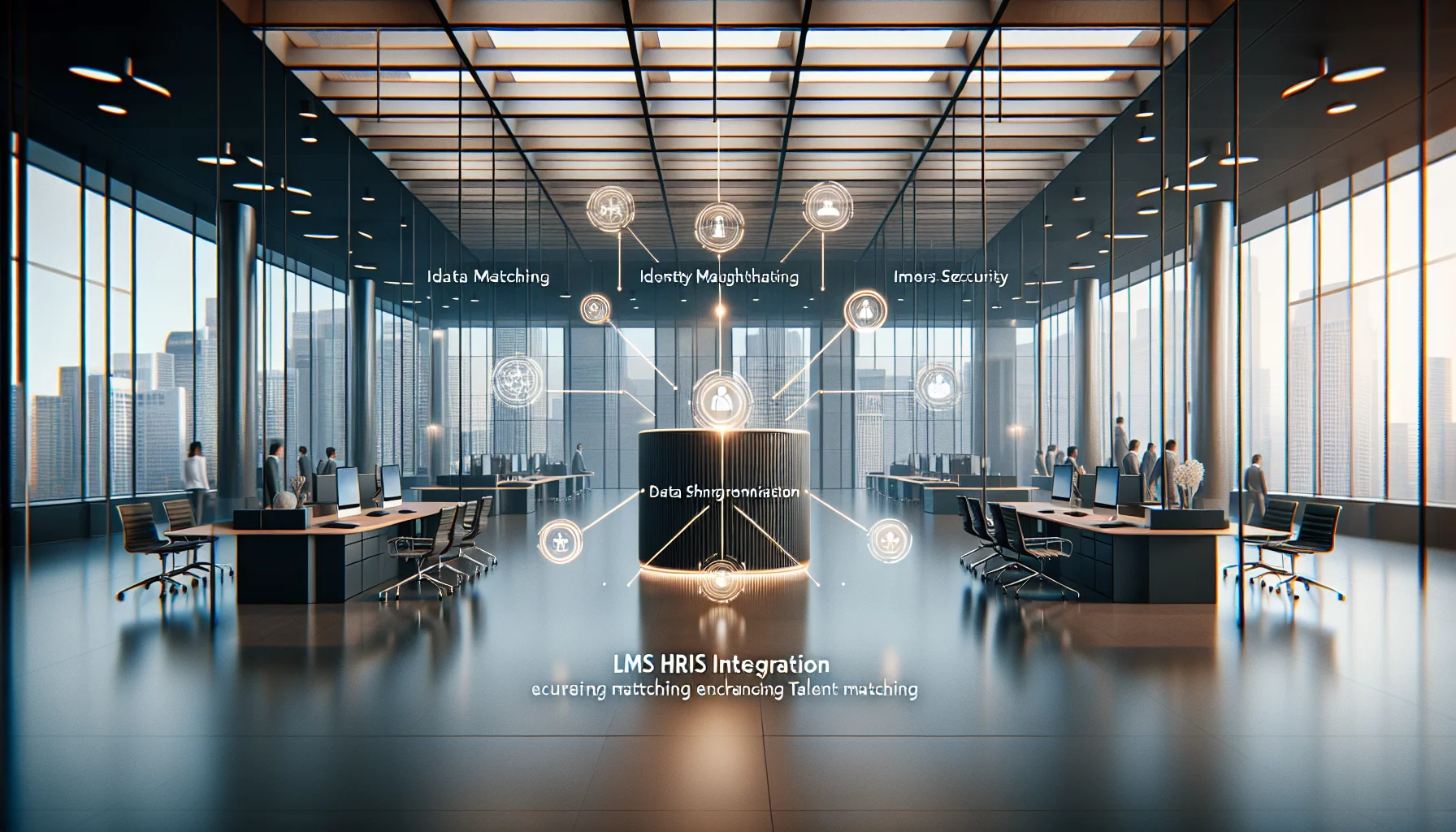
An integration platform (iPaaS) handles identity matching, transformation, and routing: it reduces inconsistent employee IDs and centralizes consent and compliance controls. This pattern is efficient for multi-vendor stacks and reduces ad hoc scripts.
In practical deployments, we’ve found that adding an orchestration layer reduces reconciliation time by 60–80% compared to point-to-point integrations.
Below is a compact decision matrix you can apply to candidates. Score each row 1–5 and multiply by the weight to get a weighted total.
| Criteria | Weight | HRIS | Learning Analytics Platforms |
|---|---|---|---|
| Data depth | 20% | 2 | 5 |
| Latency | 15% | 3 | 5 |
| Integration ease | 20% | 4 | 3 |
| Analytics features | 25% | 2 | 5 |
| Compliance | 20% | 5 | 3 |
Use the matrix above as a starting template and adjust weights for your organization. The typical result is a blended architecture rather than a single platform choice.
Three pain points dominate: double reporting, inconsistent employee IDs, and cost vs value confusion. Here are concrete steps we've used to mitigate each problem.
Operationally, standardizing the identity map and assigning KPI ownership will reduce reconciliation effort and speed up insights delivery.
The turning point for most teams isn’t just creating more content — it’s removing friction. Tools like Upscend help by making analytics and personalization part of the core process, speeding ID reconciliation and making learning signals actionable in talent workflows.
"Link event-level learning signals to HR outcomes to move from activity reports to talent predictions."
Short answer: neither alone; both together. For analytical depth and learner behavior, learning analytics platforms are superior. For workforce definitions, compliance, and headcount-driven planning, HRIS is superior. The decision is about architecture, not allegiance.
When asked "which system is better for talent management analytics", prioritize the following implementation sequence:
Choosing between learning analytics platforms and HRIS is not binary. The most effective talent management stacks use HRIS for authoritative records and learning analytics platforms for behavioral and predictive insights. A small integration layer or iPaaS with a canonical identity map prevents double reporting and inconsistent IDs and unlocks high-value use cases quickly.
Next steps we recommend: run a 6–10 week proof-of-value focused on a single talent KPI, implement an identity reconciliation table, and adopt an orchestration layer for connectors. Use the decision matrix above to score vendor candidates and apply the shortlist checklist before procurement.
Call to action: If you want a ready-to-use checklist and a one-page integration blueprint to run your proof-of-value, request the template from your procurement or integration lead and start the 6–10 week pilot — it's the fastest way to determine which combination of HRIS and learning analytics platforms delivers measurable talent improvements.
The Upscend Team provides actionable insights on technology and business strategy.
Book a walkthrough and we'll show you how it applies to your own content.
 HR & People Analytics Insights
January 6, 2026
This article compares market-leading learning analytics tools across measurement, content delivery, social learning and skills mapping. It provides a vendor-selection checklist, pilot acceptance steps, integration and pricing guidance, plus ROI examples and timelines to help HR and analytics teams choose platforms that measurably improve learning culture.
 Talent & Development
February 3, 2026
This article compares skills intelligence vs LMS to show how each affects workforce agility. It explains data models, cost vs value, and a decision matrix for common scenarios. Recommended approach: a hybrid architecture—LMS for delivery plus a canonical skills graph—plus a 90-day pilot to measure internal mobility and time-to-fill.
Business Strategy&Lms TechFebruary 5, 2026
Short version: choose based on scale and data maturity — marketplaces fill roles quickly, while AI career mapping builds promotion readiness over time. Score vendors on scale, data, use-case fit, and UX; run a 60–90 day pilot with KPIs for time-to-fill, lateral moves, and promotion velocity. A hybrid rollout often captures immediate staffing wins and long-term development.