


This article presents nine practical principles for instructional design VR that increase transfer from immersive practice to real-world performance. It covers objective writing, active learning, micro-scenarios, feedback loops, error-safe practice, cognitive load management, accessibility, aligned assessment, and structured debriefs, plus storyboard templates and an implementation checklist.
When we design training experiences with instructional design vr in mind, the psychology of learning shifts. Presence, embodied cognition, and contextual cues become primary drivers of retention. In our experience, learners form stronger procedural memories when they interact with realistic affordances and receive immediate consequences inside a virtual context.
Studies show that immersive environments increase engagement and reduce forgetting for motor and spatial tasks; however, they also magnify poor design choices. That creates a double mandate: use the immersive affordances to practice transferable skills while guarding against cognitive overload and passive spectacle. Below we present a practical, experience-led framework for vr learning design that balances immersion and measurable transfer.
These nine principles distill our hands-on work and industry best practices into a compact checklist for designers and stakeholders building immersive courses.
Clear objectives form the backbone of effective instructional design vr. Write observable performance goals (e.g., "perform a pre-flight checklist in sequence with 90% accuracy") rather than abstract outcomes. Map each virtual interaction to a real-world task to ensure transfer. We've found that objective-driven design prevents scope creep and keeps development focused on measurable outcomes.
Active learning in VR means learners manipulate objects, make decisions, and experience consequences. Replace long narrative scenes with short decision points and branching consequences. Use scaffolds (hints, guided modes) that fade to independent practice. Active learning is the most reliable lever to convert engagement into performance gains in VR.
Micro-scenarios are 2–6 minute, focused simulations that teach discrete skills. They reduce cognitive load and facilitate deliberate practice. Build 4–6 micro-scenarios per module that escalate in complexity. This approach aligns with evidence on spaced repetition and helps solve the common problem of overloaded VR learners.
Feedback in VR must be immediate, specific, and multimodal: visual overlays, haptic cues, and contextual narration work best. Design feedback loops that inform learners why a choice was right or wrong and suggest corrective action. We include three feedback layers: in-task micro-feedback, end-of-scenario summary, and comparative analytics for mastery tracking.
Error-safe practice leverages VR's safe failure environment. Deliberate practice requires quick recovery paths: rewind, replay, and branching remediation. Build error-states that surface misconceptions and provide corrective practice, rather than simply scoring and restarting.
Manage intrinsic, extraneous, and germane load. Use minimal HUDs, progressive disclosure, and consistent control metaphors. Break tasks into procedural steps and limit concurrent streams of new information. For instructional design vr, cognitive load management is the single biggest determinant of usable training versus theatrical demo.
Accessibility is non-negotiable. Offer alternative input methods, closed captions, adjustable locomotion, and color contrast modes. Design scenarios that allow pause-and-plan, and supply written summaries and 2D replay options so diverse learners can review performance.
Assessment alignment ties scenario objectives to summative and formative measures. Use performance metrics, action logs, and rubric-based observation to assess skill transfer. Ensure assessment items mirror workplace tasks to avoid artificial scores that don't predict on-the-job performance.
Debriefs convert experience into insight. Build structured debriefs that combine replay, analytics, and guided reflection prompts. Ask learners to articulate decisions, errors, and next steps. Debriefs are where behavioral change is cemented and where VR practice becomes real-world improvement.
Visual planning reduces expensive rework. Below are practical storyboard frames and a compact script to produce a 10-minute VR learning module focused on a single procedural task.
Storyboard wireframes should annotate camera angles, interactable objects, UX overlays, error states, and feedback zones. Use warm illustrative graphics that label affordances and expected user gaze paths. Annotated UX overlays help the studio team implement consistent controls across scenes.
Objective: Complete safety checklist sequence with no missed step.
0:00–0:30 — Welcome voice: "Today you'll practice the safety checklist. Your goal: full sequence in order." HUD shows checklist.
0:30–2:00 — Guided demo: highlights each item with narration and slow-motion prompt.
2:00–4:00 — Micro-scenario A: perform first half of checklist with hints enabled.
4:00–6:00 — Micro-scenario B: perform the full checklist under time constraint, hints reduced.
6:00–8:00 — Assessment: unassisted performance; system logs timing and order.
8:00–10:00 — Debrief: replay of mistakes with voice prompts and corrective tips.
Assessment must be built into the design from the beginning. For instructional design vr, use a mix of objective logs and human-rated rubrics to capture both procedural fidelity and judgment-based competencies.
Sample rubric (compact):
| Criterion | 3 - Expert | 2 - Developing | 1 - Needs support |
|---|---|---|---|
| Sequence accuracy | All steps correct | Minor order errors | Major omissions |
| Decision rationale | Clear, evidence-based | Some justification | No rationale |
| Recovery from error | Quick, correct recovery | Delayed recovery | Unable to recover |
Good assessments measure behavior, not just button presses. If your assessment can't predict on-the-job performance, redesign the task or measurement.
Common pain points we see: overloading learners with too many simultaneous cues, poor transfer to real-world tasks because the virtual task lacks fidelity, and expensive rework due to unclear objectives. The turning point for most teams isn’t just creating more content — it’s removing friction. Tools like Upscend help by making analytics and personalization part of the core process, so teams can iterate on scenarios based on real user performance data rather than intuition.
Follow this operational checklist to reduce rework and improve transfer:
Visual angle: brief studio mockups should include three frame types — storyboard frames, sample wireframes of the VR scene, and annotated UX overlays that call out affordances and feedback. Use warm, illustrative graphics to communicate intent to non-technical stakeholders and to speed creative sign-off.
Implementation tips we've learned: run early pilot tests on a target hardware baseline, keep the first release focused on the core objective (reduce scope), and instrument events so you can analyze drop-off and error patterns post-launch.
Effective instructional design vr is a synthesis of clear objectives, focused practice, and measurable assessment. The nine principles above — from clear objectives to structured debriefs — provide a practical roadmap to build immersive courses that transfer to real-world performance without unnecessary rework.
Start small with micro-scenarios, validate objectives with SMEs, and use analytics to iterate quickly. If you follow the checklist and use storyboard-driven production, you’ll reduce costly revisions and increase learner impact.
Ready to map your first module? Begin with a one-page objective and three micro-scenarios, then pilot with five learners and iterate based on performance data. This pragmatic process will keep teams aligned and learners achieving measurable results.
Call to action: Create a one-page project brief that lists the primary objective, two target audiences, and three micro-scenarios — use it as the basis for your first prototype and pilot.
The Upscend Team provides actionable insights on technology and business strategy.
Book a walkthrough and we'll show you how it applies to your own content.
 L&D
L&DDecember 14, 2025
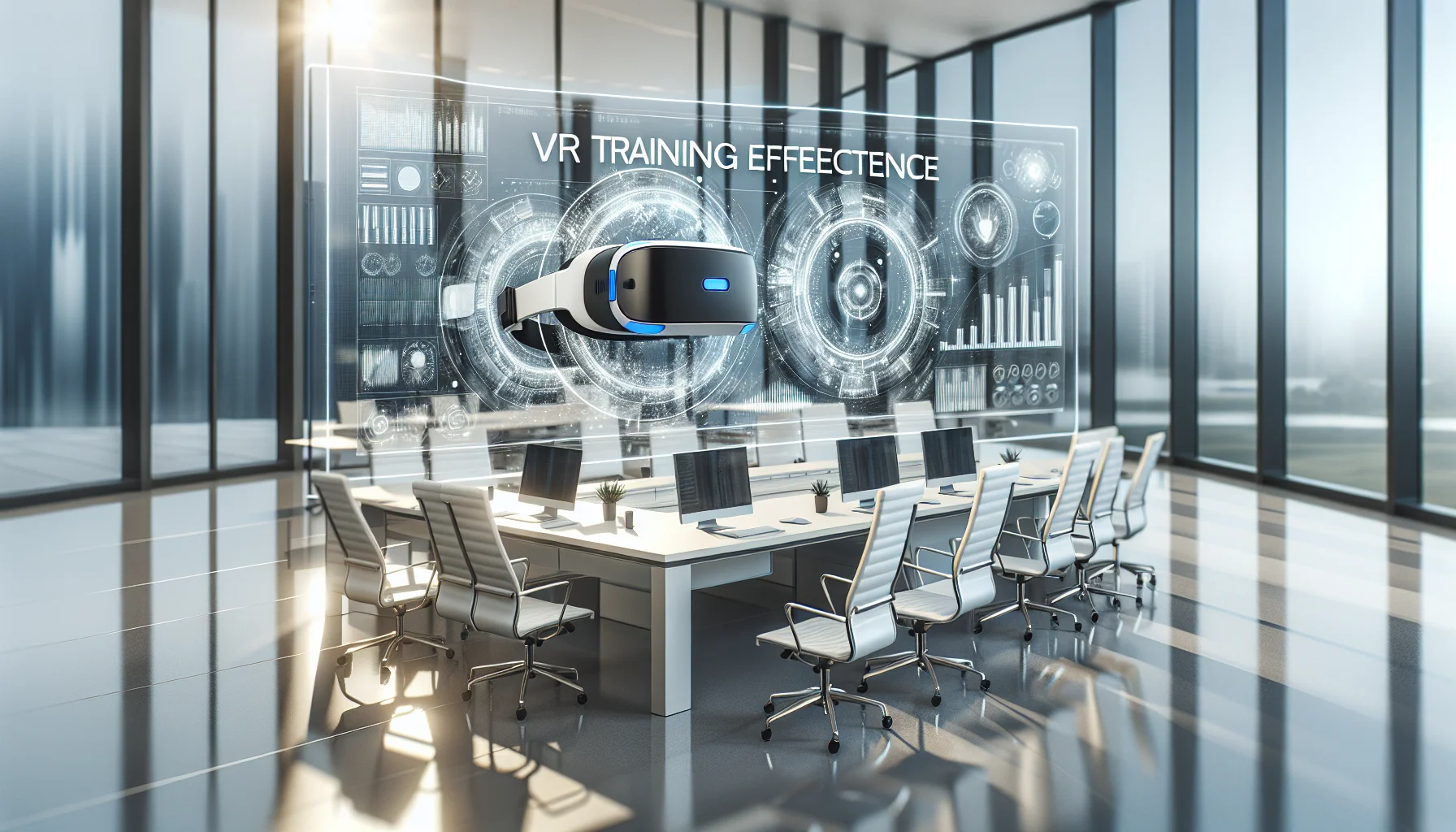
VR training effectiveness is strongest in high-risk, high-cost, or infrequent-practice scenarios where deliberate VR practice shortens time-to-competency and reduces errors. Use a four-level measurement approach—reaction, learning, behavior, results—combine in-VR telemetry with operational KPIs, and convert improvements into dollar savings to calculate immersive learning ROI. Run a 60–90 day pilot with clear KPIs.
Business Strategy&Lms TechJanuary 25, 2026
This article gives a practical pre-launch checklist for simulating layoffs in VR, covering informed consent, data capture and retention, psychological-safety protocols, accessibility accommodations, and jurisdictional legal review. It recommends conservative pilots, layered consent, data minimization, facilitator training, and legal sign-off to reduce litigation risk and protect employee wellbeing.
 Business Strategy&Lms Tech
January 26, 2026
Accessible VR courses require inclusive VR design, multiple input modes, captions, audio descriptions, and LMS-managed fallbacks. Teams should test with diverse learners using layered testing (automated, heuristic, user research), store alternative assets and accessibility metadata in the LMS, document decisions, and follow a checklist to reduce legal risk and improve completion.
HrFebruary 3, 2026
This article explains how to design interactive VR training design for onboarding using cognitive load management, microlearning VR modules, and immersive learning principles. It outlines design patterns, assessment methods, accessibility checks, authoring workflows, and rapid A/B testing to pilot and scale effective VR onboarding.