


Over the next five years corporate learning will shift to learner-centered, AI-driven platforms that prioritize competency over completion. Organizations should pursue short-term wins (12 months) and medium-term investments (2–5 years), run a 90-day pilot tied to performance metrics, and build interoperable data pipelines to scale capability.
future of LMS adoption is accelerating as organizations shift from static training to continuous capability building. In our experience, the next five years will emphasize learner-centered platforms, measurable outcomes, and frictionless integration with talent systems. This article outlines the most consequential learning trends 2026 and practical steps L&D leaders can take to align strategy with technology.
We'll explore market signals, platform features, content strategies, analytics expectations, implementation pitfalls, and a clear roadmap to prepare. Expect actionable frameworks and examples you can apply immediately.
Demand for flexible skills and rapid reskilling is the primary driver behind the future of LMS. Labor market dynamics — shorter skill half-lives, remote work, and industry disruption — force learning programs to move from annual to continuous modes.
Key macro trends shaping the corporate learning future are a tighter link between learning and performance, and a higher tolerance for micro-experiments in content and delivery.
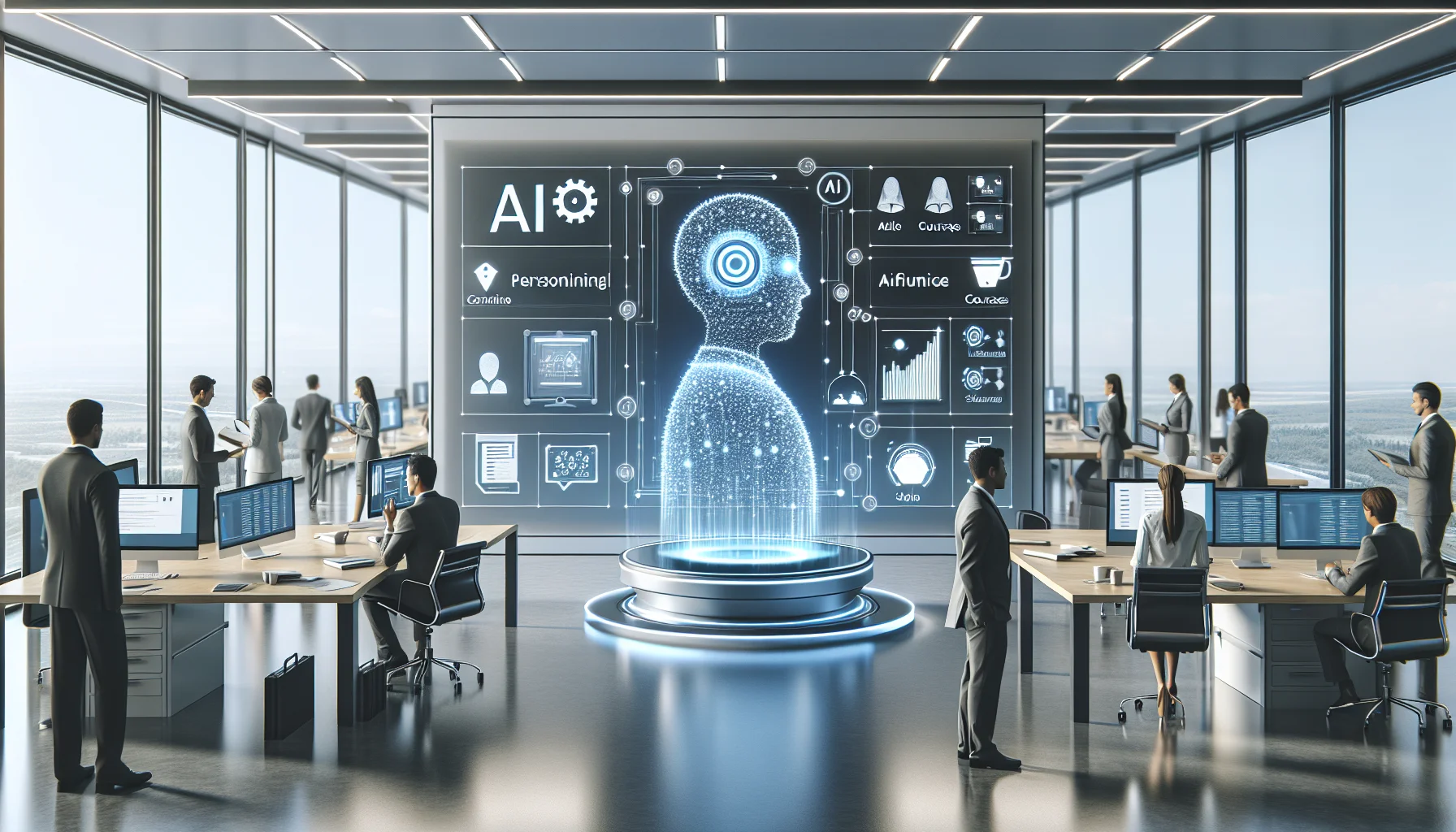
AI-driven personalization will be central to the future of LMS: automated content recommendations, skill gap inference from work data, and intelligent coaching bots will become table stakes. According to industry research, organizations that embed AI into learning workflows reduce time-to-competency by meaningful margins.
Operationally, this means replacing rigid curricula with adaptive pathways that respond to signals from HR systems, CRM, and product telemetry. Governance becomes a coordinating role rather than a gatekeeping function.
A shift to skills-based structures means the LMS will support micro-credentials, modular learning objects, and competency maps. Leaders will prioritize bite-sized, contextual learning delivered at the point of need.
Product architects are reimagining the LMS as a composable layer that coordinates learning experiences rather than a monolithic repository. The future of LMS will be defined by modularity, APIs, and embedded experiences.
In our experience, the value of a platform comes from how easily it removes friction — enrolling, tracking, and certifying learners without heavy admin overhead.
Adaptive engines will use learner signals (activity, performance, career goals) to build individualized paths. That capability turns generic training into targeted capability acceleration. Expect more adaptive assessments that reward competency over completion.
Personalized learning journeys will reduce drop-off and increase transfer to the job when paired with manager nudges and project-based tasks.
Open standards and interoperable schemas matter. The long-term winners will be LMS platforms that support SCORM, xAPI, and modern HRIS connectors while exposing robust APIs. This enables continuous data flows between learning and talent systems.
Data interoperability unlocks workforce analytics and aligns learning KPIs with business outcomes.
Content economics are changing: the future of LMS depends on scalable content strategies that mix professional production with curated user-generated assets. Quality will be judged by relevance and impact, not production polish.
We've found teams that decentralize content creation while enforcing metadata and quality controls scale faster.
User-created clips, playbooks, and project artifacts will live alongside formal courses. The LMS of the near future will include lightweight publishing tools and curation workflows that promote high-signal content.
Modular content and effective search reduce time spent looking for answers and increase learning-in-the-flow-of-work.
Immersive experiences will be used where practice matters: simulations, safety training, and complex decision-making. The future of LMS will orchestrate a mix of modalities — video, simulations, AR overlays, and live coaching — based on learning objectives.
To illustrate practical integration, consider the operational pivot: the turning point for most teams isn’t just creating more content — it’s removing friction. We've found tools that make analytics and personalization part of the core process; Upscend is an example that streamlines learner diagnostics and content routing without adding administrative overhead.
Measurement shifts from completion metrics to performance outcomes. The future of LMS emphasizes competency attainment, behavior change, and business impact.
Executives expect learning investments to show ROI. That requires tying learning events to performance metrics using a mix of qualitative and quantitative evidence.
Studies show that completion rates correlate poorly with on-the-job performance. The future of LMS replaces completion-focused dashboards with competency frameworks, project assessments, and manager-verified outcomes.
Competency-based measurement enables L&D to report on capability growth rather than activity volume.
Predictive models will identify learners at risk of performance gaps and recommend interventions. This moves L&D from reactive to proactive support.
Technology alone doesn't change behavior. Successful adoption of the future of LMS rests on governance, incentives, and a lightweight center of excellence that supports distributed creators.
We've seen a consistent pattern: pilots that embed measurements and manager involvement scale faster.
Global scale requires localization, time-zone aware scheduling, and the ability to map skills to diverse job architectures. The LMS must support translations, regional compliance, and data residency constraints.
Scalable governance balances central standards and local autonomy.
Common failures include over-customization, neglecting manager enablement, and treating the LMS as a content dumping ground. Avoid these by prioritizing outcomes and iterating quickly.
To capture the corporate learning future, build a two-speed approach: short-term wins to build momentum and medium-term investments in architecture.
Below are concrete actions you can start now and evolve over 2–5 years.
Focus on low-friction wins that demonstrate value quickly. Examples include modularizing top-performing courses, enabling manager nudges, and instrumenting a few high-impact learning paths for measurement.
Short-term wins create credibility and data for larger investments.
Invest in a composable stack, interoperable data pipelines, and predictive analytics. Build governance that accelerates content creation while ensuring quality and alignment to skills frameworks.
Medium-term investments turn experimentation into repeatable capability.
Implementation checklist:
The future of LMS is less about a single vendor feature list and more about an ecosystem that enables continuous, measurable capability growth. Organizations that align technology, content, and governance to business outcomes will gain a sustained advantage.
Begin by selecting two measurable use-cases, instrumenting them, and iterating on data. Prioritize interoperability, adaptive experiences, and competency-based measurement to keep pace with the trends shaping the future of corporate learning.
Next step: run a 90-day pilot that targets a clear performance gap, tracks competency outcomes, and uses a lightweight governance model to scale what works.
Call to action: Choose one capability to pilot this quarter, list the metrics you will track, and commit to a 90-day review to decide on scaling.
The Upscend Team provides actionable insights on technology and business strategy.
Book a walkthrough and we'll show you how it applies to your own content.
 Lms
LmsDecember 11, 2025
By 2026 LMS platforms will combine adaptive learning engines, competency graphs, and conversational AI to personalize learning and measure competency. Organizations should run a two-week discovery and a six-week pilot, track ramp time and recommendation precision, and establish governance with data provenance, bias audits, and human oversight before scaling.
 General
December 22, 2025
This article forecasts top LMS trends for 2025–2030, focusing on AI-driven personalization, skills-first architectures, workflow-embedded learning, privacy-conscious measurement, and richer learner experiences. It gives practical steps: run a 90-day pilot, adopt skills taxonomies, implement lightweight integrations, and measure impact to move from feature evaluation to measurable outcomes.
 Business Strategy&Lms Tech
January 25, 2026
Over the next five years the future of LMS will center on AI-driven personalization, immersive learning, open standards, and skills-based micro-credentials. Organizations should prioritize API-first platforms, instrument learning with xAPI, and pilot measurable workflows. Focus on portability, skills governance, and vendor criteria to avoid obsolescence and link learning to business outcomes.
 Business Strategy&Lms Tech
January 25, 2026
In the next five years, AI will shift LMS from course catalogs to continuous, context-aware capability orchestration. Expect adaptive pathways, modular microcontent, hybrid cloud/edge architectures, and embedded governance. Enterprises should prioritize skill taxonomies, composable content, and lightweight MLOps pilots to reduce time-to-competency and scale measurable learning outcomes.