


Wellness microlearning design applies behavioral science to short LMS lessons that form workplace habits. Build 5–7 minute modules focused on one behavior, explicit cue–action–reward scripts, calendar or chat triggers, and quick assessments. Run small randomized pilots tracking micro-action completion and 21/90-day retention to iterate cadence and nudges.
Wellness microlearning design is a pragmatic intersection of behavioral science and learning technology. In our experience, well-crafted short lessons that respect cognitive load and real work rhythms drive lasting change. This introduction summarizes core behavioral principles and sets expectations for the sections that follow.
We’ll cover the science behind habit formation, practical module patterns, sample microlearning wellness modules, assessment and nudges, workflow integration, pilot metrics, and templates you can drop into an LMS today.
Building health habits at work requires more than information transfer. Studies show that habit formation depends on consistent trigger–routine–reward loops, friction reduction, and small unit actions. A core principle is designing for repeated micro-actions—tiny behaviors that are easy to do and easy to repeat.
Cue, action, and reward must be explicit in your microlearning scripts. We've found that pairing short-form wellness content with immediate micro-rewards (acknowledgment, progress bars, quick badges) significantly increases adherence.
Use the following patterns to create scalable and reliable wellness microlearning design across an LMS.
Pattern 1: 5–7 minute lessons
Keep lessons under seven minutes to reduce friction and increase completion. Each lesson should have one clear behavior to practice and one simple assessment (a one-question reflection or a 30-second action).
Space concepts over days and weeks. Microlearning that revisits an idea at increasing intervals helps embed routines. Use short quizzes and prompts to force retrieval—this is the mechanism that turns knowledge into habit.
Design explicit triggers: calendar prompts, start-of-shift notifications, or lunch-time nudges. Triggers must map to natural work rhythms; context-aligned nudges reduce the cognitive cost of starting a new behavior.
Choose topics with clear, measurable behaviors. Below are three high-impact categories for microlearning wellness design that build health habits.
Short breathing exercises, posture checks, or cognitive reframes can be taught in 90 seconds and practiced multiple times a day. For habit formation at work, pair the lesson with a timed reminder and a one-line reflection prompt.
Replace broad nutrition lectures with simple swaps: "Choose water with breakfast" or "Add one vegetable to your lunch". These bite-sized prompts work well as microlearning wellness modules that build health habits because they minimize decision fatigue.
Micro-breaks, desk stretches, and 3-minute walking tasks convert sedentary patterns into repeatable routines. Short videos plus illustrated wireframes of movements reduce risk and increase confidence.
| Topic | Target action | Ideal lesson length |
|---|---|---|
| Stress | 3-minute breathing | 2-4 minutes |
| Nutrition | One healthy swap | 1-3 minutes |
| Activity | Desk stretch sequence | 2-5 minutes |
Assessment in wellness microlearning design should be lightweight and action-oriented. Replace long quizzes with quick checks: completed action, self-rated difficulty, and immediate reflection. Use aggregated micro-data to personalize future nudges.
Progressive fidelity is key: start with simple self-report items, then add short objective sensors or calendar checks only where privacy and consent are handled. In our experience, combining self-report with passive cues doubles follow-through.
Some of the most efficient L&D teams we work with use platforms like Upscend to automate this entire workflow without sacrificing quality. That approach lets teams orchestrate triggers, segment learners, and A/B test nudges at scale while keeping design quality high.
Design nudges so that the easiest next step is also the healthiest next step.
Integration reduces friction. Embed microlearning into existing workflows with calendar blocks, single-click tasks, and inline LMS widgets. Behavioral design wellness requires that the lesson is discoverable exactly when the context supports the action.
Calendar-first design maps lessons to existing routines: pre-meeting stretch, midday mindful check, or end-of-day reflection. API integrations allow lessons to appear as calendar invites or Slack prompts to increase visibility without adding extra apps.
Pilot measurement for wellness microlearning design requires behavioral KPIs, not just completion. Track micro-actions completed, weekly adherence rate, and small behavior-to-outcome correlations (e.g., reduced stress scores, increased steps).
Design your pilot with control and replication in mind: randomize which teams receive different nudge cadences, measure retention at 7, 21, and 90 days, and use qualitative check-ins to assess cultural fit. We’ve found that small pilots (50–200 users) provide reliable signals for scaling.
Core pilot metrics to track:
Below are ready-to-use templates that follow the cue–action–reward model and fit into standard LMS modules.
Template A — 5-minute stress micro-lesson
Scripting tips
Address common pain points: low retention, content overload, and cultural fit by limiting lesson scope, personalizing cadence, and translating examples to local norms. In our experience, local champions and micro-coaching improve cultural adaptation faster than blanket translations.
Wellness microlearning design is a systems challenge: content, triggers, assessment, and integration must work together. Start small—pick one measurable behavior, design a 5–7 minute module, attach a calendar trigger, and run a 90-day pilot. Use the pilot metrics above to iterate.
Key takeaways: focus on tiny, repeatable actions, ensure friction-free triggers, measure behavior instead of completion, and leverage automated orchestration where possible. Visual artifacts—wireframes, habit loop diagrams, sample storyboards, and mock push sequences—help stakeholders understand the flow.
Next step: create one pilot module using the templates here, assign it to a cohort, and collect 21-day adherence data. That process will give you the behavioral signals needed to scale effective microlearning wellness modules across your organization.
Call to action: Pick one workplace behavior to change this quarter and build a 5–7 minute microlearning lesson that runs with scheduled nudges—test it with a small cohort and iterate using the pilot metrics above.
The Upscend Team provides actionable insights on technology and business strategy.
Book a walkthrough and we'll show you how it applies to your own content.
 General
October 9, 2025
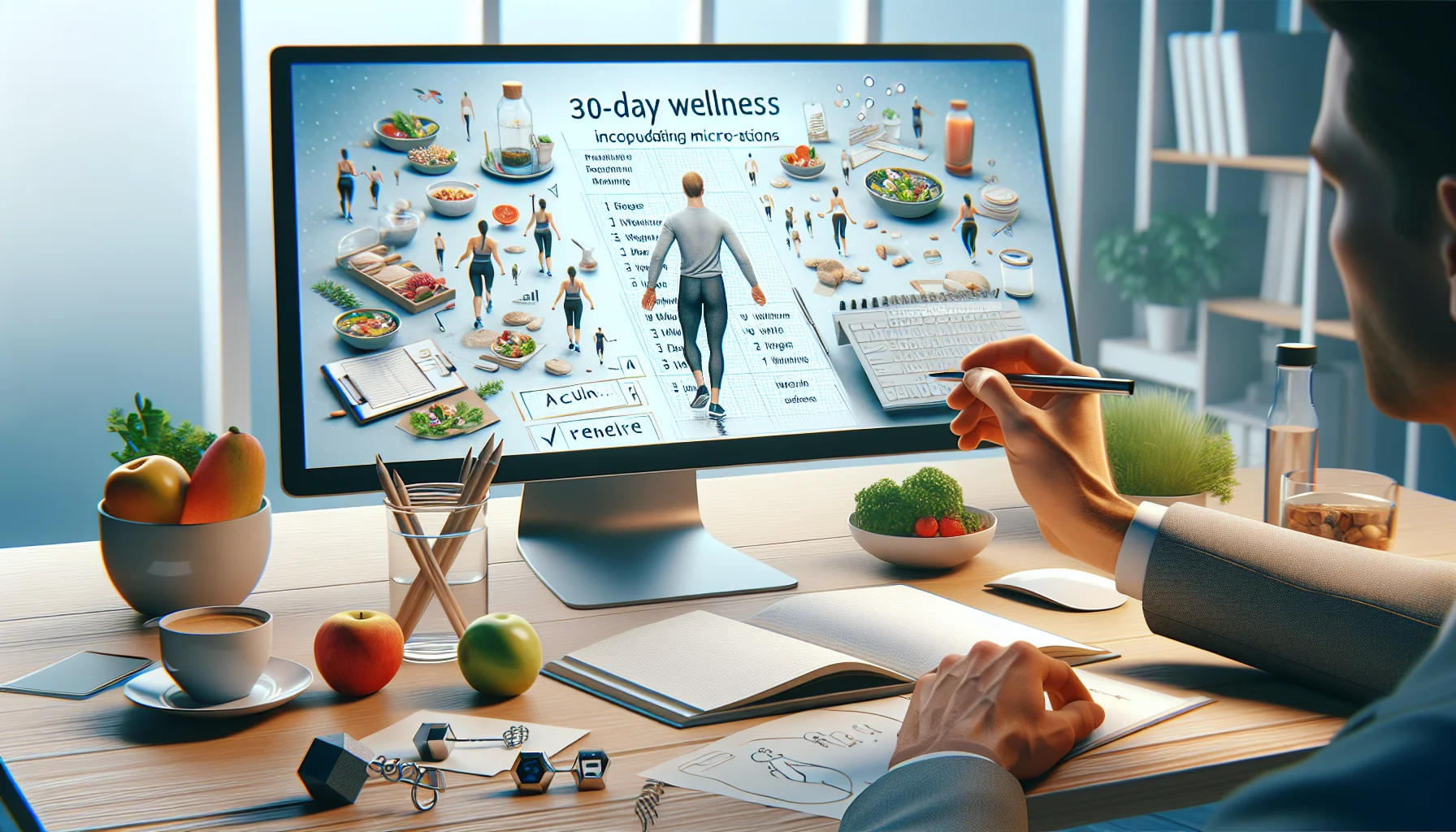
This article gives a step-by-step 30-day plan to build a wellness routine using micro-actions, a core daily framework (movement, nutrition swaps, sleep prep, stress breaks), a 7-day meal plan, progressive no-equipment workouts, and a printable weekly tracker. Start with a readiness checklist and track sleep and activity for 7 days.
 Lms
LmsDecember 28, 2025
Microlearning mental health delivers 3–7 minute, single-objective lessons that reduce cognitive load and use retrieval practice and spaced repetition to improve retention and application. The article outlines concrete lesson structures, recommended cadences, four deployable modules, and measurement metrics to pilot bite-sized wellness training in an LMS.
 Business Strategy&Lms Tech
January 25, 2026
This article shows how microlearning design psychology—spacing, retrieval, chunking, and recognition—makes short modules that boost retention and employee loyalty. It supplies templates, scripts, A/B test plans, measurement metrics, and a 5-module pilot checklist so teams can prototype and validate behavior-change training within 30 days.
 Business Strategy&Lms Tech
January 26, 2026
This article explains how microlearning time management—daily 10–15 minute online microlearning modules—accelerates habit formation and boosts productivity. It provides a vetting checklist, curated course options, a ready-to-import 6-week curriculum, implementation tips for remote teams, and a simple ROI framework to measure time saved versus learning investment.