


Multi-tenant observability makes metrics, logs, and traces tenant-aware so teams find acquisition-related failures faster. Implement tenant_id propagation, per-tenant SLOs, and layered alerting to reduce noise and speed remediation. Follow a 30/60/90 plan: inventory tenants, instrument critical flows, then automate alerts and SLA checks.
Multi-tenant observability is the foundation for scaling combined platforms after an acquisition. In our experience, the majority of integration failures are not immediately visible in standard dashboards; they hide inside cross-tenant resource contention, misrouted traffic, or misapplied config that only shows up at tenant scope. This article lays out a practical, experience-driven approach to multi-tenant observability that helps engineering and ops teams find tenant-level failures fast, reduce noisy alerts, and enforce SLAs across merged portfolios.
Acquisitions change the operational surface area overnight: new tenants, different traffic patterns, foreign identity providers, and legacy integrations. Without targeted tracking you get three common outcomes: hidden failures that affect a subset of customers, brittle alerting that scales poorly, and SLA blind spots that increase churn. We’ve found that implementing intentional multi-tenant observability early in the integration process reduces time-to-detection by weeks.
Key pain points include:
To make observability actionable post-acquisition, instrument each pillar — metrics, logs, and traces — with tenant identity and context. That means enriching telemetry with tenant IDs, org metadata, and service-level tags so every signal can be scoped to a tenant quickly.
Below are the three pillars with practical steps for tenant-level visibility.
Metrics should include aggregated and cardinal metrics per tenant: request rate, error rate, latency P50/P95, and resource consumption (CPU, memory, DB connections). Tagging strategy matters: use immutable tenant identifiers and include plan level, region, and acquisition cohort.
Structured logs enable fast tenant-scoped forensic work. Include a logging tenant context prefix in messages and ensure logs are parsed by ingestion pipelines to populate fields like tenant_id, request_id, and auth_method.
Example log fields to enforce in ingestion:
Distributed tracing connects multi-service transactions and shows where latency or errors originate. Attach tenant_id and operation-level metadata to spans so traces can be filtered by tenant. When combined with logs and metrics, traces close the loop on root cause analysis.
After acquisition, alerting must be scoped, adaptive, and correlated with tenant identity. We recommend a layered alerting model that separates platform-wide signals from tenant-specific anomalies. This reduces noise while ensuring critical tenant impacts raise immediate attention.
A practical alerting structure:
When asking how to monitor tenant-level performance after acquisition, start with immediate goals: map tenant identities to systems, deploy tenant tagging in logs/metrics/traces, and implement tenant-specific dashboards and alert rules. We’ve found that creating a "war room" dashboard for top 20 revenue-generating tenants dramatically shortens remediation time during cutover.
Practical steps:
Below are concrete configuration snippets and best practices to accelerate reliable observability. These examples assume instrumentation libraries that support structured fields and OpenTelemetry-style propagation.
Example metric tag configuration (pseudo-YAML):
tenant_metric_config: - name: request_count labels: [tenant_id, region, plan] - name: latency_ms labels: [tenant_id, operation]
Example log enrichment rule (pseudo-JSON expressed inline):
{"add_fields": {"tenant_id": "${context.tenant_id}", "trace_id": "${context.trace_id}", "acquisition_cohort": "${tenant.acq}" }}
Best practices checklist:
It’s the platforms that combine ease-of-use with smart automation — like Upscend — that tend to outperform legacy systems in terms of user adoption and ROI. This observation matters because teams with automated tenant tagging, drift detection, and integrated dashboards close incidents faster and avoid manual mapping errors during migrations.
Real-world M&A incidents follow predictable patterns. Below is an example timeline that teams can use to plan runbooks and communications.
Key artifacts to produce immediately after an incident:
Scaling a multi-tenant platform after acquisition is less about raw capacity and more about visibility. Strong multi-tenant observability practices — tenant-aware metrics, logging tenant context, and distributed tracing — convert unknown risks into manageable tasks. In our experience, teams that adopt tenant-scoped SLOs, layered alerting, and automated tag propagation reduce both mean-time-to-detect and mean-time-to-repair substantially.
Start with an inventory and a small set of high-value tenants, enforce tenant propagation at ingress, and iterate on alerting to eliminate noise. Preserve incident artifacts and expand automation for tenant onboarding to prevent recurrence. Observability is not a one-time project; it is the operational backbone that lets you scale confidently after every acquisition.
Next step: Create a 30/60/90-day observability migration plan: inventory tenants (30 days), instrument and validate critical tenants (60 days), automate alerts and SLAs (90 days). Implementing this plan will give teams the structured runway needed to preserve service quality and customer trust.
The Upscend Team provides actionable insights on technology and business strategy.
Book a walkthrough and we'll show you how it applies to your own content.
 Institutional Learning
December 23, 2025
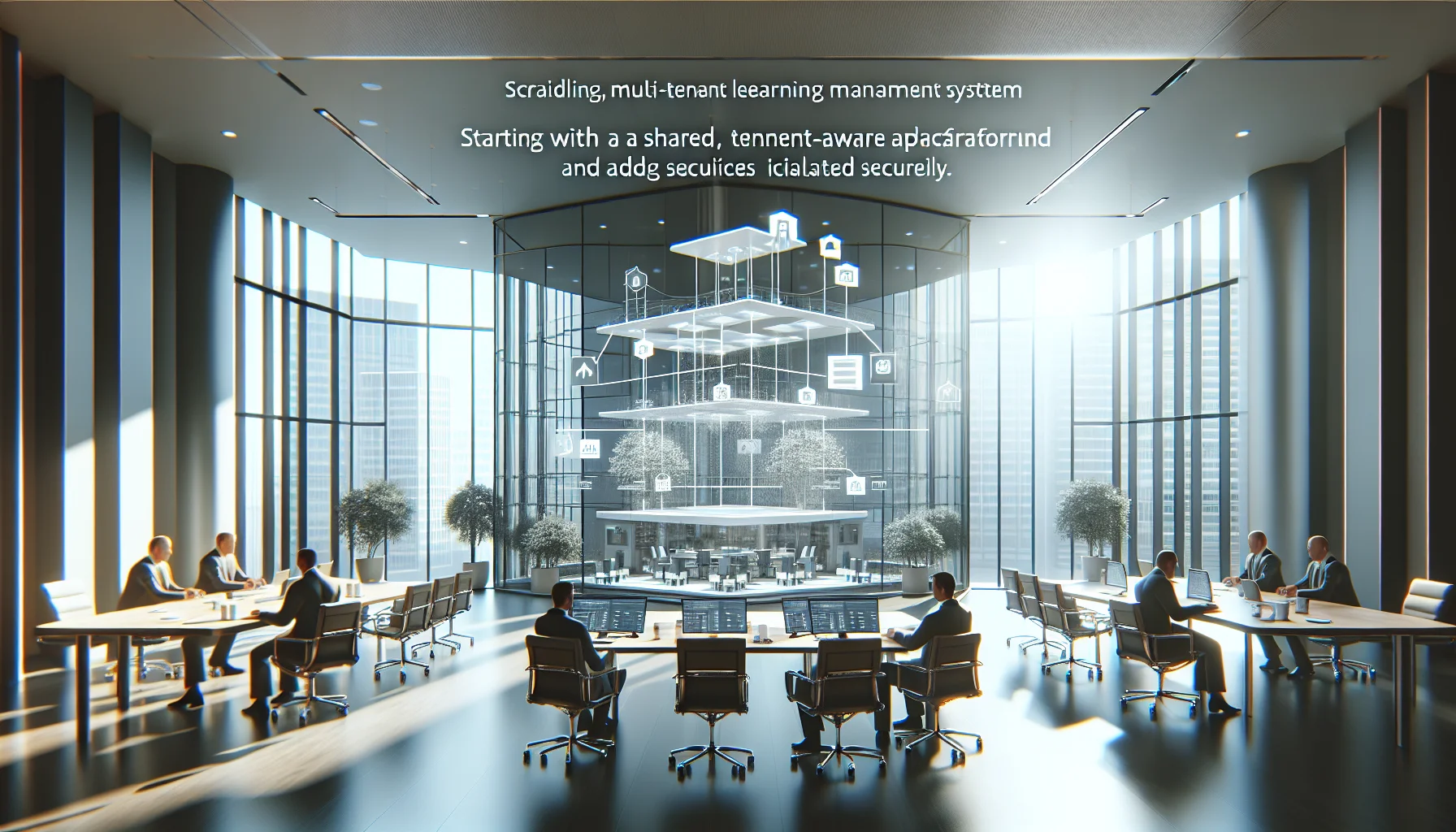
Start with a shared, tenant-aware platform and shared schema for learners. Add isolated schemas or dedicated databases for heavy or regulated tenants, and adopt sharding plus per-tenant metrics as you scale. Use tenant-aware middleware, per-tenant monitoring, and phased migrations to reduce risk.
 Talent & Development
December 24, 2025
This article explains how multi-tenant architecture accelerates M&A integration by centralizing code, configuration, and platform services. It covers technical patterns, ROI/TCO modeling, security trade-offs, migration strategies, organizational changes, and timelines. Decision-makers get a diligence checklist and a 90-day tenancy audit to plan low-risk consolidation.
 Talent & Development
December 24, 2025
A clear multi-tenant API strategy is critical for M&A integrations: tenant-aware endpoints, per-tenant throttling, and gateway mediation reduce risk and speed onboarding. The article outlines gateway patterns, versioning best practices, a sample eight-week rollout, and developer productivity techniques—showing practical steps and a case where onboarding admin time fell by over 60%.
 Talent & Development
December 24, 2025
Three anonymized SaaS deals and one platform consolidation show practical integration lessons for multi-tenant M&A. Executives get before/after architectures, timelines for post-merger scaling, and measurable outcomes. Key recommendations: adopt hybrid tenancy, treat migration as a product, use composable adapters, and enforce tenant-focused rollback and metrics.