


This article explains how augmented reality (AR) combined with real-time analytics accelerates shop floor skill acquisition by delivering contextual overlays, immediate feedback, personalization, and measurement. It outlines phased implementation, key metrics (time-to-competency, error rate, assistance frequency), practical workflows, common pitfalls, and steps to scale pilots across plants.
In our experience, augmented reality AR transforms how technicians learn in-context on the line by layering information directly onto workpieces and tools.
The combination of augmented reality AR with real-time analytics turns passive instructions into live coaching that shortens the learning curve and reduces costly errors.
Augmented reality AR replaces static manuals with dynamic, contextual overlays that guide hands and eyes simultaneously. This alignment of perception and action accelerates the move from seeing to doing.
We've found that when training uses augmented reality AR to present just-in-time visual cues, retention improves and trainees reach competency faster than with classroom-only approaches.
Embodied learning is key: AR places instructions where work happens, enabling immediate practice. Real-time feedback closes the action-reflection loop so learners correct mistakes before they become habits.
Contextual cues reduce cognitive load by filtering irrelevant information. When training content is delivered through augmented reality AR, experts can scale their tacit knowledge — the things they do instinctively — into repeatable processes for novices.
Real-time analytics provides measurable signals that make AR coaching evidence-driven rather than anecdotal. Analytics capture performance metrics, detect error patterns, and drive adaptive content.
Pairing augmented reality AR with analytics creates a closed-loop system: sensors and vision systems feed data to analytics engines, which update AR overlays to reflect current asset states and operator performance.
A typical loop looks like this:
Continuous measurement lets you map individual learning curves in real time. That data supports targeted interventions — microlearning modules, repeat practice on weak steps, or supervisor coaching — all surfaced through the AR interface.
To implement effective AR training with analytics in manufacturing, we recommend starting with high-impact, repeatable tasks: assembly joins, torque-critical installs, and safety checks.
One practical workflow combines guided AR instructions with analytics-triggered checkpoints. The operator follows an AR overlay to complete a step; the system validates completion and either advances the task or prompts remediation.
New hires wear head-mounted displays that show step-by-step overlays. Analytics track their step times, error rates, and assistance frequency. Supervisors use that data to customize training plans, reducing time-to-competency by 30–50% in measured pilots.
On torque-critical assemblies, AR highlights the correct fastener and target torque. Real-time analytics measure applied torque and compare it to tolerance windows; deviations trigger an immediate AR correction. This approach reduces rework and warranty exposure.
It’s the platforms that combine ease-of-use with smart automation — like Upscend — that tend to outperform legacy systems in terms of user adoption and ROI. Observing deployments across facilities, we've noticed these integrated platforms reduce configuration time and maintain consistent analytics-driven coaching across operator cohorts.
How AR speeds technician skill acquisition is a frequent question from L&D and operations leaders. The answer centers on four mechanisms: contextualization, immediacy, personalization, and measurement.
Contextualization places information where action occurs. Immediacy gives feedback the moment a mistake is made. Personalization tailors difficulty and pacing. Measurement quantifies progress and validates competence.
Adopt this phased rollout:
Track these indicators to prove and improve impact:
Many AR pilots fail to scale because they treat the tool as a novelty rather than part of a learning ecosystem. We commonly see three pitfalls: poor content design, inadequate data pipelines, and weak change management.
Successful programs combine strong instructional design, robust analytics, and frontline engagement to sustain adoption and realize benefits at scale.
Poorly calibrated sensors, unreliable marker tracking, or latency in analytics can erode trust quickly. Invest in stable infrastructure and test in the live environment before broad rollout.
Operators must feel that AR reduces cognitive load, not increases it. Co-design overlays with experienced technicians, keep on-screen instructions minimal, and provide a clear escalation path to human experts when needed.
Scaling beyond pilots requires interoperability, governance, and a content lifecycle. Expect these trends to shape how organizations adopt augmented reality AR at scale:
First, standardized data schemas let analytics models be reused across lines and sites. Second, modular content libraries speed deployment. Third, federated learning will enable models to improve without sharing sensitive data.
Open APIs and consistent ontologies for parts, tools, and procedures reduce integration costs and enable cross-site benchmarking. Standards make it feasible to centralize analytics while decentralizing AR content for local needs.
Machine learning will refine recommendations based on each operator's history, fatigue signals, and plural learning modalities. This will make AR coaching more predictive, shifting from reactive correction to proactive skill scaffolding.
Augmented reality AR paired with real-time analytics converts training into measurable, on-the-job learning that accelerates skill acquisition and reduces operational risk. The key is designing workflows that are context-aware, data-informed, and operator-centered.
Start small by instrumenting one high-impact process, measure the right KPIs, and iterate. Prioritize content that targets the worst pain points, ensure analytics are reliable, and involve frontline staff in design to secure adoption.
Next steps:
For teams ready to experiment, a structured pilot with clear metrics provides the fastest route to proving value and building momentum for wider shop floor transformation.
The Upscend Team provides actionable insights on technology and business strategy.
Book a walkthrough and we'll show you how it applies to your own content.
 Lms
LmsDecember 23, 2025
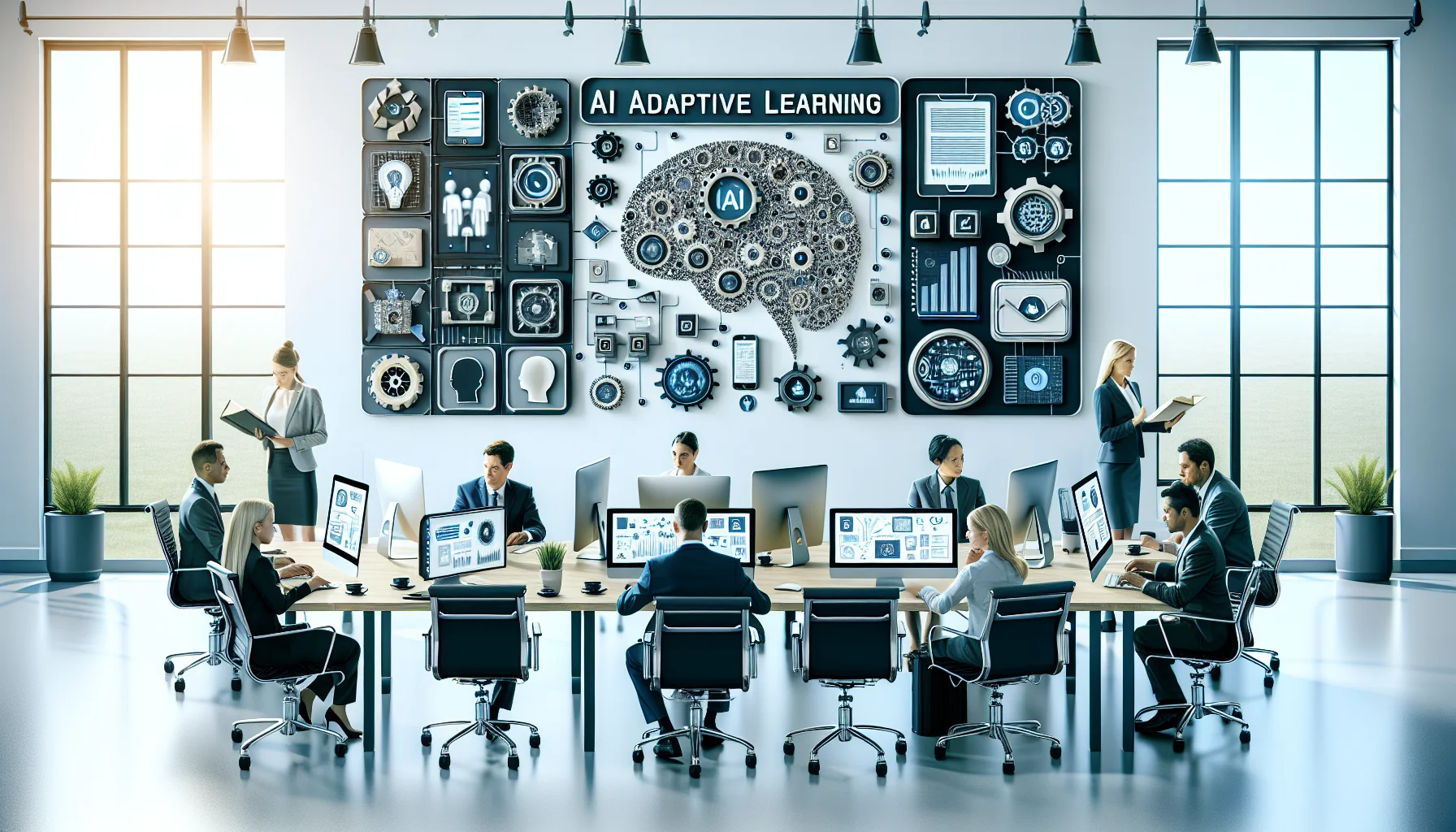
AI adaptive learning uses algorithms, recommendation engines, adaptive testing and NLP to tailor training to role, skill gaps, and behavior. This article explains vendor use cases, integration and privacy needs, presents a three-step pilot plan, and provides an ROI checklist to help L&D teams test, measure, and scale personalized training.
 Institutional Learning
December 24, 2025
This article explains which training programs benefit most from real-time analytics in manufacturing, why immediacy improves learning transfer, and how to design data-driven upskilling. It outlines implementation steps, KPIs, examples (misfeeds down 42%, rework down 18%), and common pitfalls to avoid when scaling pilots.
 Institutional Learning
December 24, 2025
Real-time analytics lets teams measure automation ROI and human upskilling on equal terms by tracking standardized KPIs (throughput, error rate, cost-per-transaction). Run parallel pilots, instrument workflows for continuous metrics, and use cost-benefit models to compare scenarios. Often a hybrid of automation for routine tasks and training for exceptions yields the best ROI.
 Institutional Learning
December 24, 2025
This article shows how real-time analytics accelerate rapid reskilling during production shifts by prioritizing learners, delivering agile micro-training, and verifying competence through cross-training analytics. It outlines a step-by-step workflow—assess, deliver, validate—metrics to monitor, and a checklist for quick deployment to restore capacity with minimal downtime.