


This article explains why API-first learning is the foundation for scalable, vendor‑neutral learning ecosystems and outlines common headless LMS patterns and API design best practices. It includes a practical migration checklist and a mini case showing integrations shrinking from 6 months to 4 weeks and reduced maintenance overhead.
In our experience, API-first learning is the practical foundation for modern, scalable learning ecosystems. Moving from brittle point-to-point integrations to an integrations-first approach reduces friction between content, experience layers, and analytics. This article explains the technical and business case for an API-first learning strategy, shows common headless learning platform patterns, recommends learning APIs design best practices, and provides a concrete migration checklist to help teams consolidate LMS capabilities without long-term vendor lock-in.
API-first learning means designing learning products around a stable, discoverable set of APIs that expose content, user state, progress, assessment results, and personalization data. In our experience organizations that start with APIs avoid the common trap of retrofitting integration points after a product is built.
An API-first learning approach treats APIs as first-class artifacts: they are documented, versioned, and governed. That approach creates a clear contract between systems and enables an API strategy LMS to support multiple presentation layers—web, mobile, LMS shells, or a headless learning platform—without reworking core services.
Adopting API-first learning produces measurable outcomes:
Many teams live with fragile, one-off connections: the LMS sends CSV exports, a single identity provider attempts to stitch data together, and analytics are built by copying data between systems. We've found this pattern leads to repeated rework and mounting technical debt.
Key pain points include:
Moving to API-first learning replaces brittle point-to-point links with a published surface of learning APIs that multiple clients can use safely and consistently.
There are several practical patterns that implement API-first learning. Choosing the right pattern depends on governance, scale, and the need for low-latency personalization.
A headless learning platform exposes content, enrollment, and tracking via APIs. Teams build lightweight frontends (e.g., React apps, native mobile) that consume these APIs. This pattern decouples presentation from domain logic and supports multiple delivery channels.
An API gateway aggregates microservices for content, user profiles, assessments, and analytics. Clients call the gateway, which enforces security, rate limiting, and orchestration. This supports incremental modernization: legacy LMS modules can be wrapped behind APIs and replaced over time.
These patterns are the building blocks of an integrations-first approach where integrations are planned, standard, and reusable rather than accidental and ad-hoc.
Designing learning APIs correctly matters. We've found high-performing teams follow a small set of disciplined rules to keep APIs robust and evolvable.
Operationalizing APIs requires observability and governance. Implement tracing for cross-service flows (e.g., enrollment → content access → completion). Maintain a central API catalog and SLA expectations so integrators know performance and uptime guarantees.
API-first learning thrives when product managers own API roadmaps the same way they own feature roadmaps; this keeps APIs stable and aligned with business goals.
Transitioning to API-first learning is a phased effort. Below is a pragmatic checklist we've used with clients to make the shift without disrupting learners.
Additional implementation tips:
We worked with a mid-sized enterprise that had three LMS instances and over a dozen bespoke connectors. The initial state suffered from duplicate course metadata, inconsistent completion rules, and a 6–9 month average for each new integration.
By adopting API-first learning, the team consolidated core services into a small set of domain APIs (content, enrollments, progress). They wrapped legacy LMS functionality behind a stable façade and implemented an API gateway. Within 9 months, new integrations moved from 6 months to 4 weeks on average, and maintenance costs dropped materially.
The turning point for most teams isn’t just creating more content — it’s removing friction. Tools like Upscend help by making analytics and personalization part of the core process, showing how API-driven data flows unlock faster iteration on learning experiences.
The financials were clear: upfront engineering investment equaled about 6 months of initial costs but produced a 3x reduction in integration hours over three years, yielding positive ROI by year two. That outcome is common when teams prioritize an API strategy LMS and pursue the benefits of API-first LMS consolidation.
Even with clear benefits, teams trip over organizational and technical issues. Common pitfalls include inadequate governance, insufficient documentation, and underestimating the cost of version management.
To avoid these problems:
We recommend quarterly API reviews and a deprecation policy that guarantees consumers plenty of time to migrate when breaking changes are unavoidable.
API-first learning is not a silver bullet, but when paired with strong governance and an integrations-first mindset, it changes how learning ecosystems evolve.
Below is a quick comparison of pre- and post-API-first outcomes:
| Metric | Point-to-point baseline | API-first outcome |
|---|---|---|
| Average integration lead time | 6 months | 4 weeks |
| Maintenance overhead | High (duplication) | Lower (shared services) |
| Vendor swap complexity | High | Low |
API-first learning delivers both technical flexibility and business agility when executed with clear ownership and standards.
Common question: How quickly can an organization see value?
Value timing depends on scale. For focused pilots—e.g., exposing content and progress APIs—teams often see measurable improvement in 3–6 months. Full consolidation across multiple LMS instances typically follows a 12–24 month roadmap.
Common question: Is a full rewrite required?
No. An integrations-first approach supports incremental modernization: start with façades and migrate domain services one at a time. This reduces risk and preserves continuity for learners.
API-first learning is a strategic choice that pays dividends in reduced integration friction, improved analytics fidelity, and the ability to deliver innovative, omnichannel learning experiences.
If your team is evaluating next steps, consider a focused pilot that publishes a small set of learning APIs, measures integration lead time, and uses those metrics to build the broader roadmap.
Call to action: Start with an API inventory sprint this quarter—identify the top three data flows that block new experiences, design contract-first APIs for them, and measure integration time before and after to validate the benefits of an API-first learning approach.
The Upscend Team provides actionable insights on technology and business strategy.
Book a walkthrough and we'll show you how it applies to your own content.
 L&D
L&DDecember 21, 2025
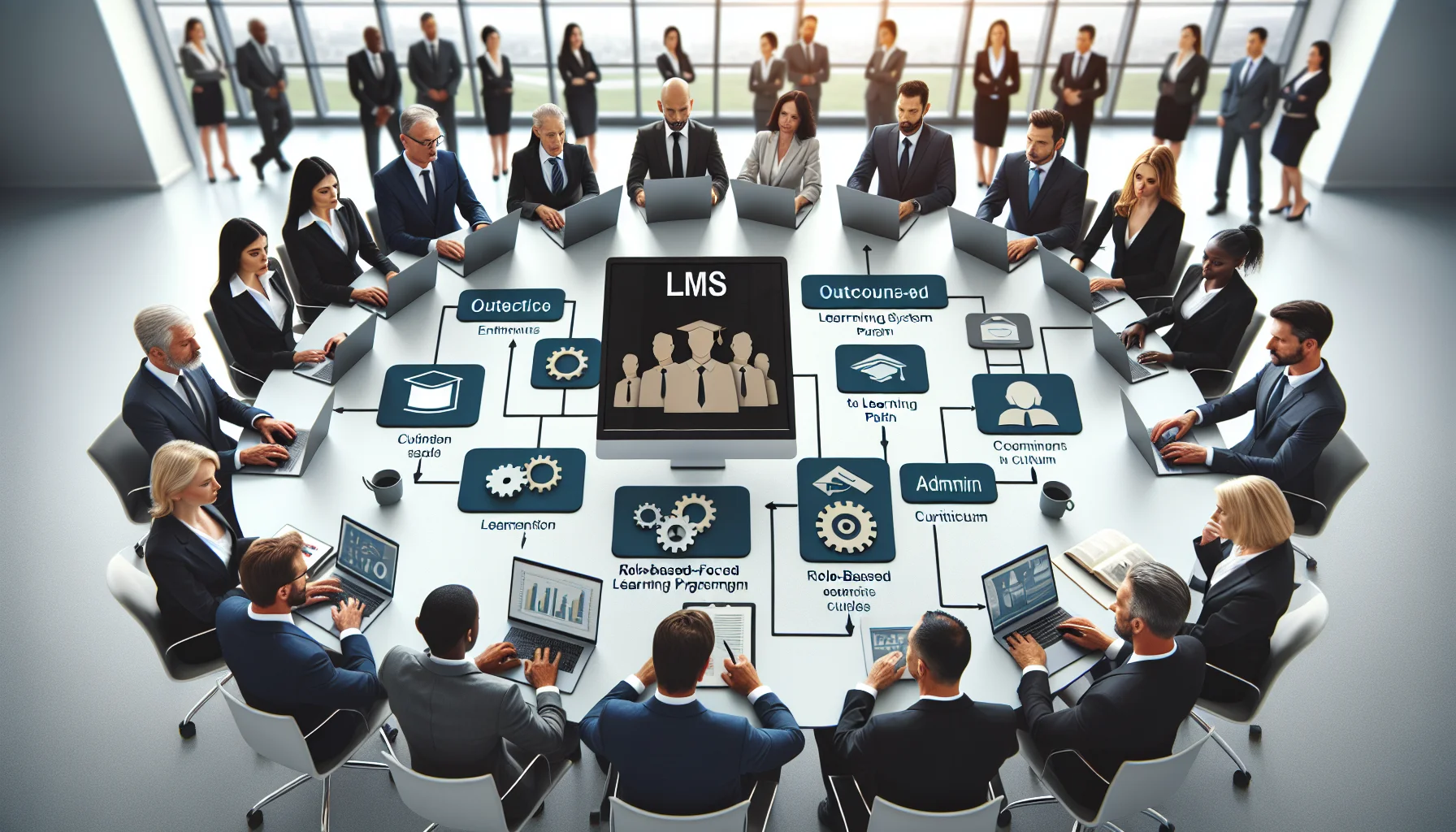
An outcomes-focused LMS training program uses role-based learning paths, a 30-60-90 admin curriculum, and trainer enablement to speed time-to-competency and reduce support tickets. Prioritize microlearning, templated tools, and KPIs—track admin setup time, ticket volume, and course completion—and run short improvement cycles to sustain adoption.
 L&D
L&DDecember 25, 2025
This article explains how integration LMS portals influence training adoption by reducing friction at discovery, authentication, enrollment and tracking. It compares LMS-first and portal-first models, details SSO, SCORM/xAPI flows, and data synchronization practices, and provides decision maps, architecture patterns and case studies that demonstrate measurable completion improvements.
 ESG & Sustainability Training
January 5, 2026
ESG training integrations align HRIS, SSO, LMS, analytics and compliance systems to automate enrollments, secure records, and speed reporting. Use SCIM, SAML/OIDC, xAPI/LRS and phased migrations (pilot, parallel run, cutover) to reduce launch time and maintain auditable logs. Start with a two‑week discovery to map attributes and pilot SCIM + xAPI.
 Business Strategy&Lms Tech
January 22, 2026
This article maps the six core tool categories needed to build compressed learning programs for a 4-day week—LMS, microlearning, assessments, simulations, rostering, and analytics. It gives selection checklists, integration and cost considerations, pilot KPIs, and vendor negotiation tips to reduce time-to-competency while maintaining compliance.