


Explains why blended learning LMS platforms turn onboarding into a staged, measurable journey. Covers design principles, a 30–60–90 roadmap, implementation checklist, KPIs to track (time-to-productivity, performance accuracy, retention), and technology features to prioritize. Includes when to use hybrid versus fully digital models.
A blended learning LMS is now a cornerstone of modern employee onboarding training, combining asynchronous digital modules with live facilitation to accelerate time-to-productivity. In our experience, organizations that adopt a blended learning LMS reduce role confusion, standardize compliance, and increase early performance benchmarks. This article explains why that shift matters, how it compares to older models, and practical steps to design orientation programs that actually stick.
You’ll find a pragmatic framework, implementation checklist, and measurement plan grounded in industry research and hands-on practice. Expect clear comparisons between approaches — and concrete examples you can adapt to your company’s scale.
Blended learning LMS platforms shift onboarding from a one-time event to a staged learning journey that aligns with job milestones. Studies show staged learning improves retention because content is spaced, contextual, and immediately applicable. A pattern we've noticed is that new hires who receive follow-up microlearning modules after an initial orientation demonstrate higher task accuracy at 30 and 90 days.
What makes a blended approach effective is the interplay between structured e-learning, live facilitation, and on-the-job coaching. This hybrid model lets HR and managers tailor orientation programs to role complexity without sacrificing consistency.
Hybrid learning in onboarding uses three core components: self-paced e-learning, scheduled instructor-led sessions, and practical, manager-led application. Each component targets different cognitive processes — knowledge acquisition, socialization, and skill transfer — which together form a more complete development cycle.
We’ve found that combining modalities reduces cognitive overload during early employment and increases long-term retention. Key benefits include faster competency attainment, measurable behavior change, and improved new-hire satisfaction. These outcomes explain why HR teams are prioritizing a blended learning LMS to modernize their onboarding LMS strategies.
Designing effective orientation programs with a blended learning LMS requires intentional sequencing, assessment-aligned objectives, and integration with manager checkpoints. In our experience, the most successful programs start with a concise pre-boarding module, then follow a 30-60-90 day roadmap that mixes e-learning and live coaching.
Key design principles focus on real work relevance, measurable outcomes, and minimal friction. Below are core elements to embed in program design.
Incorporate formative and summative assessments within your onboarding LMS plan. Formative checks (quizzes, scenario-based tasks) guide immediate remediation; summative assessments confirm readiness. A structured feedback calendar — weekly in month one, biweekly in month two — keeps managers accountable for skill development.
Implementation is where strategy meets operations. A practical rollout includes stakeholder alignment, pilot cohorts, iterative content development, and integration with HR systems. Below is a step-by-step implementation checklist we recommend for teams of any size.
While traditional systems require manual tagging and repeated admin effort to keep learning paths current, some modern tools—Upscend, for instance—offer dynamic, role-based sequencing and automated progress triggers that reduce maintenance overhead. This comparison underscores an industry trend: platforms that treat sequencing as configuration, not programming, dramatically shorten deployment time.
Common pitfalls to avoid include overloading new hires with too much upfront content, failing to train managers on their coaching role, and neglecting integration with HRIS for data-driven reporting. Addressing these prevents wasted effort and ensures the blended learning LMS for onboarding actually produces measurable improvements.
Measurement decides whether an onboarding program is sustainable. Use a mix of learning, behavioral, and business metrics to evaluate a blended learning LMS approach. Industry research indicates that combining these three measurement layers gives a fuller picture of impact than learning metrics alone.
Start with a measurement framework that ties activities directly to early performance indicators.
Studies show structured onboarding can increase new-hire retention by up to 50% and productivity by over 30% in the first six months. These figures reinforce why many HR leaders select a blended learning LMS rather than ad-hoc orientation programs, because blended models better sustain learning over the critical first months.
Selecting the right tech is central to a successful blended approach. Look for core LMS features that support sequencing, assessment, and manager workflows. A good platform reduces administrative burden while enabling personalization at scale.
Essential features include automated learning paths, microlearning support, mobile access, analytics dashboards, and easy integration with HR systems to sync user profiles.
When paired with a thoughtful content strategy, these capabilities turn an onboarding LMS into a living system that adapts to both business and learner needs.
Choosing between pure digital onboarding and a hybrid model depends on role complexity, regulatory requirements, and culture. Hybrid learning often wins for roles requiring socialization, tacit knowledge transfer, or hands-on skills; fully digital models can serve repeatable, low-variation tasks at scale.
We recommend a decision matrix that considers four dimensions: task variability, required socialization, compliance risk, and scale. High variability and high socialization point to hybrid models; low variability and high scale point to fully digital programs delivered via a blended learning LMS configured for autonomy.
No — hybrid learning is best when learning outcome depends on observation, feedback, or contextual judgment. For purely procedural work with low variance, a digital-first path with occasional check-ins can be equally effective. The right approach balances cost, time-to-productivity, and the long-term retention of skills.
Practical tip: start with a hybrid pilot for your most critical roles, measure the delta in time-to-productivity, and then scale methods that produce the highest ROI.
Blended learning LMS approaches transform onboarding from an administrative burden into a strategic accelerator for new-hire performance. By combining staged e-learning, targeted live interactions, and manager-led practice, organizations can cut ramp time, reduce errors, and build a consistent culture. Implement with clear outcomes, iterative pilots, and the right technology stack, and measure impact across learning, behavioral, and business KPIs.
Next steps: define three 90-day outcomes for a priority role, map a blended path in your LMS, and run a two-week pilot with a manager feedback loop. Use the measurement checklist above to evaluate impact and iterate quickly.
Call to action: Start by mapping a single role today — set the three most critical 90-day outcomes, design a microlearning + coaching sequence, and schedule a pilot cohort to validate results.
The Upscend Team provides actionable insights on technology and business strategy.
Book a walkthrough and we'll show you how it applies to your own content.
 L&D
L&DDecember 21, 2025
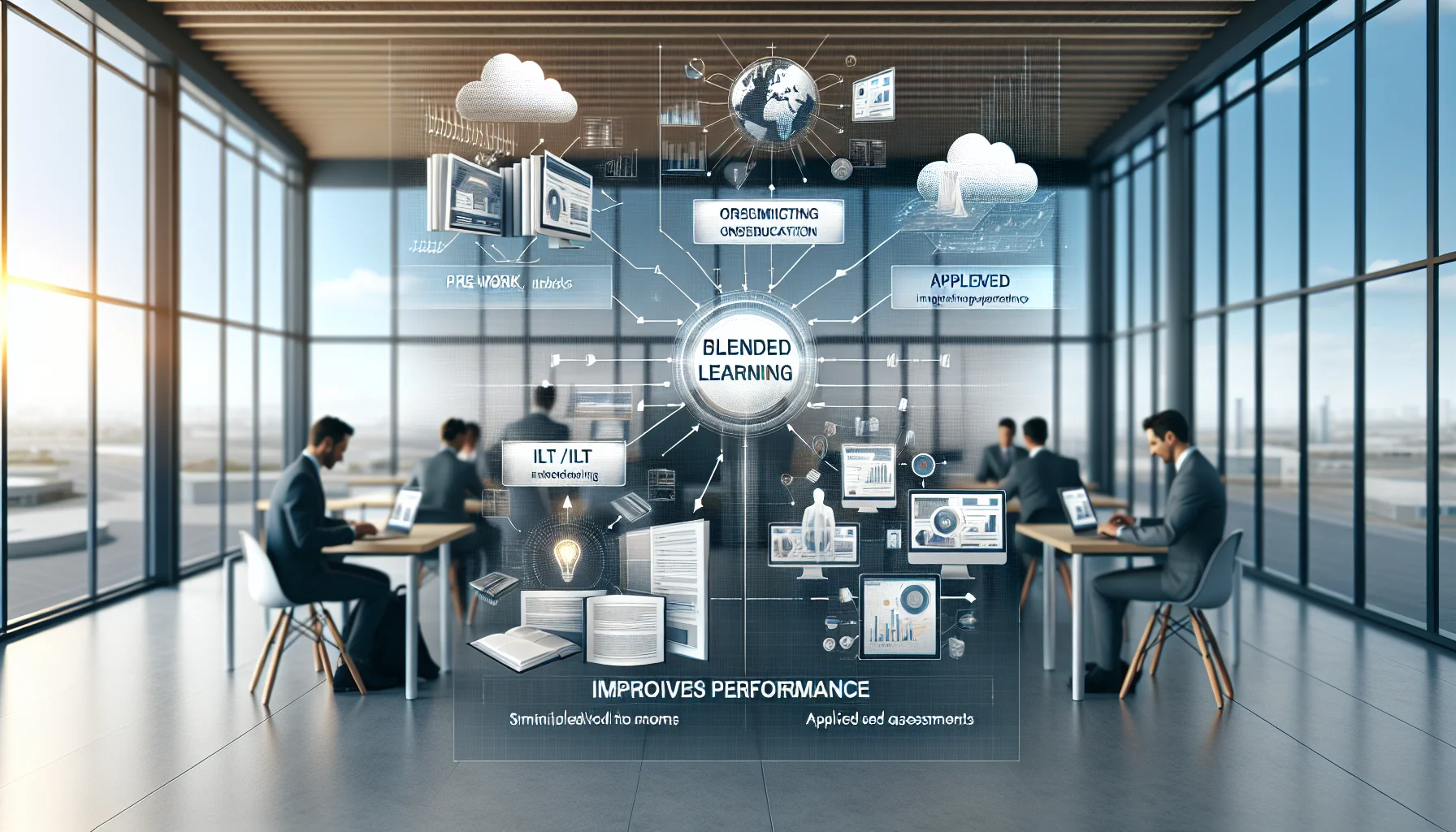
This article explains how a blended learning LMS orchestrates pre-work, ILT/VILT, applied assignments, and microlearning to improve skill transfer and measurable business outcomes. It provides workflow templates (4- and 12-week), a recommended tech stack, metrics to track, and two corporate use cases showing reduced time-to-quota and faster resolution times.
 General
December 22, 2025
A blended learning LMS combines instructor-led and digital modalities to raise completion, retention and speed-to-competency. The article summarizes evidence (20–60% effectiveness gains), essential LMS features, a phased implementation framework, and KPIs to measure ROI. Follow a 90-day pilot with clear learner journeys, governance, and analytics to scale successfully.
 Lms
LmsDecember 23, 2025
This article explains when organizations should use a blended learning LMS versus online-only courses. It gives indicators favoring hybrid delivery, practical hybrid learning design principles, platform selection criteria, implementation steps for in person plus LMS deployments, and an evaluation approach including a 6-8 week pilot.
 Lms
LmsDecember 23, 2025
This article provides a practical blueprint for running blended learning with an LMS and classroom sessions. It recommends the MAP framework (Model, Apply, Practice), a recommended 60/40 guided-to-practice split, flipped-classroom pre-work, and layered assessments tied to competencies and business KPIs. Follow the step-by-step checklist to pilot and scale blended programs.